
Technical Solution of Photovoltaic Energy Storage System for Remote Herders’ Residences in Xizang
— Application Scenarios: Remote Pastoral Residences, Households with No Stable Grid or Weak Power Supply
🌄 1. Why Do Remote Pastoral Residences Need a "Small yet Reliable" PV-ESS?
Remote pastoral residences in Xizang generally suffer from insufficient grid coverage, long power supply distances, high costs of diesel generation and inconvenient maintenance. For such scenarios, rather than building complex large-scale PV energy storage systems, it is better to design a residential PV-ESS with simple structure, easy installation and low maintenance cost according to actual living loads.
Video of System Application Scenarios
This solution adopts PV modules with a total installed capacity of 1160W, matched with a 2kW all-in-one residential energy storage unit and 25.6V/100Ah battery. By prioritizing power supply from PV, storing surplus power and supplementing power from batteries, it provides stable electricity for lighting, televisions, routers, small refrigerators and other low-power household appliances.
⚙️2. Overall System Configuration
The project mainly consists of two 580W PV panels, one 2kW 25.6V/100Ah all-in-one energy storage unit, a set of dedicated PV brackets and cables.
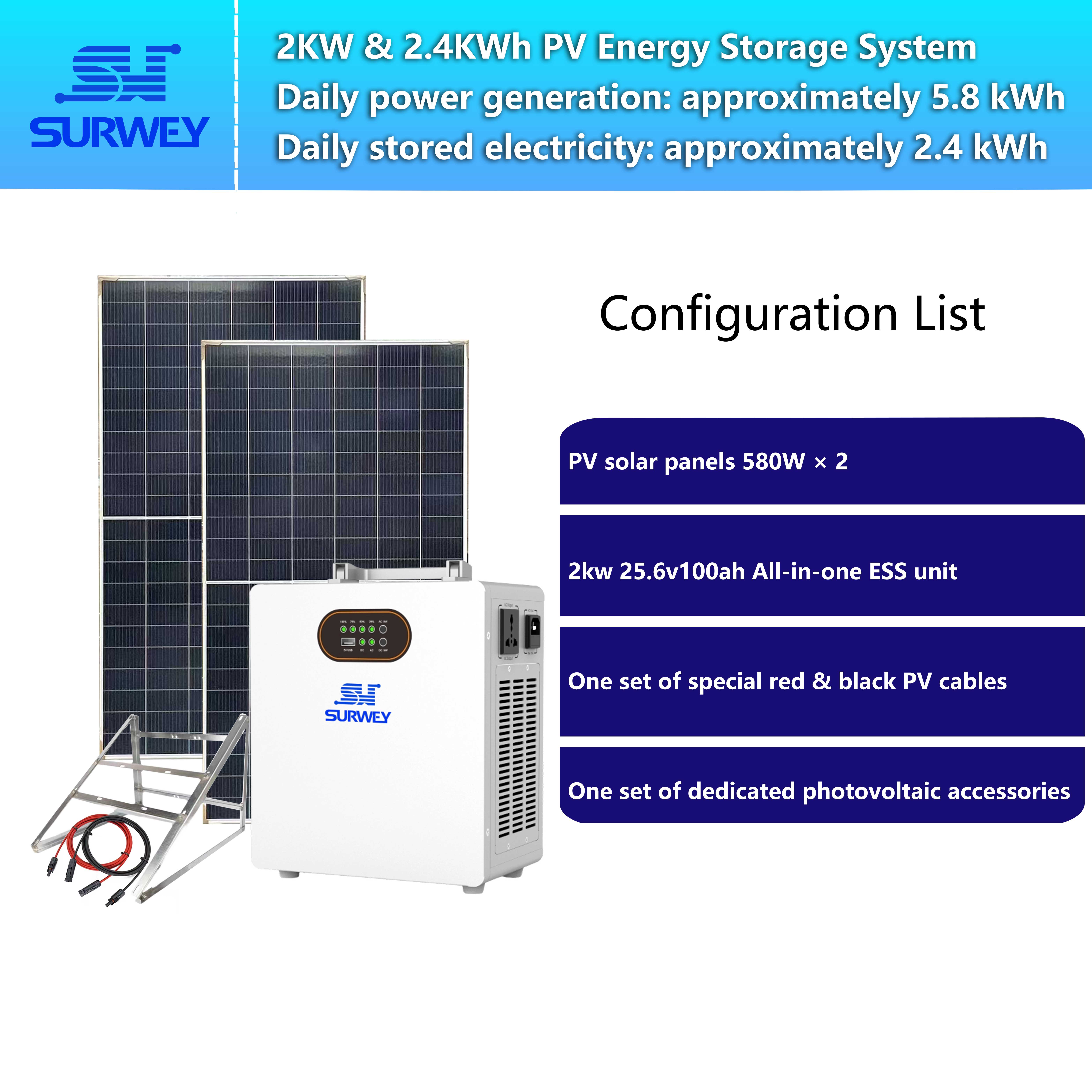
On the PV side, two 580W modules are connected in series and then connected to the MPPT input terminal of the all-in-one energy storage unit. Calculated based on module parameters, the maximum power voltage of the series-connected modules is approximately 85.30V, open-circuit voltage around 102.92V and operating current about 13.60A.
The all-in-one energy storage unit integrates MPPT solar control, energy storage battery and inverter functions to realize integrated PV power generation, energy storage and AC power supply. The system is designed with an average daily power generation of about 5.8kWh and average daily stored energy of about 2.4kWh to meet the basic domestic power demand of remote residences.
☀️3. Main Equipment 1: 580W PV Module
 Rooftop PV Panel Installation Drawing
This system uses two 580W PV modules with a total installed capacity of 1160W. The dimension of a single module is approximately 2279×1134×30mm with an aluminum alloy frame. Single module maximum power: 580W, operating voltage: 42.65V, operating current:13.60A, open-circuit voltage:51.46V, short-circuit current:14.38A, module efficiency around 22.50%. Two modules are connected in series to obtain a higher DC operating voltage within limited installation area, matching the MPPT input range of the all-in-one energy storage unit in this solution.
📐PV String Voltage & Current Verification
Key parameters of single 580W module:
- Maximum Power: 580W
- Maximum Power Voltage: 42.65V
- Maximum Power Current:13.60A
- Open-circuit Voltage:51.46V
- Short-circuit Current:14.38A
After connecting two modules in series:
- Operating Voltage: 42.65×2=85.30V
- Open-circuit Voltage: 51.46×2=102.92V
- Operating Current:13.60A
- Short-circuit Current:14.38A
The MPPT operating voltage range of the all-in-one energy storage unit is 72~170VDC, maximum PV open-circuit voltage 200VDC, maximum PV input current 50A and maximum PV input power around 1800W.
Therefore, the 85.30V operating voltage falls within the 72~170V MPPT range; the 102.92V open-circuit voltage is lower than the 200V maximum allowable value, and the 13.60A operating current is far below the 50A input limit. The total module power of 1160W is less than the upper limit of 1800W PV input power. The overall matching is reasonable.
🔋 4. Main Equipment 2: 2kW All-in-one Energy Storage Unit
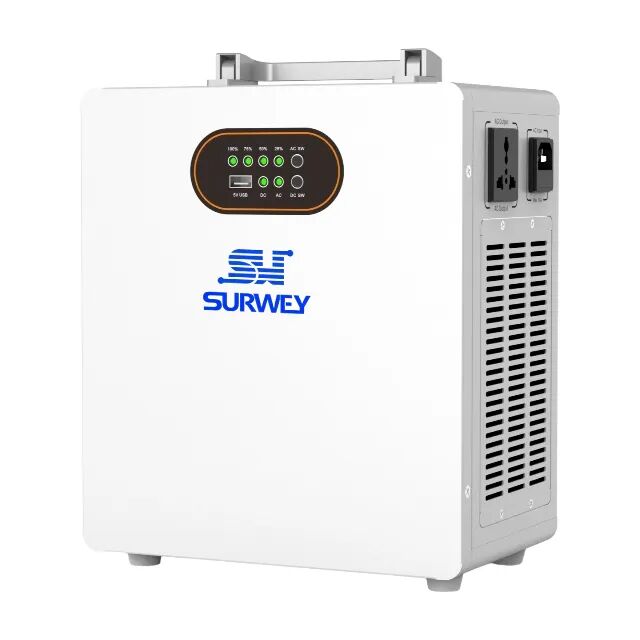
This system adopts a 2kW rated all-in-one energy storage unit, with a 25.6V/100Ah battery system and rated storage capacity of approximately 2.56kWh.
Indoor Real-shot Video of Key System Equipment
The unit integrates MPPT solar controller, storage battery and inverter, supporting PV input, energy storage and AC output. Its MPPT operating voltage range is 72~170VDC, maximum PV input power about 1800W, rated AC output power 2kW, output voltage around 200VAC±5%, pure sine wave output, suitable for basic household loads such as lighting, televisions, small refrigerators and network equipment.
📊5. Design of 5.8kWh Daily Power Generation
Total installed PV capacity of the system: 580W×2=1160W Based on local design conditions in Xizang and an estimated average equivalent peak sunshine duration of 5 hours: 1.16kW×5h=5.8kWh/day Therefore, this solution sets 5.8kWh/day as the design target for daily PV power generation.
It should be specially noted that 5.8kWh is an estimated design value instead of a fixed daily power generation all year round. Xizang boasts abundant solar resources, while actual power generation will be affected by winter, cloudy days, snow coverage on modules, installation angle, temperature and system losses. For engineering implementation, monthly and seasonal power generation verification is recommended based on local typical meteorological data.
6. Energy Storage Capacity and Daily Energy Design
Battery rated capacity: 25.6V×100Ah=2560Wh≈2.56kWh As required by the project, the planned daily stored energy of the system is about 2.4kWh.
It should be noted that 2.4kWh is the daily energy storage target of this solution, which does not mean the battery can fully discharge 2.4kWh every day without limitation. The actual available electricity is also affected by battery SOC range, inverter efficiency, temperature and battery management strategy.
Load planning is made based on about 2.4kWh available AC power to prioritize power supply for the following loads:
| Household Equipment | Typical Power | Estimated Usage Time |
|---|---|---|
| LED Lighting | 10~20W | 5~8 hours |
| Television | 60~100W | 3~5 hours |
| Router | Around 10W | 8~12 hours |
| Small Refrigerator | 60~120W | Full-day intermittent operation |
| Mobile / Small Device Charging | 10~30W | On demand |
| Small Fan | 30~50W | 4~8 hours |
| Small Kitchen Load | 300~600W | Short-time use |
For example, if 4 units of 15W LED lights + 80W TV +10W router +600W small kitchen appliance are used simultaneously at night, the total power is about 750W, consuming approximately 2.25kWh for continuous use of 3 hours, meeting basic night power demand. Refrigerator is an intermittent load in practice; its power consumption cannot be simply calculated by rated power × 24 hours and shall be verified according to actual energy consumption.
⚡7. System Operating Principle
The whole system adopts the basic operating logic of PV priority + load priority + surplus energy storage + battery supplementary power supply.
Animation Video of System Operating Principle
☀️ Sufficient sunlight in daytime: DC power generated by PV modules → into MPPT of all-in-one energy storage unit → MPPT maximum power point tracking → power supplied to household loads preferentially. When PV output exceeds instantaneous household power consumption, surplus power is stored in the battery.
🔋 Insufficient PV output: On cloudy days, morning, evening or night when PV output drops, the system automatically activates battery energy storage. The inverter converts DC power into AC power to supply household loads.
🌙 Night operation: Without PV generation, household loads are mainly powered by the storage battery. With reasonable load power control, the limited daily stored energy of around 2.4kWh can be prioritized for lighting, communication, television and essential small household appliances.
🏠 Load Management Principle: As the rated inverter output of the system is 2kW, it is recommended to keep long-term continuous loads within 1.6kW in actual use to avoid inrush current caused by simultaneous startup of multiple high-power devices. High-power loads such as electric kettles, induction cookers, electric heaters and electric water heaters are suggested for short intermittent use instead of long continuous operation.
🏔️8. Key Design Considerations for Xizang Pastoral Project
① Low-temperature Environment High-altitude areas in Xizang feature large temperature difference between day and night and low temperature in winter. Emphasis should be placed on verifying low-temperature Voc of modules and low-temperature charging conditions of storage batteries.
Supplement: The open-circuit voltage of this 580W module is 51.46V. The STC open-circuit voltage of two series-connected modules is 102.92V. Although open-circuit voltage rises under low temperature, the string open-circuit voltage is still lower than the maximum PV withstand voltage of 200V of the all-in-one unit, meeting safety requirements.
② Cable Distance If the residence is far from PV modules, PV cable specifications shall be properly selected to reduce DC line voltage drop.
③ Lightning Protection & Earthing Plateau areas have many open spaces. It is recommended to equip necessary DC lightning protection, AC lightning protection, earthing and overcurrent protection devices according to on-site buildings and local lightning conditions.
④ Load Classification Household power consumption is suggested to be divided into "critical loads" and "non-critical loads". Priority should be given to basic living loads including lighting, communication equipment, televisions and small refrigerators.
🧮9. Summary of Core System Parameters
| Item | Design Parameter |
|---|---|
| PV Module | 580W×2 |
| Total PV Capacity | 1160W |
| Module Connection Mode | 2 modules in series |
| String Operating Voltage | 85.30V |
| String Open-circuit Voltage | 102.92V |
| String Operating Current | 13.60A |
| All-in-one Energy Storage Unit | ST-T series 2kW |
| Battery System | 25.6V/100Ah |
| Rated Battery Capacity | Approximately 2.56kWh |
| Designed Average Daily Generation | Approximately 5.8kWh |
| Daily Energy Storage Target | Approximately 2.4kWh |
| Output Type | Pure sine wave AC |
| Main Loads | Lighting, TV, refrigerator, router, small short-term kitchen appliances, etc. |
✅10. Conclusion
This solution targets the actual power demand of remote herders’ residences in Xizang, adopting the configuration of two series-connected 580W PV modules plus a 2kW 25.6V/100Ah all-in-one energy storage unit with well-matched equipment parameters.
The operating voltage of the 1160W PV array is about 85.30V, falling within the 72~170V MPPT operating range of the all-in-one unit. Meanwhile, the string open-circuit voltage of approximately 102.92V is lower than the maximum PV input voltage of 200V, and the 1160W PV capacity matches the maximum PV input power of around 1800W.
Positioned to reliably guarantee basic domestic power consumption, this system delivers 2kW AC output to support more short-time low-power household appliances. By generating PV power in daytime to supply loads preferentially, storing surplus power and powering loads by battery at night, it can effectively solve power supply issues for lighting, communication, refrigerators and small household appliances in remote residences.


