
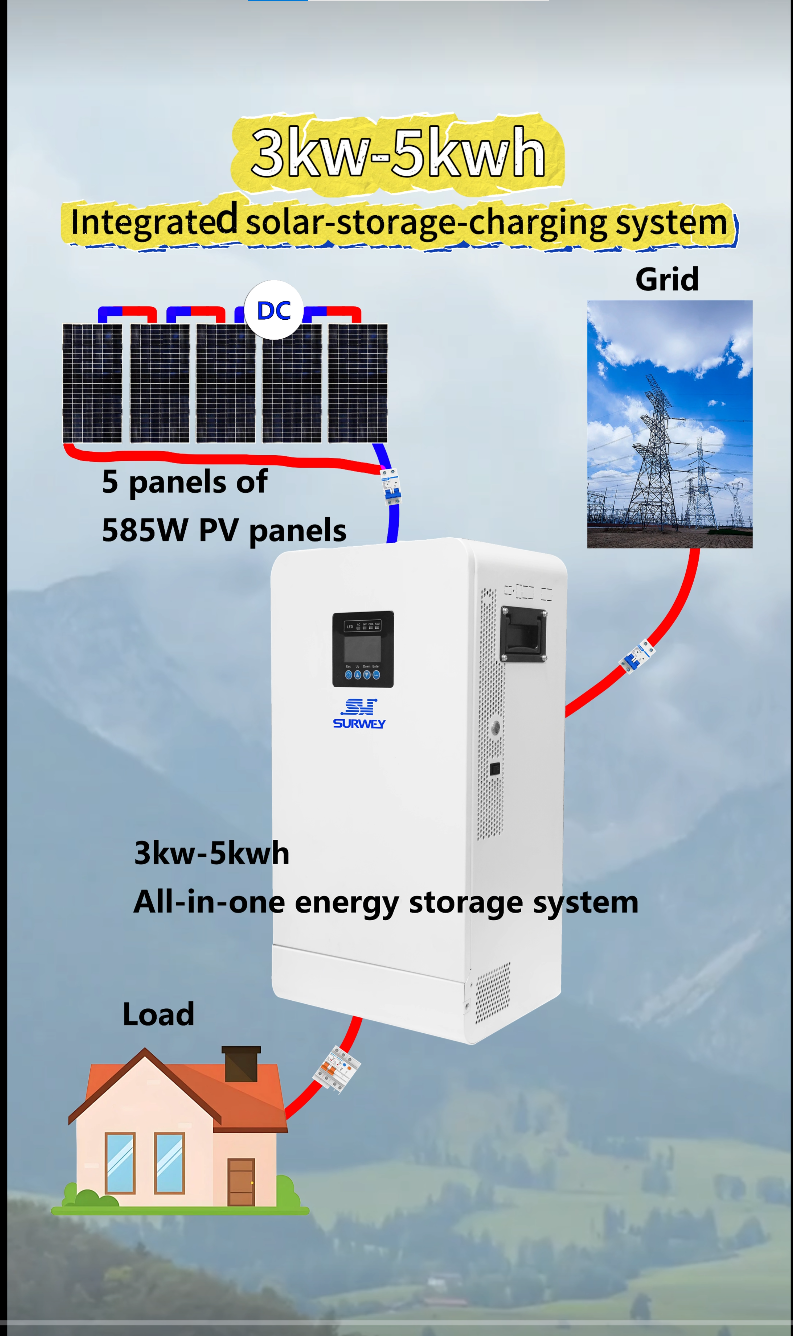
This diagram shows the topology of a 3kW-5kWh integrated solar-storage-charging system. Five 585W PV panels deliver DC power to the all-in-one energy storage unit, which connects to both the grid and household loads. The system prioritizes solar power and stores surplus power in the battery. It automatically switches to off-grid mode during grid failures to supply residential loads, ideal for suburban homes with unstable power supply.
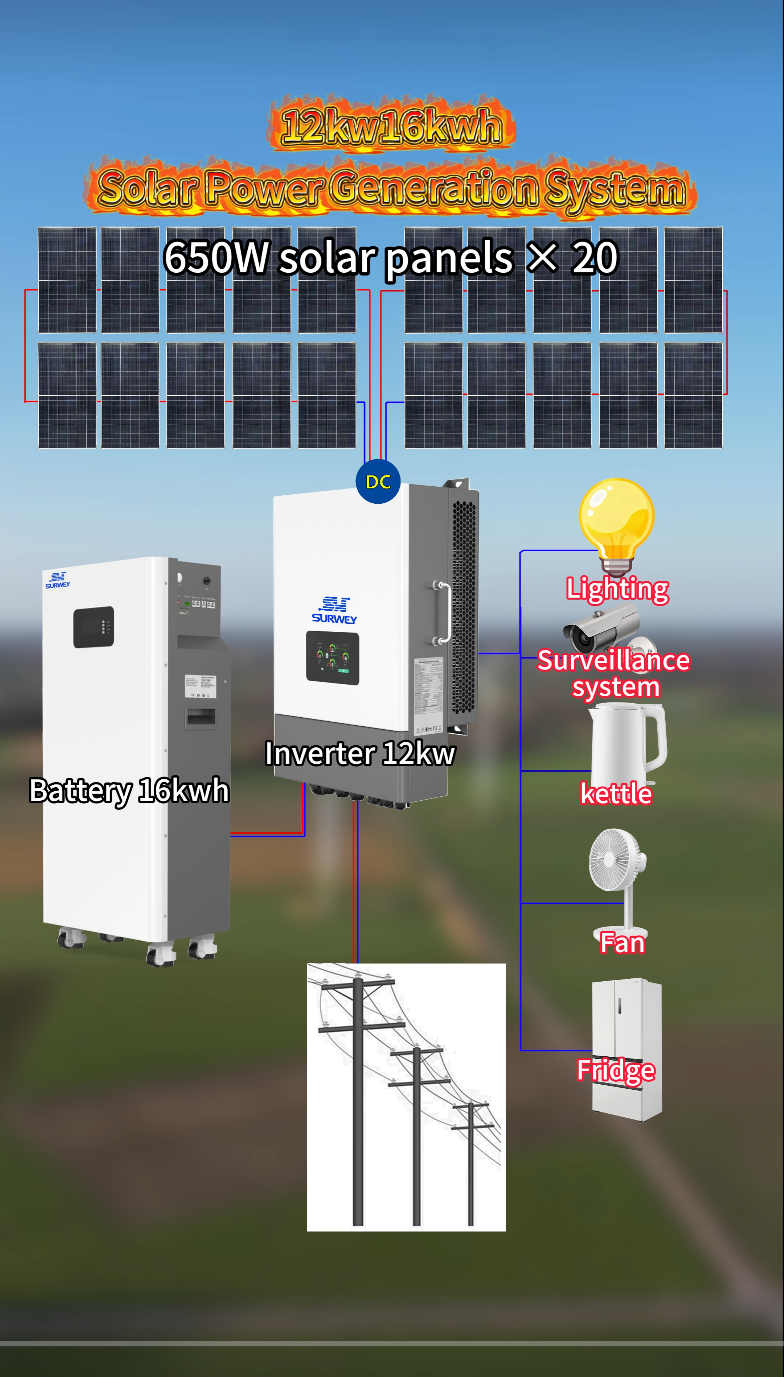
This 12kW/16kWh solar energy storage system is equipped with 20 pieces of 650W solar panels. It generates electricity by absorbing sunlight during the daytime, and surplus power is stored in the 16kWh battery.
It can power a full range of household appliances including lights, refrigerators, surveillance cameras, kettles and fans.
It automatically switches to backup power during blackouts. Ideal for villas, farms and shops to get rid of frequent power outages.
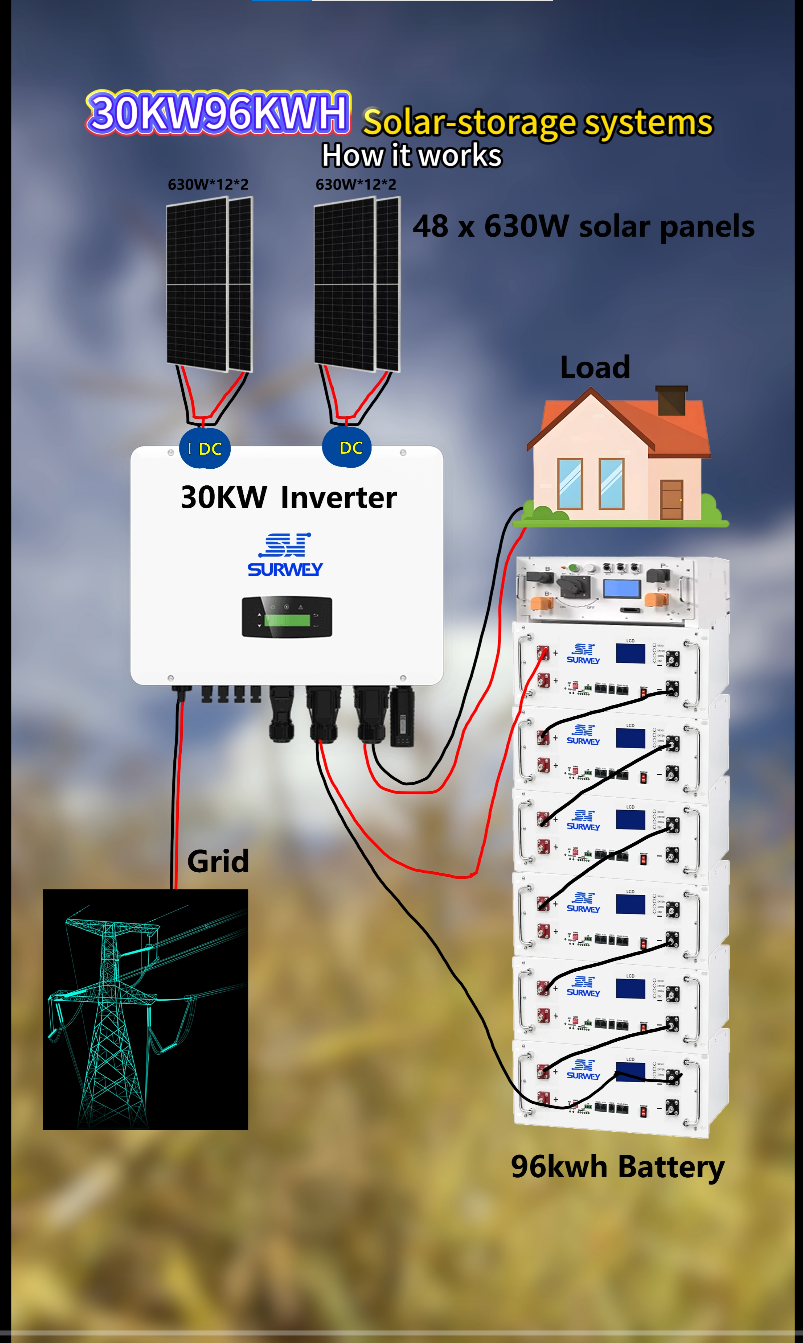
This 30kW/96kWh solar-storage system uses 48 pieces of 630W solar panels to harvest solar energy. DC power flows into the 30kW hybrid inverter. Solar power supplies household loads preferentially in daytime, and surplus power is stored in the 96kWh high-voltage battery. It can connect to the grid and switch automatically between grid-tie and off-grid modes. The battery instantly powers loads during blackouts, ensuring continuous power and lowering reliance on utility grid.
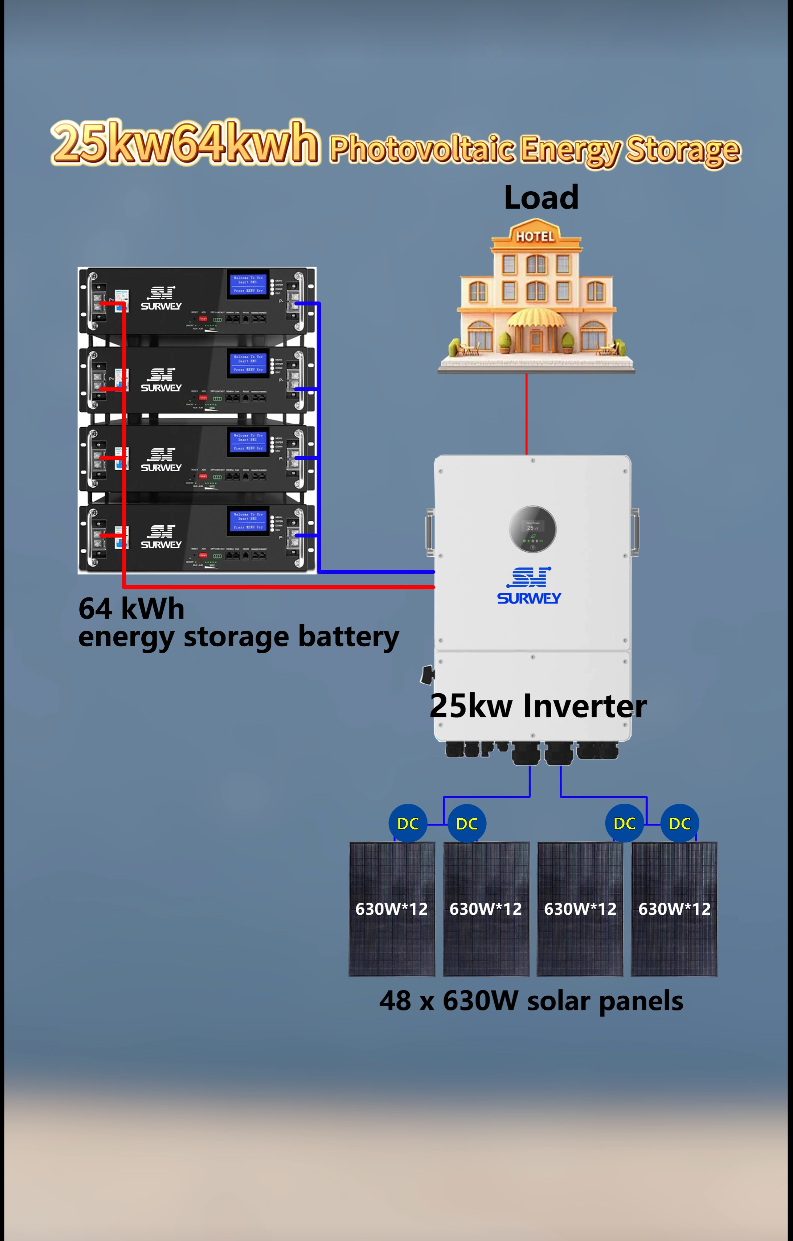
This 25kW/64kWh photovoltaic energy storage system consists of 48 pieces of 630W solar panels, a 25kW hybrid inverter and a 64kWh battery pack. Solar panels capture sunlight and generate DC power. The inverter converts power to supply loads such as hotels, and surplus power is stored in batteries. It supports grid connection and backup power, batteries will automatically discharge to keep hotels running during blackouts.
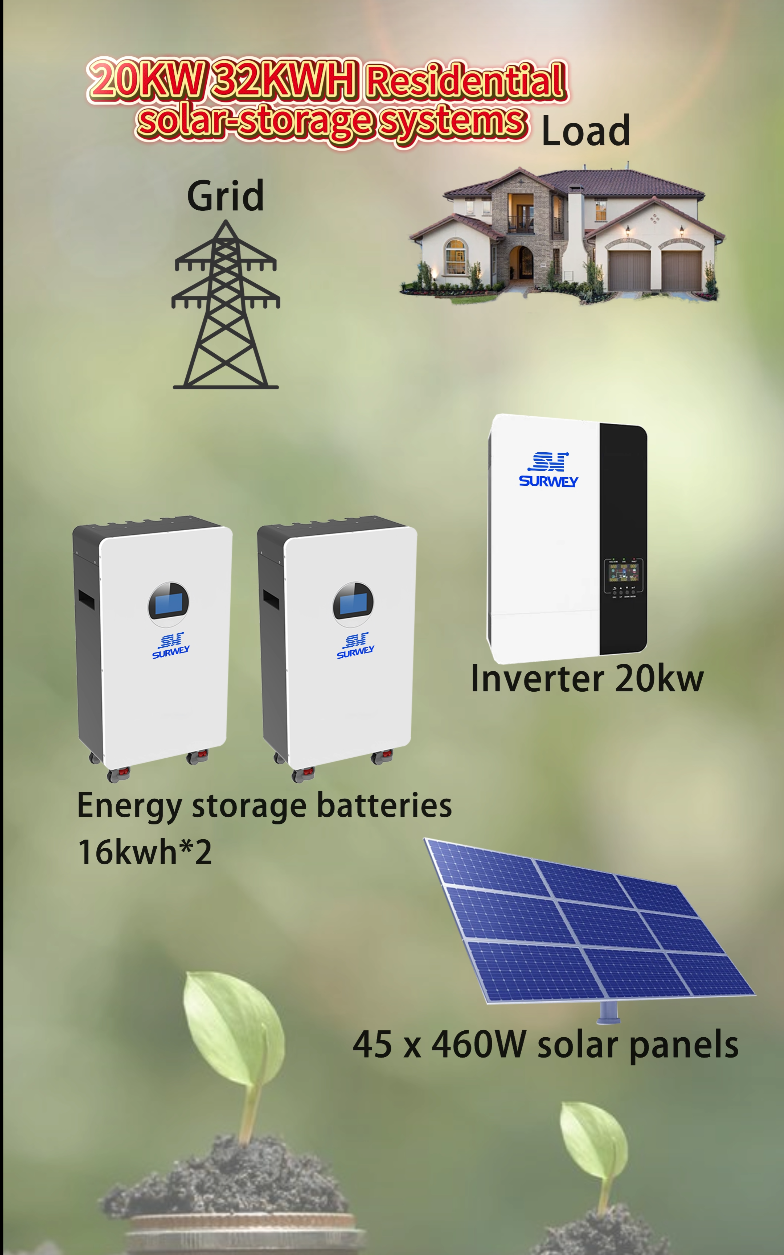
This 20kW/32kWh residential solar-storage system comes with 45×460W solar panels, a 20kW hybrid inverter and two 16kWh batteries. It connects to grid and home loads. Solar energy powers the house first, and surplus energy is stored in batteries. It works in both on-grid and off-grid modes, automatically supplying power during blackouts, ideal for large villas.
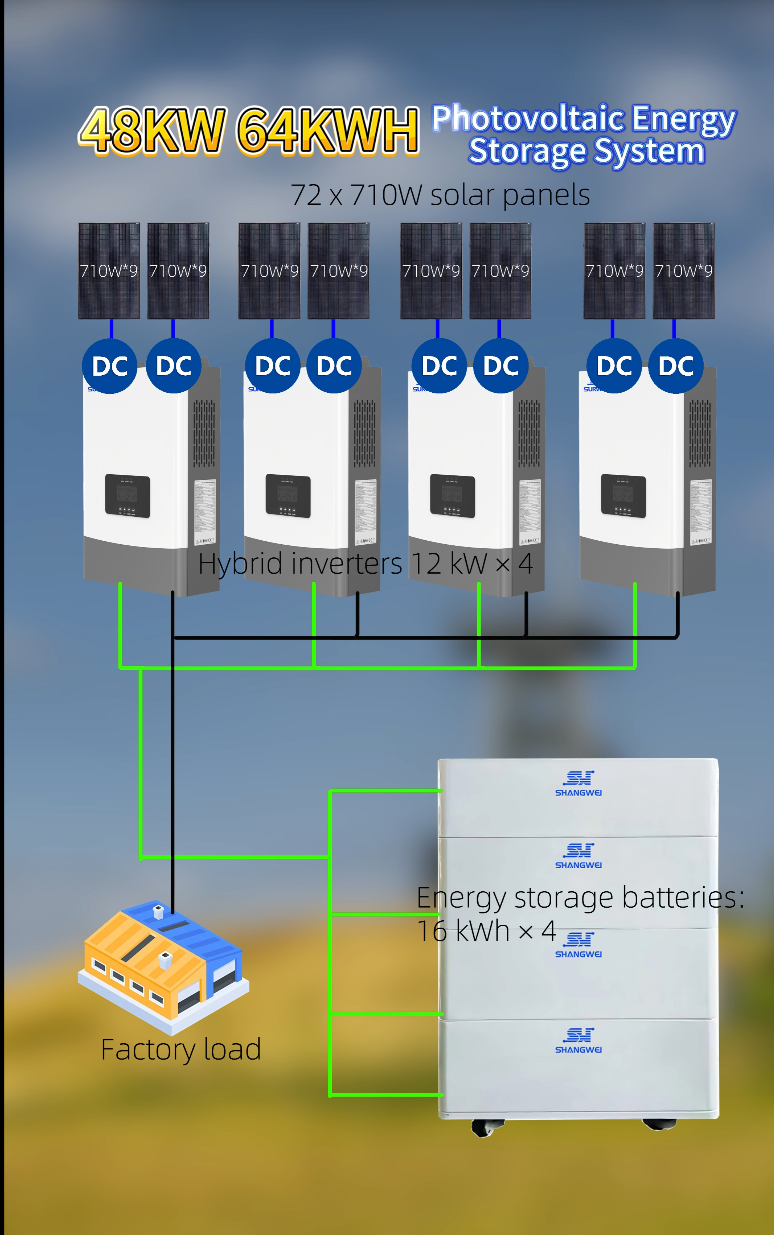
This 48kW/64kWh commercial PV energy storage system is equipped with 72×710W solar panels, four 12kW hybrid inverters and four 16kWh battery packs. Solar power supplies factory loads first, and surplus power is stored in batteries. It supports on-grid and off-grid modes, providing backup power during blackouts, ideal for energy saving and emergency use in small & medium factories.
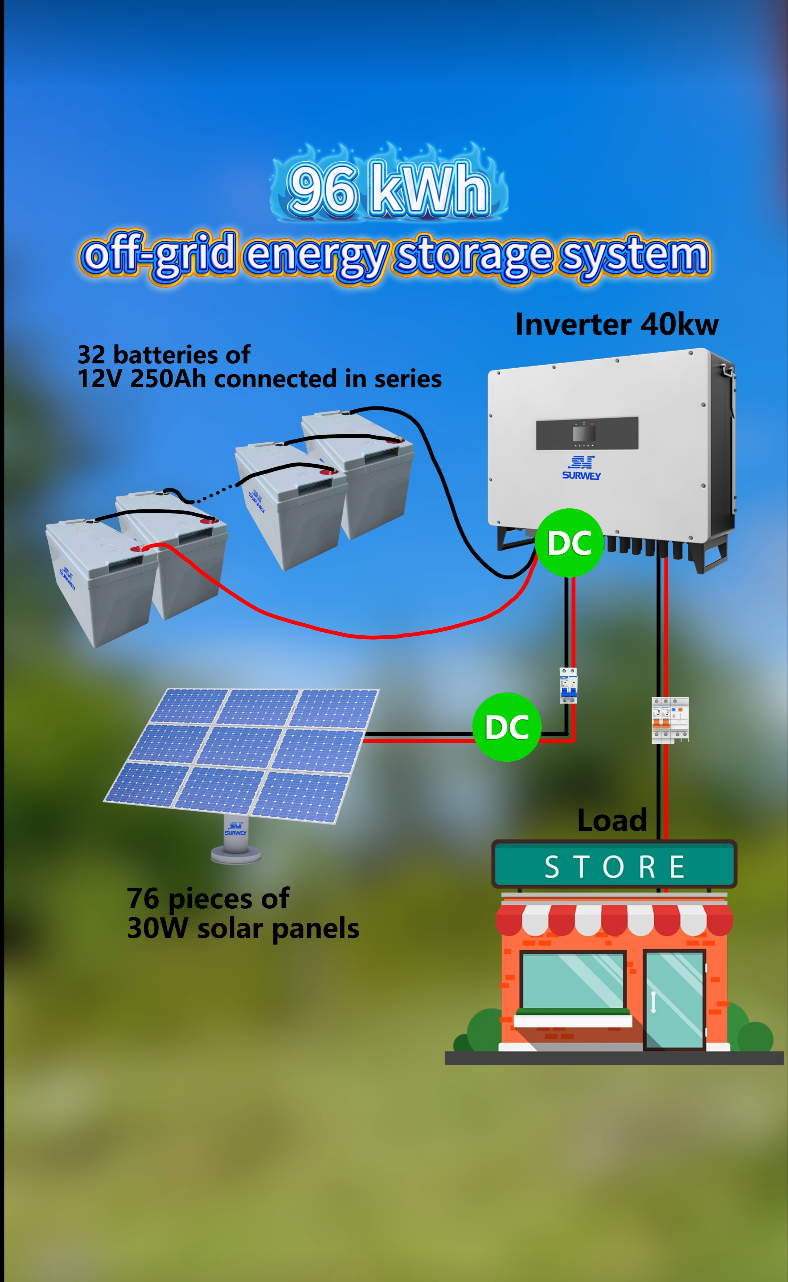
This 96kWh off‑grid energy storage system is designed for stores without grid access☀️
Equipped with a 40kW off‑grid inverter, 76 solar panels harvest solar energy, while 32 series‑connected 12V‑250Ah batteries form the energy storage bank.
DC power from PV flows into the inverter and converts to AC power for store equipment. Fully independent from utility grid, it supports full daily power consumption for remote commercial shops.
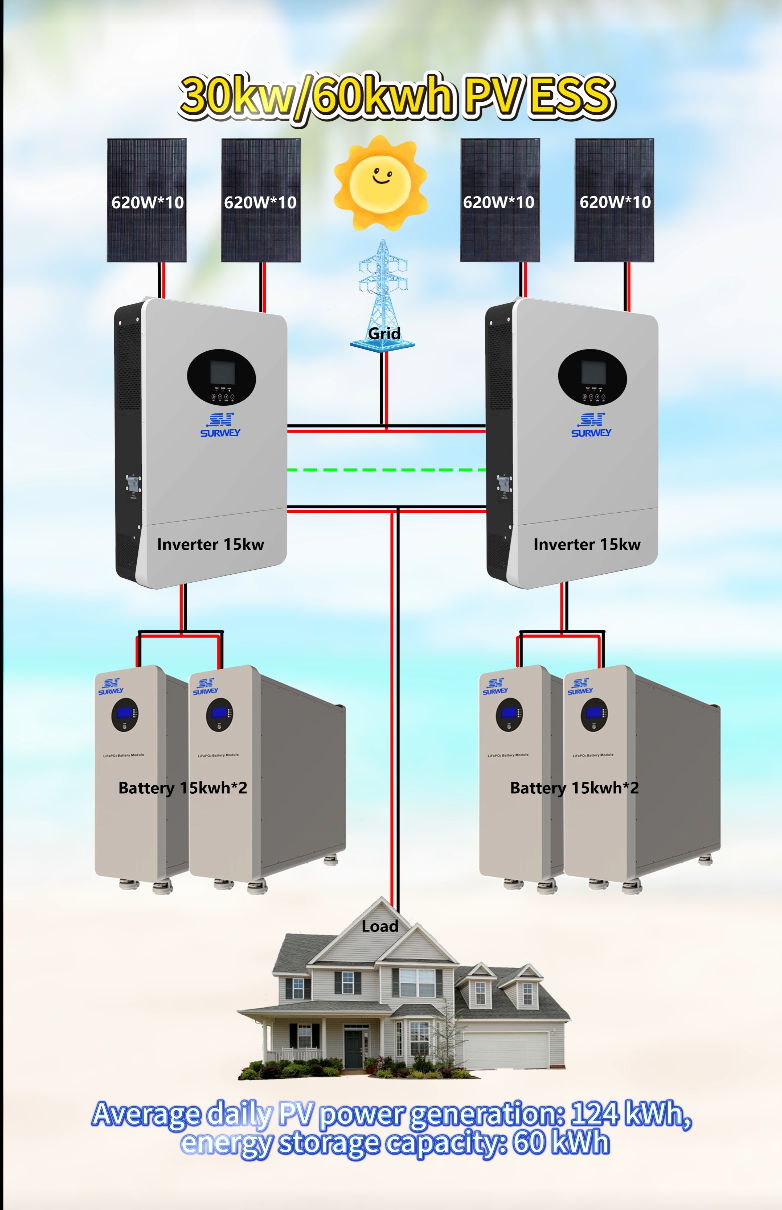
This 30kW/60kWh hybrid PV‑ESS uses 40×620W solar panels. Two 15kW hybrid inverters convert solar DC power, powering home loads and charging four 15kWh batteries. Surplus power is stored; batteries discharge at night or during blackouts. Grid‑connected for supplementary power, it delivers stable residential power supply.


