
Technical Solution for 100kW Off-Grid PV Energy Storage Power Supply System for Small and Medium-sized Building Materials Factory in Egypt
Preface
This project is a PV energy storage power supply project for a small and medium-sized building materials factory in Egypt. Aiming at the pain points of unstable local grid power supply and frequent power outages that directly interrupt building material production and processing, an off-grid high-voltage integrated PV energy storage system is constructed. The system is equipped with 112 pieces of 600W bifacial N-type PV modules, 2 sets of 50kW hybrid inverter/controller units, and rack-mounted high-voltage lithium iron phosphate energy storage batteries with a total capacity of 384kWh, forming a PV-storage combined power supply architecture. During periods without sunlight, high-voltage batteries continuously supply power to factory loads to avoid production losses caused by power outages. The system makes full use of Egypt’s abundant solar resources to realize green and stable independent power supply for the factory.

PV module array layout drawing on one side of the roof of the factory power distribution room
1. Project Overview
This solution builds an off-grid high-voltage PV energy storage power supply system for a small and medium-sized building materials factory in Egypt, with an installed PV capacity of 67.2kW, matched with 384kWh high-voltage energy storage batteries and 2 sets of 50kW hybrid inverter/controller units. The system generates power by solar energy, consumes power on-site during daytime, and stores excess electric energy into high-voltage energy storage batteries. At night or during power failures, batteries discharge to ensure continuous operation of factory equipment, reduce reliance on utility grid power, and stabilize building material production.
2. Overview of Overall System Configuration
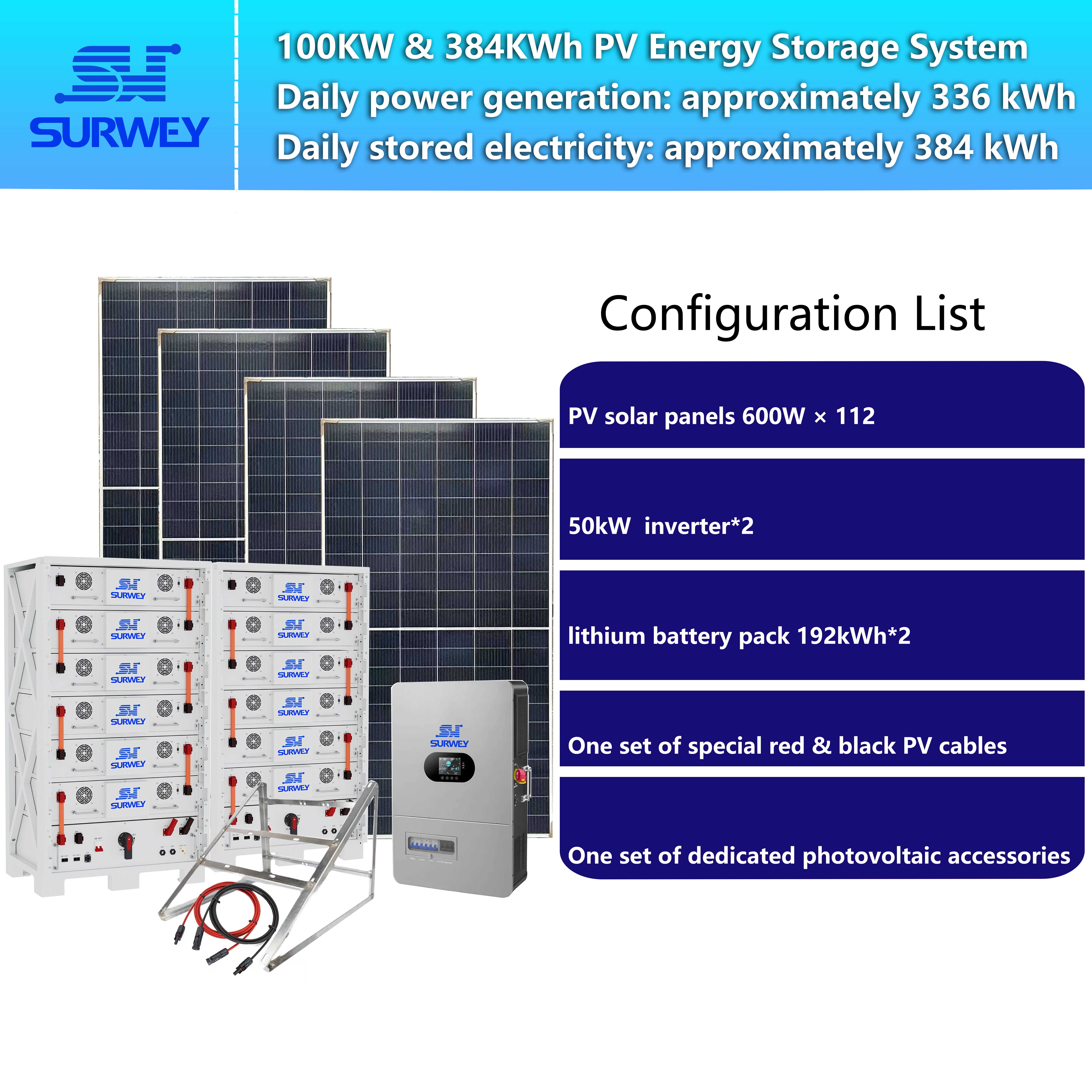
The total installed PV capacity of this PV energy storage system is 67.2kW, consisting of 112 pieces of 600W bifacial N-type PV modules. The string design adopts 14 modules connected in series as one string, with a total of 8 PV strings. 2 sets of 50kW hybrid inverter/controller units are configured; each inverter connects to 4 PV strings, and each string is independently connected to the MPPT port of the inverter. On the energy storage side, rack-mounted high-voltage lithium iron phosphate energy storage batteries with a total capacity of 384kWh are configured, composed of two 192kWh high-voltage battery units stacked together. The DC output voltage range of the battery system matches the 160~800V battery access window of the inverter.
The whole system adopts an off-grid PV-storage architecture. In the daytime, PV modules convert light energy into DC power. Part of the DC power is directly supplied to AC loads in the factory, and surplus electric energy is stored into high-voltage energy storage batteries. When illumination is insufficient, at night or in case of grid faults, high-voltage energy storage batteries release high-voltage DC power, which is inverted into AC power by the hybrid inverter/controller units to continuously supply power to production equipment of the building materials factory. Integrating power generation, high-voltage energy storage and uninterruptible inverter power supply, the whole system adapts to Egypt’s high-temperature and sandstorm climate and meets the power demand for continuous production of the building materials factory.
3. Introduction of Main Equipment
600W Bifacial N-type PV Module
N-type bifacial cell, single module power 600W, receives irradiation on both sides. The back side gains extra power generation by ground reflected light. Under STC, the module has an open-circuit voltage of 47.8V and maximum power point voltage of 40.7V. It features excellent low-temperature performance and sand resistance. The IP68 waterproof junction box adapts to outdoor high-temperature and arid working conditions in Egypt with high long-term operation reliability.
50kW Three-phase Hybrid Inverter/Controller

Integrated with multiple independent MPPT PV charging, battery charge and discharge management and off-grid inverter functions. The battery access voltage range is 160~800V, supporting high-voltage lithium battery connection. It is equipped with complete AC and DC protection and islanding protection functions, with IP65 protection grade. It can realize coordinated control of PV and high-voltage energy storage and stably output power-frequency AC power.
384kWh Rack-mounted High-voltage Lithium Iron Phosphate Energy Storage Battery

Adopts LiFePO4 cells, modular rack floor installation and high-voltage series architecture. The BMS battery management system monitors cell voltage and temperature in real time, with cycle life ≥8000 times and wide operating temperature range. Integrated with over-charge, over-discharge, over-current and short-circuit protection, it can stably store surplus high-voltage DC power generated by PV and support factory load power supply during periods without sunlight.
4. Electrical Verification of PV Strings
The PV array of this project adopts 14 pieces of 600W modules connected in series as one string, with 8 strings in total. Each 50kW inverter connects to 4 strings. Open-circuit voltage of one module under STC: 47.8V. Open-circuit voltage of one string = 14×47.8V=669.2V; Maximum power point voltage of one string =14×40.7V=569.8V. The MPPT operating voltage range of the inverter is 150~850V, and the battery side voltage range is 160-800V. Low temperature in winter in Egypt will raise the open-circuit voltage of modules. Verified by temperature coefficient, the string open-circuit voltage under extreme low-temperature conditions is still lower than the maximum DC input 1000V of the inverter and higher than the MPPT minimum start-up voltage 150V. The string operating voltage falls within the optimal tracking range of the inverter MPPT.
Operating current of single module: 14.86A, operating current of single string:14.86A. The maximum allowable input current of single MPPT channel of the inverter meets this current level. Every 4 strings connect to one 50kW inverter, corresponding to PV power of 33.6kW, which is lower than the 50kW PV access capacity of the inverter with sufficient power margin. The string voltage and current are within the allowable operating range of the inverter, without risks of overvoltage and overcurrent. MPPT can stably track the maximum power to ensure high-efficiency power generation of the PV array.
The average daily power generation of the system is 336kWh. The fully charged high-voltage energy storage can store 384kWh of electricity to store surplus PV power in daytime for night production.
5. System Operating Principle
The whole system is an off-grid high-voltage PV energy storage system, operating under two working conditions: sufficient illumination in daytime, low illumination / night time.
Video: Animation demonstration of system operating principle
When illumination is sufficient in daytime, 600W PV modules receive solar radiation and convert light energy into DC power. 8 PV strings are connected to the MPPT ports of two 50kW hybrid inverter/controller units respectively. The internal MPPT modules of the hybrid inverter/controller units track the maximum power point of the PV array in real time to extract maximum DC power. The DC power is divided into two paths: the first path is directly sent to the inverter unit, inverted into stable power-frequency AC power to supply AC loads such as factory production equipment and lighting, meeting real-time power consumption of the factory with priority; the second path is surplus DC power, which charges the 384kWh high-voltage lithium iron phosphate energy storage battery through the built-in charger of the inverter, storing electric energy in the form of high-voltage DC power in the battery pack until the battery reaches full charge.
When it is cloudy, there is no sunlight in the evening, or the illumination intensity is insufficient and PV output cannot meet the factory load demand, the system switches to battery discharge mode. The high-voltage energy storage battery releases high-voltage DC power to the hybrid inverter/controller unit, which inverts high-voltage DC power into stable AC power to continuously supply power to factory electrical equipment. The BMS battery management system monitors the voltage, current and temperature of the high-voltage battery pack in real time to protect battery safety, and communicates with the inverter to coordinately control charge and discharge power and prevent over-charge and over-discharge. The whole system automatically and smoothly switches among PV direct power supply, energy storage charging and energy storage discharging modes without manual intervention, ensuring uninterrupted power supply for the factory.
6. Available Load Power and Continuous Power Supply Duration of the System
Two sets of 50kW hybrid inverter/controller units are configured on the AC side of the system. The maximum sustainable AC load power of the system is 100kW, which can cover various production and auxiliary electrical equipment of the building materials factory including crushing equipment, mixers, material conveying motors, factory lighting and control distribution cabinets. The total available electric energy of energy storage is 384kWh. The backup power supply duration is calculated according to the actual production load scenario of the building materials factory:
- Continuous factory load of 40kW (mainly low-load production conditions including small mixing auxiliary machines, material conveying equipment, workshop lighting, monitoring and control instruments): 384÷40=9.6h. It can support nearly 10 hours of continuous operation of basic factory production, material transportation and workshop lighting, meeting the basic production demand for the whole night.
- Continuous factory load of 60kW (including medium and small crushing units + conveying equipment + factory lighting, conventional factory production load): 384÷60=6.4h. It covers continuous production period from evening to night and ensures no interruption of building material processing procedures.
- Continuous factory load of 80kW (multiple crushing and mixing equipment put into operation simultaneously, peak half-load production condition of the factory): 384÷80=4.8h. It can cope with short-time high-intensity production tasks at night.
- Full load of 100kW (all main production units, conveying equipment and lighting systems of the factory fully turned on, full-load production of the whole factory): 384÷100=3.84h. It can serve as short-time emergency backup power supply to respond to sudden power outages, ensure safe shutdown of key equipment and avoid equipment damage and raw material scrapping.
PV generates power continuously in daytime, which can supply loads and recharge high-voltage batteries at the same time to extend the overall continuous power supply duration. Even in case of consecutive cloudy days, the energy storage capacity can still maintain basic production power consumption of the factory.
7. System Protection and Reliability Design
All equipment of the system is equipped with multi-layer safety protection mechanisms. On the PV side, modules have anti-PID and anti-hotspot capabilities, and DC protection is configured for each string. The 50kW hybrid inverter/controller integrates DC reverse connection protection, AC overcurrent protection, overvoltage protection, islanding protection, insulation monitoring and other protection functions. The high-voltage energy storage battery has a built-in BMS management system to perform equalization management on the high-voltage series battery pack, monitor the overall high-voltage voltage and single cell status in real time, and trigger fault protection such as over-charge, over-discharge, over-temperature and short circuit to ensure safe and stable operation of the high-voltage battery system.


Indoor layout drawing of important system equipment
The equipment protection grades adapt to Egypt’s outdoor environment. The inverter has IP65 protection, and the battery cabinet has IP20 protection, which can be placed in a simple power distribution room to resist sand and high temperature. The design life of the whole system is 25 years, and the cycle life of energy storage batteries ≥8000 times. It can operate stably for a long time under high-temperature environment in Egypt, reduce operation and maintenance workload, and adapt to the long-term uninterrupted production demand of the building materials factory.
Conclusion
This high-voltage PV energy storage solution for small and medium-sized building materials factory in Egypt adopts a 67.2kW PV array matched with 384kWh high-voltage energy storage batteries and 2 sets of 50kW hybrid inverter/controller units. Electrical parameters are reasonably matched, string voltage and current fall within the operating range of the inverter, and the system has sufficient safety margin.
The average daily power generation of the system is 336kWh, and the energy storage can store 384kWh of electricity. It can support a maximum AC load of 100kW and provide backup power supply ranging from several hours to nearly 10 hours according to different factory electrical loads. Making use of Egypt’s abundant solar energy resources, the solution realizes electric energy storage and uninterrupted power supply through high-voltage energy storage architecture, effectively solves the problems of unstable grid power supply and production shutdown caused by power outages in the factory, reduces utility power purchase cost, helps the factory achieve low-carbon production. With mature technology and high equipment reliability, the solution adapts to local climatic conditions and has good economic and practical value.


