
Inner Mongolia Reservoir Off-Grid PV Energy Storage System Technical Solution
I. Project Overview
(1) Application Scenario
(2) Design Parameters
Photovoltaic configuration: 6 × 550W modules, total installed capacity 3,300W
Control and inverter equipment: 3,000W integrated MPPT inverter-controller unit
Energy Storage Configuration: 51.2V 300Ah, 15.36kWh lithium iron phosphate battery
Operational Metrics: Average daily power generation 16.5kWh, average daily energy storage 15kWh
II. List of Overall System Configuration
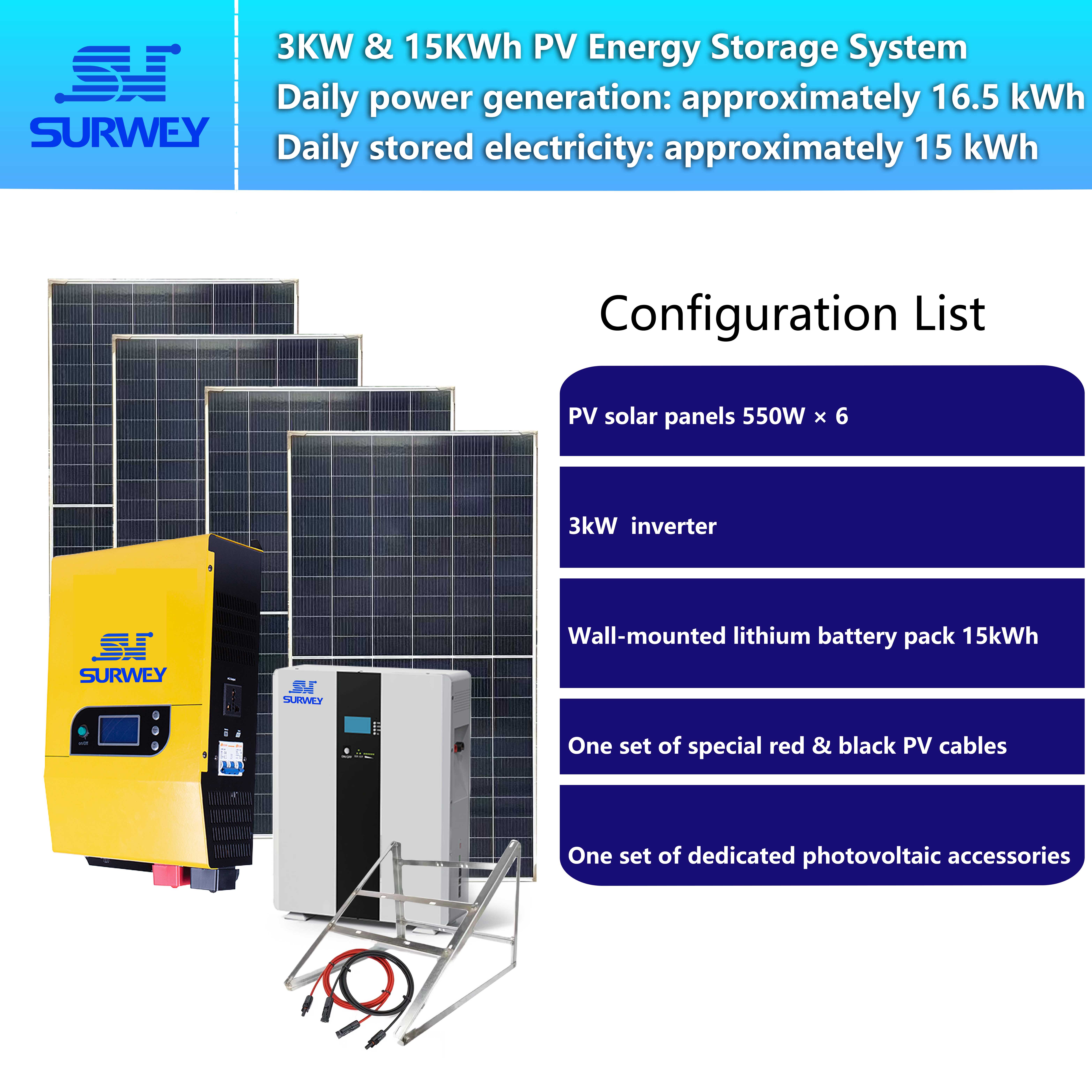
| Equipment Categories | Model and Specifications | Quantity | Function |
|---|---|---|---|
|
|
|
6 pieces | Conversion of light energy into direct current |
|
|
|
1 unit | Charging Control + DC Inverter Output |
|
(15.36kWh ) |
|
1 set | Storing surplus electricity |
|
|
Photovoltaic mounting systems, DC circuit breakers, photovoltaic cables, AC circuit breakers, monitoring modules | 1 set | Circuit connections, safety protection, status monitoring |
III. Electrical Matching Calculations for Photovoltaic Arrays
(1) Verification of the Number of Modules per String
- A single module in series: Voc = 46.32 V, which is below the minimum MPPT start-up voltage and therefore cannot charge normally;
- Two modules in series: insufficient voltage margin; prone to operational abnormalities following voltage rise due to low winter temperatures;
- Three modules in series: Voc per string = 138.96 V, Vmp = 123.36 V; falls entirely within the inverter’s voltage range;
- Four panels in series: Voc = 185.28 V, which exceeds the inverter’s upper limit, posing a risk of damage due to overvoltage; this configuration is prohibited.
(2) Array Series-Parallel Configuration
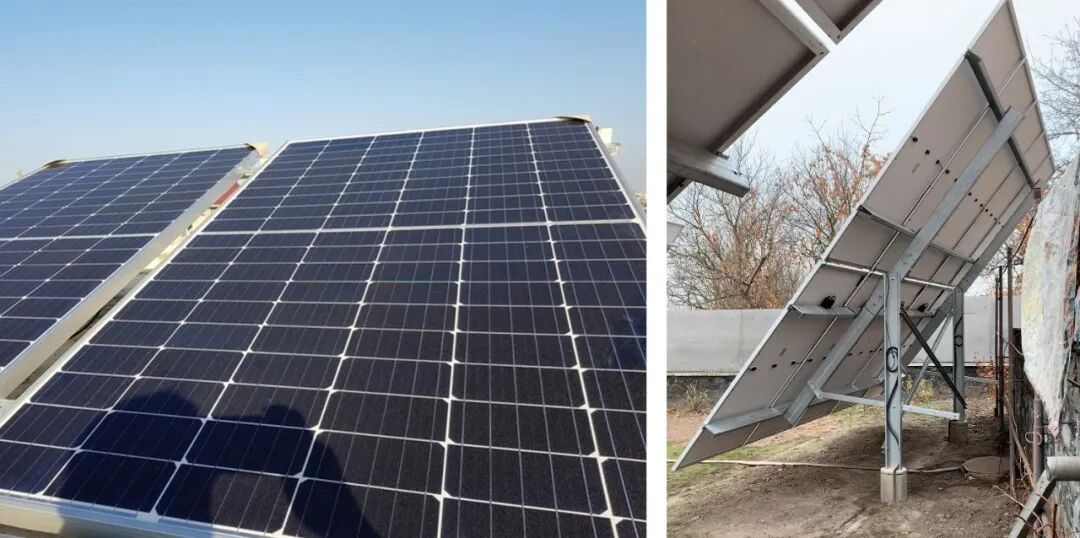
- The operating current for a single string is 12.89 A; the total current for two strings connected in parallel is 25.78 A, which is below the inverter’s maximum MPPT input current, ensuring ample redundancy;
- Low temperatures in Inner Mongolia during winter increase the modules’ open-circuit voltage; however, the peak voltage for this configuration remains below 180 V, eliminating any risk of overvoltage.
IV. Inverter-Controller Combination Unit
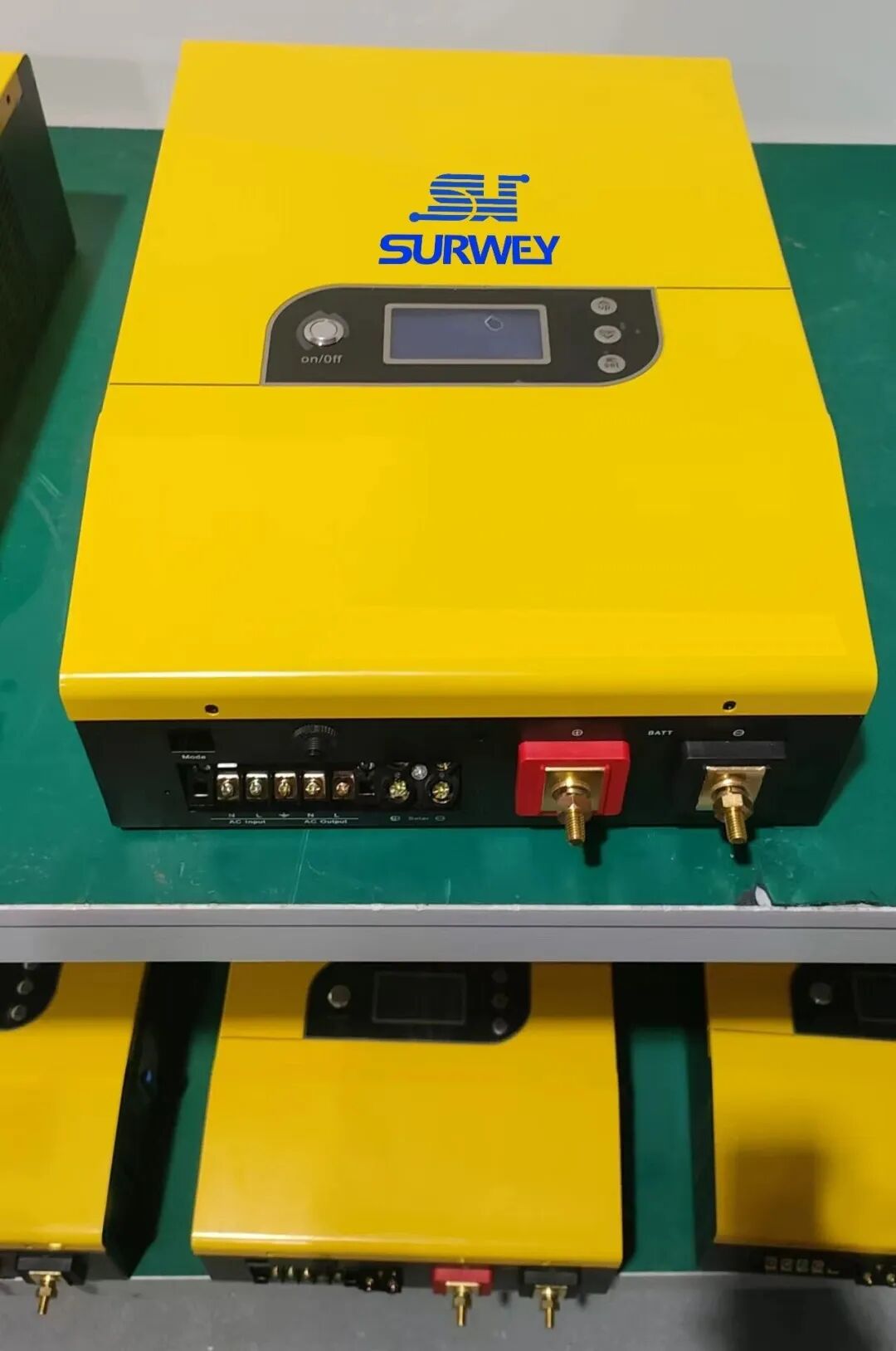
3000W All-in-One Solar Inverter and Controller
This system is equipped with a 3000W integrated inverter-controller unit, which combines an MPPT solar charge controller, an inverter module and a battery management unit, and is compatible with a 51.2V energy storage battery system.
The inverter’s MPPT input voltage range is 60–180 V DC. When three modules are connected in series, the open-circuit voltage (Voc) is 138.96 V and the operating voltage (Vmp) is 123.36 V, perfectly matching the voltage of this photovoltaic array; it outputs a pure sine wave 220 V AC with a stable waveform, ensuring no damage to precision hydraulic equipment such as water pumps and water level monitors.
The unit automatically switches between three operating modes: direct PV supply, battery inversion and mains backup, with a switching time of less than 10 ms and fully automated, unattended operation throughout. It features built-in basic fault warning functionality and can synchronise with a monitoring module to upload operational data, making it suitable for unattended use in remote reservoir environments. The unit operates within a temperature range of 0–40 °C and functions reliably with simple ventilation in the equipment room.
V. Technical Specifications of the Energy Storage System
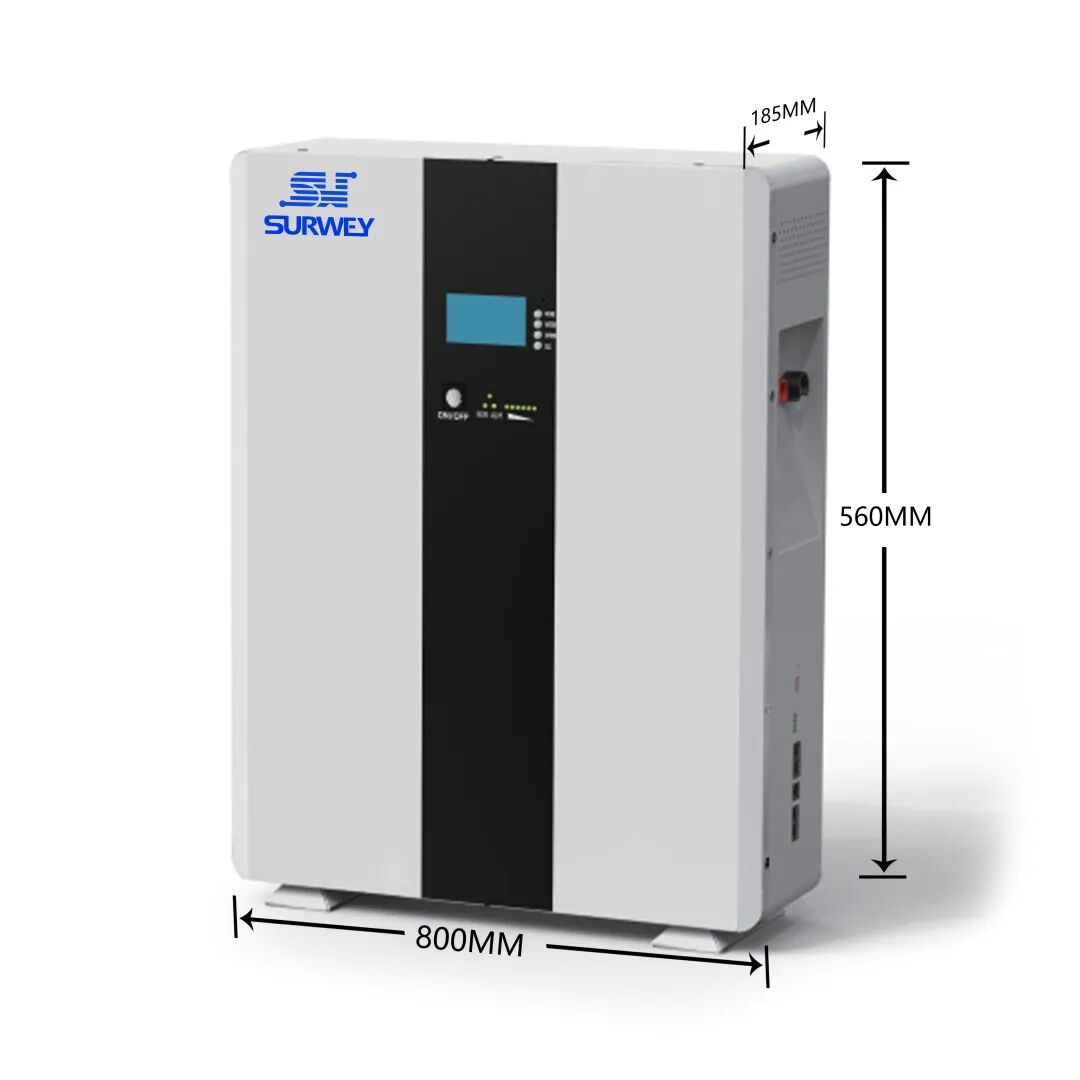
- Protection configuration: Built-in BMS (Battery Management System) offering multiple protection features against overcharging, over-discharging, overcurrent, short circuits, and extreme temperatures; charging cut-off at 58.4V, discharging cut-off at 44.8V;
- Performance advantages: Battery cycle life ≥ 8,000 cycles, enabling long-term stable charge and discharge cycles; continuous discharge current meets the full-load operating requirements of a 3kW inverter;
- Monitoring functions: Supports 485/CAN communication, allowing remote monitoring of battery charge level, cell temperature and charge/discharge status, making it suitable for unattended outdoor applications.
VI. System Energy Operation Logic
Energy Balance
The system generates an average of 16.5 kWh per day. After the load has been prioritised for power consumption, 15 kWh is stored daily in the energy storage batteries, forming a complete energy closed loop.
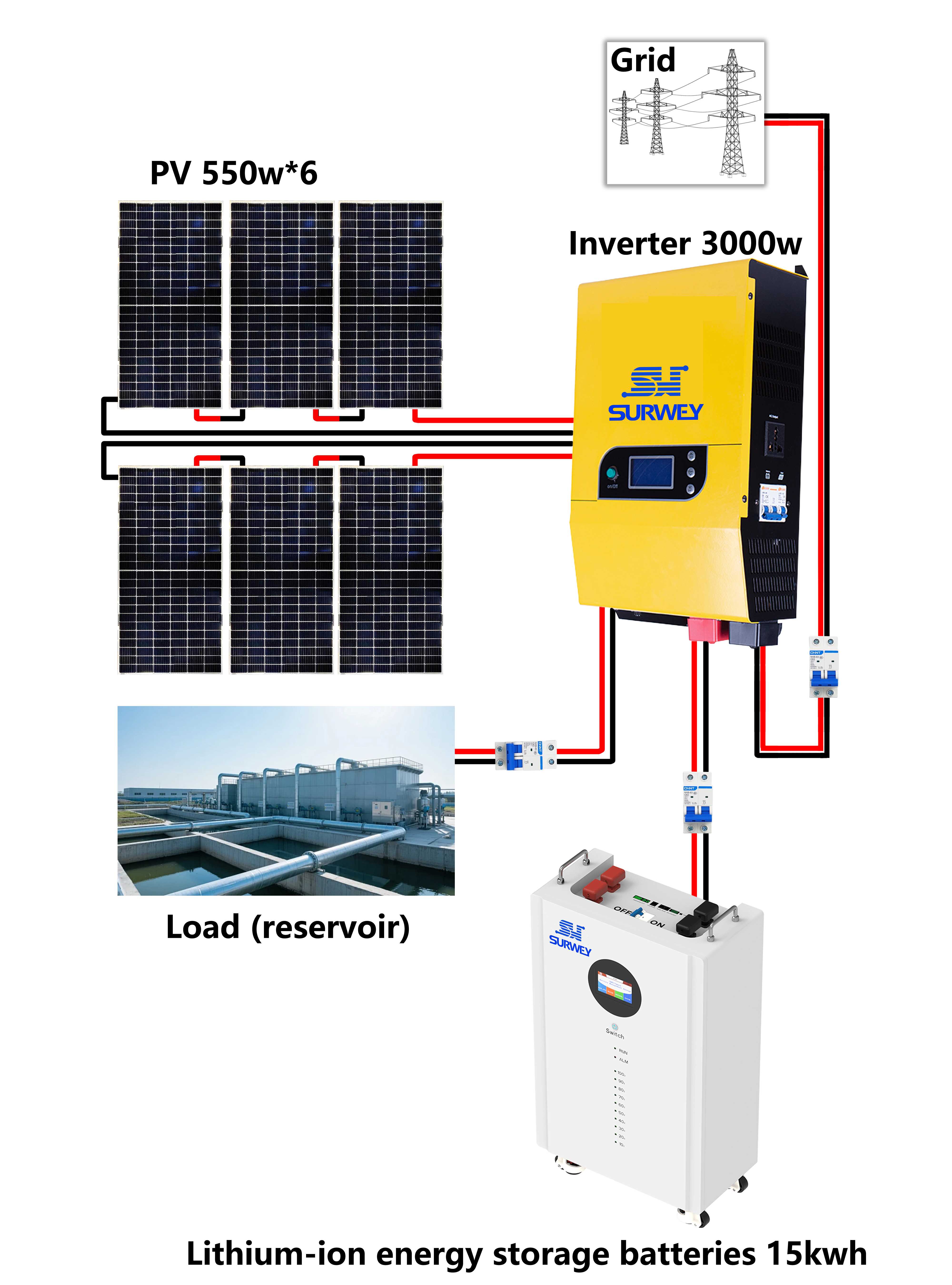
Three automatic operating modes
☀️ PV Priority Mode (during daylight hours with ample sunlight): DC power from the photovoltaic system is optimised via MPPT (Maximum Power Point Tracking); a portion is inverted into 220V AC power to supply the water storage equipment, whilst the remaining power is used to charge the lithium-ion battery.
🌙 Energy Storage Discharge Mode (at night / on overcast or rainy days): When there is no effective photovoltaic power generation, the energy storage battery outputs DC power, which is converted to AC via the all-in-one inverter to ensure the uninterrupted operation of water pumps and monitoring equipment.
🔌 Mains Backup Mode (extreme conditions such as prolonged overcast or rainy weather): The inverter is equipped with a dedicated mains connection port; when sunlight is insufficient for an extended period, it automatically switches to mains power to supplement the system, whilst simultaneously recharging the battery to prevent system shutdowns.
VII. Design Adapted to the Environmental Conditions of Inner Mongolia
- Photovoltaic modules: Operating temperature range -40°C to +85°C; resistant to wind and sand, hail and power degradation; suitable for the harsh, cold and dusty environments of northern regions;
- Energy storage batteries: Operating temperature range -20°C to 60°C; installation is planned in an insulated indoor equipment room to minimise capacity degradation caused by low temperatures;
- Integrated inverter-controller unit: Operating temperature 0–40°C; the equipment room is fitted with ventilation systems to prevent derating due to high summer temperatures;
- Outdoor cabling: Photovoltaic connection terminals and cables are sealed and treated to prevent rust, providing protection against erosion and oxidation caused by wind and sand.
VIII. Summary
This proposal provides a bespoke design for a complete photovoltaic energy storage system, tailored to the site conditions at the Inner Mongolia reservoir, which are characterised by low temperatures, frequent sandstorms and the absence of mains electricity.
Voltage calculations determined the optimal configuration of the photovoltaic array—comprising three modules in series, with two such strings connected in parallel—paired with a 3 kW integrated inverter-controller unit and a 15.36 kWh energy storage battery with a cycle life of ≥8,000 cycles. The system’s average daily power generation and energy storage capacity are tailored to meet the on-site load requirements.
The entire system is fully adapted to the region’s specific climatic conditions, operates fully automatically without the need for manual supervision, and can serve as a standardised technical reference for similar off-grid photovoltaic power supply projects at water conservancy facilities in northern China.


