
Integrated Grid-Tied & Off-Grid PV Energy Storage Solution for a Singapore Detached Villa (16.38kW)
Preface
"To meet the power consumption demands of private detached villas in Singapore, and considering Singapore’s equatorial location with abundant, evenly distributed annual sunlight and no frigid weather, Shangwei New Energy has customized and delivered a PV-storage solution perfectly suited for residential self-consumption with backup power storage. This system combines on-site solar power generation with energy storage for emergency power supply."
📌I. Project Overview
(1) Project Background & Application Scenario
Core requirements of the property owner: Install PV modules on the rooftop to generate electricity for self-use; store excess daytime solar power in batteries to reduce mains grid electricity consumption at night. Supported by hybrid grid-tied inverters, the system enables seamless switching between grid-tied and off-grid modes. It instantly switches to off-grid operation upon mains power failure, ensuring uninterrupted power supply for villa appliances, central air conditioning and security equipment. The solution delivers both electricity cost savings, revenue generation and reliable power stability.
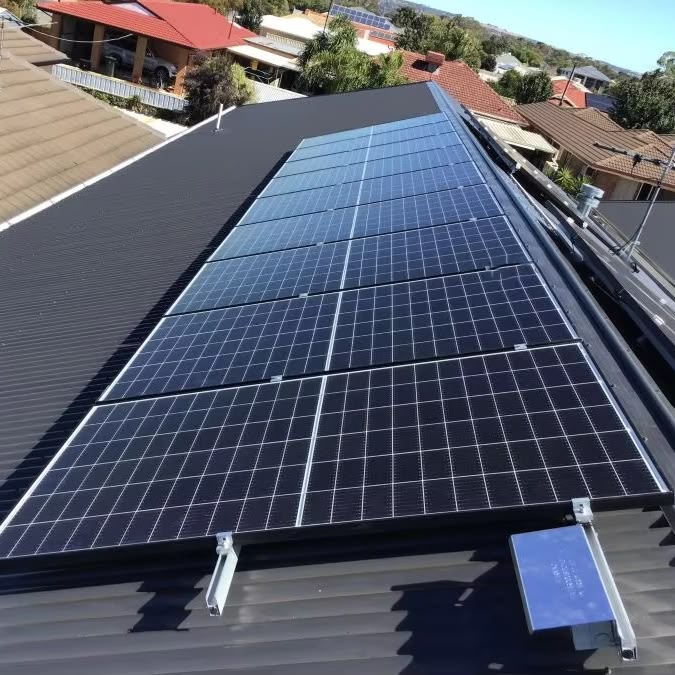
Construction Site Photos of PV Panels
(2) Overall System Configuration
- PV Array: 28 pieces of 585W monocrystalline double-glass PV modules; 7 modules connected in series per string, 4 strings in total connected to inverters
- Inverter Unit: 2 sets of 11kW single-phase hybrid grid-tied all-in-one inverter & controller
- Energy Storage Unit: 3 sets of 51.2V 300AH wheeled lithium energy storage batteries (15.36kWh per unit)
- Operational Performance Indicators: Average daily power generation of the system: 82kWh; average daily stored energy: 45kWh
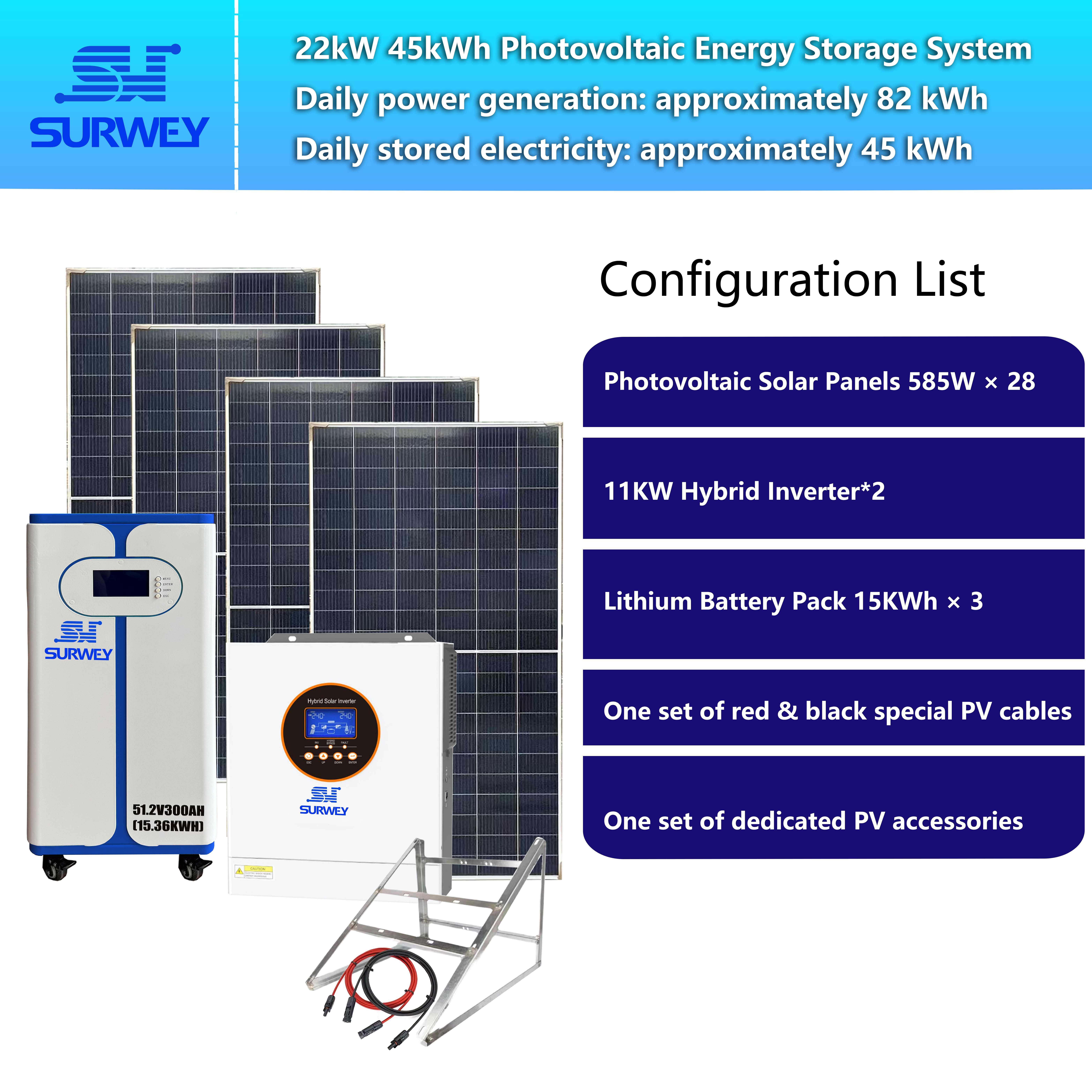
Configuration Diagram of 22kW/45kWh PV Energy Storage System
☀️II. PV Array Selection & Electrical Verification
(1) Core Parameters of PV Modules
Model SW10T-144HBD 585W monocrystalline double-glass PV modules are adopted. Key parameters under Standard Test Conditions (STC): Peak power: 585W; Open-circuit voltage Voc=51.85V; Maximum power point voltage Vmp=44.06V; Module withstand voltage: 1500V; Operating temperature range: -40℃ ~ 70℃, compatible with Singapore’s year-round high-temperature environment.
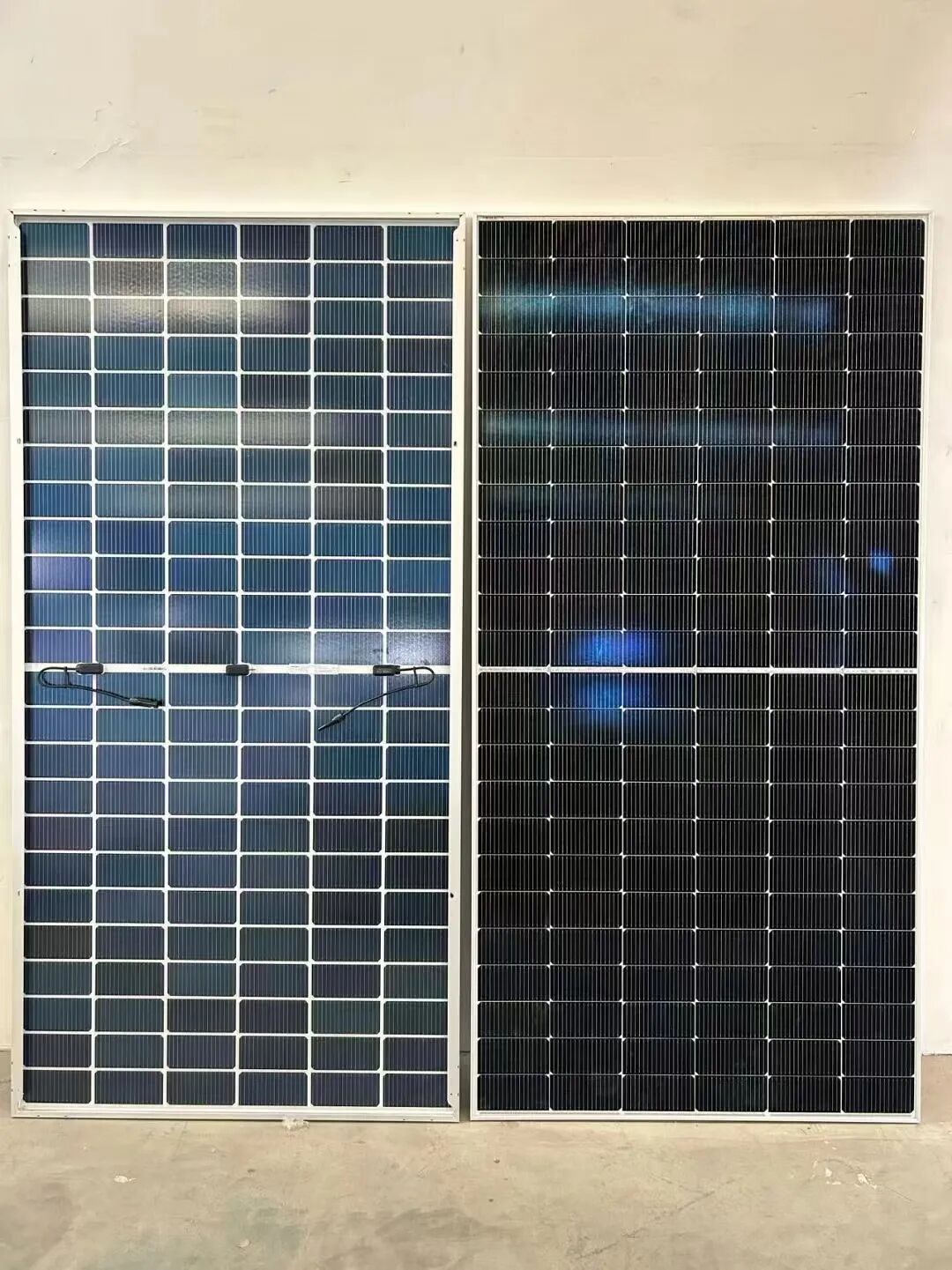
Diagram of 585W Solar PV Module
(2) String Layout & Voltage Verification
7 modules are connected in series to form one PV string, with 4 strings evenly allocated to two inverters. Single-string open-circuit voltage = 7 × 51.85V = 362.95V The inverter’s MPPT operating voltage range is 60VDC ~ 500VDC. 362.95V falls within the normal MPPT operating window of the inverter, featuring compliant voltage matching. The inverter can continuously track the maximum solar power without the string falling out of the MPPT range. Single-string operating voltage = 7 × 44.06V = 308.42V, also within the MPPT range to guarantee full power generation efficiency.
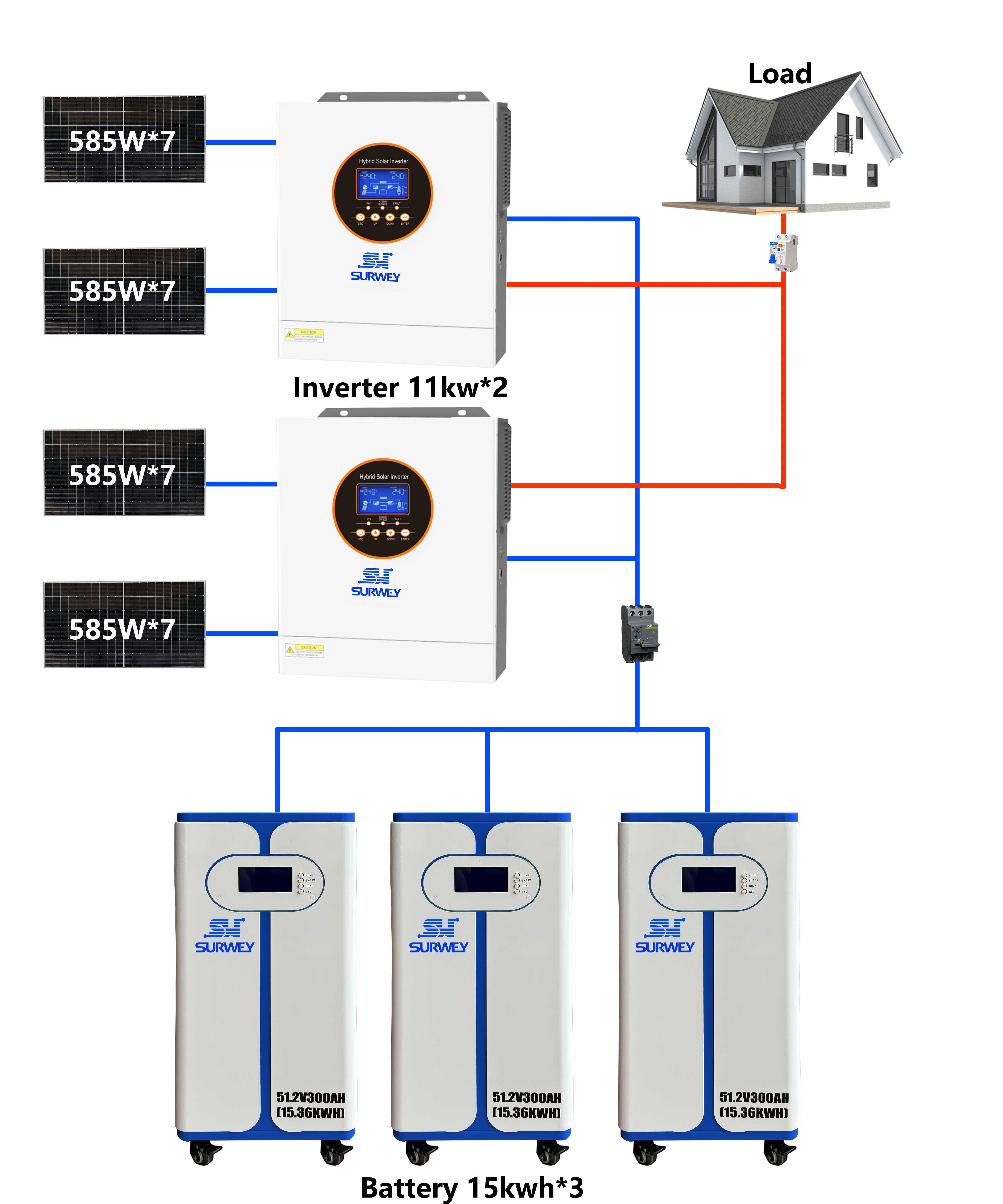
Topology Diagram of 22kW/45kWh PV Energy Storage System
(3) Installed Capacity Calculation
Total installed PV capacity = 28 × 585W = 16380W = 16.38kWp Combined with Singapore’s solar irradiance conditions, the system generates an average of 82kWh daily, equivalent to an effective sunshine duration of approximately 5.01 hours, consistent with Singapore’s annual average effective sunshine hours, proving reasonable power generation design.
(4) Environmental Adaptation Advantages of PV Modules
The SMBB layout and double-glass structure endow the modules with PID attenuation resistance: the first-year attenuation rate is 1%, followed by a linear annual attenuation rate of 0.4%, with a 30-year power output warranty. The IP68 split junction box delivers excellent waterproof, moisture-proof and salt-fog corrosion resistance, suitable for long-term operation in Singapore’s rainy coastal climate.
⚡III. Hybrid Grid-Tied Inverter Configuration Scheme
(1) Inverter Selection
2 sets of 11kW single-phase hybrid grid-tied all-in-one inverter & controller are deployed. Each unit features a rated AC output power of 11kW, with a total inverter power of 22kW, capable of simultaneously driving high-power loads including villa central air conditioning, kitchen appliances and vehicle charging piles.
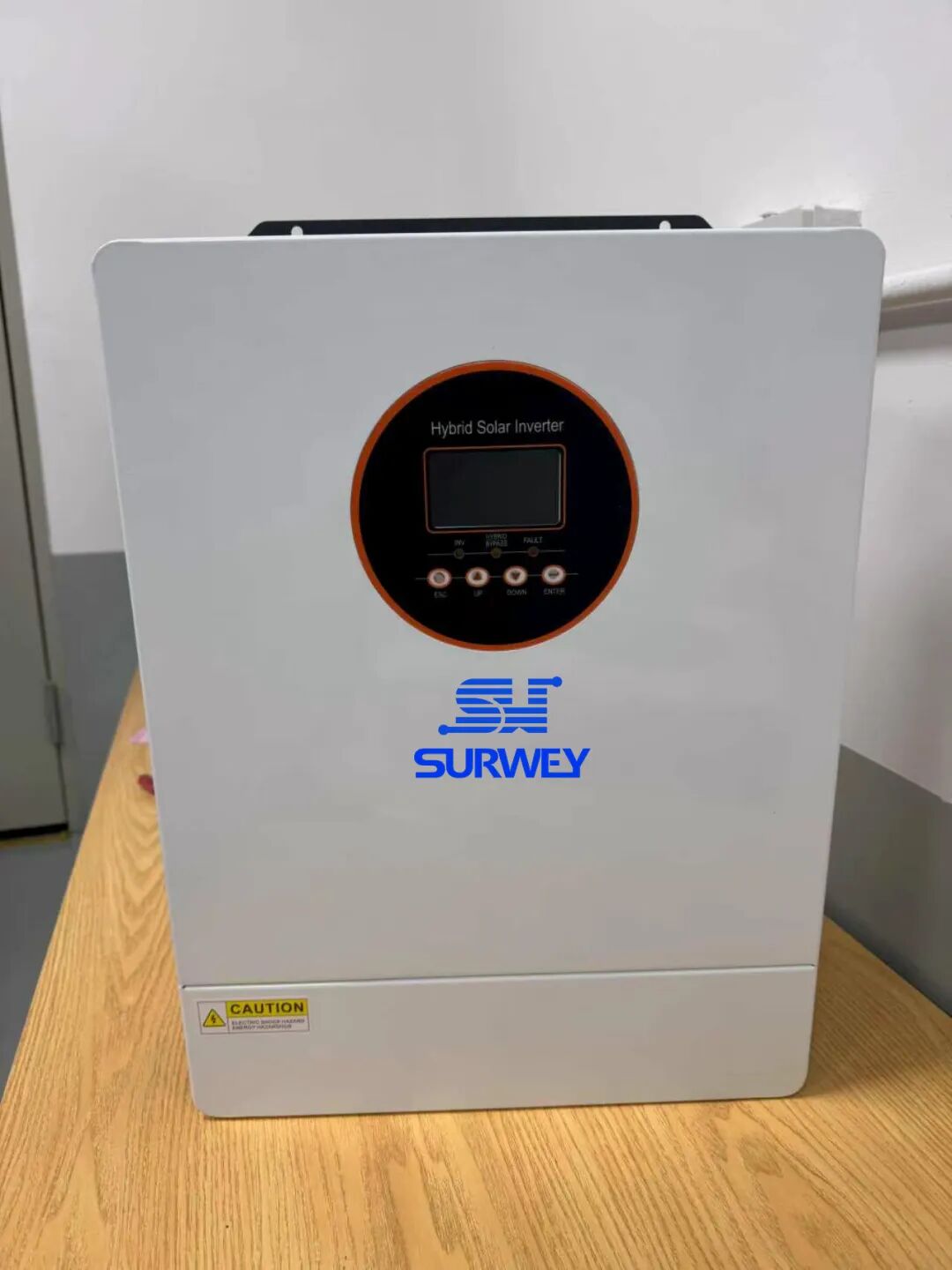
11kW Inverter
Core Inverter Advantages
- Pure sine wave output; millisecond-level switching between grid-tied and off-grid modes for zero power interruption during outages
- MPPT voltage range of 60~500VDC, perfectly matching the voltage grade of 7-module PV strings
- Supports battery-free startup and automatic lithium battery activation, with excellent communication compatibility with battery BMS
- Built-in three-stage lithium battery charging strategy; charging cut-off voltage of 58.4V fully matches the energy storage battery charging parameters
- Equipped with WIFI and GPRS remote communication; mobile APP enables remote real-time monitoring of power generation, State of Charge (SOC), load power and other data
(2) String Allocation Logic
4 PV strings are evenly distributed to two inverters, with each inverter connected to 2 PV arrays. This balances the load of the two devices, avoiding overload on a single inverter and improving overall system operational stability. The inverter’s maximum conversion efficiency reaches 97%, delivering extremely low energy loss under full-load operation.
🔋IV. Energy Storage Battery System Design
(1) Battery Specification Parameters
Single energy storage battery: 51.2V 300AH, usable capacity 15.36kWh; continuous charging current range: 0~150A; continuous discharging current range: 0~200A. Equipped with full BMS protection (overvoltage, undervoltage, overload, short circuit, overtemperature), with a cycle life of ≥6,000 times. 3 battery units are connected in parallel for a total energy storage capacity of 3 × 15.36 = 46.08kWh. The scheme sets a daily energy storage limit of 45kWh, reserving a 1.08kWh buffer capacity to prevent accelerated battery aging caused by long-term full-charge static storage and extend the service life of the energy storage system.
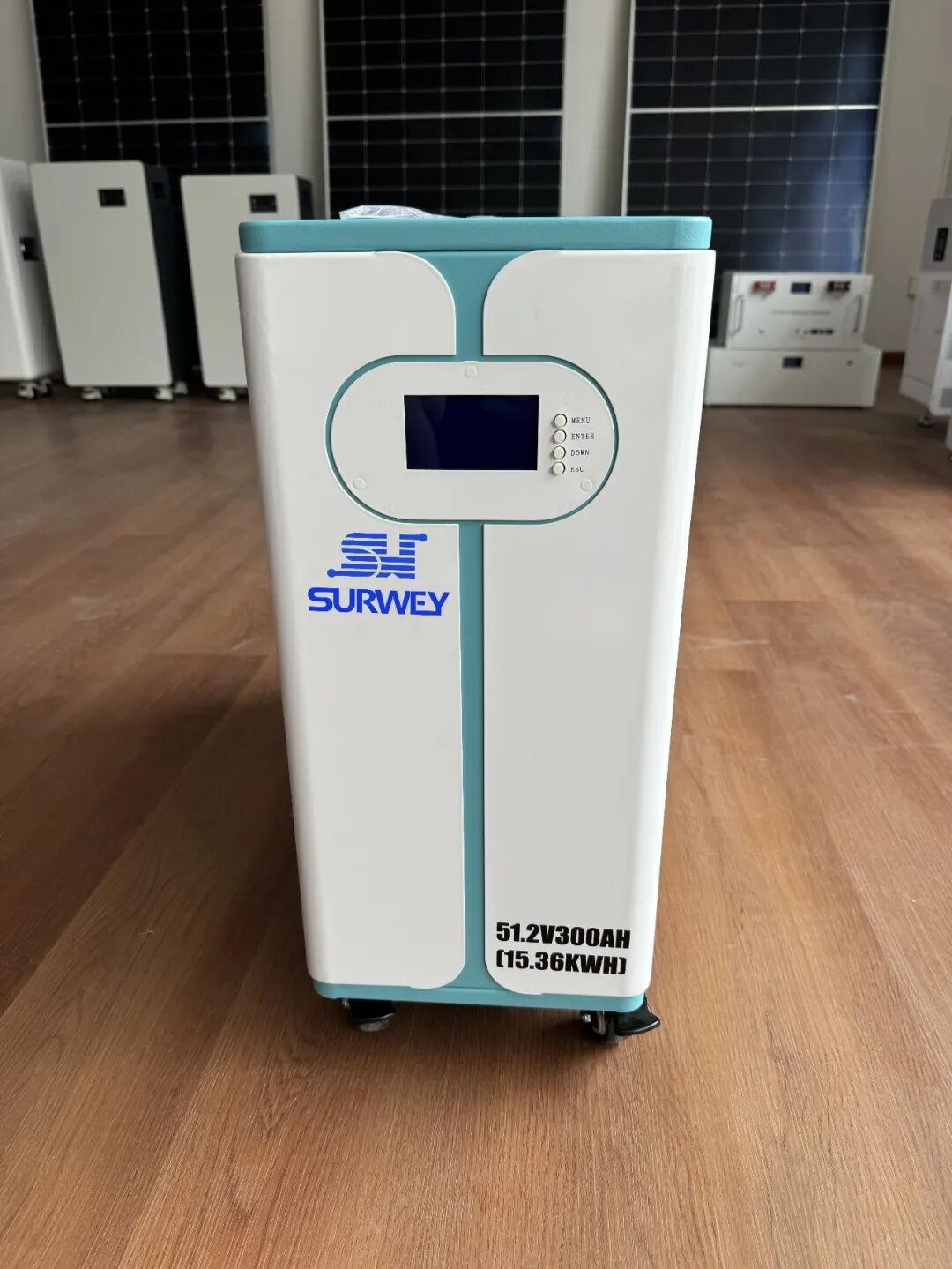
15kWh Energy Storage Lithium Battery
(2) Voltage Matching Logic
The inverter’s nominal DC voltage is 48VDC, while the battery’s nominal voltage is 51.2V; both share a charging cut-off voltage of 58.4V, achieving fully compatible charge and discharge logic. Excess solar power generated during the daytime charges the batteries via the inverter. Charging stops once stored energy hits the 45kWh threshold, and surplus electricity is fed into the Singapore power grid for revenue. When solar output declines in the evening, the batteries discharge via the inverter to supply 230V AC power to villa loads. Once the battery charge is depleted, the system automatically switches back to mains power supply.
(3) Energy Storage Layout Features
Cabinet-style wheeled batteries are fitted with universal casters for easy maintenance and transportation. An optional APP monitoring module enables real-time tracking of cell voltage, remaining capacity and cell temperature. RS485 and CAN communication interfaces are available for connection to the EMS Energy Management System to realize coordinated scheduling of the entire system. The operating temperature range of the batteries is -20℃ ~ 60℃, allowing stable operation when placed in the villa’s indoor mechanical room.
📊V. Calculation Table of System Load Duration (Full Storage Capacity: 45kWh)
Usable energy storage: 45kWh; Total inverter output power: 22kW. Based on common household appliance power ratings in villas, the theoretical continuous power supply duration under discharge mode is calculated as follows:
| Power Consumption Scenario | Load Configuration | Total Power | Theoretical Continuous Power Supply Duration |
|---|---|---|---|
| Basic standby power | Lighting, router, refrigerator, security monitoring | 800W | Approx. 56 hours |
| Daily residential mode | Full-house lighting + 2 bedroom air conditioners + kitchen appliances + refrigerator | 5500W | Approx. 8.2 hours |
| Full-load full-house operation | 3 central air conditioning units + all household appliances running simultaneously | 18000W | Approx. 2.5 hours |
| Emergency power outage mode | Critical loads only: refrigerator, lighting, monitoring | 500W | Approx. 90 hours |
🔄VI. Four Operating Modes of the System
Mode 1: Sunny Day – PV Self-Consumption
Solar power generated during daytime prioritizes powering villa loads such as air conditioning, lighting and household appliances to reduce mains grid draw. When PV power output exceeds instantaneous load demand, excess electricity charges the energy storage batteries. Charging ceases once the stored energy reaches the 45kWh setpoint, and any remaining power is fed into Singapore’s power grid.
Mode 2: Nighttime – Discharge from Energy Storage for Self-Use
Solar irradiance fades in the evening, and PV power generation becomes insufficient to support load operation. The inverter automatically switches to battery discharge mode, relying on the 45kWh energy stored during the day to supply the villa and eliminate mains grid consumption overnight. The system reverts to mains power supply automatically once the battery is depleted.
Mode 3: Off-Grid Emergency Mode During Power Outage
In the event of mains power failure or grid maintenance, the inverter instantly disconnects from the grid and enters off-grid operation. Combined PV and energy storage output delivers continuous power to critical villa loads, ensuring uninterrupted operation of refrigerators, lighting, security systems and cooling equipment.
Mode 4: Low-Irradiance Complementary Mode on Rainy Days
On cloudy or rainy days with low PV output insufficient to meet residential power demand, the system adopts a complementary "PV + mains grid" power supply strategy. Battery charging is suspended to reserve stored energy for emergency backup use.
💰VII. Return Analysis & Overall Scheme Summary
(1) Economic Return Analysis
With a 16.38kWp installed PV capacity and average daily generation of 82kWh, 45kWh of stored energy covers nighttime self-consumption each day. Remaining solar power is either consumed on-site or exported to the grid for revenue. Singapore’s residential electricity tariffs are relatively high, so self-generated solar power significantly cuts monthly electricity bills. PV modules carry a 30-year power output warranty, and lithium storage batteries deliver a cycle life of over 6,000 times, resulting in extremely low operation and maintenance costs throughout the system’s full lifecycle. When paired with an EMS energy scheduling system, the solution optimizes charge and discharge cycles according to Singapore’s time-of-use tariffs: batteries discharge for self-consumption during peak tariff hours and suspend charging during low-tariff periods to maximize electricity savings and revenue.
(2) Scheme Summary
This villa PV-storage system adopts an architecture of a 16.38kW PV array, 2 sets of 11kW hybrid inverters and 46.08kWh lithium energy storage batteries. Electrical verification confirms that the 362.95V open-circuit voltage of the 7-module series PV string falls within the inverter’s 60~500V MPPT operating range, delivering rational voltage matching and excellent maximum power point tracking efficiency.
✅ After on-site deployment, this scheme fully satisfies the energy-saving and stable power demands of high-end private villas in Singapore. The system delivers dual core functions: daily electricity cost reduction and emergency power supply during outages. All equipment features moisture-proof and salt-fog resistant properties to adapt to Singapore’s tropical coastal climate. Flexible switching between grid-tied and off-grid modes not only lowers daily household power expenditure but also safeguards reliable power supply for the villa.


