Renewable Energy Storage / Grid-Side Peak Shaving / Commercial and Industrial Load Leveling and Microgrid Solutions 1.5 MW / 5 MWh
Created on:2026-06-10


Microgrid 1.5 MW, 5 MWh: How It Works
Against the backdrop of the ongoing development of the new power system, the integration of solar power and energy storage has become the mainstream approach in the energy sector. From energy storage solutions for renewable energy plants and dynamic peak-shaving for power grids, to energy management in large industrial and commercial parks and the deployment of standalone microgrids in remote areas, multi-scenario, multi-functional, and highly stable integrated solar-storage systems are continuously expanding the boundaries of energy utilization. This 1.5MW/5MWh integrated PV-storage solution centers on 1.5MW of PV modules, a 20-foot HM-5MWh energy storage container, and a 600kW energy storage inverter control system, with optional isolation transformers available. Leveraging a mature hardware architecture, cutting-edge thermal management technology, a comprehensive security protection system, and intelligent collaborative control logic, it enables the integrated operation of PV power generation, energy storage, power dispatch, and off-grid/grid-connected switching, fully addressing four core application scenarios: renewable energy storage integration, grid-side peak shaving, commercial and industrial load leveling, and off-grid microgrids. The system features a compact architecture, strong compatibility, significant scalability, and excellent environmental adaptability. Through integrated design and end-to-end technical optimization, it provides stable, efficient, and reliable comprehensive energy support solutions for diverse energy application scenarios.

Microgrid 1.5 MW, 5 MWh

I. Overall System Architecture: Synergy Between Solar and Storage, Modular and Integrated Design

This photovoltaic-storage solution employs a layered architecture comprising photovoltaic generation units, energy storage units, inverter and control units, and optional transformer units. Each module performs its specific function while working in close coordination with the others, forming a complete closed-loop system for energy collection, storage, conversion, and transmission. The overall configuration is designed around a 1.5 MW PV installation and a 5 MWh energy storage capacity. Hardware selection adheres to design principles of high integration, high compatibility, and high stability, eliminating redundant structures. This approach simplifies system connections while enhancing coordination among devices, enabling rapid system networking and functional commissioning whether deployed in centralized clusters or distributed multi-site configurations.

Microgrid Solution: 1.5 MW / 5 MWh Configuration Diagram

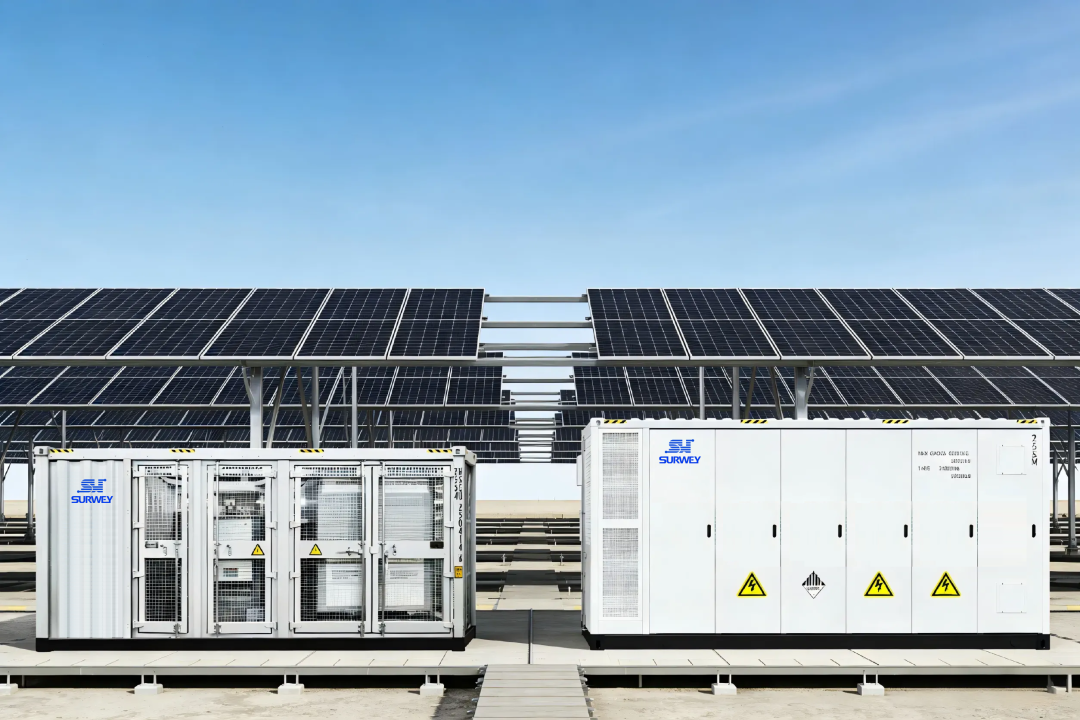
The front end of the system consists of a 1.5 MW photovoltaic array, which serves as the energy input for the entire solution and is responsible for converting solar energy into direct current. The electrical energy generated by the photovoltaic array can be flexibly allocated based on the system’s operating status: when energy is abundant, a portion is supplied directly to local loads, while excess energy is fed into the rear-end energy storage container for storage; When sunlight is insufficient and PV generation decreases, the energy storage system releases stored energy to bridge the power gap, achieving dynamic matching between PV generation and load consumption. The PV unit and the energy storage unit are interconnected via standardized electrical interfaces, ensuring orderly wiring and stable signal transmission, thereby guaranteeing the smooth flow of energy throughout the entire system from the source.
The core energy storage unit is a 20-foot HM-5MWh energy storage container, which serves as the energy hub of the entire system. This container builds upon the proven “Magic Cube” energy storage design philosophy and is a standardized, prefabricated energy storage unit. It highly integrates battery modules, power distribution units, busbar units, temperature control systems, fire suppression systems, and local controllers within a standard 20-foot container. Most commissioning work is completed at the factory, significantly reducing the complexity of on-site networking. The container features a compact, uniform structure. Leveraging standard container dimensions, it can be flexibly adapted to various site conditions and supports parallel expansion with multiple units. Should capacity upgrades be required in the future, expansion can be achieved simply by adding additional energy storage containers of the same model, without the need to modify existing photovoltaic or inverter control equipment, highlighting its distinct modular advantages.
At the heart of the power dispatch and conversion system is a 600 kW energy storage inverter-controller system. Serving as a critical hub connecting photovoltaic systems, energy storage, loads, and the utility grid, this equipment integrates multiple functions—including inversion, control, energy management, and condition monitoring—and performs core tasks such as bidirectional conversion of AC and DC power, switching between system operating modes, and real-time power regulation. Both the DC power generated by the PV system and the DC power released from the energy storage batteries must be converted by the inverter-controller system into standard AC power to supply the load or feed into the grid; conversely, AC power from the grid can also be rectified by the inverter-controller system into DC power to recharge the energy storage system. Additionally, the inverter-controller system incorporates built-in intelligent control logic that collects real-time data on PV output, energy storage levels, load power, and grid status. It autonomously switches between operating modes—such as grid-connected, off-grid, and energy storage charging/discharging—to ensure fully automated system operation.
For applications with stricter requirements for electrical isolation and voltage stability, this solution supports the optional use of an isolation transformer. The isolation transformer optimizes the system’s electrical environment, blocks electrical interference, and enhances the safety and stability of the entire photovoltaic-storage system. It is further adapted to special operating conditions such as industrial sites, aging power distribution networks, and complex microgrids, thereby expanding the solution’s range of applicable scenarios.
Each module of the system has a clearly defined role and works in close coordination with the others, forming a comprehensive and logically coherent operational framework that spans solar energy harvesting, electrical energy storage, power conversion, and intelligent dispatch. Thanks to its modular design, the system can operate as a standalone unit or integrate into large-scale energy clusters to work in concert, fully meeting the construction needs of projects of various scales and types.

Microgrid Solution: 1.5 MW / 5 MWh Topology Diagram

II. Core Energy Storage Unit: 20-foot HM-5MWh Energy Storage Container—Robust Performance Lays a Solid Foundation for Operation
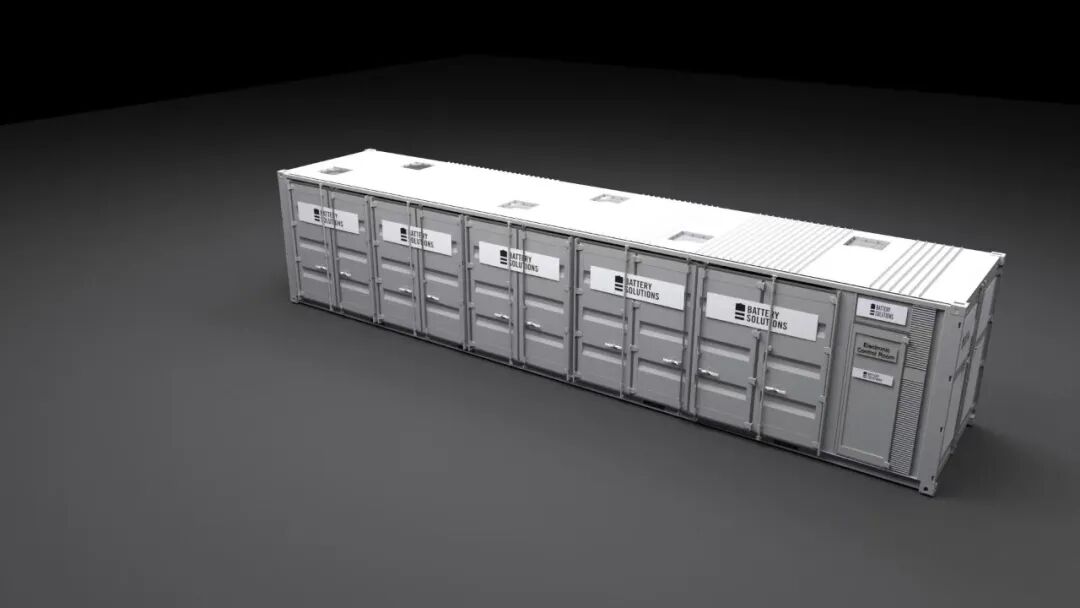
As the energy core of a complete photovoltaic-storage solution, the 20-foot HM-5MWh energy storage container (corresponding to the SW-MC10C-B5010-A-R2 Magic Cube Energy Storage System) combines five key advantages: high energy density, intelligent liquid-cooled temperature control, multi-layered safety protection, wide environmental adaptability, and a highly integrated design. With its robust hardware performance, it supports long-term, stable operation across all scenarios. Designed for a 1500V high-voltage system, this energy storage container utilizes industry-standard LFP (lithium iron phosphate) battery cells arranged in a 2×5×1P416S precision configuration. Under standard FAT testing conditions, the system achieves a usable energy capacity of 5010 kWh, perfectly aligning with the solution’s 5 MWh storage capacity target. The high-capacity design is fully capable of accommodating the power generation from a 1.5 MW photovoltaic array, enabling efficient energy storage and sustained discharge.
In terms of spatial design and energy density, this energy storage container features a compact design with overall dimensions of 6,650 mm × 2,510 mm × 3,300 mm and a total weight of less than 43,500 kg. The standard container structure not only facilitates land transportation, on-site hoisting, and placement but also maximizes energy density within the limited container space. Compared to traditional split-type energy storage systems, the integrated container significantly reduces the footprint required. It can be easily deployed in industrial and commercial parks with limited land resources, densely laid-out grid substations, and outdoor micro-grid sites with complex topography. The interior of the container features a meticulously planned layout, with battery cells, modules, electrical components, and temperature control equipment arranged in separate zones. This design not only improves space utilization but also facilitates future equipment inspections and maintenance.

5 MWh Energy Storage Container

The thermal management system is critical to ensuring the lifespan and operational stability of energy storage batteries. This energy storage container is equipped with a cluster-level liquid cooling system. Unlike traditional air-cooling methods, liquid cooling technology enables uniform temperature control across the entire system, strictly limiting the temperature difference between battery clusters to within 4°C. A stable and balanced temperature environment effectively prevents performance degradation and capacity inconsistencies caused by excessive temperature differences between cells, fully leveraging the inherent safety and long lifespan of LFP (lithium iron phosphate) cells to extend the service life of the entire energy storage system. The liquid cooling system employs a cell-level compartmentalized design, with each battery cell cluster having its own independent temperature control zone. This enables more targeted heat dissipation, ensuring stable internal temperatures even during prolonged full-load charging and discharging cycles, and withstanding continuous high-intensity operating conditions.

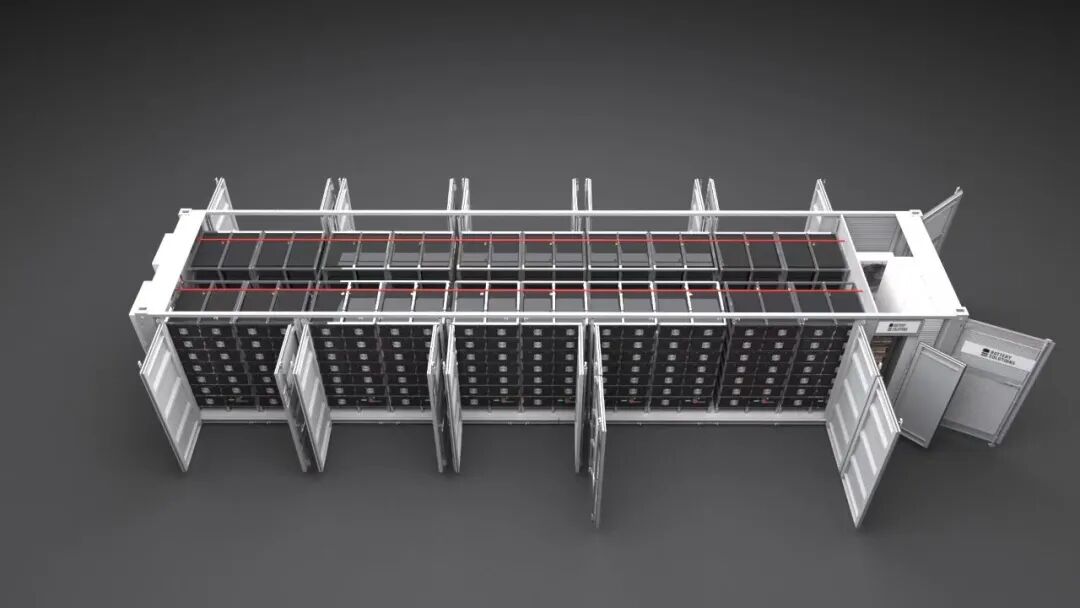
Top view of a 5 MWh energy storage container
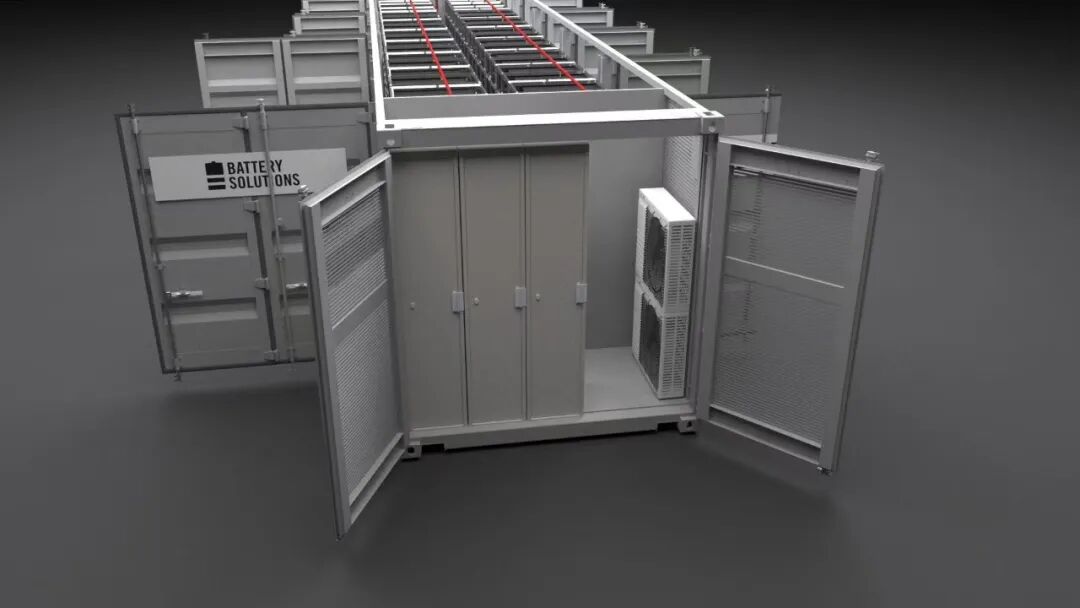
To adapt to complex and variable outdoor operating environments, the energy storage container has undergone comprehensive upgrades in terms of protection rating, corrosion resistance, and temperature and humidity tolerance. The enclosure features an IP55 protection rating, effectively preventing dust and rain from entering the interior and protecting the internal precision electrical components and battery modules. It also supports C4/C5 salt fog resistance configurations, enabling reliable deployment in highly corrosive environments such as coastal areas and chemical industrial parks. The official operating temperature range is -30°C to +55°C, with a relative humidity tolerance of 5% to 100%. Whether in the extreme cold of northern regions, the intense heat of the south, or humid and rainy areas, the energy storage container maintains normal operation, demonstrating environmental resilience far surpassing that of conventional energy storage equipment. During operation, the device produces noise levels of ≤75 dBA. With its low operational noise, it can be deployed in areas with strict acoustic requirements—such as industrial sites, industrial parks, and residential neighborhoods—without causing any impact on the surrounding environment.

Side view of the 5 MWh energy storage container
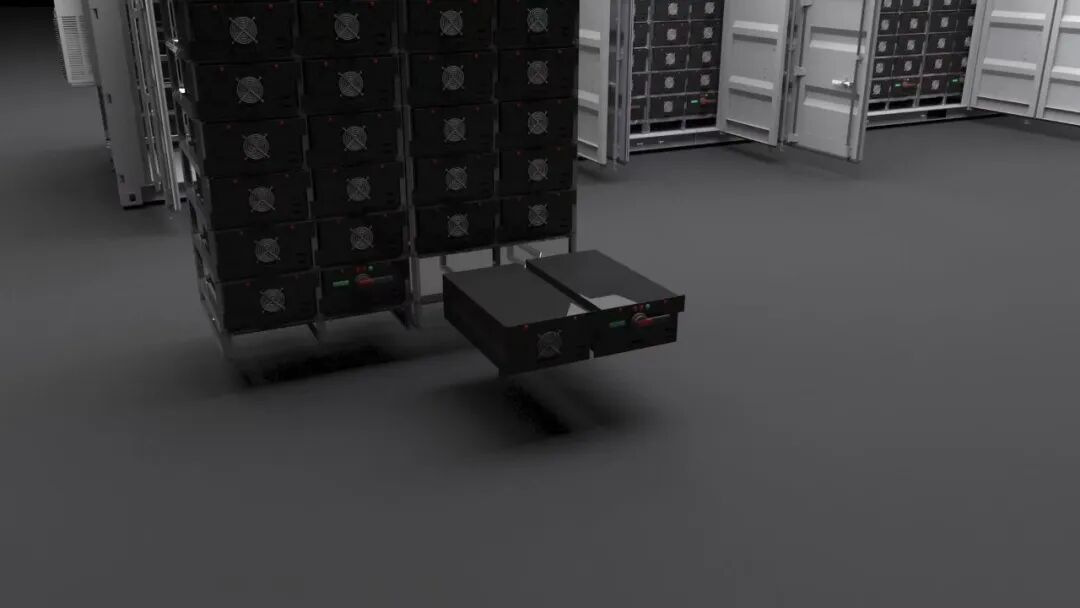
Safety design is integrated throughout the entire architecture of the energy storage container, creating a multi-layered, round-the-clock safety protection network. First, at the structural level, an isolated, fire-resistant cluster-based compartmentalization design is employed. Each battery cluster is physically isolated from the others, effectively preventing the spread of heat and fire between modules and reducing safety risks through physical structure; Second, the system is equipped with a dual fire suppression configuration comprising a perfluorohexane gas fire suppression system and a water sprinkler system. These two systems respond in coordination to provide early fire detection, rapid fire suppression, and sustained fire containment, ensuring comprehensive protection for equipment operation. Regarding the electrical system, the DC-side rated voltage is 1331.2 V DC, with a battery voltage operating range of 1081.6 V to 1497.6 V DC. This well-designed voltage range, combined with comprehensive electrical protection logic, prevents electrical faults such as overvoltage, undervoltage, and overcurrent. The enclosure’s auxiliary power supply utilizes a three-phase, four-wire interface rated at AC 380V ±5% / 50Hz, ensuring stable and reliable power delivery to guarantee the uninterrupted operation of auxiliary systems such as temperature control, fire protection, and monitoring.

5 MWh Containerized Rack-Mounted Lithium-Ion Battery System

In terms of integration and intelligence, the container features a specialized integration of functional modules such as local controllers, power distribution, busbar systems, HVAC systems, and FSS fire suppression systems. The internal wiring and piping layouts are standardized, reducing the number of external devices and simplifying the system architecture. At the communication level, the system supports the two major mainstream communication protocols, Modbus TCP and IEC 61850, enabling seamless data exchange with photovoltaic modules, energy storage inverters, and remote monitoring platforms. It uploads core data—such as battery status, voltage, current, temperature, and equipment faults—in real time, providing the data foundation for intelligent system dispatch and remote management.
The energy storage system is paired with the SNEPS-2500C power conversion system (PCS), which is fully compatible with the energy storage container. This PCS unit has a rated power of ≥2500 kW, an AC-side rated voltage of 690 V, and a rated current of 2092 A. Its full-power DC voltage range is 1000–1500 V, perfectly matching the 1500 V voltage rating of the energy storage container. The device achieves a maximum conversion efficiency of up to 99.0%, with extremely low energy conversion losses. The charge-discharge switching time is less than 100 ms, ensuring extremely fast power response and the ability to rapidly switch between charging and discharging states based on PV output, load changes, and grid commands. The PCS employs an air-cooled heat dissipation system, features an IP55 protection rating, and operates at a noise level of ≤75 dB, making it highly suitable for outdoor environments. Communication interfaces include 1 RS485 port and 1 Ethernet port, which can be expanded to dual Ethernet ports, ensuring flexible and stable data transmission. The配套 transformer has a rated capacity of 2500 kVA, with an overload capacity of up to 2750 kVA. It operates at a rated voltage of 36.75 ± 2 × 2.5% / 0.69 kV, with a maximum system voltage of 40.5 kV and a rated frequency of 50 Hz. It provides ample power redundancy to ensure stable system operation under fluctuating conditions. The entire set of energy storage and transformer equipment is a mature, well-balanced combination that forms a complete power chain for the energy storage unit.

III. Control Core: 600 kW Energy Storage Inverter Control System, Managing Energy Flow Throughout the System

The 600 kW Energy Storage Inverter-Controller System serves as the “brain” of the entire photovoltaic-storage solution. Acting as the central hub connecting the photovoltaic array, energy storage, loads, and the utility grid, it integrates three core functions—inverter, controller, and energy management unit—to enable bidirectional power conversion, operational mode switching, intelligent power allocation, and equipment status monitoring. This system determines the operational efficiency and response speed of the entire photovoltaic-storage system. Leveraging an integrated design, the inverter-controller system simplifies the complex structure of traditional solutions—which involve multiple devices such as inverters, controllers, and management units connected in series—reducing potential failure points in intermediate equipment and enabling more direct and efficient energy flow and command transmission.
In terms of power conversion capabilities, this inverter system supports bidirectional AC/DC conversion, perfectly aligning with the energy flow logic of photovoltaic-storage systems. During daylight hours when sunlight is abundant, the 1.5 MW photovoltaic array generates direct current (DC), which the inverter system converts into standard alternating current (AC) to directly supply local loads such as factory premises and industrial parks; When PV output exceeds load consumption, the excess DC power is regulated by the inverter-controller system and stored in a 5MWh energy storage container. When sunlight weakens, PV generation is insufficient, or PV operations cease at night, the inverter-controller system operates in reverse, converting the DC power output from the storage batteries into AC power to meet load demand. In grid-connected operation mode, the inverter-controller system can smoothly feed stored energy into the grid in accordance with grid dispatch instructions; it can also work in conjunction with the PV system and energy storage to support local grid loads when grid power supply is insufficient. This rapid power conversion capability ensures seamless coordination between the PV system and energy storage.
Intelligent switching between operating modes is one of the core capabilities of the inverter control system. It automatically and seamlessly switches between grid-connected mode, off-grid mode, PV-storage combined power supply mode, and pure energy storage power supply mode based on grid availability, PV output levels, and changes in load power. In areas with normal grid power supply, the system operates in grid-connected mode, with the PV system, energy storage, and the grid working in concert to fulfill the core tasks of peak shaving on the grid side and load leveling for commercial and industrial users; In remote areas and standalone campuses without public grid coverage, the system switches to off-grid microgrid mode, where photovoltaic modules and energy storage containers form an independent power supply network. The inverter control system autonomously balances the power relationships among generation, storage, and consumption to ensure continuous and stable power supply for the microgrid. The mode switching process is smooth and seamless, causing no impact on downstream loads or upstream generation equipment. The switching logic is fully automated, requiring no manual on-site operation.
In terms of power regulation and load matching, the 600 kW rated power is precisely matched to the load capacity of the entire 1.5 MW/5 MWh photovoltaic-storage system. It can monitor changes in load power in real time and dynamically adjust the PV output power and the charging/discharging power of the energy storage system, ensuring that the system’s output power consistently aligns with load demand. In response to instantaneous fluctuations in load power, the inverter control system rapidly adjusts with its sensitive response capabilities to stabilize output voltage and frequency, ensuring the smooth operation of various electrical equipment. To address diverse operating conditions—such as multi-type commercial and industrial loads, intermittent microgrid loads, and dynamic grid loads—the equipment incorporates multiple built-in control strategies that can flexibly adapt to varying power consumption characteristics.
In terms of communication and remote monitoring, the energy storage inverter control system is equipped with standardized communication interfaces that can be integrated with the iSolarCloud local monitoring and cloud platform systems to enable visualized management of system-wide data. Operations and maintenance personnel can use terminal devices to view real-time, comprehensive operational data, including PV power generation, remaining energy storage capacity, equipment operating power, voltage, current, and temperature. Additionally, the system features automatic fault detection and early warning capabilities for abnormal conditions. Should any module exhibit operational abnormalities, the inverter control system will immediately upload alert information and trigger emergency response measures in accordance with protection logic, thereby enhancing the convenience of system maintenance and operational safety. By integrating the communication protocols of the entire energy storage system, the inverter control system enables comprehensive data exchange with energy storage containers, PCS units, and PV modules, creating a unified intelligent management network.
The inverter control system is fully compatible with optional isolation transformers. Once the isolation transformer is integrated into the system, it optimizes electrical circuits, isolates electrical interference, and balances voltage waveforms. The inverter control system works in conjunction with the transformer to provide secondary voltage stabilization and filtering, further enhancing the quality of the output power. This meets the stringent power quality requirements of precision industrial equipment and specialized power equipment, thereby expanding the range of applications for the entire solution.

IV. In-Depth Adaptation Across Multiple Scenarios: Unlocking the Diverse Application Value of Solar-Storage Integration

Leveraging a powerful combination of a 1.5 MW photovoltaic system, a 5 MWh liquid-cooled energy storage container, and a 600 kW inverter-controller system, this integrated solar-storage solution delivers outstanding hardware performance, flexible operating modes, and robust environmental adaptability. It is deeply integrated into four mainstream applications: renewable energy storage, grid-side peak shaving, commercial and industrial load leveling, and off-grid microgrids. By addressing the operational characteristics and specific requirements of each application, the solution fully harnesses the unique advantages of an integrated solar-storage system.

(1) Scenarios for Energy Storage in New Energy Systems

In new energy storage applications such as centralized photovoltaic power plants and distributed renewable energy stations, photovoltaic power generation is characterized by its intermittent, fluctuating, and random nature, with output easily affected by sunlight, weather, and seasonal variations. This system utilizes a 1.5 MW PV array as the primary power source, paired with a 5 MWh high-capacity energy storage container, to form a “PV-storage integration” model for renewable energy support. The energy storage system can smooth out fluctuations in PV output, making the renewable energy output more stable and consistent, thereby addressing industry challenges such as difficulties in grid integration and significant power fluctuations. During periods of high PV generation, the energy storage system absorbs excess electricity; when PV output drops sharply, it rapidly releases stored energy to fill the power gap. The entire system features a modular design, allowing a single unit to independently support small-to-medium-sized renewable energy sites, or multiple units to be connected in parallel to form large-scale PV-storage clusters, accommodating renewable energy storage projects of various scales. The energy storage container’s excellent temperature control, protection, and safety features also meet the requirements for long-term, unattended outdoor operation at renewable energy sites.

(2) Grid-side peak-shaving scenarios

Grid-side peak shaving is one of the core application areas for energy storage systems. Grid load fluctuates significantly throughout the day: during peak hours, load is concentrated, increasing pressure on the grid’s power supply; during off-peak hours, load drops sharply, leading to a decline in grid resource utilization. This 5MWh energy storage container features high capacity, rapid charging and discharging, and long-duration operation capabilities. When paired with a 600kW energy storage inverter control system and PCS equipment, it can precisely respond to grid peak shaving commands. During peak grid load periods, the energy storage system continuously discharges to supply power to the grid, alleviating the pressure on the grid’s power supply; during off-peak periods, the system draws power from the grid to recharge, achieving dynamic load balancing. With a rapid power response time of less than 100 ms and a high conversion efficiency of 99.0%, the equipment precisely meets the grid’s peak-shaving response requirements. Its 1,500 V high-voltage system architecture aligns with the mainstream technical approach for large-scale grid-side energy storage, enabling widespread deployment at grid hubs, regional substations, and other locations.

(3) Peak-shaving and valley-filling scenarios in the industrial and commercial sectors

Commercial and industrial areas such as large industrial parks, industrial bases, and commercial complexes have massive electricity loads with significant differences between peak and off-peak demand. When this photovoltaic-storage solution is implemented in commercial and industrial settings, 1.5 MW of photovoltaic modules are installed on idle rooftops and vacant land within the facility to generate clean electricity on-site, which is prioritized for powering production, office operations, lighting, and other loads within the facility. During daytime peak hours, the PV system and energy storage work in tandem to supply power; during off-peak hours, surplus PV electricity and grid power are stored in the energy storage containers. All equipment in the system features a low-noise design, with an IP55 protection rating suitable for outdoor and semi-outdoor deployment within industrial sites. The C4/C5 salt fog-resistant versions are also suitable for special environments such as coastal industrial zones and chemical plants. The highly integrated energy storage container has a compact footprint, minimizing the impact on the facility’s production space. Its modular structure allows for phased construction and gradual expansion based on the facility’s electricity demand, aligning with the step-by-step implementation schedule typical of commercial and industrial projects.

(4) Off-grid microgrid scenarios

In remote mining areas, rural communities, field operation bases, and islands—where access to the public grid is limited—standalone microgrids are the primary means of ensuring a reliable local power supply. This solution enables the creation of a self-sufficient, off-grid microgrid using a combination of solar power and energy storage, completely independent of the public grid. A 1.5 MW PV system serves as the primary power generation unit, while a 5 MWh high-capacity energy storage container acts as the energy buffer unit, ensuring continuous power supply during nighttime, cloudy, or rainy periods when sunlight is unavailable. The energy storage and control system is fully responsible for energy dispatch, voltage and frequency stabilization, and load management within the microgrid. With a wide operating temperature and humidity range (-30°C to +55°C), the entire system is capable of withstanding harsh natural environments such as those found in the wilderness or on islands. Cluster-level liquid cooling, multi-layered fire protection, and IP55 dust and water resistance ensure the long-term, stable, and unattended operation of the microgrid. The system can flexibly adjust its operating strategy based on the local population and the scale of electrical equipment, making it suitable for serving both small residential communities and providing stable power support for medium-sized remote field operation bases.

V. Summary of Overall Advantages

Taken as a whole, the 1.5 MW/5 MWh integrated solar-storage solution demonstrates exceptional comprehensive capabilities across hardware selection, structural design, technical configuration, and scenario adaptation. At the hardware level, the 20-foot HM-5MWh energy storage container leverages four key advantages—LFP (lithium iron phosphate) battery cells, liquid-cooled cluster-level temperature control, multi-layered safety protection, and wide-range environmental adaptability—to create a stable and durable energy core. The 600kW energy storage inverter-controller system, featuring an integrated design, serves as the central hub for intelligent system-wide dispatch, enabling efficient energy conversion and flexible mode switching; The 1.5 MW photovoltaic array, serving as the energy input source, is perfectly matched with the energy storage and inverter-control equipment to form a complete photovoltaic-storage synergy chain; the optional isolation transformer further expands the solution’s applicability.


In terms of structural design, the entire system adopts a modular and highly integrated approach. Standard prefabricated energy storage containers reduce on-site construction and commissioning workloads, support flexible configuration and phased expansion, and ensure convenient transportation, deployment, and operation and maintenance. Technologically, the system incorporates mature and cutting-edge technologies in the PV-storage field, including a 1,500V high-voltage system, liquid-cooled temperature equalization technology, a dual fire suppression system, mainstream communication protocols, and high-efficiency power equipment.


In terms of application scenarios, the solution comprehensively covers four core areas: renewable energy storage, grid-side peak shaving, commercial and industrial load balancing, and off-grid microgrids. It can integrate into large-scale power systems to participate in grid dispatch, optimize electricity consumption structures in commercial and industrial parks, or serve as an independent microgrid to ensure power supply in remote areas, demonstrating exceptional scenario compatibility. The entire solution eschews complex and redundant designs, prioritizing practicality, stability, and flexibility. Leveraging robust product capabilities and an integrated system architecture, it delivers high-value, highly reliable comprehensive solutions for PV-storage projects across various sectors. As the integration of PV and storage continues to deepen, this solution stands as an excellent choice for multi-scenario energy applications.