
Power Retrofit for a Suburban Shop in Uganda: A Right-Sized PV & Energy Storage Solution
Last year, we completed a small photovoltaic energy storage project on the outskirts of Kampala. The client runs a neighbourhood general store and lives on the same premises, following the common local layout of “shop at the front, home at the back”. This is not our highest-power or largest-capacity project, yet it stands out as one of the most representative ones so far this year. No redundant components were overspecified. Every equipment selection and design detail was tailored precisely to the real power supply pain points of ordinary local households and micro-business owners.
After years delivering localised projects, we have noticed that most clients start with vague requirements. They only know they face frequent blackouts and want solar power, but have no idea of the required system size, battery capacity or module string configuration. Some immediately ask for the largest setup, believing overbuilding once is cost-effective. Others cut corners to save money, only to find the final system cannot run their deep freezers after installation — a complete waste of investment.
This shop owner’s demands perfectly typify local end users. Let’s share his story to illustrate how a practical energy storage solution evolves from initial requirements into a fully operational system.

Solar Panel Installation Image
1. Blackouts: An Unavoidable Daily Headache
The grocery store has operated for nearly five years, selling daily necessities, cold drinks and packaged food. Two refrigerated display cabinets are the backbone of his business. The attached residence has a fridge, a television and other appliances. His two primary-school children need lighting for homework at night.
Anyone living in Uganda understands the unreliable grid supply. Suburban areas fare far worse than the city centre. Power cuts strike without warning during peak hours, lasting one to two hours on average. Outages can drag on for half a day or longer during line faults or thunderstorms in the rainy season. Previously, the shop owner relied on an old diesel generator.
“The cold drink freezers are my biggest worry,” he told us at our first meeting. Short outages were manageable, but once power stayed off for more than two or three hours, ice cream and fresh juice inside the freezers began to thaw. Sometimes he lost an entire day’s profit in one outage. The generator was not a convenient backup. He could start it when he was present during daytime, but he could not get up in the middle of the night to pull the starter cord. When he left town to source stock, only hired staff remained at the shop. Without anyone able to operate the generator, he could only watch his inventory warm up.
Noise and exhaust fumes were other persistent issues. The generator sat beside the shop. Once running, the whole building hummed loudly, forcing customers to raise their voices to talk. Exhaust smoke drifted indoors, leaving oily dust on food packaging. He dared not run it for long after dark to avoid complaints from neighbours and to keep a quiet environment for his children’s study. Plus, refuelling required a trip of more than ten kilometres into town, adding up to substantial monthly fuel costs.
“I want something quiet that kicks in automatically when the power cuts out, with no need for anyone to tend it,” was his core requirement. He also had two practical expectations. First, he hoped to use solar-generated power during sunny daytime hours to reduce grid electricity consumption and cut utility bills. Second, he planned to expand the shop next year and add another refrigerated cabinet. The power system should accommodate this upgrade without full replacement.
Limited budget, clear functional demands, room for future expansion, and tolerance of local high temperatures, dust and humid rainy weather — these formed all our design constraints. There was no point building a top-tier oversized system. Our goal was a properly sized, “just right” solution.
2. 4 Modules + 6kW Inverter + 5kWh Battery: Nothing Excessive, Fully Functional
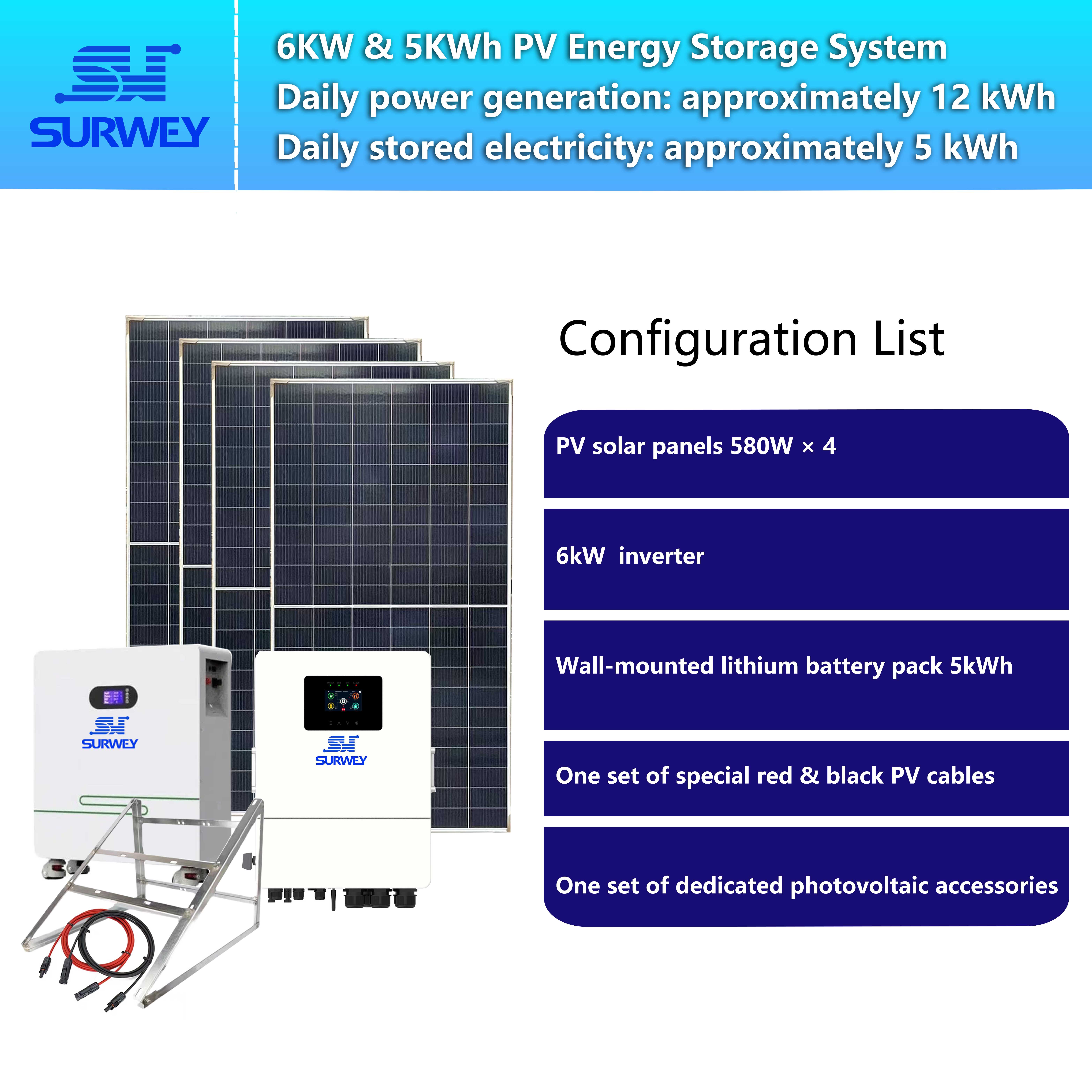
We worked out a detailed energy budget for the owner. The two shop refrigerators run nonstop, alongside lighting and point-of-sale equipment, creating a steady base load of roughly 1.5kW. The residential fridge, lights, TV and small appliances create an evening peak load of around 2kW when switched on together. The combined simultaneous peak load stays below 4kW, with total daily consumption at approximately 4kWh.
Matching this load profile, our final configuration consisted of four pieces of 580W monocrystalline PV modules, one 6kW hybrid energy storage inverter and one 5kWh vertical lithium iron phosphate battery pack.
The owner initially questioned why we did not specify a larger inverter or bigger battery bank. We explained the rationale clearly: The 6kW rated output comfortably handles the 4kW peak load and absorbs the inrush current of inductive loads such as refrigerators and freezers, preventing tripping on startup. Four modules deliver a combined power of 2.32kW. With an average local peak sun hour of 4.5 hours, the system yields roughly 10kWh of electricity daily. This covers regular consumption with surplus energy stored in the battery for blackouts or evening use. The 5kWh battery can sustain critical loads for 8 to 12 hours, long enough to cover the vast majority of local blackout events.
“First we solve your core blackout problem with adequate capacity. When you expand the shop and add another freezer next year, you can simply add more batteries in parallel and extra PV modules. The inverter stays the same.” This explanation eased his concerns. He never needed an all-in-one oversized system; he wanted a reliable setup that works today and scales tomorrow.
Fixing the system layout was only the first step. The real engineering depth lies in equipment selection and PV string design — details that determine whether the system can run reliably for more than a decade under local conditions.
System Operating Principle Video
580W Monocrystalline Modules: Consistent Output Even in Extreme Heat
Everyone knows how intense midday sunlight can be in Uganda. High-wattage panels suffer severe power drop-off if they have poor temperature coefficients, drastically cutting real-world generation.
This 580W half-cut monocrystalline module achieves a conversion efficiency of 22.5%, ranking among top-tier products in its form factor. More importantly, it delivers excellent thermal performance with a power temperature coefficient of -0.29%/°C: output decreases by only 0.29% for every 1°C temperature rise. When panel surface temperatures soar above 60°C at noon, its power degradation is far milder than conventional modules, translating to tangible energy harvest.
Its mechanical build suits the local environment well. The front sheet uses high-transmittance tempered glass, resisting damage from sandstorms in dry seasons and hail in rainy seasons. The anodised aluminium frame resists corrosion from prolonged sun and rain exposure, and the junction box carries an IP68 dustproof and waterproof rating, eliminating short-circuit risks during extended downpours. Each module weighs 32kg, light enough for two local workers to lift onto the rooftop without heavy lifting machinery.
We settled on a single series string of four modules after repeated calculations. Each module has an open-circuit voltage of 51.46V and operating voltage of 42.65V. Four in series produce 205.84V open-circuit voltage and 170.6V operating voltage, landing neatly in the middle of the inverter’s 50–450V MPPT operating window.
Why four, instead of two or six? A two-module string would run at roughly 80V operating voltage. While still within limits, line losses rise noticeably, wasting generated power along the wiring. Six modules would stay under the 520V maximum DC voltage limit, yet the extra capacity would sit idle given his current consumption, inflating upfront costs unnecessarily. The four-module arrangement strikes the optimal balance. Even in rare cold weather when voltage rises, it remains safely below the 520V upper threshold with generous safety margin. When voltage sags under midday heat, it stays well above the 50V lower limit, enabling continuous high-efficiency MPPT tracking.
We avoided complicated multi-string designs. The single string uses straightforward wiring, with only positive and negative cables running directly to the inverter. Local electricians are less likely to make connection mistakes, and fault diagnosis remains simple for later maintenance.
6kW Hybrid Inverter: Stable Operation Amid Grid Voltage Fluctuations
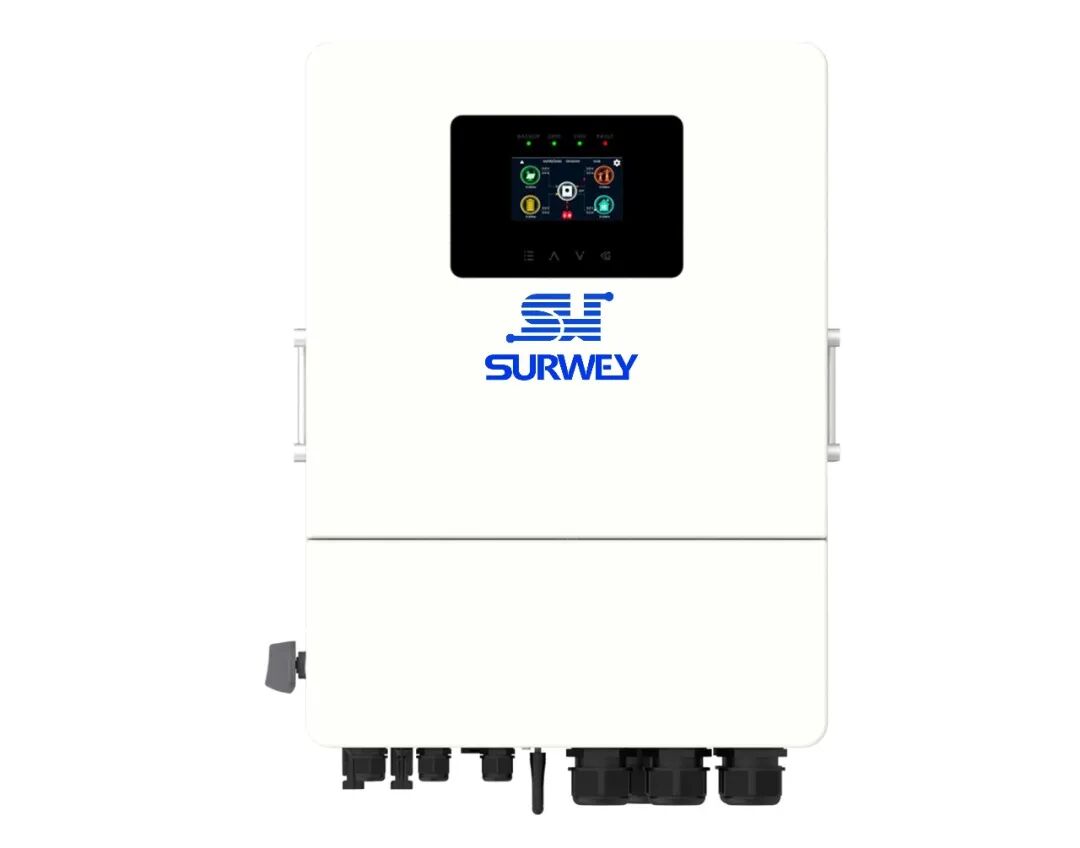
Wide grid voltage swings are a universal challenge for all electrical appliances here. Supply can drop below 100V or surge above 260V. Many standard inverters shut down for protection under such conditions and become useless backups.
This inverter impressed us with its ultra-wide AC voltage adaptability. It accepts grid input from 90VAC to 280VAC and maintains normal grid-tied operation across this range. Its AC restart window is 170–280VAC. When grid power returns and voltage stabilises after an outage, it automatically reconnects to the grid without manual switching. This is critical when the owner leaves for purchasing trips, as the system keeps running unattended.
It carries an IP65 protection rating, meaning it can be wall-mounted outdoors without a separate shelter for shade and rain protection, saving space and extra construction expense. Its DC-to-AC conversion efficiency reaches 93%, ensuring most solar and battery power is delivered to loads instead of being lost during inversion.
It supports charging from both solar and grid AC sources. During prolonged cloudy spells with insufficient solar yield, the grid can top up the battery to guarantee emergency power continuity. It also accepts a maximum PV input of 9000W, reserving abundant headroom for expansion. He can add another four modules in series later while keeping the existing inverter.
5kWh Lithium Iron Phosphate Battery: Safe, Low-Maintenance, Decade-Long Lifespan
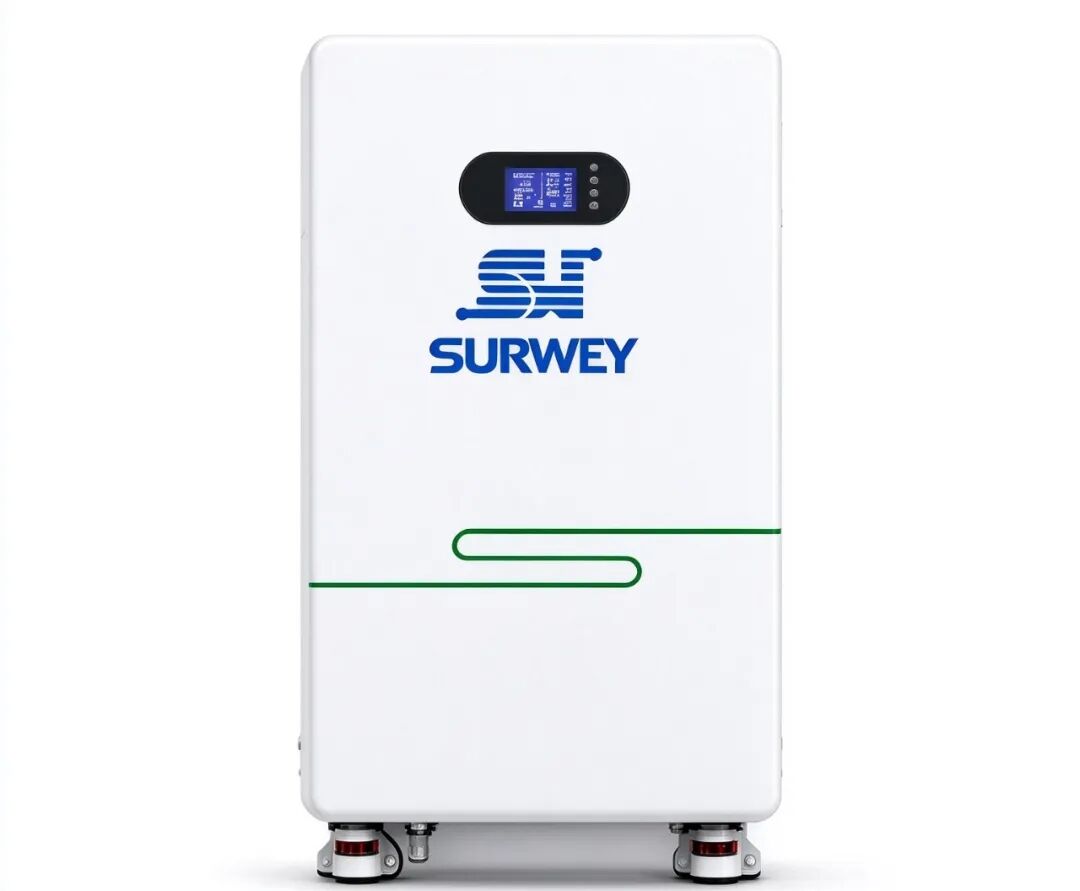
Batteries determine the system’s safety and service life. We ruled out cheaper lead-acid batteries and chose lithium iron phosphate for practical reasons. Lead-acid cells degrade rapidly under persistent high local temperatures, require regular maintenance and carry risks of leakage and gas evolution, proving less economical over the long run.
This vertical battery pack is rated 51.2V, 100Ah with a usable capacity of 5.12kWh, perfectly matching the 48V-class inverter without extra voltage conversion. Its built-in BMS provides intelligent protection against overcharge, overdischarge, overcurrent, overtemperature and short circuit, cutting off power automatically when hazards arise without constant supervision. It achieves over 6,000 charge-discharge cycles under standard test conditions. With one full cycle per day, it can reliably serve for more than ten years.
Its appliance-style vertical cabinet with a plain white exterior fits discreetly in a shop corner or storage room, unlike bulky industrial battery racks. A front LCD screen displays state of charge, charge/discharge current, voltage and temperature. Anyone, even without technical knowledge, can read the status easily. Bluetooth mobile connectivity allows the owner to monitor battery data from behind the checkout counter without physical inspection.
The expansion requirement is fully satisfied: this model supports up to 16 units connected in parallel. When he adds more freezers next year, another battery can be plugged in directly with minimal rework to the existing wiring and hardware.
We also clearly communicated its limitations to the owner. With an IP20 rating, the battery must stay indoors in dry, ventilated spaces. It cannot be installed outdoors exposed to rain or damp, water-prone corners. Proper placement during installation eliminates this risk.
3. On-Site Installation: Practical Local Construction with Uncompromised Details
Installation was completed in two days by our locally trained crew using standardised workflows, with close attention paid to fine details.
On day one, rooftop racking and PV modules were fitted. The owner’s roof uses old clay tiles, some of which had loosened over time. Instead of simply drilling expansion bolts, the crew adjusted mounting points to align with load-bearing roof beams, added extra fasteners and secured the loose tiles as a courtesy. The owner mentioned this small gesture repeatedly; no previous tradespeople had cared for the roof in this way.
On day two, cabling, inverter and battery connection took place. DC, AC and battery circuits were routed separately, with conduits and insulation applied where required. We mounted the inverter on a shaded side wall of the shop, away from direct midday sun and rain splash zones. The battery sat on an elevated base inside the storage room to isolate it from floor moisture.
During commissioning, we ran a simple live demonstration: we cut off the grid supply. The shop lights and refrigerators continued running instantly without interruption. The owner leaned toward the freezers, listened, checked the inverter indicators and smiled: “This is far better than the generator — completely silent.”
We trained him to use the mobile app to view daily generation and battery state of charge. The system sends automatic fault alerts, removing the need for regular rooftop inspections. He picked up the operation quickly and started checking the day’s energy yield on the same afternoon.
4. Two Months On: Real-World Operational Feedback
We followed up recently. The owner sat behind his counter and walked us through his observations on the app, sharing honest, unexaggerated changes to his daily routine.
The biggest gain: no more spoiled inventory during blackouts. “I used to panic and rush to start the generator the second power failed. Now sometimes I only notice an outage after checking my phone, because the battery seamlessly takes over.” He can leave for purchasing trips for the whole day without worrying about the freezers, thanks to automatic transfer.
Nighttime trading has also improved. Previously he avoided running the generator for long after dark due to noise and fumes. Customers would finish shopping and leave quickly. Now the shop stays quiet and brightly lit with refrigerators running normally. Local residents often linger to chat after buying goods, and his turnover has seen a modest uplift. The generator has become a true backup, only activated during extended cloudy periods when battery reserves run low, cutting fuel expenditure dramatically.
There is one minor regret. He told us that if he had known how well the system performs, he would have ordered a larger battery or added a second unit upfront to withstand multi-day blackouts. We reassured him that extra batteries can be paralleled anytime without changing existing hardware, and the upgrade can be finished within half a day.
This aligns with our core design philosophy. There is no need to build a fully maxed-out system from day one. Start with a foundational setup that resolves critical pain points, then scale capacity as demand grows. This lowers upfront risk and spreads capital investment gradually.
Closing Remarks: The Best Solution Is the One That Fits
After years delivering PV and storage projects overseas, we have seen many clients make missteps. Some invest heavily in oversized systems on advice from others, leaving half the capacity unused and wasting capital. Others opt for low-cost substandard modules and batteries, which fail within one or two years, with repair costs exceeding replacement value.
For the vast majority of ordinary households and micro-enterprises, power demand grows incrementally. Overspecifying from the beginning is unnecessary and uneconomical. We advocate the “start with a baseline, scale on demand” approach. Deploy a right-sized system first to resolve blackout risks and demonstrate the value of solar storage. Add more modules and batteries later as household appliances multiply or businesses expand.
This 4×580W module, 6kW inverter, 5kWh battery setup embodies this mindset. It carries no fancy redundant functions or inflated nominal parameters. It delivers solid core performance: heat-resistant, robust PV modules, an inverter that tolerates volatile grid conditions, and safe, long-cycle batteries. Installation is straightforward, maintenance is minimal, and future expansion is flexible.
Photovoltaic energy storage is no longer an unattainable luxury. It is a practical tool that improves daily life and supports small businesses. For anyone hesitating over whether to invest, a conservative, proven baseline configuration like this offers the lowest-risk way to experience its benefits.
At the end of the day, reliable power without the constant anxiety of sudden blackouts matters more than anything else.


