
No Freezing Water Pipes Even in Cold Waves|20kW PV-ESS Hybrid Grid Project for a Courtyard in Northern China
No Freezing Water Pipes Even in Cold Waves|20kW PV-ESS Hybrid Grid Project for a Courtyard in Northern China
Project Overview
This project is located in Jilin Province, serving a self-built courtyard house combining residential living and small-scale workshop operations. The region features long, frigid winters, large day-night temperature differences, and short daylight hours in winter; space heating accounts for the core electricity demand. The site enjoys favorable solar irradiation, which allows proper layout of photovoltaic equipment.
Before system installation, the property relied entirely on the public utility grid. Nighttime in winter coincided with peak power consumption, accompanied by frequent voltage fluctuations. Short-term power outages often occurred during severe snowstorms. Once power was cut off, floor heating would stop immediately, leading to rapid indoor temperature drops and a high risk of heating pipeline rupture, threatening residential safety and daily production activities.
To resolve these risks, this hybrid grid-connected PV-energy storage system is designed to guarantee night-time heating power supply. It enables on-site consumption of solar power, storage of surplus electricity, peak load shifting, and greatly improves power supply reliability.
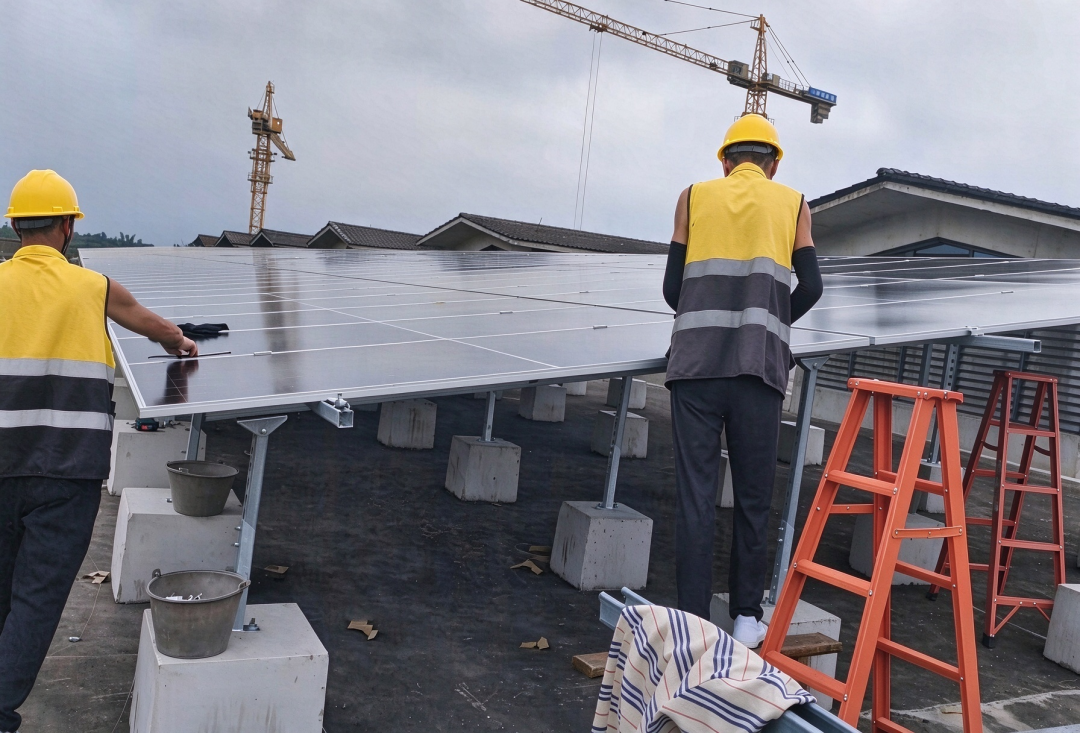
(PV Module Installation Photo)
List of Major Electrical Loads
1. Floor Heating Circulation System (Top-Priority Nighttime Load)
The complete water underfloor heating system, including circulation water pumps and temperature control units. It requires non-stop operation throughout winter nights, making it the largest power consumer and the highest-priority protected load. A power outage will quickly cool down the house and cause pipe freeze rupture.
2. Household Electrical Loads
Whole-house lighting and domestic appliances, mainly used in the evening; only minimal lighting power is consumed during daytime hours.
3. Small Workshop Equipment in the Courtyard
- Daytime loads: small processing machinery, workshop lighting and ventilation equipment.
- Nighttime loads: low-power standby equipment and partial workshop lighting.
Load Time Distribution
- Daytime: workshop machinery + daytime lighting, total consumption: 18–21 kWh.
- Nighttime: floor heating pump (maximum load) + household lighting + minor standby workshop loads, total consumption: 42–49 kWh, accounting for 70% of the total daily electricity use.
Main Equipment Introduction
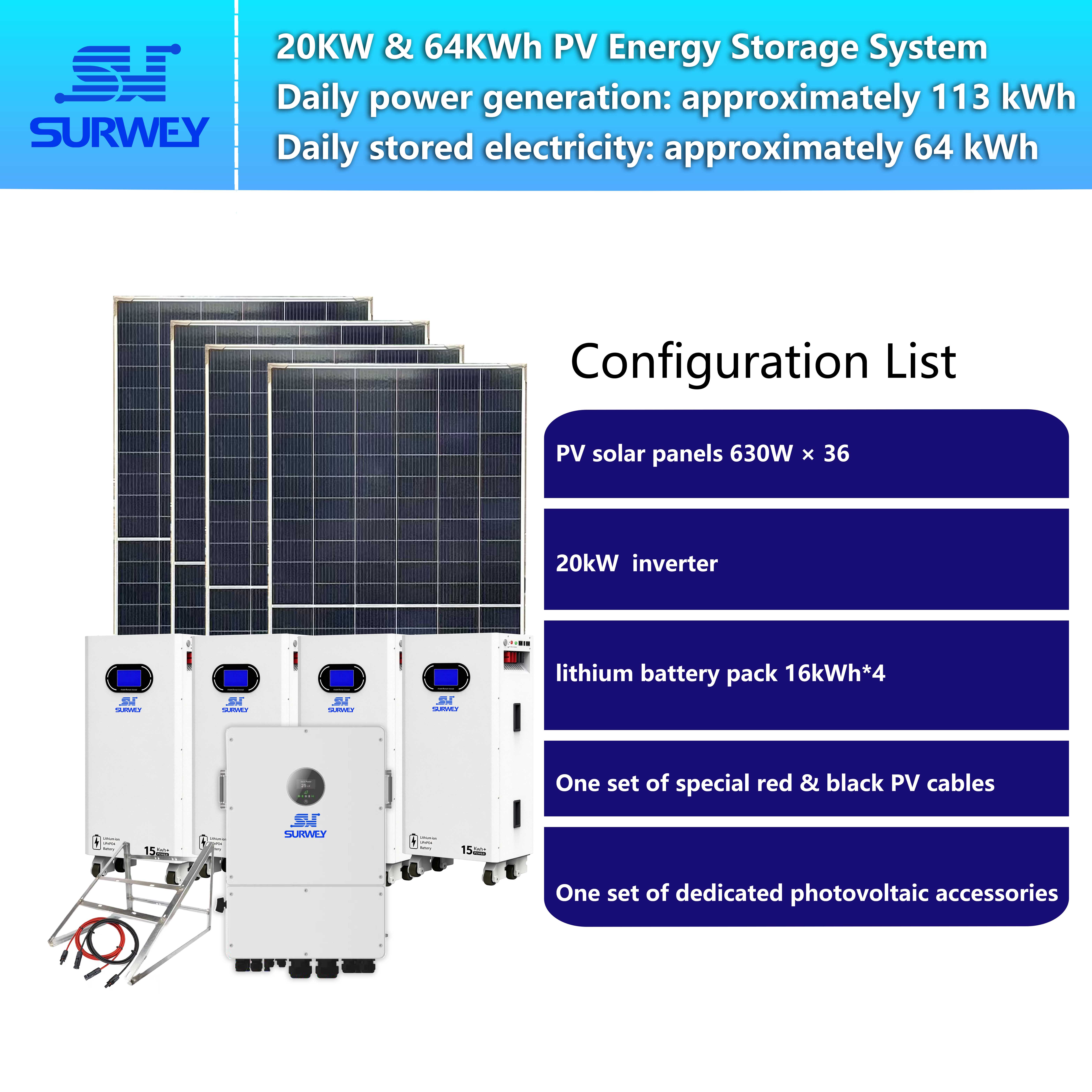
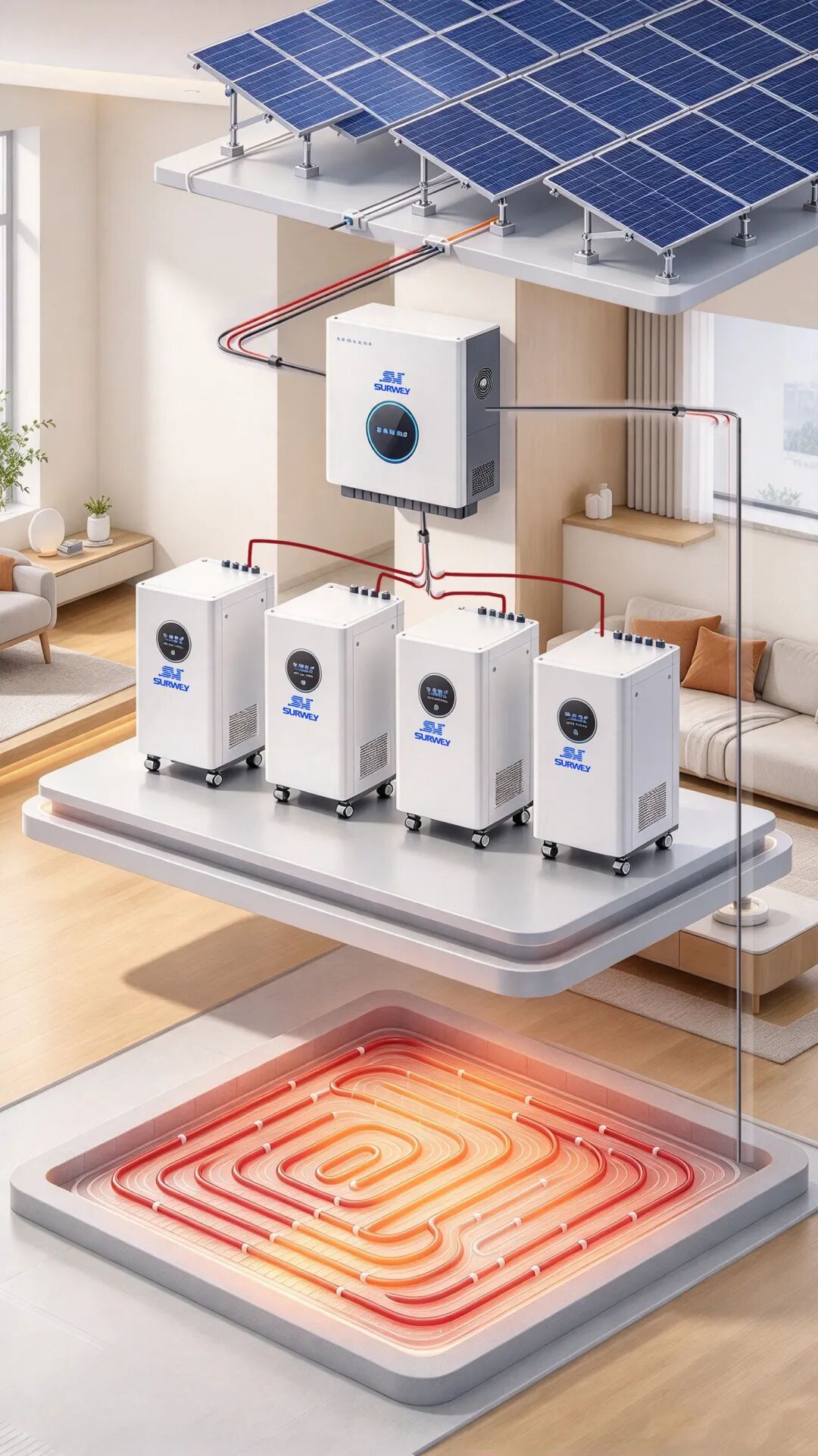
(System Configuration Diagram)
The entire hybrid grid system consists of PV modules, a 20kW hybrid grid energy storage inverter, LiFePO4 battery energy storage, plus PV brackets, DC cables, PV connectors and other auxiliary materials. The functions and specifications of each piece of equipment are detailed below.
1. Photovoltaic Modules
A total of 36 pieces of 630W high-efficiency monocrystalline PV modules are deployed as the energy source to convert sunlight into DC electricity. The modules deliver excellent low-light power generation performance, well suited for weak winter sunlight and low solar elevation angles in northern Jilin. Power output remains stable under low-temperature conditions; reflected light from snow-covered ground further boosts power generation. The modules feature high mechanical strength against wind and snow impacts, excellent anti-aging and low-temperature resistance, suitable for long-term outdoor deployment in Jilin. Generated DC power is fed into the inverter: part directly supplies on-site loads, and excess power is stored in the energy storage batteries.
2. 20kW Three-Phase Hybrid Grid Energy Storage Inverter
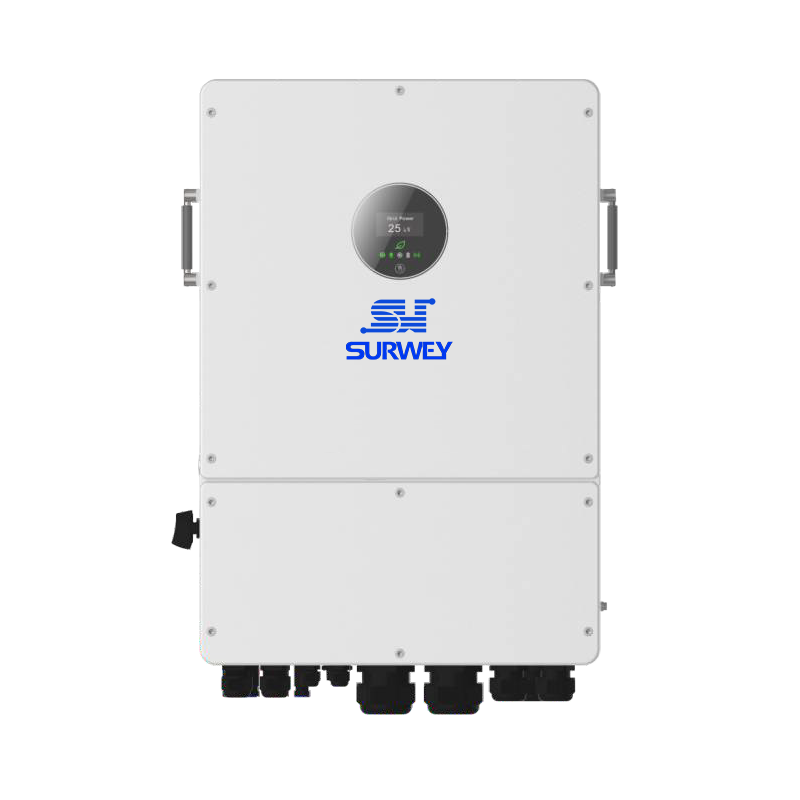
This 20kW three-phase hybrid inverter acts as the core power conversion and control unit of the whole system, supporting both grid-tied and off-grid operation modes, and compatible with 51.2V low-voltage LiFePO4 battery packs. Full electrical parameters are as follows:
PV DC Input Side
- Rated power: 20kW
- MPPT channels: 2 independent MPPT channels, max input current per channel: 40A
- MPPT operating voltage range: 150–850V; the designed string voltage (376.38V–444.06V) falls perfectly within this optimal window
- Maximum PV DC input voltage: 1000V, providing sufficient safety margin against voltage rise caused by extremely low winter temperatures
- Each MPPT channel supports two parallel module strings. In this project, 18 modules are connected to each of the two MPPT channels to achieve balanced loading and minimize generation loss caused by partial snow shading.
Battery Side Parameters
- Compatible battery voltage range: 40–60V, matching the 51.2V energy storage battery system
- Bidirectional charge and discharge control for PV charging, off-peak grid charging and battery discharging. CAN bus communication with the battery BMS enables real-time monitoring of cell voltage and temperature, implementing charge-discharge protection and low-temperature thermal control strategies.
AC Output Side
- Output format: three-phase 220V/380V AC, compatible with heating, lighting and small workshop loads
- Maximum conversion efficiency: 97.6%, minimizing power conversion loss
- Grid-tie/off-grid switching time: <10 ms. The seamless transfer delivers UPS-grade backup power; the heating pump keeps running without interruption and lights stay flicker-free during grid outages.
- Multi-level load management: the floor heating pump can be set as the highest-priority load. Non-essential loads will be automatically cut off when battery capacity drops below the alarm threshold to preserve power for heating.
Other Functional Features
Built-in DC arc detection, overvoltage, overcurrent, overtemperature and multi-layer protection. Local parameter configuration and remote commissioning are supported; users can customize charge-discharge time windows and load priority to match the "daytime PV generation + nighttime battery discharge" operation logic for northern courtyards. The unit operates reliably under wide northern temperature ranges and can be installed indoors with low running noise for continuous long-term operation.
Project wiring design: each of the two MPPT channels connects two module strings (9 modules per string). Equal module counts on both channels maximize the dual-MPPT advantage and reduce generation loss from string imbalance.
3. Floor-Standing LiFePO4 Energy Storage Batteries
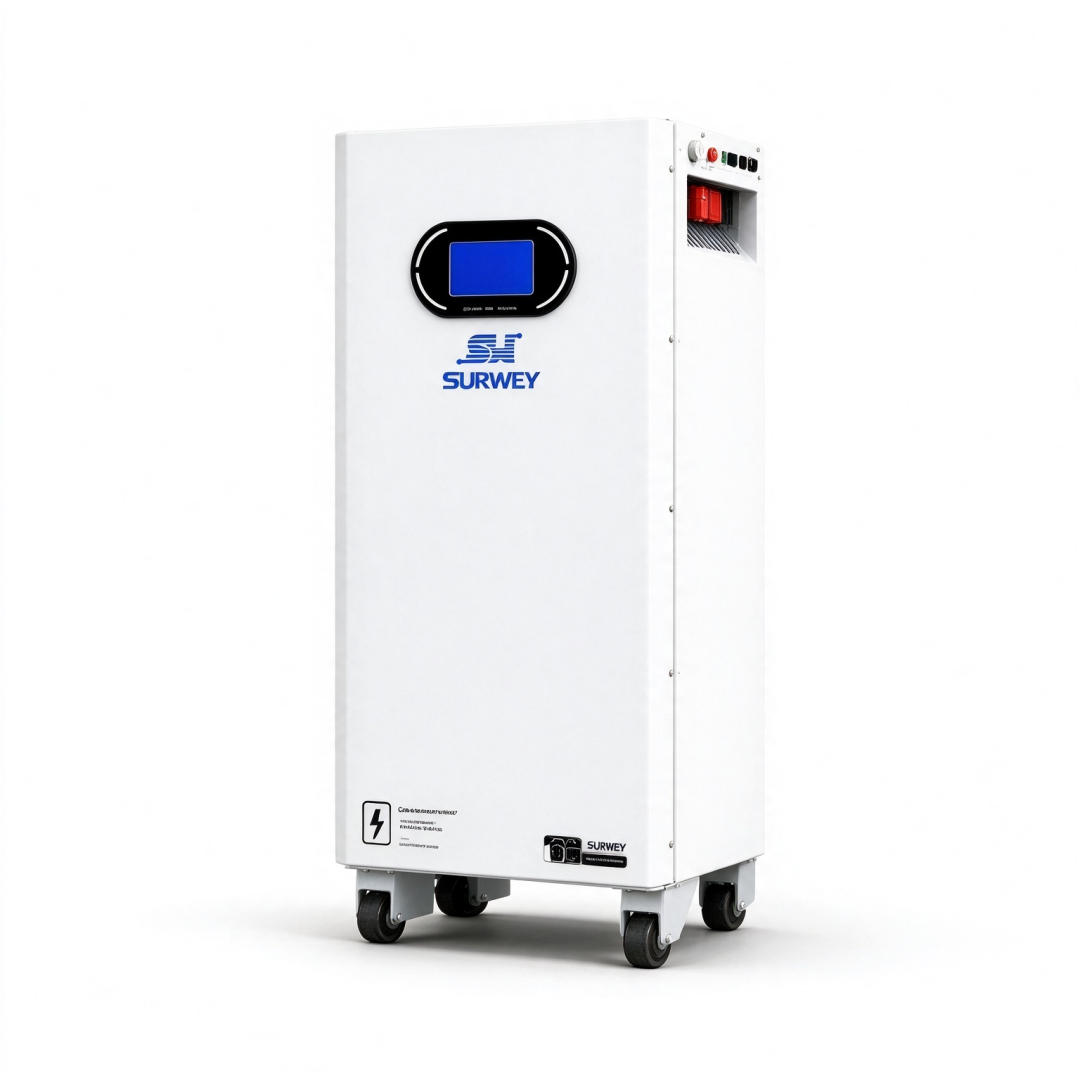
(16kWh Floor-Standing LiFePO4 Battery)
Single unit capacity: 16 kWh; four units are connected in parallel for a total energy storage capacity of 64 kWh. The battery bank stores surplus PV power and off-peak grid electricity to supply most of the nighttime power demand. LiFePO4 cells offer outstanding thermal stability, high safety rating, deep discharge capability and ultra-long cycle life. Each battery unit comes with an integrated BMS that monitors cell voltage, current and temperature in real time, with comprehensive overcharge, overdischarge, overcurrent and overtemperature protection. Automatic cell balancing is enabled when multiple units run in parallel. The battery cabinet is installed indoors in the equipment room to avoid performance degradation caused by extreme outdoor cold, ensuring high charge-discharge efficiency and extending service life. The battery bank discharges to power the heating system and other high night-time loads.
4. Auxiliary Materials (Mounting Brackets, DC Cables, PV Connectors)
The PV array brackets are tilted at an angle calculated based on Jilin’s latitude. The tilt maximizes winter solar irradiation while enabling snow to slide down by gravity, shortening the snow-covered period of the panels. All outdoor DC cables and PV connectors adopt low-temperature-resistant outdoor-grade materials to prevent hardening and cracking in frigid weather, guaranteeing reliable DC circuit connections and lowering outdoor failure risks.
PV String Electrical Design & Operating Condition Verification
PV module open-circuit voltage rises sharply as ambient temperature drops in Jilin’s harsh winters. Improper series configuration will trigger overvoltage protection and shut down the inverter. Therefore, string design is the critical technical focus of this project.
Key electrical parameters per PV module:
- Open-circuit Voltage (Voc): 49.34 V
- Maximum Power Voltage (Vmp): 41.82 V
- Short-circuit Current (Isc): ~16.27 A
Calculation confirms 9 modules wired in series per string. Under ambient temperature, the string open-circuit voltage reaches 444.06 V, and the string maximum power voltage reaches 376.38 V, well within the inverter’s MPPT optimal operating window.
The 36 modules are divided into 4 series strings (9 modules per string). The inverter’s two MPPT channels each take two parallel strings (18 modules per channel), achieving perfectly balanced loading. The short-circuit current of a single string is 16.27 A; two parallel strings produce a current well within the inverter’s safe limit. Balanced dual-channel loading reduces power loss from string mismatch. Independent MPPT channels also mitigate generation drop caused by local snow shading. Voltage rise under historical extreme low temperatures is verified; the cold-condition string voltage remains below the inverter’s maximum DC input limit, eliminating winter shutdown from overvoltage protection.
System Operation Logic
(System Operation Principle Video)
The operating strategy is fully customized to match the day-night load profile of the site:
- Daytime: Solar PV power first feeds daytime workshop machinery and lighting. If PV output exceeds real-time load consumption, surplus power is stored in the battery bank. When generation falls short of demand, the grid makes up the power gap.
- Evening: Solar output fades as daylight diminishes; the system preserves stored battery power without early discharge.
- Nighttime peak hours: After floor heating is activated, the battery bank supplies the majority of night-time electricity demand. Night power consumption far exceeds the energy stored from daytime PV generation alone. The system automatically charges the battery bank from the grid during off-peak periods to stock up electricity for overnight use.
Multi-level load priority is configured with the floor heating system as the top priority. During prolonged cloudy and snowy weather with almost zero PV generation, once battery SOC hits the warning threshold, the system automatically disconnects non-critical secondary loads to sustain continuous heating and prevent pipeline freeze damage. When the utility grid suffers an unexpected outage, the inverter switches to off-grid mode within 10 milliseconds, and the battery bank continues to supply critical heating loads without interruption.
Key Construction Implementation Points
All construction works are tailored to the climatic conditions of Northeast China:
- PV bracket inclination is optimized for local latitude to maximize solar intake and facilitate snow sliding.
- All outdoor DC cables and connectors are low-temperature resistant.
- All energy storage batteries are placed in the indoor equipment room with proper ventilation and thermal insulation. BMS and inverter maintain continuous communication to monitor cell conditions in real time. Post-installation full commissioning includes field measurement of string electrical parameters, grid-tie/off-grid switching simulation, low-SOC load priority testing, and simulated extreme scenarios such as continuous cloudy weather and sudden blackouts to verify all functional requirements before project handover.
Project Outcome Summary
After commissioning in the heating season, the system reliably meets the total daily electricity demand of 60–70 kWh. The battery bank covers 70% of the night-time load, fully securing continuous floor heating. During cold waves and heavy snowstorms, even when PV panels are fully covered by snow, pre-charged battery power can sustain all critical heating loads overnight. When grid voltage fluctuates, the energy storage system provides isolated power supply and shields loads from grid disturbances, ensuring stable equipment operation.
This project proves that customized hybrid grid PV-ESS systems deliver high practical value for cold northern regions with winter heating demand. Instead of blindly pursuing larger installed capacity, the design is fully tailored to real power consumption and local climate conditions to solve the real pain points of night-time power use and pipe freeze protection during blackouts. The project provides valuable reference for similar courtyard residential projects across northern cold regions.


