
Hotels in Kenya Are Turning Their Rooftops Into Power-Generating Surfaces!
Air conditioning in many Kenyan hotels runs nearly nonstop all year round. Electricity bills consistently account for a large share of operating costs, and unstable grid power with frequent outages is a common headache. Yet one resource here is remarkably abundant: sunshine. The region enjoys strong solar irradiation year-round, with many locations boasting more than five hours of peak generation time each day.
This has led many operators to run the numbers: instead of pouring money into grid electricity, why not make use of the empty rooftop space? Solar panels generate power from sunlight during the day, while energy storage systems store excess power for use after dark. By producing their own electricity, hotels gain a more reliable and worry-free power supply.
What does this system look like in a real project? How should PV strings be configured to avoid issues? How much electricity can it generate per day?

PV Panel Installation Diagram
01 Understanding the System Configuration
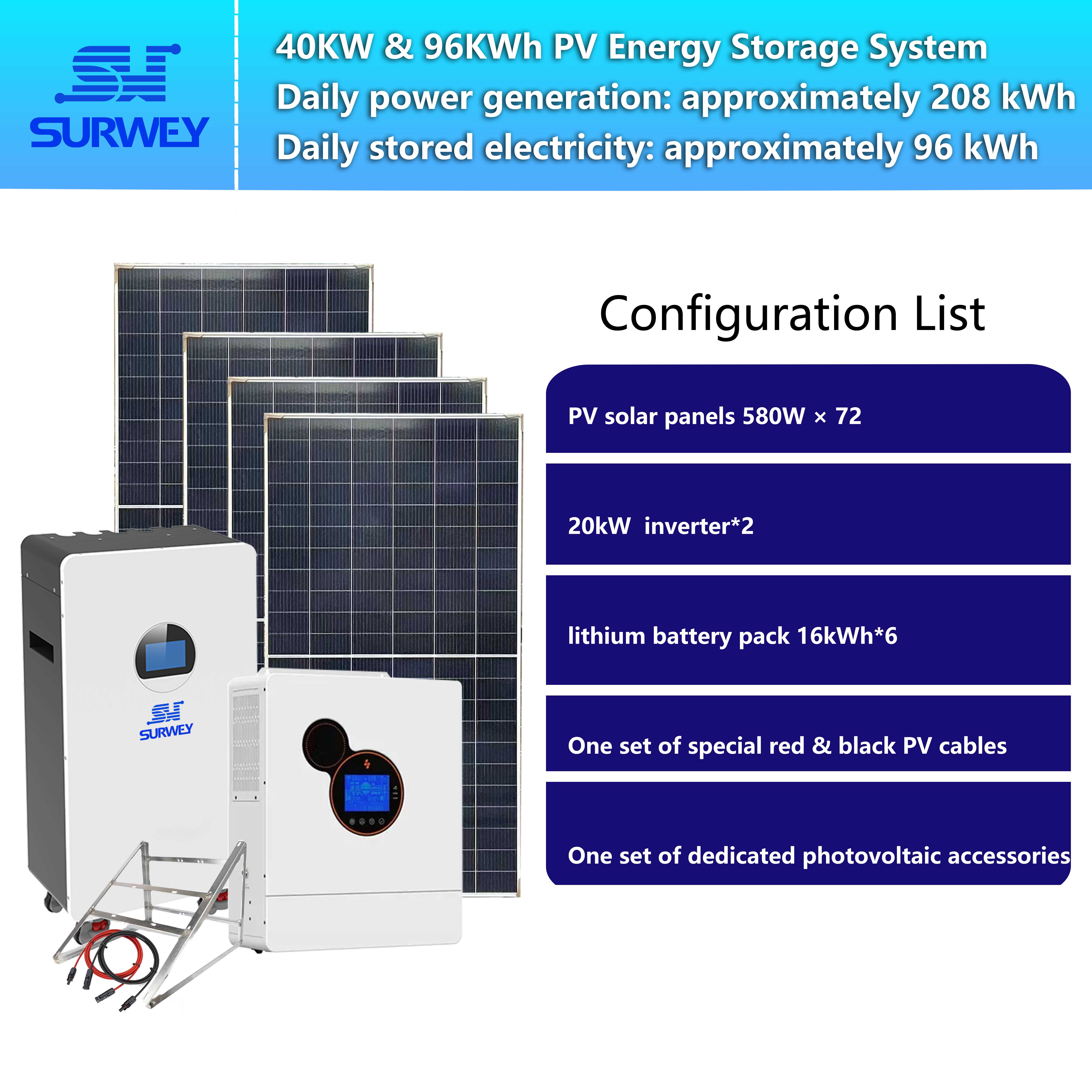
A rooftop PV energy storage system relies on three core components working together: solar panels to generate electricity, inverters to convert and manage power, and battery storage to store energy for peak-shaving and off-peak use.
Solar Panels
580W monocrystalline modules are adopted, featuring 144 half-cut cells with a conversion efficiency above 22.5%. Each panel measures 2279×1134×30 mm and weighs approximately 32 kg. The half-cut design reduces the risk of hotspots and minimizes power loss under partial shading, making it ideal for rooftops where minor shading is unavoidable. In high-irradiance regions such as Kenya, high-efficiency modules maximize power output within the limited rooftop area.
20kW Hybrid Inverter

The 20kW hybrid inverter converts DC power from PV modules into AC power usable by the hotel. It also manages battery charging and discharging, automatic backup switching, and intelligent load dispatching. It is equipped with 2 MPPT channels. Each channel supports a maximum input current of 40A, an MPPT operating voltage range of 150–850V, and a maximum PV input voltage of 1000V. The rated AC output power is 20kW. Its maximum efficiency reaches 97.6%, and MPPT tracking efficiency hits 99.9%, minimizing energy waste. With an IP66 protection rating, it is dustproof and waterproof, suitable for outdoor installation or equipment rooms.
16kWh Energy Storage Batteries
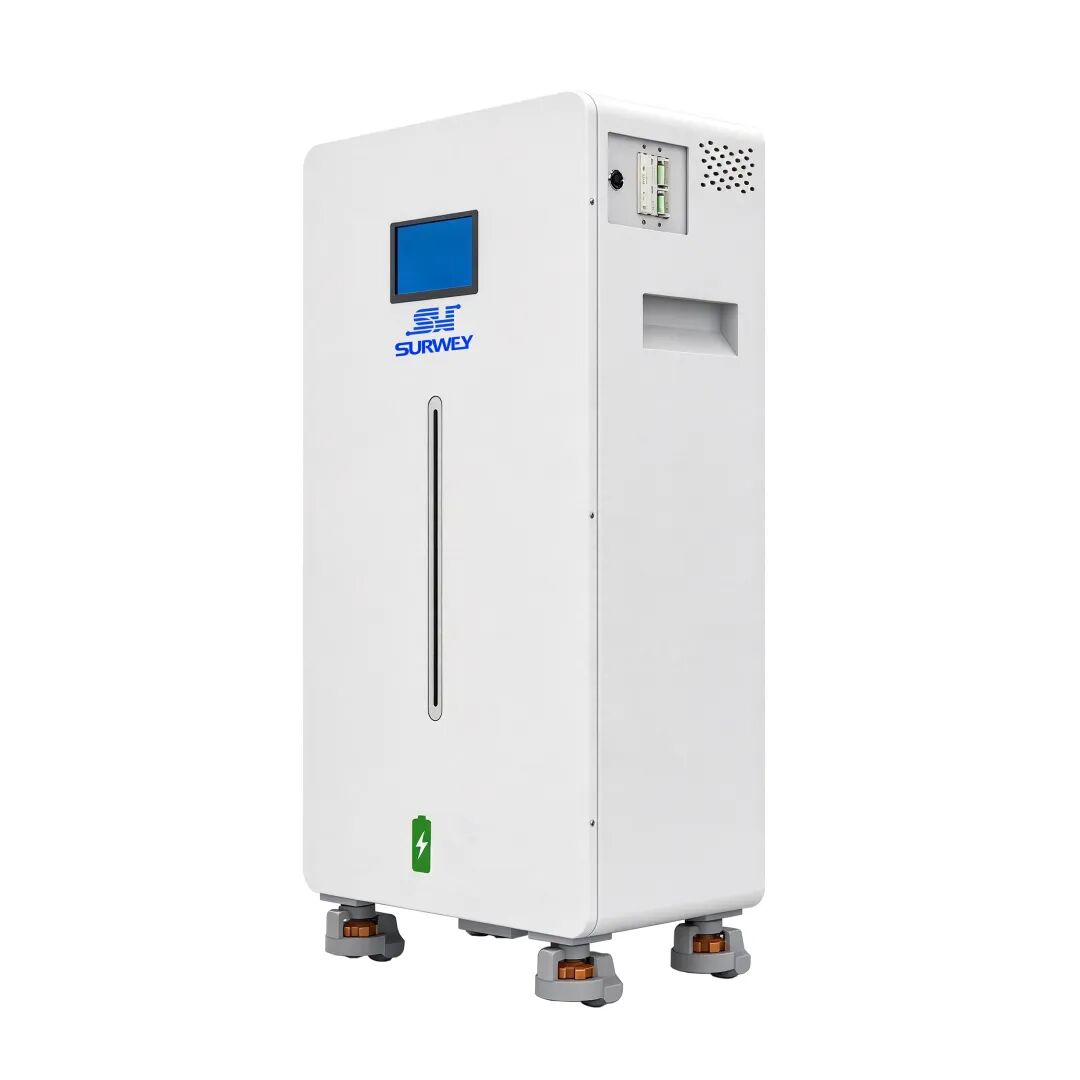
Six 16kWh lithium iron phosphate battery modules are deployed. Each module has a nominal voltage of 51.2V, a capacity of 314Ah, and a maximum charge/discharge current of 200A. Multiple units can be connected in parallel for capacity expansion. Lithium iron phosphate batteries stand out for superior safety and cycle life. Designed for a 90% depth of discharge, they achieve 6,000–8,000 cycles, perfectly matching the long-term stable operation requirements of hotels.
System Operating Principle Video
02 PV String Design: Voltage First, Then String Count
This is the most critical and error-prone step in system design. Many assume panels can simply be wired in series, but the number of panels per string directly determines string voltage. Improper voltage calculation results in low generation efficiency or even permanent damage to equipment.
The core rule for string configuration: the total open-circuit voltage, especially under low-temperature morning conditions when voltage rises, must never exceed the inverter’s upper limit with sufficient safety margin. Meanwhile, the operating voltage should stay within the high-efficiency MPPT range.
For this design, 12 panels are connected in series per string:
- Open-circuit voltage (Voc) per module: 51.46V; 12 modules in series ≈ 617.5V
- Kenya has a large diurnal temperature difference. Low morning temperatures raise open-circuit voltage. After applying a low-temperature coefficient of 1.06, the adjusted voltage ≈ 655V
- The inverter maximum input voltage is 1000V, leaving a comfortable safety margin of roughly 345V
- Operating voltage (Vmp) per module: 42.65V × 12 ≈ 511.8V. This falls inside the 150–850V MPPT window and sits close to the rated 625V point for high efficiency.
There are 72 panels in total, grouped into 6 strings of 12 panels each. A key principle: every string has an identical number of modules. This ensures balanced voltage, current and load across all strings for stable system performance and convenient troubleshooting.
Allocation: 2 units of 20kW inverters, each connected to 3 strings. Each inverter has 2 MPPT channels: one channel for 2 parallel strings and the other for 1 string. A common concern is overcurrent. Note that series connection defines voltage while parallel connection affects current. Each string operates at around 13.6A; two parallel strings draw approximately 27.2A, well below the 40A per-channel MPPT limit.
Always prioritize voltage calculation over power when designing strings. Unutilized power can be adjusted later, but overvoltage creates severe hidden risks. The correct workflow: confirm voltage limits → determine string quantity → evenly distribute strings to inverters.

Indoor Installation Diagram of Key PV Equipment
03 Energy Storage Sizing: Voltage Matching + Adequate Capacity
Batteries cannot be connected arbitrarily. The primary requirement is voltage compatibility with the inverter. These batteries have a nominal voltage of 51.2V, matching the inverter’s recommended battery voltage. The BMS communicates with the inverter via RS485/CAN, and charge-discharge strategies are centrally managed by the inverter.
Total capacity: 6 × 16kWh batteries = 96kWh, shared by 2 inverters (3 batteries per inverter). With a 90% depth of discharge, the 96kWh storage, paired with optimized scheduling, generally covers major evening loads until sunrise, when solar generation resumes and closes the self-consumption cycle.
Solar power supplies on-site loads with priority during daytime. Surplus energy charges the batteries, which supply power after sunset. This peak-shaving and valley-filling cycle runs automatically through the intelligent control of the hybrid inverter.🔋
04 Project Implementation: Four Stages
Rooftop PV energy storage projects follow a clear implementation roadmap in four phases:
- Site Survey: Measure rooftop dimensions, assess structural load-bearing capacity, check orientation and shading. While solar orientation and tilt are less stringent in Kenya’s high-irradiance environment, structural load and waterproofing are critical. Mounting brackets must be securely fixed without damaging the existing waterproof layer.
- String Layout: Arrange panels on the rooftop following the 12-panel-per-string design and fasten them with brackets. Route DC cables neatly and connect them to inverters in compliance with standards for easy maintenance.
- Energy Storage and Power Distribution Installation: Place battery cabinets indoors or in dedicated equipment rooms. Inverters can be wall-mounted or floor-standing. Complete standard wiring, lightning protection, earthing, ventilation and heat dissipation. Thermal management and fire protection are mandatory for a nearly 100kWh energy storage system.
- Commissioning and Monitoring: Verify voltage and current for each string after startup and confirm normal battery charge and discharge. Real-time data including power generation, state of charge and system status can be monitored remotely via display screens or mobile apps.
05 Daily Power Generation Output
Total installed capacity: 72 × 580W ≈ 41.76kWp (~42kW rooftop power station). Kenya lies near the equator with stable sunshine. The equivalent peak sun hours in most areas range from 5 to 5.5 hours per day. The overall system efficiency is estimated at 0.75–0.78 after accounting for high-temperature derating, cable losses, dust and shading.
- Daily generation: 41.76 × 5.3 × 0.76 ≈ 168 kWh, typically ranging from 160 to 175 kWh depending on weather
- Monthly generation: approximately 4,800–5,200 kWh
- Annual generation: approximately 58,000–64,000 kWh
For a medium-sized hotel, this output means daytime loads can mostly run on self-generated solar power, while the 96kWh storage covers key nighttime consumption, substantially reducing reliance on the utility grid. Generation varies with seasons, weather and rooftop conditions. The figures above are estimates based on local typical solar resources; actual results depend on on-site measurement.🌙
06 Rational Judgment Matters More Than Hardware
PV string configuration is far more than connecting panels together. It requires systematic evaluation: verify voltage limits first, set string counts, then distribute strings evenly. A well-designed system delivers stable, long-lasting power generation; premium equipment cannot compensate for flawed design.
If hotel or factory owners are considering rooftop PV plus energy storage, do not rush to purchase hardware. Start with site surveys and technical calculations to evaluate solar resources, load profiles and rooftop conditions. A well-matched design ensures worthwhile investment.


