
PV & Energy Storage Solution for Small Processing Plants in Zambia | Stable Power Supply Tailored to Local Production Loads

Factory Rooftop PV Rendering
Introduction: In many industrial zones across Africa, unstable grid power and sudden blackouts are major headaches for processing plants. For rice mills, timber processing factories and hardware workshops, power cuts cause machinery to halt and raw materials to be scrapped. Every trip brings direct economic losses. This hybrid PV-storage system deployed in Zambia consists of 2 sets of 12kW hybrid inverters + 32kWh energy storage + 40 pieces of 580W PV modules. It realizes self-consumption during daytime, energy storage for production backup, and keeps core equipment running continuously even when the utility grid fails.
The hardware configuration of the whole system is listed below:
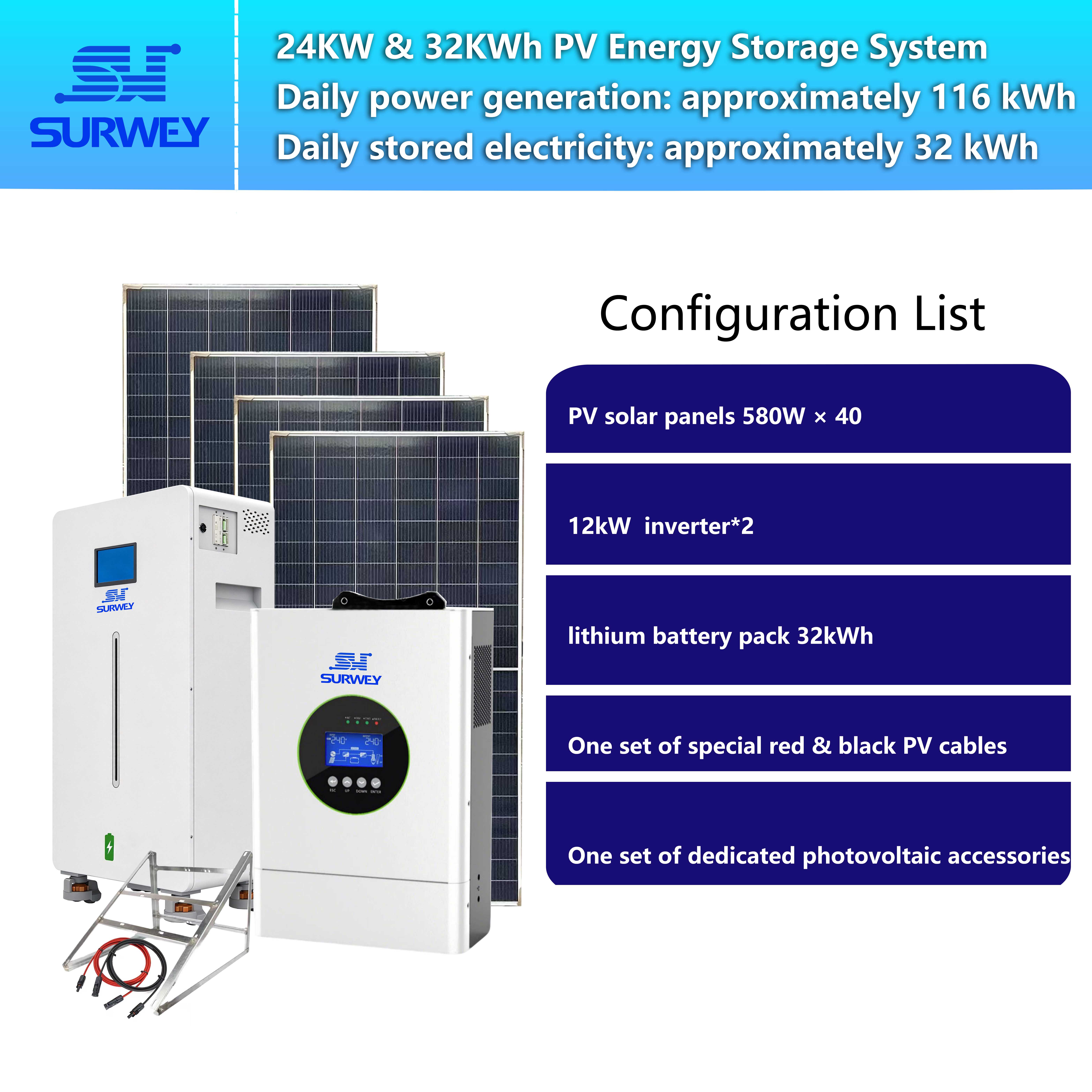
✅ Hybrid Inverter: 2 units of 12kW IP66 hybrid inverters
✅ Energy Storage Battery: 1 unit of SW-L-32kWh vertical LiFePO4 battery (51.2V)
✅ PV Module: 40 pieces of 580W monocrystalline half-cut solar panels
This system is designed for on-site self-consumption of industrial facilities. It supports priority power supply from PV, peak shaving and backup via battery, and complementary power supply with the utility grid. It can maintain the operation of essential processing equipment with PV and battery during grid outages, matching the power consumption characteristics of small and medium-sized rice, hardware and timber processing plants in Zambia.

Installation Drawing of Main System Components
We focus on the PV string design which is critical for the project. Strings must be carefully matched to the MPPT voltage window of inverters, as this is the foundation of stable system operation. Inverter specifications: The 12kW hybrid inverter has an MPPT operating voltage range of 120V~500V per track. Parameters of single 580W module: Open-circuit voltage Voc=51.46V, operating voltage Vmp=42.65V.
Zambia is located in the tropical Southern Hemisphere with a large diurnal temperature difference. Module voltage drops at high noon under high temperature and rises at low temperature in early morning. The string design must ensure that the open-circuit voltage at low temperature does not exceed the upper MPPT limit, and the operating voltage at high temperature stays above the minimum MPPT start voltage. We adopt the configuration of 10 modules per string: Open-circuit voltage per string: 10 × 51.46V = 514.6V. Due to the year-round high ambient temperature in Zambia, module voltage will decrease under operating conditions and fall into the 120–500V working range, adapting to local site conditions.
All 40 modules are divided into 4 strings with 10 modules each. The two 12kW hybrid inverters have 2 independent MPPT channels each, providing 4 MPPT channels in total. Two strings are connected in parallel to one MPPT channel. The same number of modules in series on one MPPT channel guarantees high MPPT tracking efficiency. The maximum MPPT tracking efficiency of this inverter reaches 99.99%, so the power generation potential can be fully released. Total installed capacity: 40 × 580W = 23200W = 23.2kWp.
The average daily equivalent sunshine duration on horizontal surfaces in most areas of Zambia is 4.8~5.2h. We take 5h as the reference value. A comprehensive efficiency factor of 0.8 is applied to account for high-temperature derating, soiling loss, cable loss and inverter loss. Daily power generation ≈ 23.2kWp × 5h × 0.8 = 92.8kWh. Under sufficient sunlight and clean modules, the system can steadily generate approximately 93 kWh per day.
System Operation Principle Video
📋 Wiring List for Full Set of 40 × 580W Modules ✅ Final wiring scheme: 10 modules in series × 2 strings in parallel. 40 solar panels are divided into 4 groups of 10 modules each. Series grouping (4 groups in total):
- Group 1: 10 panels connected in series (positive to negative), with one positive cable and one negative cable led out.
- Group 2: 10 panels connected in series in the same way.
- Group 3: 10 panels connected in series in the same way.
- Group 4: 10 panels connected in series in the same way.
Parallel connection at inverter side:
- PV1 port: Connect the positive and negative cables of Group 1 and Group 2 in parallel via branch connectors, then connect to PV1+ and PV1- of the inverter.
- PV2 port: Connect the positive and negative cables of Group 3 and Group 4 in parallel via branch connectors, then connect to PV2+ and PV2- of the inverter.
✅ Scheme logic: 4 strings of 10 modules each; 2 strings in parallel per MPPT channel. The 4 strings fully occupy the 4 MPPT channels of the two inverters to utilize all 40 modules.
⚠️ Mandatory Construction Requirements (Must be communicated clearly to electricians)
- All strings contain exactly 10 modules. Do not mix strings with different series quantities on the same MPPT.
- Each string shall be equipped with an independent DC fuse; fasten all MC4 connectors tightly. DC cables of 4mm² PV-specialized wire are recommended.
- Label every string uniformly with tag【10-Module String】for convenient maintenance.
- Battery side for two inverters: Batteries are connected in parallel. BMS communication cables shall be connected to both inverters to keep consistent battery voltage and synchronized dispatch.
- Measure open-circuit voltage of each string with a multimeter before power-on. Normal open-circuit voltage per string is around 514V. Investigate wiring immediately if the reading deviates significantly.
✅ Simple on-site instruction: 40 pieces of 580W panels, 4 strings with 10 panels each; 2 strings parallel into one MPPT channel, 4 strings for 4 MPPT channels of two inverters.
II. Introduction of Core Equipment for Zambian Factory Scenarios
12kW Hybrid Inverter (2 units)

IP66 outdoor protection rating, suitable for rainy and dusty outdoor environments in Africa. It supports three working modes: grid-tied, off-grid and hybrid. Each unit has 2 independent MPPT channels with maximum tracking efficiency up to 99.99%. It supports battery-first and PV-first dispatch strategies. The factory consumes PV power preferentially during daytime, and excess power is stored in the battery. The battery supplies power in cloudy weather or at dusk. The system automatically switches to off-grid mode during grid failure to secure continuous operation of core processing equipment. The two inverters work in parallel and are coordinated by the battery BMS for charge and discharge management.
SW-L-32kWh Vertical LiFePO4 Energy Storage Battery
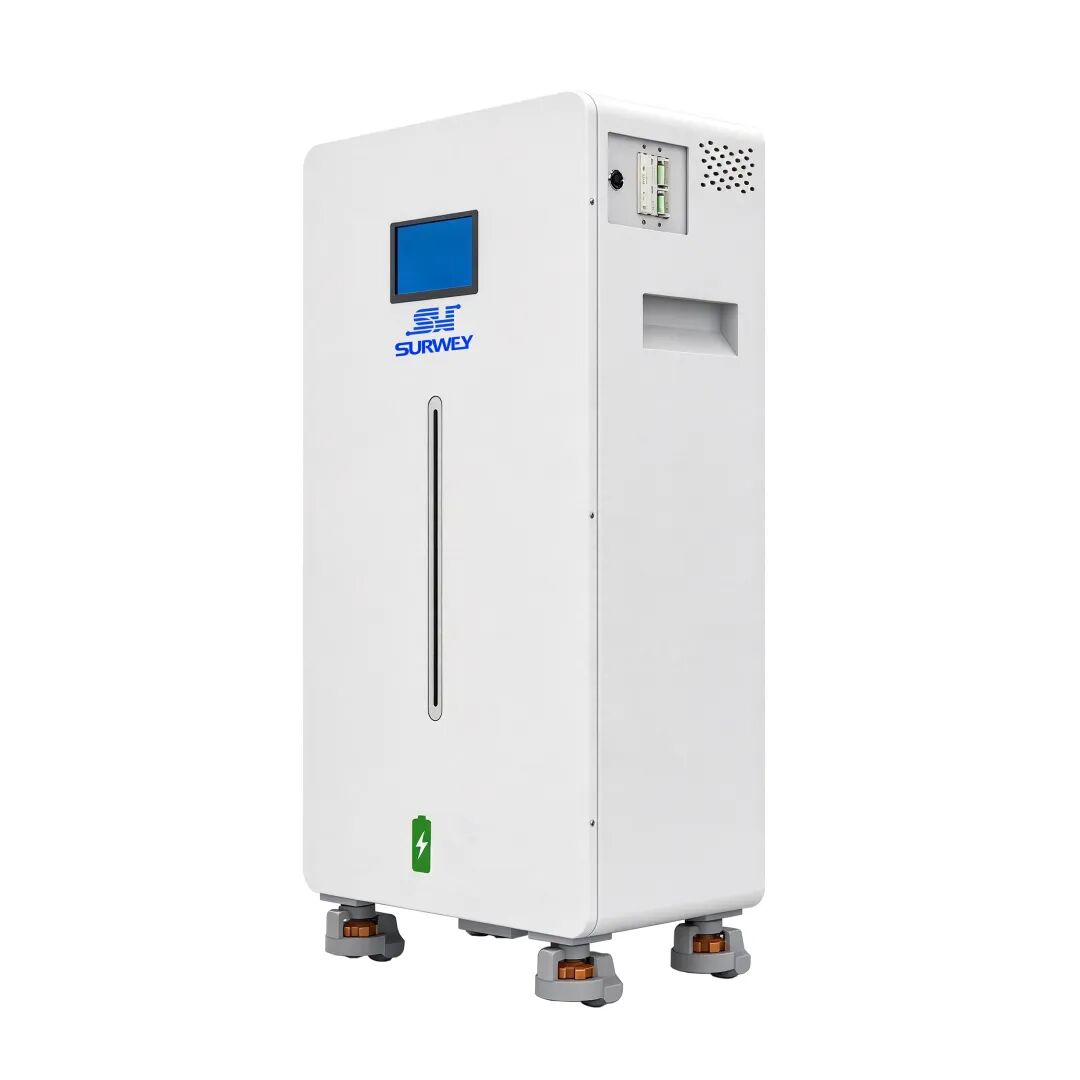
51.2V low-voltage energy storage system with vertical layout, occupying small floor space inside workshops. LiFePO4 chemistry features good high-temperature resistance, suitable for hot climate in Zambia and long cycle life. Built-in BMS realizes cell balancing, overvoltage, undervoltage, overcurrent and overtemperature protection. It supports communication connection with both inverters, synchronizing battery status and avoiding scheduling conflict to ensure stable charge and discharge.
580W Monocrystalline Half-cut PV Module
High-power half-cut module with excellent low-light performance, matching the solar resource conditions in Africa. Low temperature coefficient reduces power attenuation under high temperature. The frame is resistant to salt spray and sand erosion for high reliability in long-term outdoor deployment.
Closing Remarks
For overseas commercial and industrial PV-storage projects, string design and equipment selection must adapt to local climate and grid conditions. For processing plants troubled by unstable grid supply in Africa, a well-matched hybrid energy storage system serves as reliable guarantee for continuous production. If you have demands for PV and energy storage solutions for overseas factories, feel free to contact us for further discussion 📩


