
Pure Off-Grid PV Energy Storage System Solution for Self-Built House in Shanxi, China|All-Weather Stable Power Supply, Independent Operation of Air Source Heat Pumps and Multiple Loads
Preface
This project is a standalone off-grid photovoltaic energy storage power supply project for a self-built house in Shanxi, China. The building has no access to the municipal power grid and needs to be completely disconnected from the external grid to realize all-weather autonomous power supply for the building. The owner’s total daily electricity consumption is 70 kWh, with energy storage guaranteeing a base load of 30 kWh during nighttime. Core electrical loads include two 6600W air source heat pump units, two air conditioners, an electric water heater, as well as conventional household loads such as lighting and sockets.
This solution adopts N-type bifacial 650W PV modules to harvest solar energy, paired with a 64kWh low-voltage lithium iron phosphate energy storage battery to store surplus electric energy, and a 20kW hybrid grid inverter/controller to complete electric energy conversion and system energy scheduling, operating fully off-grid. Combined with the local solar irradiance resources in Shanxi, the system is configured with 36 pieces of 650W PV modules, a 20kW inverter/controller, and 4 units of 16kWh low-voltage lithium energy storage batteries.
The scheme completes the calculation of string topology, electrical parameter matching, energy storage capacity, load-carrying capacity and operation strategy, ensuring stable power supply for day and night loads, meeting continuous use of heating, domestic hot water and daily household appliances, avoiding power outage risks, and realizing self-sufficiency of clean energy for the self-built house.
1. Overview of Overall System Configuration
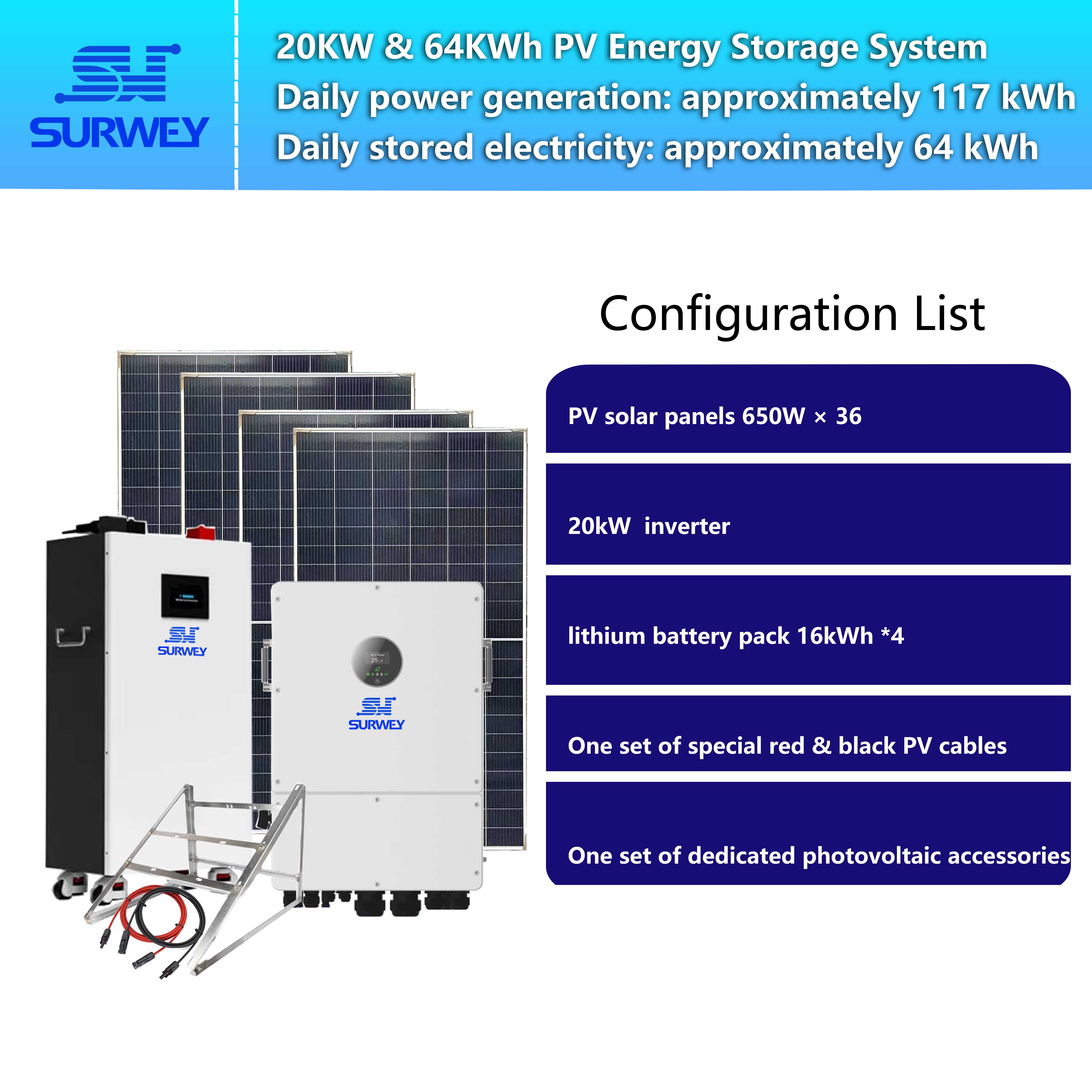
This pure off-grid power supply system consists of a PV array, a 20kW inverter/controller, a 64kWh low-voltage lithium iron phosphate battery, AC/DC power distribution units, lightning protection and protection devices.
 System Configuration Diagram
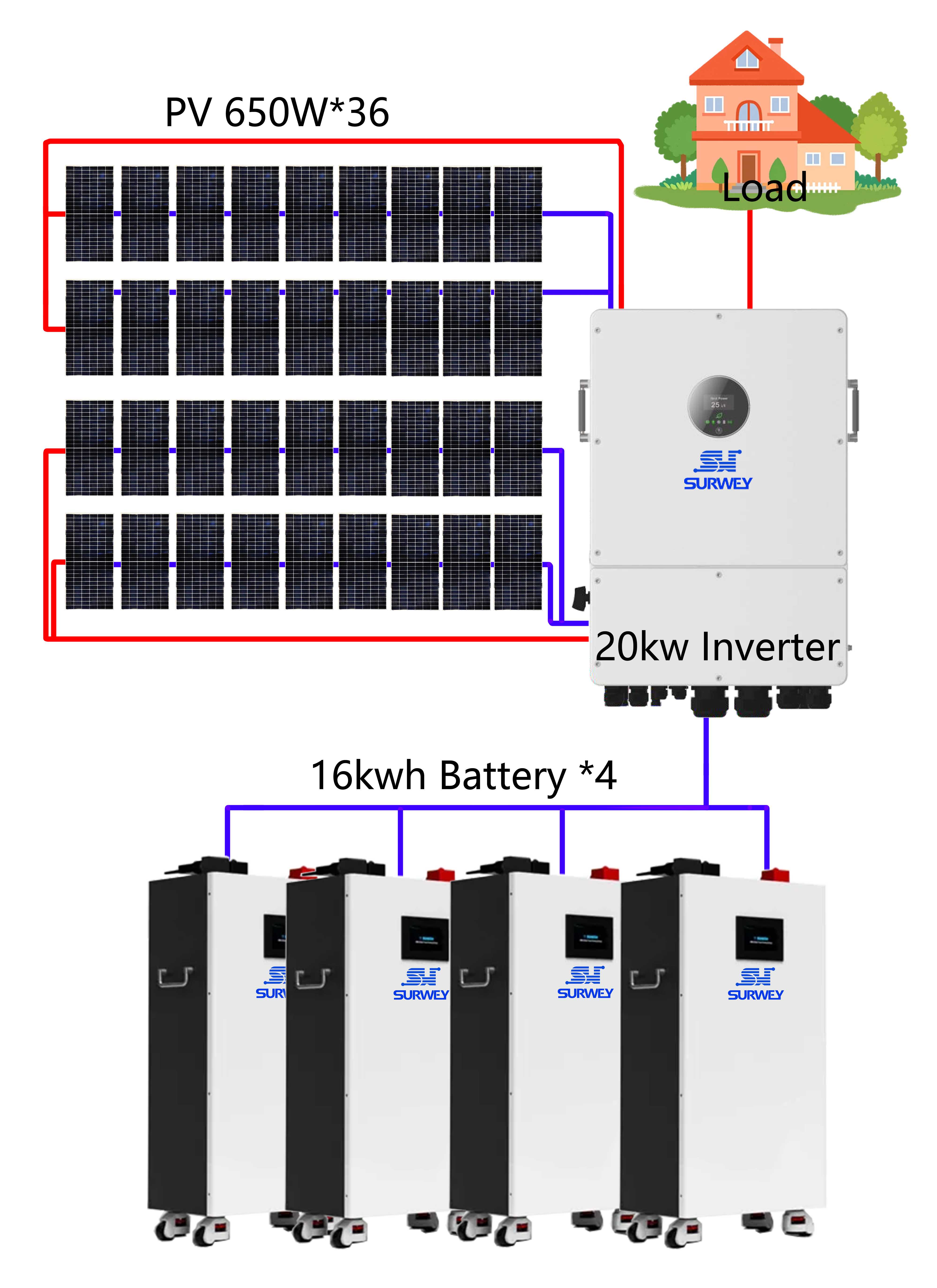
The PV array adopts 36 pieces of N-type bifacial 650W PV modules. 9 modules are connected in series to form one string, with a total of 4 strings. Every 2 strings are paralleled into one group and connected to two independent MPPT interfaces of the inverter/controller respectively. The energy storage unit is equipped with 4 units of 16kWh, 51.2V floor-standing low-voltage lithium iron phosphate batteries, with a total energy storage capacity of 64kWh. The system is designed with an average daily power generation of 117 kWh and a daily storable energy of 64 kWh, meeting the total daily electricity demand of 70 kWh, and the energy storage guarantees the base load of 30 kWh at night. The complete system can stably drive two 6600W air source heat pumps, two air conditioners, an electric water heater and all other loads. It never connects to the public power grid and realizes independent clean energy power supply for the building.
Main Equipment Parameters of the Project
N-type bifacial monocrystalline silicon module, adopting double-glass semi-tempered coated glass. It features excellent low-temperature power generation performance, suitable for the low temperature and snow environment in winter in Shanxi, with good snow and wind resistance and low power attenuation. Under STC, the open-circuit voltage is 49.73V and short-circuit current is 16.56A. As the core power generation unit of the system, it converts solar energy into DC electric energy.
20kW Hybrid Grid Inverter/Controller
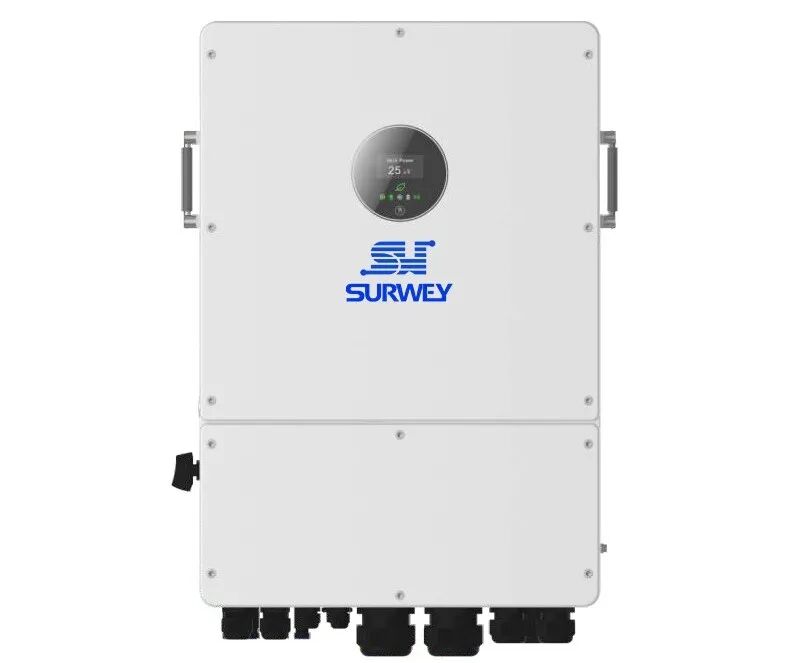
An integrated hybrid grid device integrating 2 independent MPPT PV charging, inversion and battery management. It supports flexible switching between grid-tied and off-grid modes. The MPPT operating voltage range is 150V~850V, the maximum input current per MPPT channel is 40A. It supports 51.2V lithium battery access. It can charge the battery with PV power, invert DC power into standard sine-wave AC output, control system power, and is equipped with comprehensive protection functions.
64kWh Low-Voltage Lithium Iron Phosphate Energy Storage Battery
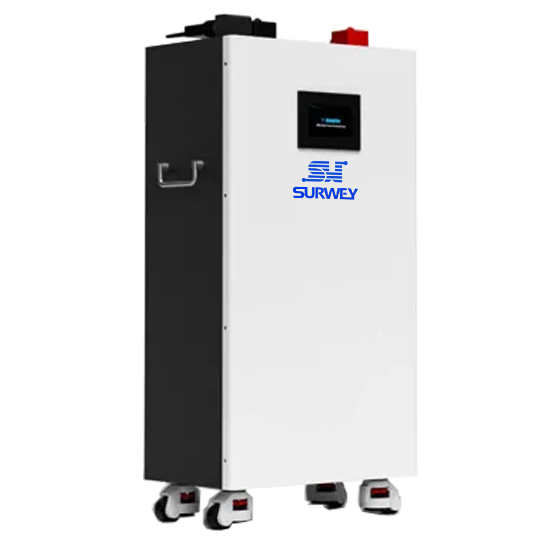
Composed of 4 paralleled 16kWh, 51.2V floor-standing lithium iron phosphate batteries, with a total capacity of 64kWh. Built-in BMS battery management system, supporting RS485/CAN communication. Recommended depth of discharge is 90%, cycle life ≥6000 times, with active equalization. It stores surplus PV power and releases electric energy during non-sunlight hours to guarantee stable power supply at night.
2. Calculation of Electrical Parameter Matching for PV Strings
 System Topology Diagram
The PV array is designed with 9 modules in series per string, 4 PV strings in total. Two strings are paralleled and connected to the No.1 MPPT port of the inverter, and the remaining two strings are paralleled and connected to the No.2 MPPT port.
For one string of 9 modules in series, STC open-circuit voltage: 9×49.73V=447.57V. The open-circuit voltage rises under low-temperature conditions in Shanxi. The low-temperature limit voltage is still lower than the maximum MPPT input of 850V and higher than the startup voltage of 180V, falling within the MPPT operating range of 150~850V of the inverter.
The short-circuit current of a single string is 16.56A. After two strings are paralleled, the total short-circuit current of a single MPPT channel is 33.12A, which is less than the maximum short-circuit current limit of 50A and the maximum input current of 40A per MPPT channel. The current is within the allowable range of the equipment with no risk of overvoltage or overcurrent.
The total installed capacity of 36 pieces of 650W modules in the system is 23.4kW. Combined with the horizontal solar irradiance conditions in Shanxi, comprehensively considering module temperature loss, line loss, charging and inversion loss, dust and snow loss, the average daily power generation of the system is calculated as 117 kWh. During daytime, PV power supplies on-site loads preferentially, and surplus power is stored in the energy storage battery, with 64 kWh of electricity available for daily storage. Daytime power generation covers the total daily electricity consumption of 70 kWh, and surplus power is stored in the battery for night use. The two MPPT channels track independently, reducing power generation loss caused by partial snow shading and improving power generation utilization.
3. System Operating Principle
This project is a pure off-grid standalone PV energy storage system, not connected to the municipal power grid. The energy flow of the whole system is divided into daytime PV power generation condition and nighttime energy storage discharge condition.
Schematic Video of System Working Principle
When sunlight is sufficient during the day, the 650W double-glass PV array receives solar radiation and converts light energy into DC power. DC power is transmitted through DC cables to the two independent MPPT modules of the 20kW inverter/controller. The MPPT modules track the maximum power point of the PV array in real time to extract the maximum generating power. Electric energy preferentially supplies AC-side loads, namely two air source heat pumps, air conditioners, water heaters and other household electrical equipment to meet real-time power consumption of the building during daytime. When PV power is greater than real-time load consumption, surplus DC power charges the 64kWh low-voltage lithium iron phosphate energy storage battery through the internal charging circuit of the inverter/controller, storing electric energy inside the battery. The battery BMS monitors the voltage, current and temperature of each cell in real time, controls charging cutoff to prevent overcharging and ensure the safety of the energy storage battery.
In the evening, at night or on cloudy days, when sunlight weakens and PV power drops to a level unable to support load operation, the system automatically switches operating mode. The energy storage lithium battery releases DC power into the 20kW inverter/controller, which inverts low-voltage DC power into pure sine-wave AC power to continuously supply all AC loads and realize uninterrupted power supply at night.
The system is embedded with intelligent power management logic, which compares PV generation power, battery remaining SOC capacity and load power in real time. When the battery capacity drops to the protection threshold, the system will cut off secondary loads according to preset priority, guaranteeing priority power supply for core loads such as heating and hot water, and preventing deep discharge of the battery from damaging cells. Relying on the closed-loop energy cycle of PV-energy storage-inverter, the whole system is completely separated from the utility grid to realize all-weather autonomous power supply for the building.
4. Calculation of Available Electrical Power and Continuous Duration of the System
Core load list of the project: two 6600W air source heat pump units, rated total power 13200W; two air conditioners; one electric water heater, superimposed with conventional household loads including lighting and sockets. The rated AC output power of the 20kW inverter/controller is 20kW, which can output twice the rated power for 10 seconds in short term. It has sufficient power margin to withstand the inrush current during startup of air source heat pump compressors and avoid overload shutdown caused by compressor startup.
The owner’s total daily electricity demand is 70 kWh, and energy storage guarantees 30 kWh of electricity consumption at night. The system generates 117 kWh on sunny days. Around 40 kWh is consumed by daytime loads, and the remaining 64 kWh is stored in the energy storage battery. With a total energy storage capacity of 64kWh, considering inversion conversion efficiency and line loss, the available effective electricity can meet the 30 kWh power demand at night.
Sunny Day Condition: PV directly supplies loads during daytime; air source heat pumps, air conditioners and water heaters can run continuously all day. At night, power is supplied by the energy storage battery, stably delivering 30 kWh of electricity to ensure continuous operation of core heating and hot water loads such as air source heat pumps and water heaters.
Continuous Cloudy Day Condition: PV power generation decreases. Power supply is maintained by stored energy. The system prompts to reduce non-essential power consumption and prioritize heating and domestic hot water loads to extend the power supply duration of energy storage. Lithium iron phosphate energy storage batteries feature long cycle life and can withstand repeated charge and discharge for a long time, adapting to the large fluctuation of solar irradiance in winter and summer in Shanxi.
5. Detailed System Design
5.1 PV Array Layout and String Topology Design
The project site has sufficient area to accommodate roof installation of 36 pieces of 650W double-glass PV modules. The array adopts 9 modules in series per string, with 4 PV strings in total. Every two strings are paralleled as one group and connected to the two independent MPPT interfaces of the inverter/controller respectively. The two MPPT channels are independent of each other: one MPPT channel manages 2 strings, and the other manages the other 2 strings.
Core advantages of this topology: when snow, dust or fallen leaves partially shade one string, only the power generation of this MPPT channel is affected, without sharp drop of power generation of the whole array. It improves the anti-shading capability of the system and adapts to snowy winters in Shanxi. DC cables are selected to match the operating current of the string, and the voltage drop of the DC loop is strictly controlled within the specification allowable range to reduce DC transmission loss. The module support adopts wind and snow resistant steel structure, suitable for low temperature, strong wind and snow climate in winter in Shanxi. The support inclination angle is set according to the local optimal irradiance angle to maximize solar energy capture in winter and improve power generation during the heating season.
The modules are N-type double-glass products with excellent low-temperature power generation characteristics. The open-circuit voltage of modules rises under low temperature in winter. The string voltage in this scheme has been verified for low-temperature limit open-circuit voltage in advance, ensuring that under the minimum ambient temperature locally, the series voltage of modules remains within the MPPT allowable range of the inverter, with no risk of overvoltage damaging the inverter. The module adopts IP68 junction box for high reliability in long-term outdoor use.
5.2 Energy Storage System Configuration Design
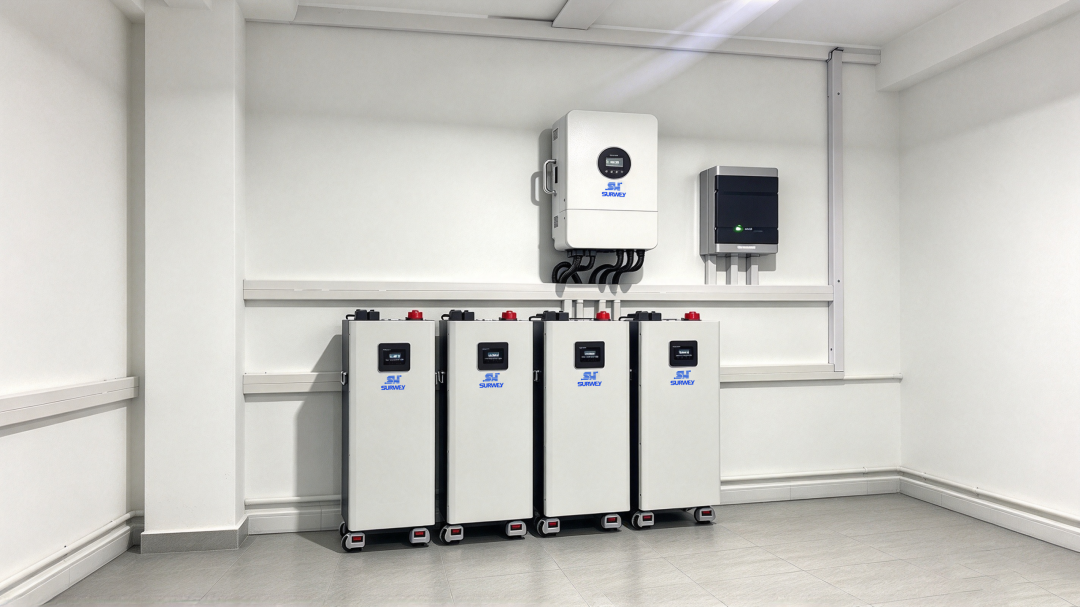 Indoor Placement Diagram of Important System Equipment
The energy storage unit consists of 4 paralleled 16kWh floor-standing low-voltage lithium iron phosphate batteries, with a total capacity of 64kWh and nominal voltage of 51.2V. Each unit has a built-in independent BMS battery management system. BMS collects the voltage, temperature, charge and discharge current of each cell in real time, with protection functions including overcharge, overdischarge, overcurrent, high temperature and low temperature protection. It supports RS485/CAN communication and can interwork with the inverter/controller to guarantee safe operation of energy storage.
The recommended depth of discharge of the battery is 90%, and the cycle life ≥6000 times, greatly extending the battery replacement cycle and reducing the full life-cycle cost of the project. The battery adopts a modular floor-standing design. A single 16kWh independent unit is easy to install. For later operation and maintenance, a single battery can be inspected and replaced separately without powering off the whole energy storage system.
The battery pack is connected in parallel to the DC energy storage port of the 20kW inverter/controller, and the system uniformly manages the battery charge and discharge strategy. The system sets upper charging limit and lower discharge limit to prevent deep charge and discharge of the battery and extend service life. Surplus PV power during daytime is preferentially supplemented to the battery; once the battery is fully charged, the system automatically limits voltage and stops charging. At night, when discharge reaches the protection threshold, the system automatically restricts discharge to protect cells. The battery has a wide operating temperature range of -20℃~55℃ for charge and discharge, adapting to the low-temperature winter environment in Shanxi. Indoor placement can further optimize the operating temperature of the battery.
5.3 Control Design of 20kW Hybrid Grid Inverter/Controller
The 20kW hybrid grid inverter/controller is the core power conversion and control equipment of this system, integrating two independent MPPT PV charge controllers, sine-wave inverter, battery charge-discharge management and multiple system protection functions. The two MPPT channels perform independent maximum power tracking, perfectly matching the 2+2 grouping string scheme of 4 strings in this project.
The equipment is recommended to match the 51.2V lithium battery voltage level, consistent with the energy storage battery. The inverted output is pure sine-wave AC power with stable waveform and THDv≤3%, suitable for inductive loads such as air source heat pump compressors and air conditioner motors. It effectively reduces harmonic loss of motor loads, protects air source heat pumps and air conditioners, and avoids compressor burnout caused by square-wave power supply.
Multiple protections are integrated inside the equipment: PV reverse connection protection, DC switch, DC/AC surge protection, insulation monitoring, leakage protection, AC short-circuit protection, ground fault monitoring and islanding protection. When the instantaneous load power exceeds the equipment rating, the system sends an overload alarm. Short-time overload can withstand compressor startup impulse, while long-term overload will automatically cut off output to protect the inverter and downstream electrical equipment.
The equipment reaches IP66 protection rating, supports wide-temperature operation from -30℃ to +60℃, comes with intelligent air cooling heat dissipation, and supports remote viewing of operating parameters via APP, facilitating users to remotely monitor system power generation, energy storage and load status.
5.4 AC/DC Power Distribution and Safety Protection Design
DC Side: DC power output from PV modules is connected to the DC combiner unit, equipped with DC fuses and DC circuit breakers. Each MPPT branch is equipped with independent protection devices to quickly cut off the loop in case of DC short circuit or electric leakage and protect PV modules and the inverter. DC cables adopt low-temperature resistant flame-retardant PV special cables to adapt to low temperature in winter in Shanxi. Cables are well insulated and fixed; outdoor parts are waterproof and anti-aging.
AC Side: AC power output by the inverter is connected to the AC power distribution cabinet, equipped with AC circuit breakers and surge protection devices. Multiple branches supply power separately for air source heat pumps, air conditioners, water heaters, ordinary sockets and lighting. The multi-branch design facilitates separate control of each type of load. Tripping of a single branch will not cause whole-house power outage. The system is equipped with Type II/III surge protection devices to resist lightning induced surges in thunderstorm seasons in Shanxi and protect the whole set of electrical equipment.
Earthing System: PV supports, inverter shell, battery cabinet and power distribution cabinet are all reliably earthed to reduce electric shock risks and meet the safety earthing specifications for off-grid PV energy storage systems.
6. Load Matching and Power Consumption Strategy Design
The core power consumption target of the owner: total daily power consumption of 70 kWh, energy storage guarantee of 30 kWh at night. Core loads are two 6600W air source heat pumps for heating, together with air conditioners and domestic electric water heaters. Air source heat pumps are seasonal high-energy loads with large power consumption during winter heating season and significantly reduced load in summer. The system conducts annual energy balance design based on average daily power generation of 117 kWh. On sunny days, power generation is sufficient. In addition to meeting the 70 kWh daily power consumption, the remaining 64 kWh is stored in energy storage. In case of continuous cloudy days, stored energy maintains basic power consumption at night, and an intelligent load management strategy is set meanwhile.
Load Hierarchical Management:
- Primary priority loads: air source heat pumps and electric water heaters (heating and domestic hot water)
- Secondary loads: air conditioners
- Tertiary loads: lighting, ordinary sockets and other non-essential loads
When battery SOC drops to the set threshold, the system automatically cuts off tertiary and secondary loads step by step to guarantee continuous power supply for primary heating and hot water loads and meet basic living needs.
Winter Heating Season: Shanxi features short sunshine duration and low temperature in winter, and air source heat pumps run for long hours with increased power demand. Power is jointly supplied by PV and energy storage. In summer, solar irradiance is sufficient with surplus power generation. After energy storage is fully charged, longer backup power supply can be maintained to improve system redundancy.
7. System Loss Analysis
System energy loss consists of multiple parts: PV module temperature loss; high temperature in summer in Shanxi will slightly reduce module output power; DC cable transmission loss; MPPT charging conversion loss; battery charge and discharge loss; inverter inversion loss; loss of AC cables and power distribution components.
All losses are incorporated into calculation during power generation estimation of the scheme, and the final available average daily power generation of the system is 117 kWh.
During daytime, PV power preferentially supplies loads directly, eliminating double conversion loss of "PV - battery - inversion" and only incurring single loss of direct PV inversion, improving energy utilization efficiency. Only surplus power is stored into the battery. Power consumption at night adopts battery discharge plus inversion, bringing dual loss of battery charge-discharge and inversion.
The topology of this scheme prioritizes self-consumption, reducing repeated battery charge-discharge frequency, cutting down energy loss, lowering battery cycle times and extending energy storage service life. Double-glass modules feature low attenuation characteristics, with smaller long-term power generation attenuation and guaranteeing stable power generation of the system in long-term operation.
8. Equipment Installation and Operation & Maintenance Scheme
PV modules are installed on the roof with firmly fixed supports, meeting wind and snow load design. Maintenance passages are reserved for modules to facilitate cleaning of snow and dust in later periods; regularly clean dust on module surface to improve power generation efficiency, and manually remove snow in winter.
Energy storage batteries are placed indoors in the power distribution room, kept ventilated and dry, avoiding direct low-temperature wind to maintain the optimal operating temperature range of the battery and improve battery charge and discharge performance. The 20kW inverter/controller and power distribution cabinet are placed in an independent power distribution room with dustproof and heat dissipation measures.
Daily Operation & Maintenance: Regularly check equipment operating parameters, including PV power, battery SOC, voltage and temperature; check whether cable connectors are loose and inspect the status of protection devices. The battery has built-in BMS monitoring to view cell status. A single faulty battery can be replaced separately.
The whole system has no rotating parts with low daily maintenance workload. PV modules have low annual attenuation, the cycle life of energy storage batteries ≥6000 times, and the system runs stably for a long time. The inverter supports APP remote monitoring, which can view real-time data of power generation, energy storage and load power consumption for convenient remote operation and maintenance.
9. Project Benefit Analysis
This project adopts a pure off-grid PV energy storage solution. There is no need to erect external municipal power lines, saving the supporting engineering cost for external grid access. The system generates power relying on solar energy. After one-time investment and completion, there is almost no fuel cost, meeting the power demand of heating, hot water and daily household appliances for the self-built house. The whole system operates with zero carbon emission, belonging to clean energy power supply and conforming to the concept of low-carbon buildings.
The system features strong power supply autonomy, completely independent of the municipal power grid, free from power outages, line maintenance and power rationing of the external grid. It has obvious advantages for self-built houses far away from municipal power in Shanxi, China. The long cycle life of energy storage batteries greatly reduces later replacement cost, and the economic efficiency continues to improve with long-term use. The whole system is expandable. If additional electrical loads need to be increased in the later stage, PV or energy storage capacity can be expanded after evaluation. All equipment is equipped with complete safety protection mechanisms, high IP protection rating, suitable for harsh outdoor environments in northern China and high equipment reliability.
Conclusion
This pure off-grid PV energy storage solution for self-built house in Shanxi, China selects 36 pieces of 650W N-type double-glass PV modules, a 20kW inverter/controller and low-voltage lithium iron phosphate energy storage battery with a total capacity of 64kWh. It adopts the string topology of 9 modules per string, 4 strings in total with two independent MPPT accesses. The string voltage and current are both within the operating range of the inverter. The average daily power generation of the system is 117 kWh and daily storable energy is 64 kWh. The rated inversion output of the system is 20kW, which can stably drive two 6600W air source heat pumps, air conditioners, water heaters and all other loads, meeting the 70 kWh daily power consumption and the 30 kWh power demand guaranteed by energy storage at night.
The whole pure off-grid system does not need to access the public power grid and operates through the closed-loop energy cycle of PV and energy storage. It is equipped with complete AC and DC protection, earthing lightning protection and load hierarchical management, adapting to local climatic conditions in Shanxi. The equipment is safe and reliable with simple operation and maintenance. It can provide long-term stable all-weather clean independent power supply for the self-built house, meet the demand of heating and domestic power consumption. The technical scheme of the project is feasible.


