
Technical Solution for Hybrid Grid PV-ESS Power Supply System of Small Oil Mill in Mali, West Africa
Preface
This project is located in Mali, West Africa. To address local pain points including unstable grid power, frequent power outages and high costs of diesel power generation which prevent oil processing equipment from stable and continuous operation, a photovoltaic plus energy storage hybrid grid power supply system is constructed to provide reliable power support for the small oil mill.
The total installed PV capacity of the project is 16.52kW, equipped with 2 sets of 12kW hybrid grid inverter-controller integrated machines, matched with vertical lithium energy storage batteries with a total capacity of 48kWh. The system adopts photovoltaic power supply priority; surplus electric energy is stored in energy storage batteries. During periods with insufficient sunlight, electric energy is released from batteries to continuously supply power to oil pressing equipment. When necessary, it can be compatible with mains power / diesel generator complementary power supply to reduce fuel consumption and cut long-term electricity costs of the factory. The solution is fully adapted to the high-temperature environment in Mali, and the equipment features good dust-proof and heat-resistant performance to guarantee continuous oil processing production and reduce raw material losses and production interruption losses caused by power outages.
1. Overview of Overall System Configuration
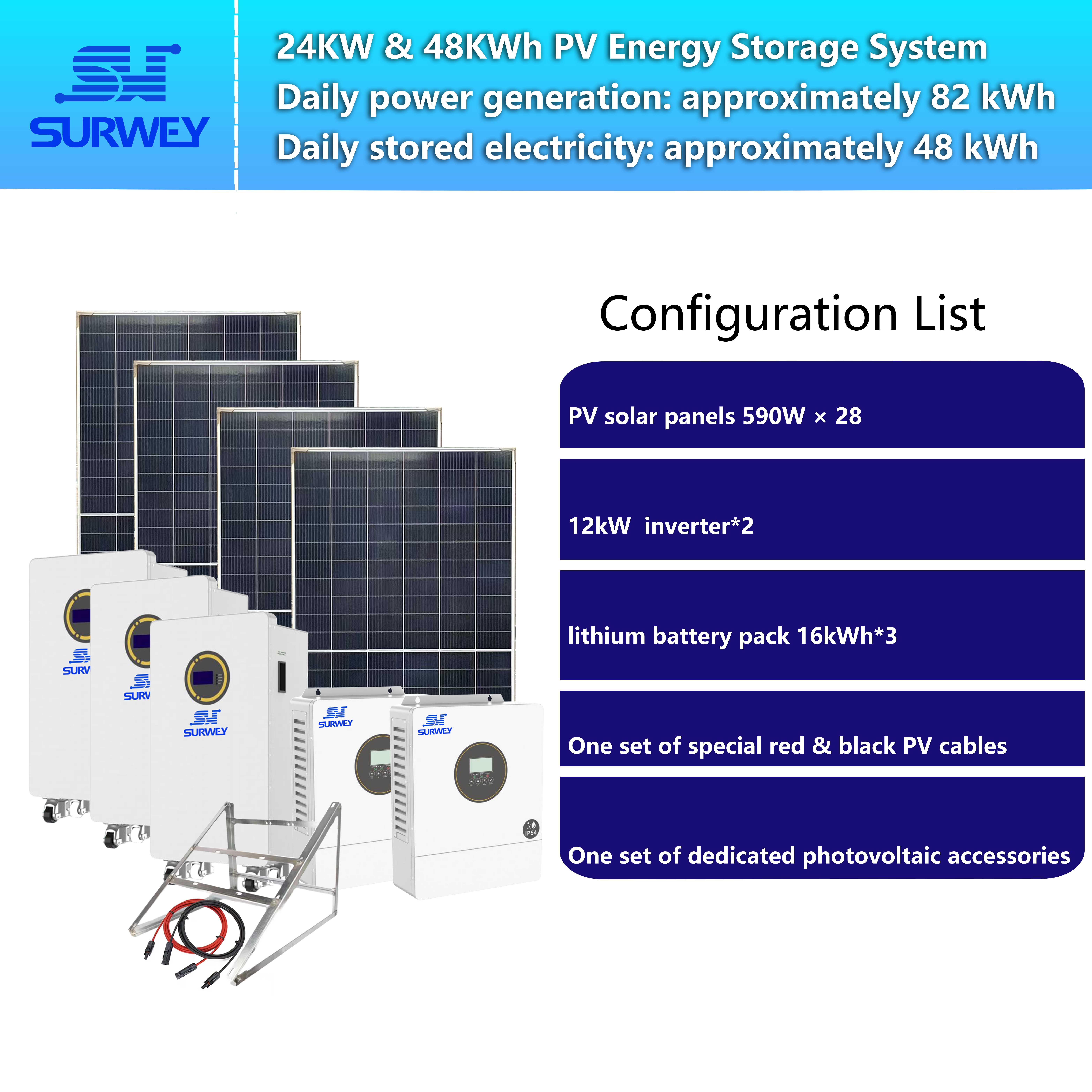
On the photovoltaic side, the system adopts 28 pieces of 590W monocrystalline half-cut photovoltaic modules, with a string design of 7 modules per string and 4 strings in total. Two strings are connected to the MPPT port of one 12kW hybrid grid inverter-controller integrated machine, with 2 inverters in total. On the energy storage side, 3 sets of 16kWh vertical lithium batteries are configured, with a total energy storage capacity of 48kWh. The system is designed with a daily power generation capacity of 82kWh and daily stored electricity of 48kWh, meeting the daytime production and short-term nighttime power demand of oil pressing equipment. It can operate off-grid independently to carry loads when the grid is interrupted.
2. Introduction of Main Project Equipment
590W Photovoltaic Module
Roof PV installation diagram of the system Module power: 590W, maximum system voltage: 1500VDC, IP68 junction box, wide operating temperature range from -40℃ to +85℃. It adapts to the high-temperature environment in West Africa, features excellent low-light power generation performance and good outdoor sand and aging resistance.
12kW Hybrid Grid Inverter-Controller Integrated Machine

IP21 protection grade, three-way MPPT, built-in 200A MPPT charge controller, supports parallel operation. It realizes multi-path power switching among photovoltaic, battery and mains power, built-in BMS communication interface, supports WiFi remote monitoring, and has overload, short-circuit, high and low voltage protection, suitable for harsh outdoor scenarios.
48kWh Vertical Lithium Energy Storage Battery

51.2V 314Ah lithium iron phosphate energy storage battery, single unit capacity 16kWh; 3 units connected in parallel with total capacity of 48kWh. IP54 protection grade, built-in BMS battery management system, ≥8000 deep charge-discharge cycles, floor-standing vertical installation, supports up to 16 units in parallel. It has multiple electrical protections with a service life of more than 10 years.
3. Electrical Verification of PV Strings
For a single 590W module, under STC conditions, open-circuit voltage Voc=51.86V, maximum power voltage Vmp=43.01V. 7 modules are connected in series per string: Vmp of single string = 7×43.01V=301.07V; open-circuit voltage Voc of single string = 7×51.86V=363.02V.
The MPPT voltage operating range of the inverter is 50~500VDC. After 7 modules are connected in series, both operating voltage and open-circuit voltage fall within the MPPT operating window of the inverter. Each inverter is connected with 2 strings. Imp of single string =13.72A, the PV input current after 2 strings in parallel is 27.44A, lower than the maximum MPPT input current of the inverter. The 4 PV strings are divided into 2 groups and connected to the MPPT interfaces of two 12kW inverters respectively.
This configuration ensures that the open-circuit voltage in the early morning under low temperature in West Africa will not exceed the maximum DC withstand voltage of the inverter, and the operating voltage at noon under high temperature will not be lower than the minimum MPPT starting voltage. The string voltage and current of modules match the inverter, making the system safe and reliable. The designed daily power generation is 82kWh and daily stored electricity of the energy storage system is 48kWh. Surplus photovoltaic power is stored in batteries for load power supply during periods without sunlight.
4. System Operating Principle
This hybrid grid PV-ESS system adopts photovoltaic priority control logic.
System operating principle video
In daytime with sufficient sunlight, 590W PV modules capture light energy and convert it into DC power sent to the MPPT port of the 12kW inverter-controller integrated machine. The inverter converts DC power into AC power to directly supply loads of the oil mill. When photovoltaic output power exceeds the power consumption of on-site loads, the excess DC power will charge the 48kWh lithium energy storage battery through the built-in charging module of the inverter until the battery reaches the full-charge protection threshold.
When sunlight fades, at dusk or on cloudy days with insufficient PV output, the energy storage battery releases electric energy through the inverter, and DC power is inverted into AC power to continuously supply power to oil pressing equipment.
The system has intelligent switching function. If local mains power is available, the system automatically switches to mains supplementary power supply. When mains power is completely disconnected, the system operates in independent island mode to guarantee load power supply. Built-in BMS communication linkage of equipment monitors battery voltage, current and temperature in real time to protect battery safety. The inverter comes with multiple fault protections and will automatically shut down for protection in case of overload, short circuit, high temperature and other faults.
5. Available Load Power and Continuous Power Supply Duration of the System
The system is equipped with 2 sets of 12kW hybrid grid inverter-controller integrated machines, with a maximum continuous output power of 24kW, which can simultaneously drive oil pressing main unit, delivery pumps, lighting, control distribution cabinets and other equipment. The total energy storage capacity is 48kWh, and the available daily stored electricity is 48kWh.
When the factory's nighttime base load is 6kW, the battery can independently supply power continuously for about 8 hours under full charge state; If the load is reduced to 3kW, continuous power supply can last for 16 hours.
Photovoltaic generates power continuously in daytime. When the oil pressing equipment operates under 10kW working condition in daytime, photovoltaic power directly supplies loads and charges the battery at the same time. In case of consecutive rainy days, battery energy storage can maintain basic production power consumption of the factory and avoid shutdown risks caused by power outages.
6. System Advantages
The whole solution adapts to the characteristics of tropical high temperature and heavy sand in Mali. PV modules, energy storage batteries and inverters all adopt wide-temperature equipment to cope with working conditions with large day-night temperature difference.
The hybrid grid architecture is flexible. It can reduce the operation frequency of diesel generators relying on photovoltaic power, greatly cut fuel procurement and transportation costs, and ease the shortage of diesel supply in Mali.
The energy storage battery has ultra-long cycle life to reduce later replacement costs. The inverter supports remote WiFi monitoring, which allows remote viewing of power generation, battery status and load power, facilitating operation and maintenance personnel to master equipment operation status. The equipment supports parallel capacity expansion. When the factory production capacity is upgraded later, PV modules and energy storage batteries can be added to expand system capacity. The whole system is equipped with complete electrical protection including lightning protection, short-circuit protection, overcurrent protection, high and low voltage protection to guarantee the safety of production equipment and personnel of the oil mill.
Conclusion
For this PV-ESS system of the small oil mill in Mali, electrical parameter verification of PV strings has been completed. The string voltage and current of photovoltaic modules fully match the operating range of the 12kW inverter, and the hardware selection of the system is reasonable. With daily power generation of 82kWh and daily stored electricity of 48kWh, the system can effectively compensate for the instability of local grid power and meet the production power demand of the oil mill, reducing diesel consumption.
All equipment is resistant to high temperature and sand, stable in operation and simple in maintenance, adapting to local working conditions in West Africa. This solution can effectively reduce the electricity cost of the factory, cut production losses caused by power outages, realize local utilization of clean energy, and has good economic benefits and implementation feasibility.


