
Technical Scheme for 8.5kW/16kWh Residential PV Energy Storage System in Austria
1. Project Overview
This project develops an integrated photovoltaic-energy storage system for single-family villas in Austria. It adopts the operation mode of self-consumption with surplus power storage, while supporting grid complementary power supply and off-grid emergency power supply during blackouts.
Working Principle Video of 8.5kW & 16kWh PV System
System Configuration
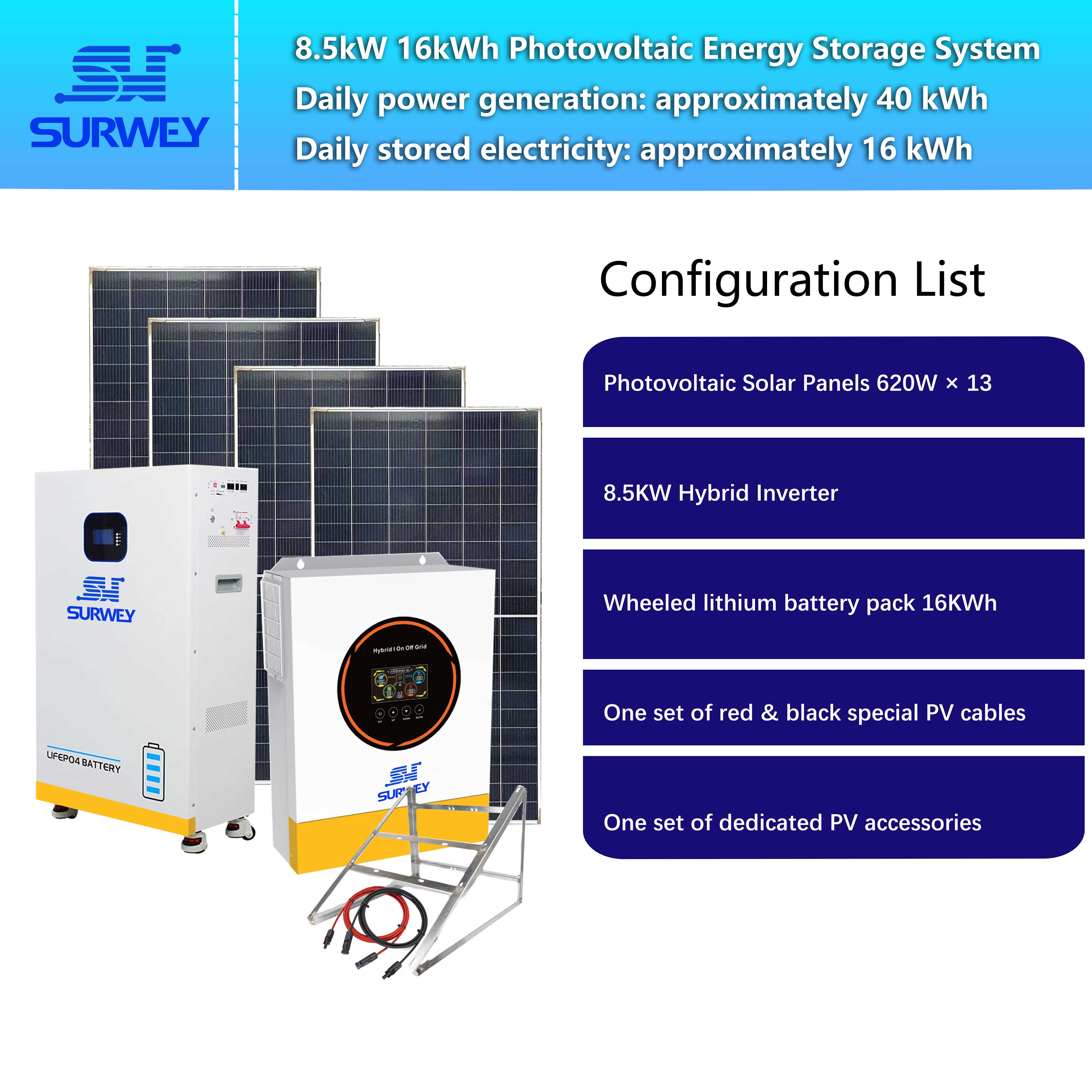
13 pieces of 620W monocrystalline double-glass PV modules, an 8.5kW hybrid all-in-one PV inverter, and a 16.08kWh wheeled mobile energy storage lithium battery. The system generates 40kWh photovoltaic power on average every day; 16kWh of surplus daytime electricity is stored in the battery to supply household loads at night. Tailored to Austria’s temperate climate, it meets daily domestic power demand and emergency backup requirements during grid outages.
System Configuration Diagram
2. Basic Parameters of Core Equipment
2.1 620W PV Modules
Parameters under Standard Test Conditions (STC: 25°C, 1000W/㎡ irradiance):
- Maximum power: 620W
- Open-circuit voltage (Voc): 56.33V
- Voltage at maximum power (Vmp): 47.33V
Adopting precise grid line technology with anti-PID attenuation performance: power attenuation ≤1% in the first year, followed by linear annual attenuation of 0.4%, with a 30-year power warranty. The double-glass semi-tempered packaging can withstand snow load of 5400Pa and resist impact from 25mm hailstones. Operating temperature range: -40℃ ~ +70℃, perfectly fitting Austria’s cold and snowy winters.
2.2 8.5kW Hybrid All-in-One Inverter

- Rated AC output power: 8500W
- Built-in dual-channel MPPT solar charge controller
- MPPT operating voltage range: 60VDC ~ 500VDC
- Maximum PV input power: 10kW, compatible with 48V energy storage battery systems
Supports three operating modes: grid-tied self-consumption, independent off-grid operation, and grid complementary supply. Equipped with communication wiring to connect the battery BMS, featuring multi-protection including battery balanced charging, overload, short circuit, overvoltage and undervoltage. Protection class IP21, with WiFi remote monitoring function.
2.3 51.2V 314Ah Wheeled Lithium Energy Storage Battery

- Rated voltage: 51.2V
- Rated capacity: 314Ah
- Actual energy capacity: 51.2×314÷1000=16076.8Wh ≈16.08kWh, precisely matching the design target of storing 16kWh electricity daily
- Maximum continuous discharge current: 200A
- Cycle life: ≥8,000 times
Built-in Bluetooth and WiFi communication modules to monitor State of Charge (SoC), voltage and temperature in real time. Operating ambient temperature: -20℃ ~ 60℃, adapting to Austria’s year-round temperature variations.
3. PV Module String Configuration & Voltage Verification (Core Calculation)
The maximum withstand voltage of each single MPPT channel of the inverter is 500V. Combined with the module’s Voc of 56.33V, the maximum number of modules per string is calculated as: Max series modules per string = 500÷56.33≈8.87; engineering limit: maximum 8 modules per string.
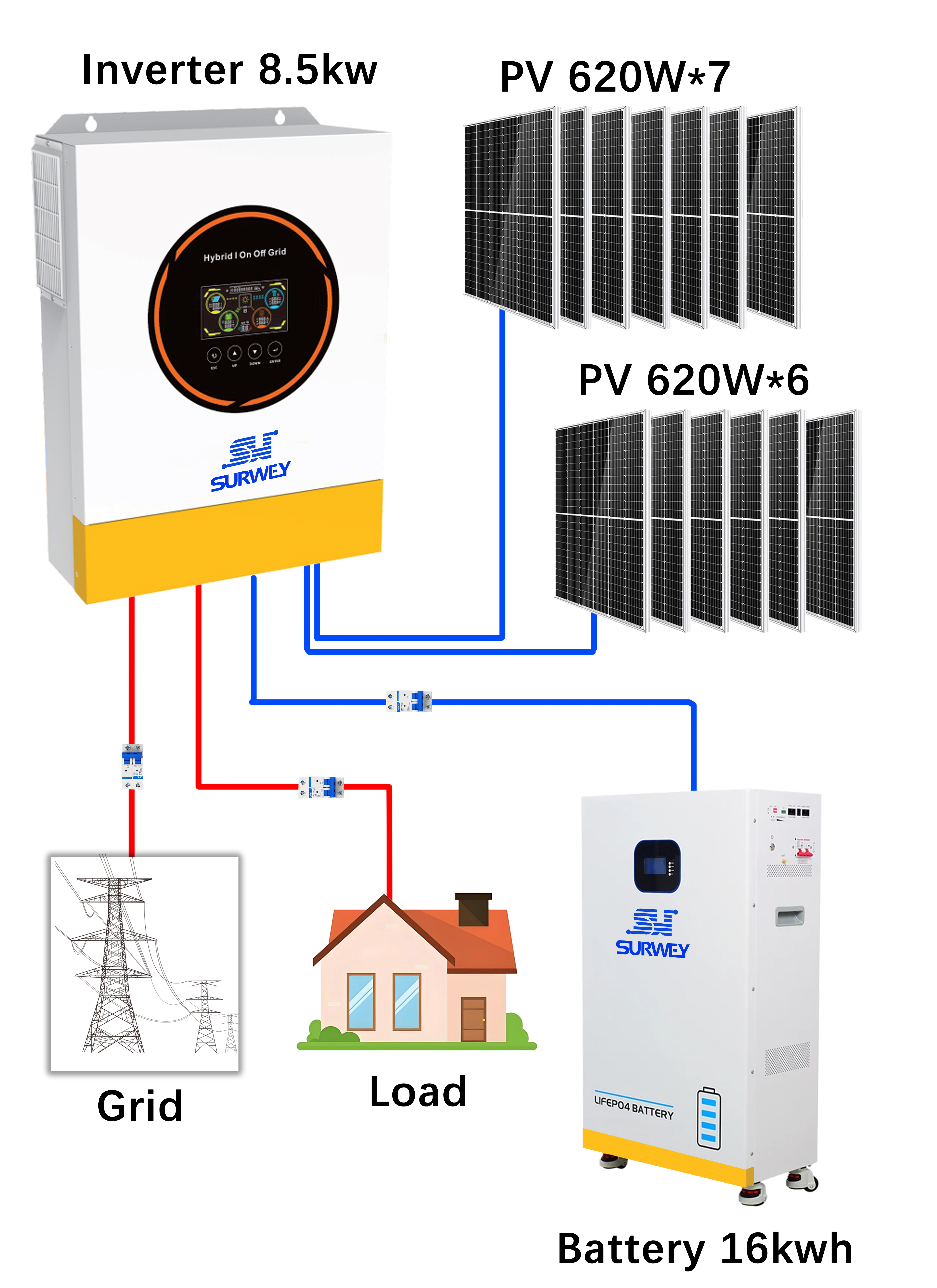
Total 13 PV panels are split into two series strings connected to the inverter’s dual MPPT channels: String 1 with 7 modules in series, String 2 with 6 modules in series.
3.1 Open-Circuit Voltage Verification at 25°C Ambient Temperature
- String 1 (7 modules): Total Voc = 7×56.33=394.31V
- String 2 (6 modules): Total Voc = 6×56.33=337.98V
Both string voltages fall within the inverter’s MPPT operating range of 60~500V DC, enabling stable maximum power point tracking.
3.2 Verification Under Extreme Low-Temperature Winter Conditions
PV modules feature negative temperature coefficient for Voc: Voc rises by approximately 0.32% per 1℃ temperature drop. Austria’s extreme winter low temperature is -15℃, with a temperature difference ΔT=-40℃ versus STC. Single-module Voc at low temperature = 56.33×(1+0.0032×40)=63.52V
- String 1 low-temp total Voc =7×63.52=444.64V
- String 2 low-temp total Voc =6×63.52=381.12V
The extreme low-temperature voltage remains below the MPPT upper limit of 500V DC, eliminating overvoltage shutdown risks all year round; the string layout scheme is safe and reliable.
3.3 Installed PV Power Verification
Total PV installed power =13×620W=8060W=8.06kW, lower than the inverter’s maximum PV input power of 10kW. The inverter can fully absorb all PV generation without power overflow and waste.
4. Matching Logic of Power Generation & Energy Storage Capacity
The system’s total PV capacity is 8.06kW. Based on Austria’s average annual equivalent sunshine duration of 5.0 hours, the average daily power generation =8.06×5=40.3kWh, consistent with the design target of 40kWh daily output.
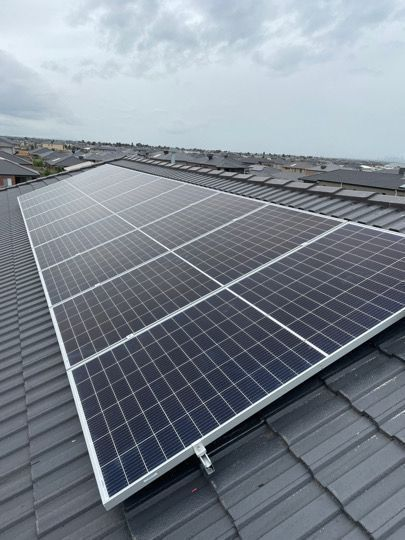
Daytime Energy Distribution Rule: Load Priority
The 40kWh daily PV output first powers household loads including lighting, kitchen appliances and living room equipment; the remaining 16kWh surplus power charges the 16.08kWh energy storage battery.
The battery stores 16kWh electricity per day with a charging depth of approximately 99.5%. The inverter’s built-in battery balancing charging function reduces cell attenuation caused by deep cycling. During nights with no sunlight, the battery discharges stored power to supply homes and cut grid electricity consumption.
On cloudy days with insufficient PV output, the inverter automatically switches to grid supplementary power supply; only minor residual solar power performs shallow charging for battery maintenance. In case of grid blackouts, the device switches to off-grid mode within milliseconds, combining PV and storage to guarantee uninterrupted power for critical loads.
5. Four Operating Modes of the System
Sunny Day with Sufficient Irradiance
PV operates at full output to supply household loads first; surplus 16kWh power is stored in the battery. Once fully charged, the system connects to the grid to export excess electricity for revenue maximization.
Cloudy Day with Weak Irradiance
PV generation fails to cover household loads, so grid power supplements the deficit. PV only charges the battery at low power to maintain a healthy battery SoC range.
Off-Grid Emergency Mode During Grid Blackouts
Upon grid failure, the inverter quickly disconnects from the utility grid. The wheeled storage battery works with PV to power critical loads such as refrigerators, lighting, security devices and heating controllers, achieving zero-interruption power supply during outages.
Nighttime Pure Battery Discharge Mode
No PV input; the storage battery releases the 16kWh energy stored during the day to power all household loads completely off-grid, cutting electricity bills.
6. Regional Adaptation Advantages for Austria
- Climate-resistant design: Double-glass PV modules resist snow accumulation and hail impacts, enduring heavy winter snow loads in Austria. Anti-PID technology drastically reduces long-term outdoor power attenuation, and the long-term power warranty matches European homeowners’ long-term usage demands.
- Safe & rational PV string layout: The dual-string scheme (7+6 modules) ensures array voltage stays within the inverter’s MPPT window under both normal and frigid winter temperatures, enabling efficient maximum power tracking and higher overall generation efficiency.
- Precisely matched storage capacity: The 16.08kWh battery perfectly accommodates the 16kWh daily surplus PV power, avoiding over-investment in oversized storage or insufficient capacity to store excess energy, delivering optimal economic performance.
- Intelligent & low-maintenance operation: Both the inverter and wheeled battery are equipped with WiFi communication modules. Users can check power generation, battery SoC and load consumption data anytime via mobile APP. The built-in cell balancing system greatly reduces on-site maintenance frequency.
7. Continuous Operation Duration Calculation of Supported Electrical Appliances
Calculated based on 16kWh usable battery energy and the 8.5kW inverter rated output power, the endurance under different household load scenarios is listed below:
- Basic emergency loads (refrigerator + full-house lighting + router, total power 800W) Endurance =16÷0.8=20h; supports 20 consecutive hours of essential living power during blackouts.
- Regular daily household loads (lighting, TV, fridge, small home appliances, total power 2000W) Endurance =16÷2=8h; meets full-family normal night power demand for 8 hours.
- Full household peak load (all appliances running simultaneously, total power 6000W) Endurance =16÷6≈2.67h; supports all high-power home appliances operating together for around 2 hours 40 minutes.
- Full rated output of the 8500W inverter Endurance =16÷8.5≈1.88h; continuous full-load output for about 1 hour 53 minutes.
On sunny days with simultaneous PV generation, the actual battery supply duration extends further, fully covering Austria households’ all-night power consumption.
8. Solution Summary
This residential system combines 8.06kW PV modules with a 16.08kWh wheeled energy storage battery. Thirteen PV panels are divided into two series strings (7pcs & 6pcs) connected to the dual-MPPT inverter. High and low temperature voltage verification confirms the PV array voltage remains within the inverter’s valid MPPT range all year round, delivering excellent equipment matching performance.
The energy allocation logic of 40kWh daily generation and 16kWh daily stored power aligns with Austrian residents’ lifestyle of daytime outings and nighttime home occupancy. It realizes core goals of daytime self-consumption & energy storage and nighttime battery discharge to save electricity costs, while supporting off-grid emergency backup during blackouts.
Featuring cold/snow resistance and low power attenuation with simple maintenance, the system reduces residents’ grid electricity expenditure and handles sudden grid outages, making it highly suitable for deployment on single-family villas across Austria.


