
Integrated Technical Solution of 40kW/75kWh PV Energy Storage System for Small and Medium-Sized Flour Mills in Africa
Preface
This project develops a grid-tied/off-grid compatible photovoltaic energy storage system to address the power consumption pain points of small and medium-sized processing factories in Africa. Factories here suffer from volatile daytime production loads, unstable municipal power supply, frequent blackouts and high grid electricity prices. Leveraging abundant local solar resources, the solution adopts monocrystalline P-type PV modules, three-phase energy storage hybrid inverters and low-voltage lithium battery energy storage systems. It prioritizes self-consumption of on-site solar power and uses energy storage for peak shaving and valley filling, reducing reliance on municipal electricity, delivering uninterrupted power for production equipment, and balancing economic benefits and power supply reliability.
Working Principle Video of 40kW/75kWh PV Energy Storage System
I. Project Overview

See attached System Topology Diagram
II. Core Equipment Selection & Electrical Verification
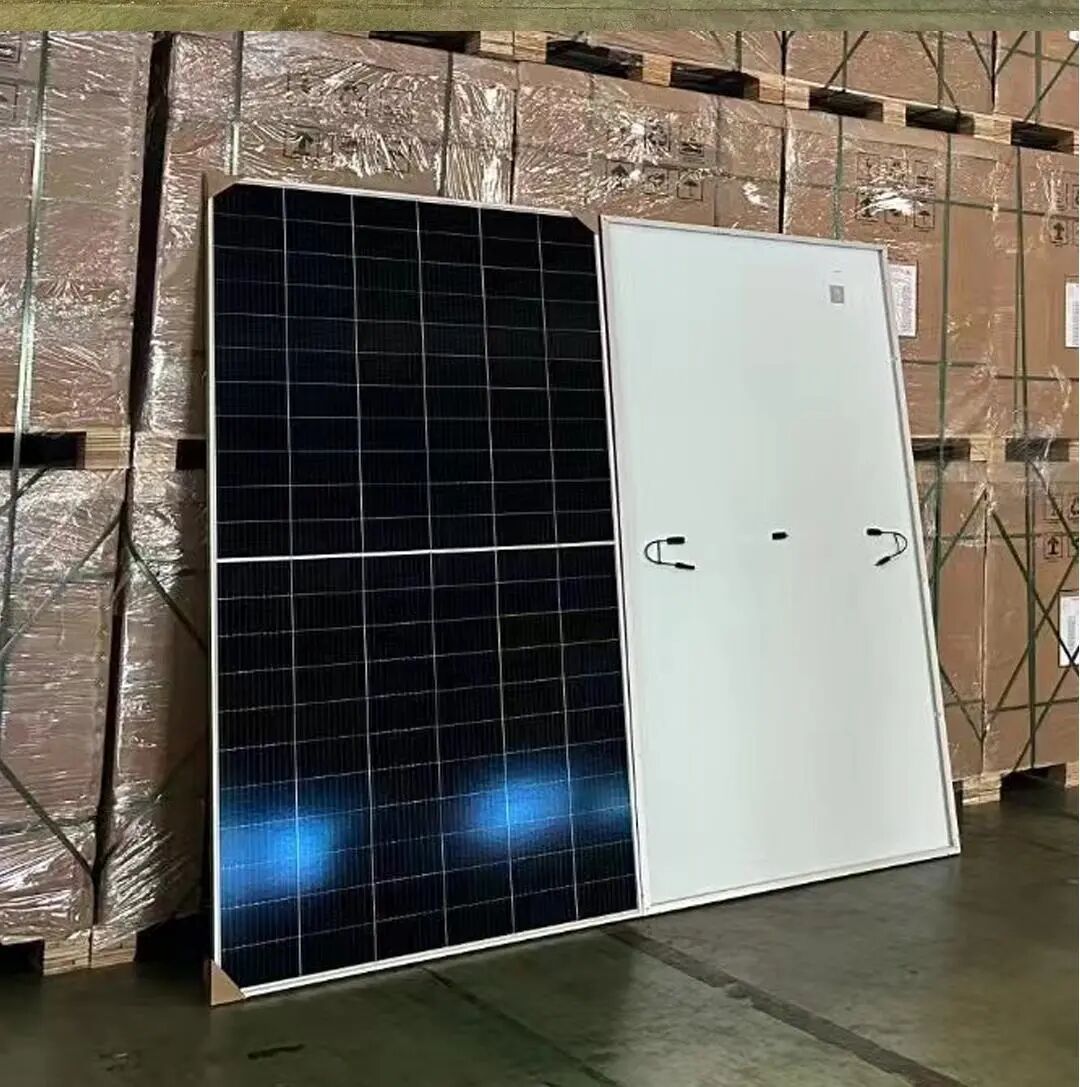
2.1 PV Module Selection
2.2 Open-Circuit Voltage Verification of PV Strings
Each 650W module has a standard open-circuit voltage of 43.0V. For each string of 8 modules connected in series, the standard open-circuit voltage under normal temperature is calculated as: Total Uoc = 8 × 43.0 = 344V.
Taking the minimum ambient temperature of 0°C in African nights as the extreme operating condition, lower temperatures will raise PV open-circuit voltage. Based on the Voc temperature coefficient of -0.26%/℃: Temperature difference ΔT = 25℃ - 0℃ = 25℃ Voltage increase ratio = 25℃ × 0.26% = 6.5% Maximum open-circuit voltage under extreme low temperature = 344 × (1+6.5%) = 366.36V.
The supporting SW-40K-G04 energy storage inverter features an MPPT operating DC voltage range of 200V~1000V. The extreme maximum open-circuit voltage of 366.36V for each string fully falls within the inverter’s effective MPPT operating range. The module series layout complies with specifications, eliminating risks such as insufficient voltage for grid connection or inverter damage caused by overvoltage, and delivers perfect matching performance for long-term operation.
Total installed PV capacity: 64 × 650W = 41,600W = 41.6kW, slightly exceeding the inverter’s rated AC power of 40kW. This reasonable over-sizing improves the inverter’s full-load utilization rate by taking advantage of staggered power output during peak sunshine hours to boost power generation revenue.
2.3 Energy Storage System Configuration
The energy storage unit consists of 5 sets of 15kWh low-voltage rack-mounted lithium batteries connected in series. Each battery pack has a nominal voltage of 48V; after series connection, the overall energy storage system nominal voltage reaches 240V, with a total capacity of 75kWh, matching the daily energy storage target of 75kWh set for the project.
The batteries adopt a modular rack-mounted structure with built-in BMS (Battery Management System) for cell balancing, overcharge/over-discharge protection and over-temperature protection, suitable for indoor factory installation. Excess power generated by PV during daytime is stored in the batteries, which release electricity to supply factory loads at night or on cloudy days with insufficient sunlight. Factories can rely on self-generated PV power in daytime and stored energy at night, enabling basic production operation independent of unstable municipal power grids.
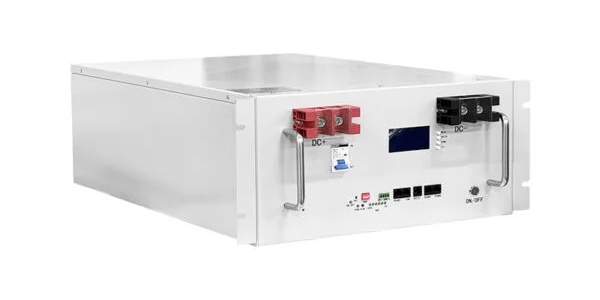
15kWh Low-Voltage Rack-Mounted Lithium Battery Pack
2.4 Energy Storage Hybrid Inverter
The SW-40K-G04 three-phase grid-tied/off-grid energy storage hybrid inverter is selected, with a rated AC output power of 40kW and four independent MPPT PV access channels. The 8 PV strings can be grouped and connected to multiple MPPT channels separately to reduce power generation losses caused by shading of the array. It supports automatic switching between grid-tied and off-grid modes; millisecond-level off-grid energy storage power supply kicks in immediately upon municipal power failure, avoiding sudden shutdown damage to machine tools and electrical control equipment, making it an ideal fit for African regions with unstable power grids.
The equipment is equipped with a high-temperature derating protection function to adapt to high-temperature environments in Africa.
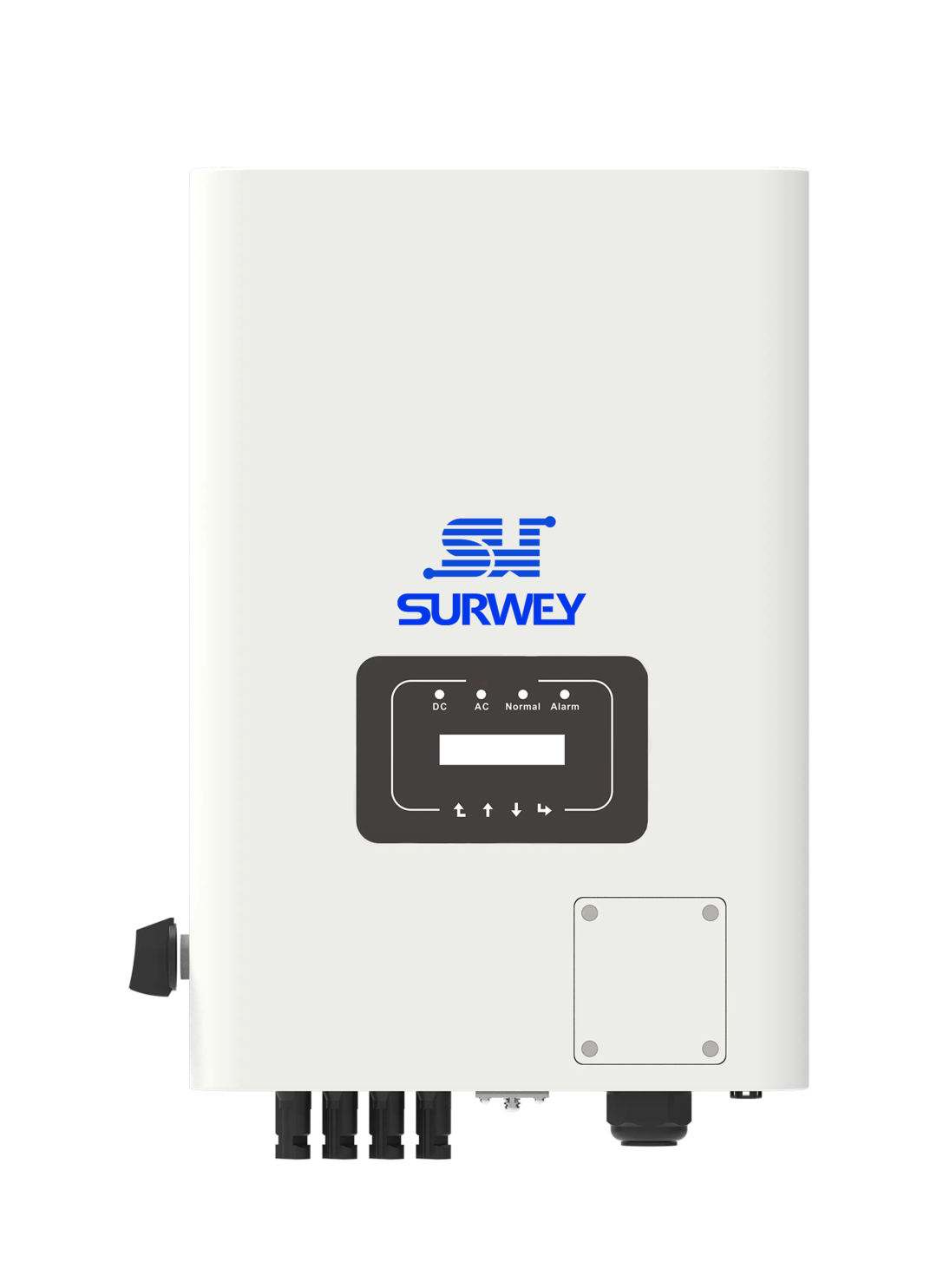
40kW Three-phase Hybrid Inverter
III. System Topology & Operating Modes
3.1 Energy Storage Topology Structure:
DC power from PV arrays is regulated and rectified via the inverter’s MPPT modules. One branch converts DC to AC to directly power factory production loads, while excess DC power charges the lithium battery energy storage system. At night or on cloudy days with insufficient PV output, DC power from lithium batteries is inverted into AC power to supply plant loads.
When municipal power is available, the system runs in grid-tied mode: on-site PV power is consumed first, and surplus electricity can be fed back to the grid. In the event of power outages, the system instantly switches to off-grid mode, with batteries delivering uninterrupted power supply.

3.2 Operating Modes
- Sunny Daytime Operation: PV power supplies factory loads on priority. Electricity unconsumed by loads is stored in the 75kWh energy storage battery. The system generates a total of 208 kWh daily, meeting daytime factory power demand while completing 75 kWh of battery charging.
- Evening / Cloudy Day Operation: PV output declines, and battery discharge automatically supplements power for loads.
- Municipal Power Outage Operation: The inverter rapidly switches to off-grid mode, with energy storage batteries independently powering loads to keep production lines, lighting and control systems running without shutdown.
- Normal Grid-Tied Operation: The system operates under grid connection, maximizing self-consumption of PV power to slash municipal electricity bills.
IV. Power Generation & Energy Storage Operating Condition Analysis
With a 41.6kW PV installation and an average equivalent sunshine duration of 5 hours annually near the equator in Africa, the system stably generates 208 kWh per day.
Factory daytime production loads consume PV power first, with an average of 75 kWh of surplus electricity stored in energy storage batteries daily. The 75kWh total storage capacity precisely accommodates excess daytime PV power without overcharging and energy waste.
Basic nighttime factory loads can be fully covered by the stored 75 kWh electricity. In areas with frequent blackouts, the energy storage system sustains nighttime basic maintenance and lighting, drastically cutting production shutdown losses caused by power failures.
The PV modules achieve a conversion efficiency of 21.3%, maintaining power generation even in weak light during early mornings and cloudy weather to offset output drops on overcast days.
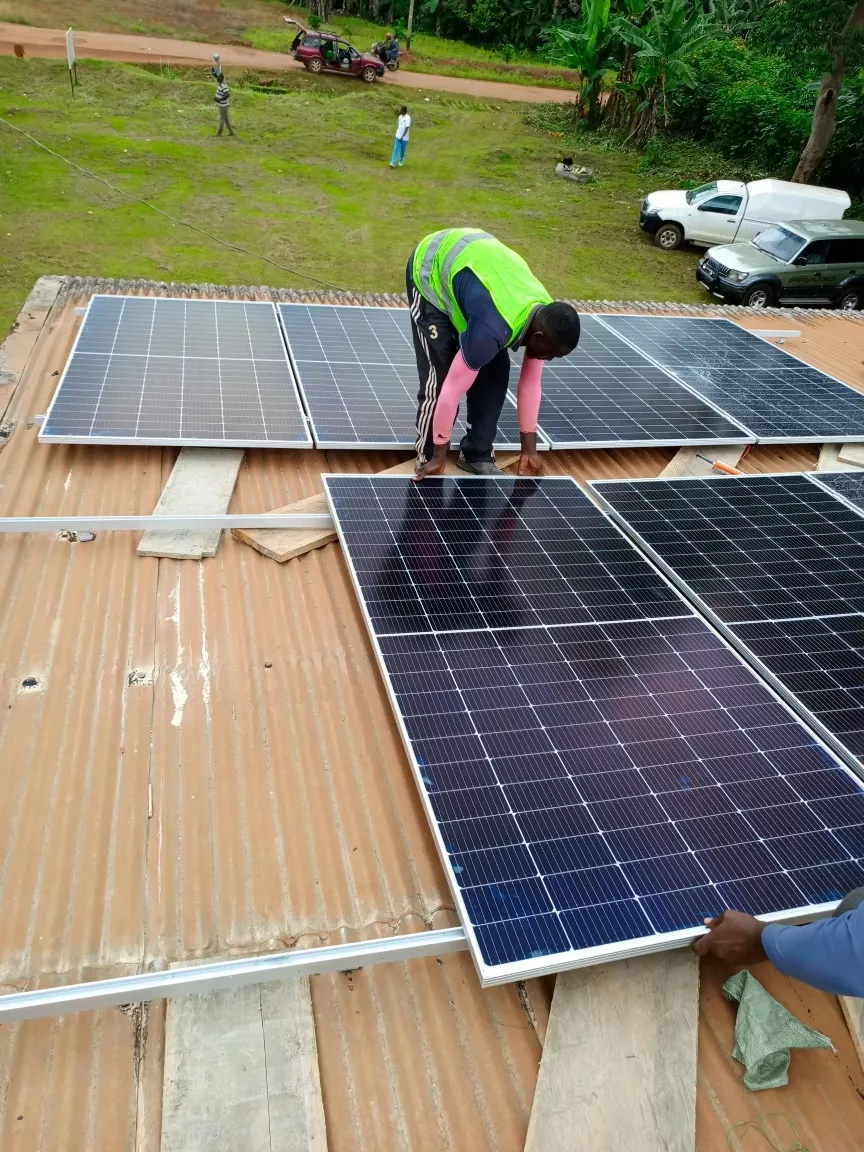
Site Photos of PV Modules Installed on Factory Roof
V. System Advantages
-
Safe & Reliable Voltage Matching The maximum extreme open-circuit voltage of each 8-module string only reaches 366.36V, well within the inverter’s 200V~1000V MPPT operating range with no risk of high-voltage breakdown, ensuring stable long-term system operation. The 41.6kW PV array paired with a 40kW inverter delivers rational over-sizing to boost inverter utilization during peak sunshine hours.
-
Improved Power Supply Stability The integrated grid-tied/off-grid architecture enables seamless switching to energy storage power supply during municipal blackouts, eliminating sudden shutdown damage to factory equipment and raw material losses — addressing the core pain point of frequent power outages across Africa.
-
Significant Cost-Saving Benefits All 208 kWh of daily PV generation is prioritized for on-site self-consumption to cut most municipal electricity charges. An additional 75 kWh of stored energy covers nighttime power demand, greatly reducing long-term factory electricity expenditure.
-
Strong Environmental Adaptability The PV modules deliver robust power generation under weak light conditions and voltage gain at low temperatures, suiting cloudy mornings and variable weather in Africa. All equipment adopts anti-corrosion, dust-proof and wind-resistant designs to withstand the local windy, dusty climate.
-
Simple Operation & Maintenance Modular batteries and multi-MPPT inverters ensure the whole system remains operational even if a single PV string malfunctions. On-site inspection and module replacement are straightforward without professional dedicated maintenance teams, fitting the simple local operation conditions in Africa.
VI. Solution Summary
This 41.6kW PV system matched with a 40kW energy storage hybrid inverter and 75kWh energy storage lithium batteries undergoes rigorous PV string open-circuit voltage verification, with the PV series layout perfectly aligned to the inverter’s MPPT voltage range and fully compliant with electrical safety standards for long-term operation.
The system generates 208 kWh and stores 75 kWh of electricity daily, fitting the power consumption patterns of small and medium-sized African factories. It leverages self-generated PV power to cut electricity costs while relying on energy storage to resolve frequent local power outages. All equipment is dust-proof, high-temperature resistant and easy to maintain, adapting to Africa’s local climate and maintenance conditions. Delivering both economic efficiency and practicality, the system fully meets the production power demand of local factories.


