
Technical Solution for 16kW/32kWh Residential PV Energy Storage System of Private Villa in Singapore

Created on:2026-07-30

Foreword

 This project involves the design of an integrated 15.6 kW photovoltaic and 32 kWh energy storage distributed power supply system for high-end private villas in Singapore. Leveraging the region’s abundant solar resources, the system establishes an intelligent power supply model characterized by “self-generation and self-consumption of solar power, storage of surplus electricity, peak-load supplementation, and emergency backup.” This model effectively adapts to Singapore’s tiered electricity pricing structure and tropical climate, reduces users’ reliance on the grid, and enhances the building’s energy supply stability and green energy efficiency.


I. Project Overview

Core Equipment Configuration for This System:One SW-16K-SG01LP1-EU single-phase low-voltage hybrid inverter, 24 650W high-efficiency monocrystalline bifacial solar modules, and 2 sets of SW-T51.2V16KWH-L2 rack-mounted lithium iron phosphate energy storage batteries. The system is designed to generate an average of 78 kWh of electricity per day and store an average of 32 kWh per day, precisely matching the typical load characteristics of a villa and meeting both daily electricity consumption and emergency power supply needs.

Topology Diagram of a 16 kW/32 kWh Photovoltaic Energy Storage System

II. System Application Scenarios

Taking into account the living conditions in Singaporean villas and the characteristics of the power grid, this photovoltaic-storage system can be applied across a wide range of operating conditions. The specific application scenarios are categorized as follows:

1. Scenarios for Self-Generation and Self-Consumption of Daily Load

For major loads such as central air conditioning in villas, home elevators, swimming pool water circulation systems, smart home systems, and kitchen and bathroom appliances, solar power generated during the day is prioritized for on-site consumption, directly replacing grid power. This effectively avoids transmission losses in the external grid, significantly reduces daytime base electricity costs, and is well-suited to Singapore’s year-round high cooling load patterns.

2. Economic Arbitrage Scenarios for Peak-and-Off-Peak Electricity Rates

Taking advantage of the peak-to-off-peak price differential in Singapore’s power grid, the system operates on the principle of “storing energy during the day and discharging it during the evening peak.” Excess solar power generated during the day is stored in energy storage batteries, which then discharge to meet demand during nighttime peak hours, effectively reducing the volume of electricity purchased at peak rates and maximizing the system’s operational efficiency.

3. Scenarios for Maintaining Supply Through Unmanned Monitoring

When homeowners are away on extended vacations, the system can independently maintain essential functions such as security monitoring, temperature control, plant irrigation, and basic lighting. By continuously drawing power from the photovoltaic system, it ensures the normal operation of equipment, thereby preventing operational and maintenance risks caused by equipment shutdowns or environmental abnormalities during periods of vacancy.

4. Emergency Standby Scenarios for Power Grid Failures

The system supports seamless switching between grid-connected and off-grid modes, enabling it to handle short-term power outages caused by grid maintenance, extreme weather, and other conditions. In the event of a power outage, the system quickly switches to standalone power supply mode, ensuring uninterrupted operation of the villa’s critical loads and significantly enhancing the power supply reliability and fault tolerance of high-end residences.

5. Low-Carbon Applications for Green Buildings

The system uses clean energy to replace traditional coal-fired power generation, effectively reducing a building’s carbon emissions and supporting a green and healthy lifestyle. It aligns with Singapore’s Green Building Rating System and low-carbon development policies, and can enhance a building’s green rating and asset value.


Video on How a 16 kW/32 kWh Solar Energy Storage System Works

III. Selection of Core Equipment and Verification of Electrical Parameters

(1) Photovoltaic Module Array Configuration and Voltage Verification

This project utilizes 650W N-type high-efficiency bifacial monocrystalline photovoltaic modules, which are designed for tropical environments characterized by intense sunlight and high temperatures. These modules offer advantages such as excellent low-light power generation performance, low high-temperature degradation, and a long service life.
Array Design:Each string consists of 8 modules connected in series; a total of 3 strings are connected in parallel to the inverter’s MPPT port, with a total installed capacity of 15.6 kW.
Electrical Parameter Verification: The standard open-circuit voltage of a single module is 49.73 V; the calculated open-circuit voltage of a single string is 8 × 49.73 V = 397.84 V.
The SW-16K-SG01LP1-EU inverter used in the project has an MPPT operating voltage range of 150 V to 425 V and a startup voltage of 125 V. Verification confirms that the operating voltage of the module strings falls entirely within the inverter’s optimal MPPT operating range, eliminating issues such as overvoltage or failure to start due to undervoltage. Given Singapore’s high-temperature environment, the actual open-circuit voltage of the modules at high temperatures will decrease slightly, further enhancing the system’s operational safety margin. The array configuration is compliant and reliable.
The system’s 15.6 kW PV installed capacity is paired with a 16 kW-class inverter, representing an optimal industry ratio. This balance ensures both power generation efficiency and long-term operational stability of the equipment, avoiding issues such as over-sizing and overload on one hand, and under-sizing and waste on the other.

Topology Diagram of a 16 kW/32 kWh Photovoltaic Energy Storage System

(2) Selection of Hybrid Inverter Equipment

The project is equipped with the SW-16K-SG01LP1-EU single-phase low-voltage hybrid inverter. The unit complies with Singapore’s single-phase low-voltage grid connection standards and meets local grid-connection regulations. It features three independent MPPT channels, each corresponding to one of the project’s three string PV arrays, enabling independent maximum power point tracking for each string. This effectively mitigates power generation losses caused by localized shading and uneven sunlight on the roof, thereby improving overall power generation efficiency.
Supports automatic switching between grid-connected and off-grid modes:It can meet the needs of routine self-consumption, energy storage for peak shaving, and emergency backup power supply.
Built-in Smart Management Program:It can communicate and coordinate in real time with the energy storage battery BMS system to precisely control charging and discharging power, SOC thresholds, and operating logic, and features comprehensive electrical protection mechanisms.
The device supports capacity expansion through parallel connection of multiple units:Designed to accommodate future load upgrades and retrofits, it features Wi-Fi and serial port communication, enabling remote monitoring and parameter tuning for highly convenient operation and maintenance.
IP65 protection rating for the entire unit:Its wide operating temperature range makes it fully compatible with Singapore’s hot and humid climate.
Three-View Drawings of a Single-Phase Low-Voltage Hybrid Inverter

(3) Energy Storage Battery System Configuration

The energy storage system is configured with two sets of SW-T51.2V16KWH-L2 rack-mounted lithium iron phosphate energy storage batteries. Each set has a capacity of 16 kWh and a nominal voltage of 51.2 V. When connected in parallel, the total energy storage capacity is 32 kWh, which perfectly matches the project’s designed average daily energy storage capacity.
High-Safety Lithium Iron Phosphate Battery Cells:Long cycle life and excellent thermal stability, making it suitable for daily charge-discharge cycles in residential applications.
Built-in Intelligent BMS Management System:It can monitor key parameters such as voltage, current, and temperature in real time, and features cell balancing, fault early warning, and multi-level protection functions to ensure the safe and stable operation of the energy storage system.
Compatible with common communication protocols such as CAN and RS-485:It integrates seamlessly with the inverter, eliminating the need for additional adapters and enabling coordinated control of charging and discharging strategies.
The batteries feature a rack-mounted, modular design and are centrally installed in the equipment room, ensuring a neat layout and convenient operation and maintenance. The equipment has a wide range of temperature and humidity tolerance, making it fully compatible with Singapore’s tropical rainforest climate. It also holds a full suite of international safety certifications and meets local equipment approval and installation acceptance standards.
16 kWh Rack-Mounted Lithium Iron Phosphate Battery Pack

IV. Analysis of Adaptability to the Local Environment
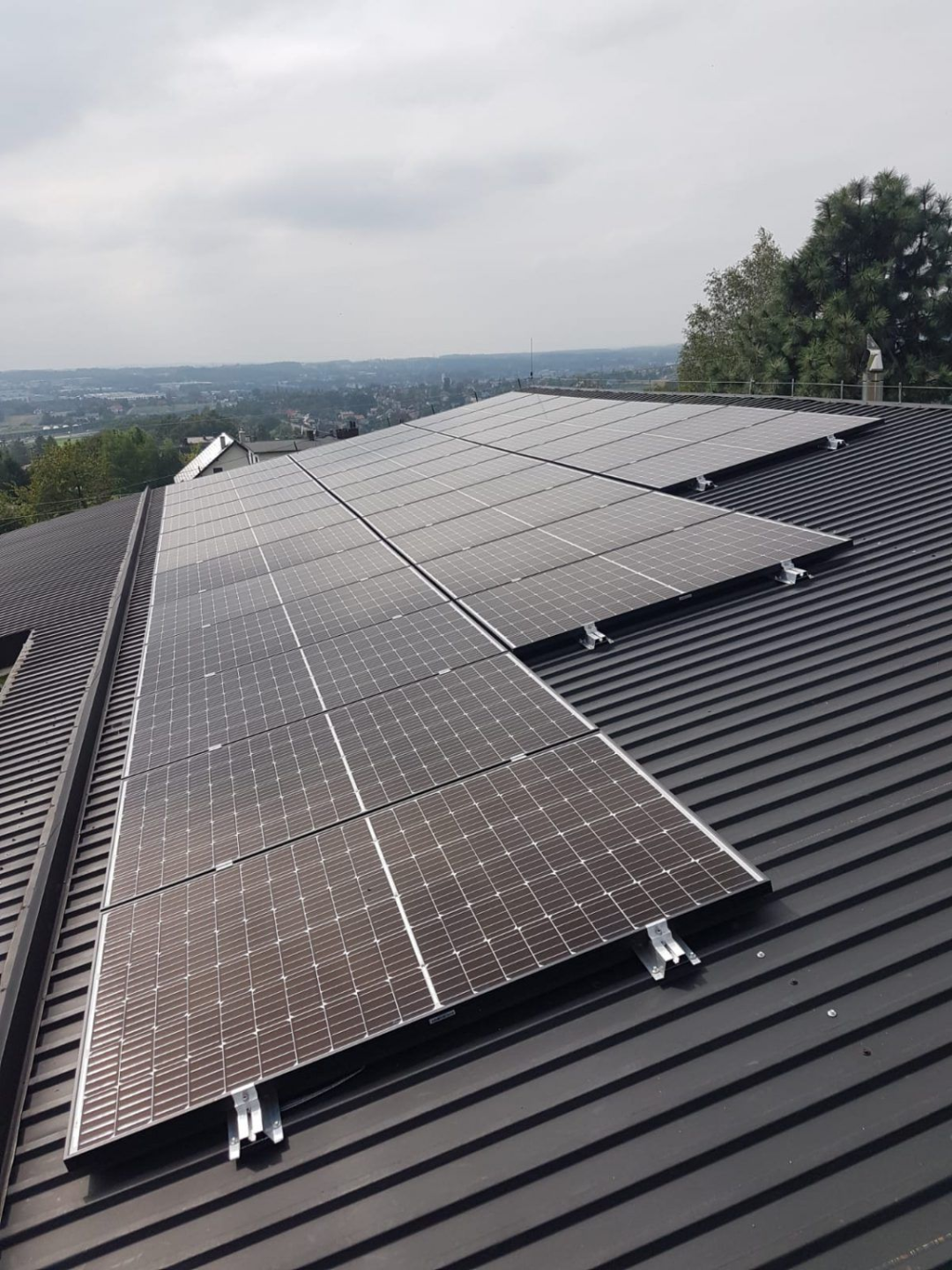
Singapore has a tropical rainforest climate characterized by high temperatures, high humidity, heavy rainfall, and strong ultraviolet radiation year-round. The equipment selection and installation plans for this project have been specifically tailored to the local climate.
The photovoltaic modules feature a sealed structure made of high-strength tempered glass and an IP68-rated junction box, offering excellent water resistance, dust resistance, aging resistance, and UV resistance. They are designed to withstand operating environments characterized by high temperatures, high humidity, and frequent rainfall over the long term. Their optimized temperature coefficient effectively minimizes power degradation at high temperatures, ensuring high-efficiency power generation throughout the year.
Roof-Mounted Solar Panel Array Diagram
The inverters and energy storage batteries are installed in an indoor equipment room to avoid the risks of exposure to direct sunlight and rain. The equipment’s wide operating temperature and humidity ranges fully cover Singapore’s year-round environmental conditions, effectively preventing issues such as condensation corrosion, capacity reduction due to high temperatures, and equipment failures.

V. Conclusion

This solution is a customized 15.6 kW photovoltaic (PV) + 32 kWh energy storage system designed for a private villa in Singapore. The equipment selection is scientifically sound, and the electrical configuration is precisely matched; verification confirms that the PV array voltage is fully compatible with the operating range of the 16 kW inverter.
The system supports a wide range of application scenarios, including daily power supply, electricity price arbitrage, power supply during periods of vacancy, emergency backup, and green energy conservation. It is highly suited to Singapore’s climate conditions, grid characteristics, and the villa’s electricity needs.
With a simple structure, stable operation, and strong scalability, the complete system effectively reduces users’ electricity costs, enhances power supply reliability, and supports green building initiatives, making it a high-quality distributed PV-storage solution tailored for local residential applications.