
Technical Solution for Off-Grid & Grid-Tied Integrated PV Energy Storage System in Private Villa District, Nigeria
Working Principle of the 56.16kW/32kWh PV Energy Storage System
1. Project Overview
This project is located in a private villa district of Nigeria. The local power grid suffers from severe instability, featuring frequent power outages and severe voltage fluctuations. Daily power loads in the villa zone include lighting, air conditioners, water pumps, household appliances and other continuous electrical equipment. To improve power supply reliability, reduce reliance on utility grid power and cut electricity costs, a hybrid off-grid and grid-tied PV energy storage power supply system is proposed.
The system adopts power generation via PV modules, energy storage through lithium batteries, and coordinated regulation by hybrid off-grid/grid-tied inverters. Generated solar power is preferentially supplied to on-site loads, with surplus electricity stored in energy storage batteries. In case of utility power failure, the system switches seamlessly to independent power supply mode to guarantee uninterrupted operation of critical loads in villas.
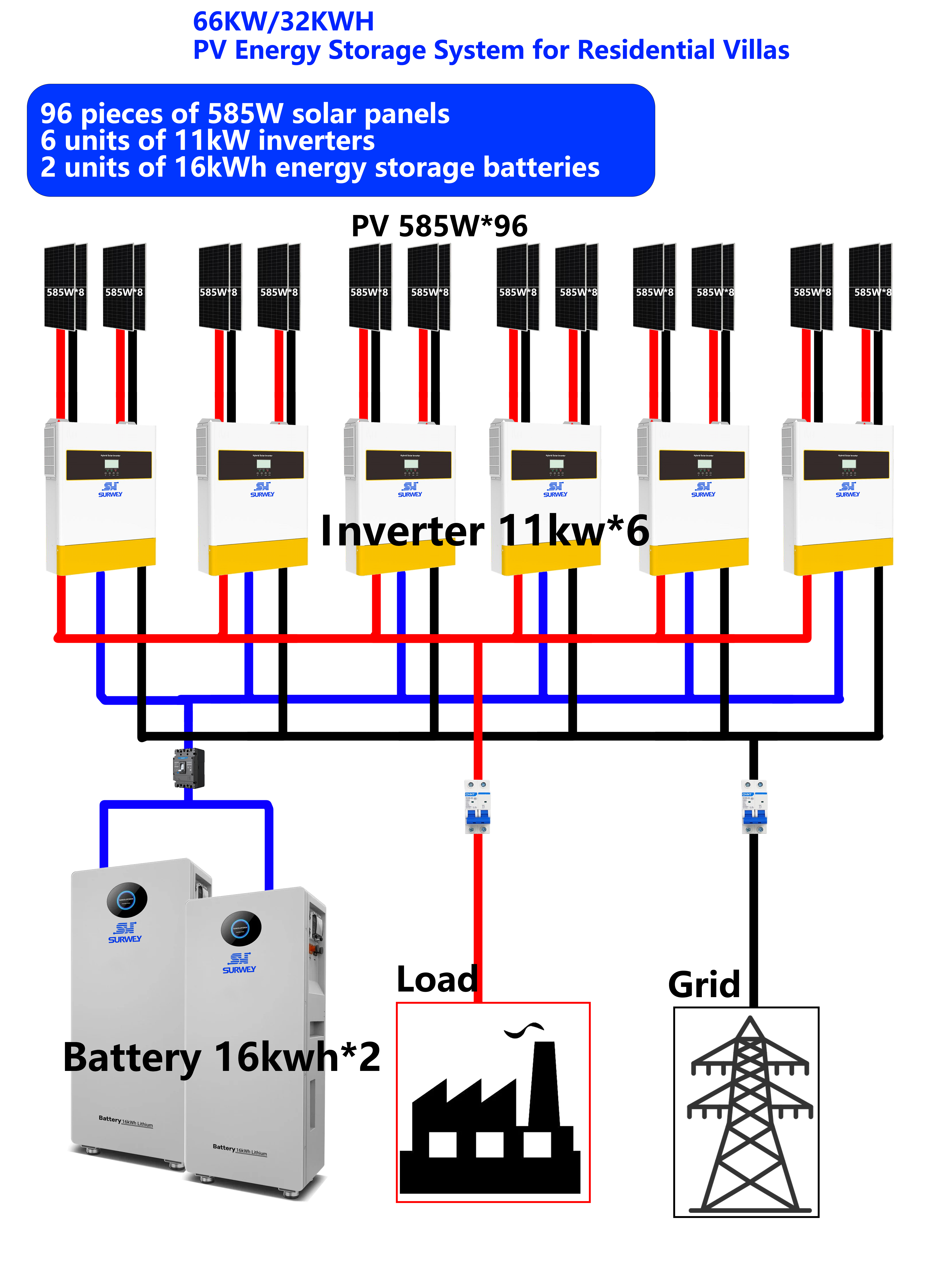
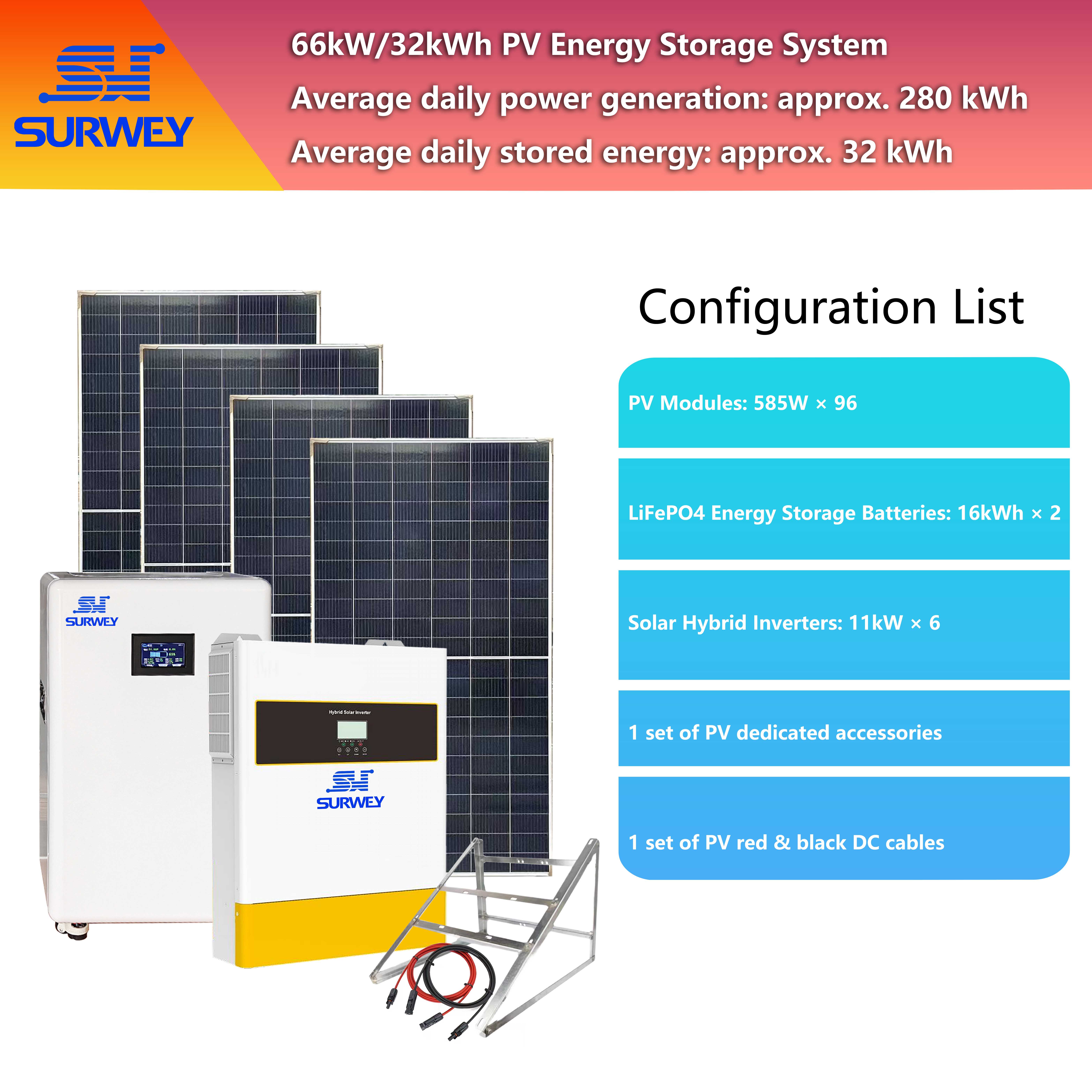
- PV Modules: 96 pieces of 585Wp monocrystalline half-cut modules
- Energy Storage Hybrid Inverters: 6 units of 11kW 48V off-grid & grid-tied hybrid inverters
- Energy Storage Batteries: 2 sets of 51.2V 16kWh vertical lithium iron phosphate battery packs
- Auxiliary materials including matching cables, combiner accessories, power distribution cabinets, mounting brackets, monitoring and communication systems
2. Local Environmental Conditions & Design Basis
2.1 Climatic Conditions
Nigeria lies in the tropical zone with abundant solar irradiation and long annual sunshine hours, making it ideal for PV projects. The ambient temperature varies widely. PV modules operate stably within -40℃~+85℃, and energy storage batteries and inverters are fully compatible with the local high-temperature environment. All electrical equipment of the system meets outdoor and semi-outdoor IP protection standards to adapt to tropical humid conditions.
3. Core Equipment Technical Parameters & System Configuration Verification
3.1 PV Module Parameters
N-type monocrystalline 144-cell half-cut 585Wp PV modules are selected for this project. Key electrical parameters under Standard Test Conditions (STC):
- Maximum Power (Pmax): 585Wp
- Maximum Power Point Voltage (Vmp): 42.65V
- Open-circuit Voltage (Voc): 51.46V
- Short-circuit Current (Isc): 14.38A
- Module Efficiency: 22.50%
- Open-circuit Voltage Temperature Coefficient: -0.25%/℃
- Maximum System Voltage (IEC): 1500V
3.2 PV String Design & Voltage Verification
The adopted inverter model is SW-11000T-48PL, with an MPPT PV voltage operating range of 60V~500VDC. The system contains 96 pieces of 585W modules, evenly allocated to 6 inverters with 16 modules per unit. The layout adopts 2 strings × 8 parallel branches, with 8 modules connected in series per string.
Normal-temperature open-circuit voltage of one string: 8 × 51.46V = 411.68V Considering the low-temperature limit in Nigeria, the open-circuit voltage is corrected at a minimum ambient temperature of 20℃: Corrected Voc = 411.68 × [1 − 0.0025 × (20 − 25)] = 411.68 × 1.0125 = 416.83V
The corrected voltage 416.83V is lower than the upper MPPT limit of 500VDC, and above the minimum operating voltage of 60VDC. The open-circuit voltage of the full string falls entirely within the inverter’s MPPT operating range, eliminating risks of overvoltage shutdown.
Maximum power point voltage of a single string: 8 × 42.65V = 341.2V, which lies within the optimal MPPT operating range, enabling the inverter to fully capture PV power output. Total installed PV capacity of the system: 96 × 585W = 56.16kW.
3.3 Inverter System Configuration
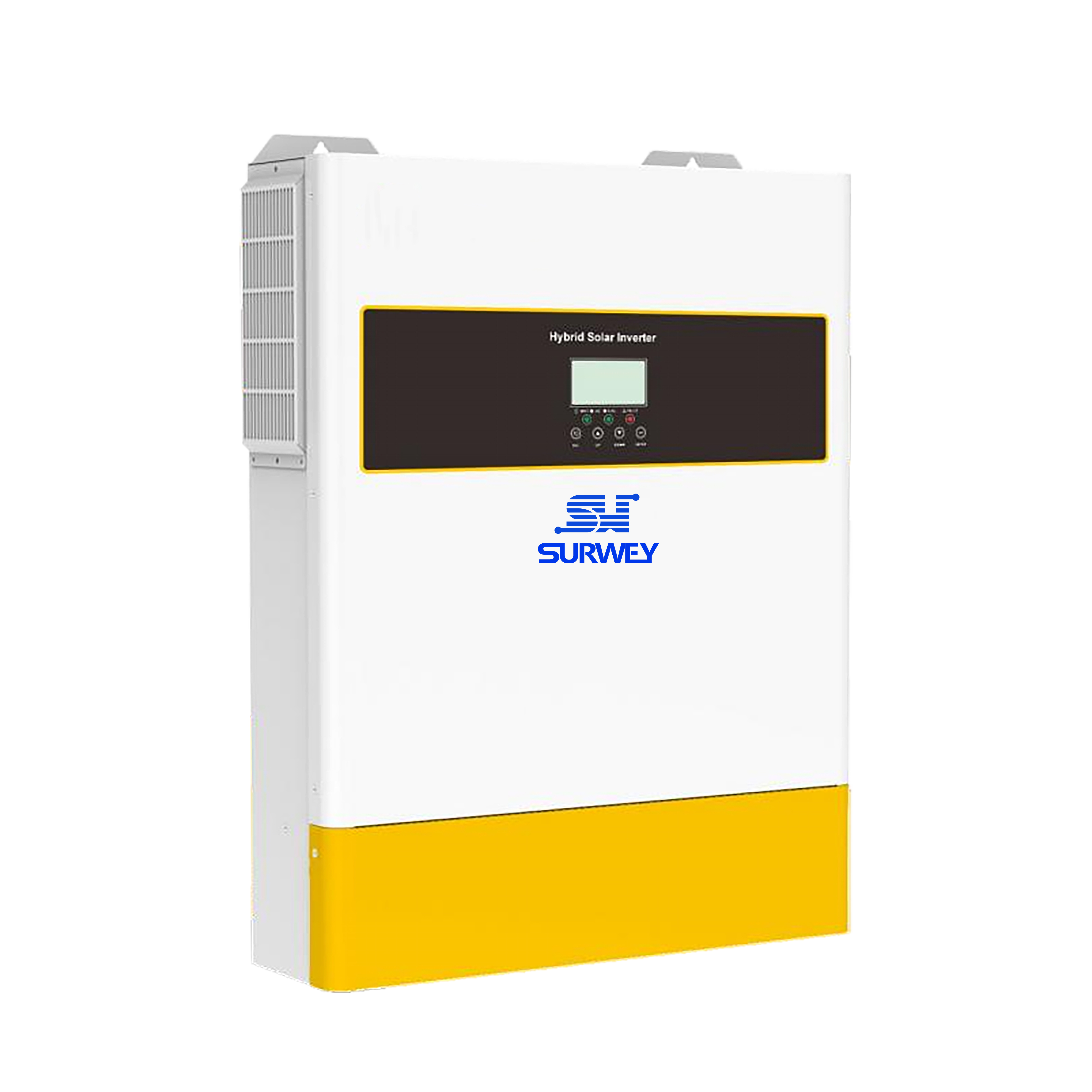
Six units of 11kW off-grid & grid-tied hybrid inverters are deployed. Each unit has a rated AC output power of 11kW, delivering a total AC output capacity of 66kW for the whole system.
Core equipment features: Dual-channel MPPT PV charging, built-in 48V MPPT controller, automatic switching between grid-tied and off-grid modes, parallel operation support for multiple units, intelligent dispatch logic prioritizing PV power, utility grid complement and battery charge-discharge management. The inverters support WiFi remote monitoring, are compatible with mainstream energy storage BMS communication protocols, and achieve stable linkage with vertical energy storage batteries.
The battery rated operating voltage is 48VDC, while the nominal voltage of the energy storage batteries is 51.2V with an operating voltage range of 43.2V~58.0V, perfectly matching the 48V battery port operating window of the inverters.

3.4 Energy Storage System Configuration
The energy storage unit consists of 2 sets of 51.2V 16kWh vertical lithium iron phosphate battery packs, with a total energy storage capacity of 32kWh. The batteries adopt LiFePO4 cells with an integrated intelligent BMS system, supporting parallel expansion of up to 16 units; 2 units are connected in parallel for this project. The recommended depth of discharge (DOD) is 90%, delivering an effective usable storage capacity of approximately 28.8kWh.
Battery specifications: Charging temperature range: 1℃~55℃; Discharging temperature range: -20℃~55℃, well-suited for Nigeria’s tropical climate. IP20 protection grade, vertical floor-mounted design, equipped with a 4.3-inch touch display screen. Bluetooth and APP remote access are available to view real-time SOC and charge-discharge status. Multi-level protections including overcharge, overdischarge, overcurrent and abnormal temperature are integrated.
The system is designed to store 32kWh of surplus solar power daily, with 28.8kWh usable capacity, which can sustain critical basic loads at night and guarantee stable power supply for core villa loads during short-term grid outages.

4. System Operating Modes
he integrated PV + energy storage + utility grid complementary power supply system operates under four working conditions:
Condition 1: Sufficient solar irradiance, PV power generation > villa load consumption
Solar power is first supplied to on-site villa loads, and surplus electricity automatically charges the energy storage batteries. Once the batteries are fully charged, the system can limit PV output according to preset strategies or allow reverse power feeding to the utility grid. The system is designed to generate an average of 280kWh per day, with 32kWh of surplus power stored in batteries daily.
Condition 2: Moderate solar irradiance, PV power generation < villa load consumption
All solar power feeds the loads, and energy storage batteries discharge to supplement power demand. When the battery SOC drops to the preset lower limit, the system automatically switches to complementary power supply via the utility grid.
Condition 3: Nighttime with zero solar generation
Energy storage batteries supply power to villa loads first; the inverters switch to utility grid power automatically when battery power is depleted.
Condition 4: Utility grid power failure (Off-Grid Mode)
Upon grid blackout, the inverters switch seamlessly to independent off-grid operation mode. Combined PV and battery power continuously supply critical loads, eliminating power cut risks for villas.
5. Power Generation & Load Matching Calculation
Total installed PV capacity: 56.16kWp, with a calculated average daily power generation of 280kWh. The equivalent daily effective sunshine duration is approximately 5.0 hours, consistent with the horizontal solar irradiation level of villa districts in Nigeria.
Total energy storage capacity: 32kWh, effective usable capacity around 28.8kWh. The system is designed to store 32kWh of daily surplus PV power for night use, substantially reducing electricity purchase from the utility grid.
The total inverter output power reaches 66kW, capable of covering peak simultaneous loads of the villa zone. Multi-unit parallel connection ensures sufficient power supply capacity, and additional energy storage batteries can be connected in parallel to expand power capacity for future load growth.
6. Electrical System Design Scheme
6.1 PV DC Side
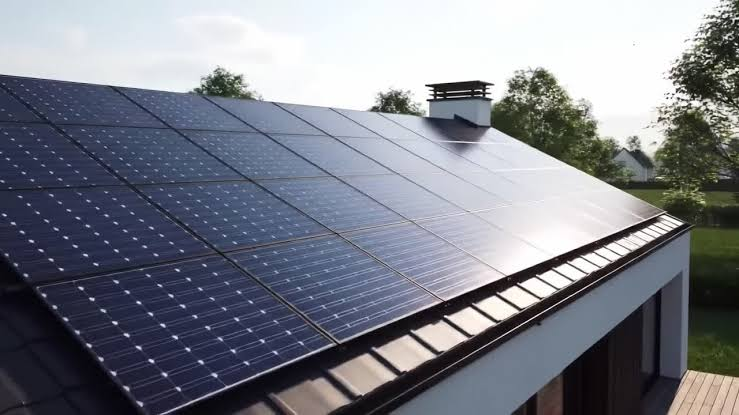
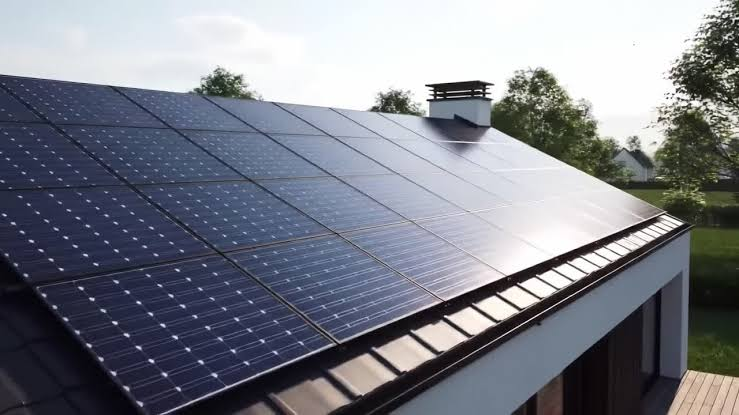
The 96 PV modules are divided into 6 groups of 16 modules each (2 strings × 8 parallel), connected to the dual MPPT channels of one 11kW inverter. PV-specialized DC cables with outdoor weather resistance and high-temperature tolerance are adopted for module output circuits. DC loops are equipped with fuses and surge protectors to prevent inverter damage caused by DC short circuits and lightning surges. Hot-dip galvanized aluminum alloy PV mounting brackets are used for rooftop installation, with reserved drainage and ventilation gaps to lower module operating temperature and improve power generation efficiency.
6.2 Energy Storage DC Side
Two 16kWh vertical energy storage batteries are connected in parallel to form a unified DC bus, which links to the battery ports of all 6 inverters. DC cables between batteries and inverters are properly sized to control line voltage drop. DC circuit breakers are installed at battery outlets for short-circuit and overload protection. Communication cables connect the battery BMS to inverters to realize real-time interaction of battery status data. Inverters dynamically adjust charge and discharge power based on battery SOC, voltage and temperature to extend battery service life.
6.3 AC Side System
AC outputs of the six parallel inverters converge into an AC power distribution cabinet. The cabinet is equipped with utility grid input switches, load output switches and surge protection devices. Loads are classified into ordinary loads and Class I critical loads. Under off-grid blackout conditions, power supply can be selectively retained for critical loads only. AC cables are sized according to long-term rated current carrying capacity with sufficient safety margin reserved.
6.4 Monitoring & Communication System
All inverters and energy storage batteries support WiFi communication, and the whole system is connected to a remote monitoring platform. Operation and maintenance personnel can view real-time PV power, daily power generation, battery SOC, charge-discharge power, load electricity consumption and power exchange volume with the utility grid via mobile APP or computer terminals. Fault alarm push notifications are supported to facilitate remote troubleshooting and reduce on-site maintenance costs.
7. Conclusion
This 56.16kW PV paired with 32kWh off-grid & grid-tied energy storage power supply system meets the power demand of private villa districts in Nigeria and fully leverages local solar energy resources. Through self-consumption of on-site PV power and peak-shaving & backup power via energy storage, the system continuously cuts utility grid power consumption and electricity expenditure, while resolving power outage troubles caused by unstable grids.
The scheme features rigorous electrical design, reliable matching of equipment parameters, excellent economic efficiency, safety and expandability, capable of delivering long-term stable high-quality power supply for the villa district.


