Implementation Plan for a 10kW Hybrid Solar-Storage Power Supply System
(Principles of a 10 kW/20 kWh Three-Phase Grid-Connected Photovoltaic Energy Storage System)
A client in South America has enquired about this integrated photovoltaic and energy storage power supply project, primarily wishing to know whether two 10.5kWh energy storage batteries can meet the power requirements of ten high-efficiency air filters. Taking into account the local power supply conditions in South America, the equipment specifications and the system’s operational logic, we will first address the key query before providing a detailed explanation of the overall system design.
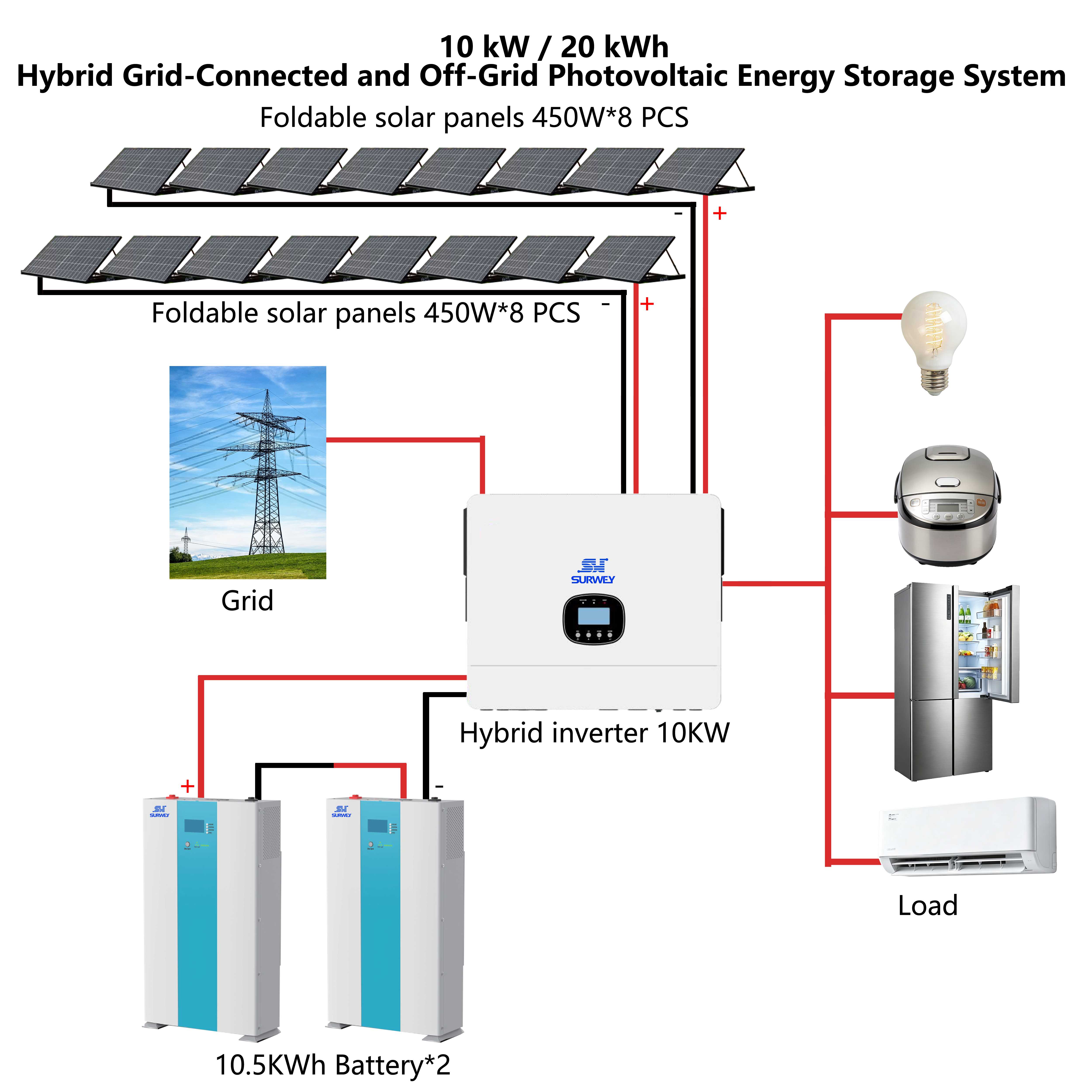
(Topology diagram of a 10 kW/20 kWh three-phase grid-connected photovoltaic energy storage system)
I. Answers to Key Questions
(1) Analysis of the compatibility between high-efficiency air filters and battery charging
(2) Dimensions of the hybrid inverter
The SW 10000 ES hybrid inverter selected for this project features a wall-mounted design, offering a compact structure and flexible installation options. The unit measures 550 mm × 465 mm × 150 mm and weighs approximately 21.5 kg. With its small footprint, it can be installed on indoor walls or in sheltered outdoor areas, and routine maintenance and parameter adjustments are also very convenient.
The unit is designed to operate within a temperature range of -10°C to 50°C, making it well-suited to the local climate of South America and ensuring stable performance during long-term operation, whether indoors or outdoors.
II. Overall System Configuration and Operating Principles
The complete system comprises five components: photovoltaic power generation, energy storage, inverter control, power distribution and loads, and intelligent monitoring. It features a simple circuit layout and low power transmission losses, and is fully compatible with South American standards of 50 Hz power frequency and 220 V/380 V voltage.
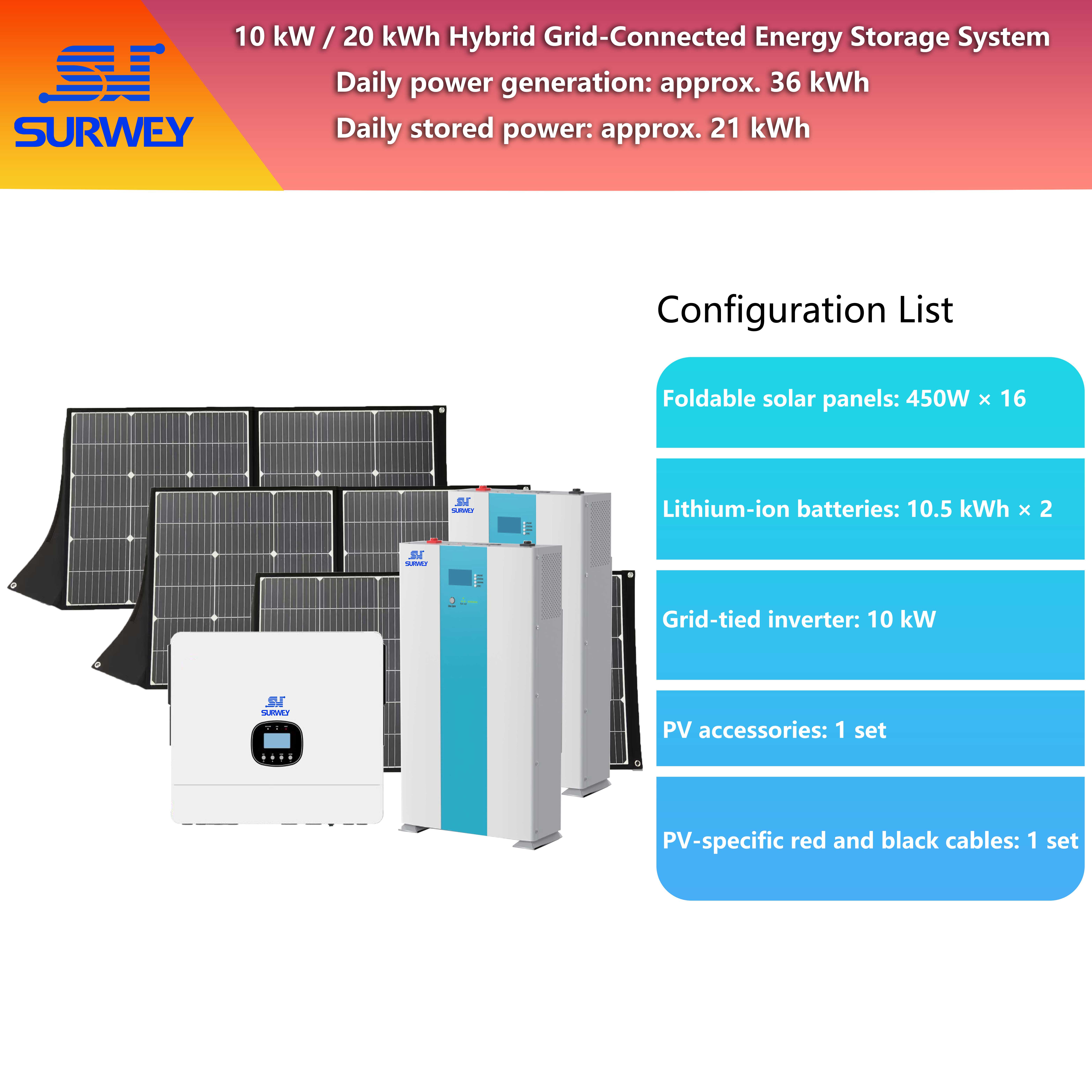
The photovoltaic generation unit comprises 16 x 450W folding solar panels, arranged in two independent arrays, responsible for generating direct current (DC) power; two 10.5kWh lithium-ion battery packs are connected in parallel to form the energy storage unit, which stores surplus energy and supplies power to the external load during periods of insufficient sunlight, at night, or in the event of a mains power failure; The SW 10000 ES hybrid inverter serves as the core control unit, converting DC power to local AC power whilst coordinating the operational modes of the entire system; the power distribution circuit, equipped with cables, circuit breakers and other components, can distinguish between critical and standard loads, flexibly adapting to both single-phase and three-phase power scenarios; monitoring modules integrated within the inverter and battery display real-time voltage, current, energy levels and equipment status, ensuring intuitive and convenient operation.
The system automatically switches operating modes based on sunlight intensity, mains power availability and load demand, eliminating the need for frequent manual intervention. When sunlight is abundant, photovoltaic power is prioritised for on-site loads, with surplus energy automatically stored in the lithium-ion battery; once the battery is fully charged, excess energy can be fed into the mains grid. When photovoltaic generation cannot meet power demand, the system automatically switches to supplementary power from the mains.
In the event of a mains power outage or voltage abnormalities, the inverter’s built-in transfer switch rapidly disconnects the mains circuit, switching to a combined supply from the PV system and batteries to ensure uninterrupted power. Once mains power is restored, the system automatically reverts to grid-connected mode. Taking into account local electricity consumption patterns, the system also enables time-of-use electricity management: during off-peak hours, the mains grid is used to recharge the batteries, whilst during peak hours, power is supplied by the PV-storage system, effectively reducing electricity costs. If the batteries are fully charged, the energy storage unit will pause operation, and PV power will be supplied directly to the loads, reducing the frequency of battery charging and discharging and extending their service life.
In terms of power and voltage, the 16 solar panels have a total peak power of 7.2 kW, whilst the inverter has a rated power of 10 kW, providing ample power headroom; the two batteries have a combined capacity of 21 kWh, sufficient to meet daily load-shifting requirements and short-term emergency power needs. The total DC voltage of the solar panels in series also falls within the inverter’s permitted input range, ensuring safe operation without any safety hazards.
3. Detailed Description of Core Equipment
(一)SW 10000 ES Hybrid Inverter
This 10kW hybrid inverter is perfectly suited to the grid parameters in South America, which operate at single-phase 220V and three-phase 380V, 50Hz. The unit is equipped with dual independent MPPT tracking modules, corresponding to two sets of PV arrays. This ensures maximum power generation efficiency even if some solar panels are shaded. With a maximum DC input voltage of 550 VDC, it is highly compatible with the current PV panel series configuration, achieving a maximum energy conversion efficiency of 96.5% and extremely low power loss.
The unit integrates two mains input terminals and an automatic transfer switch, enabling rapid switching between grid-connected and off-grid modes to ensure uninterrupted power supply; dual AC output ports allow for load zoning management. The unit supports parallel operation of multiple units, with the system scalable up to 108 kW; should high-power appliances be added or the PV system expanded in the future, there is no need to replace the main unit. Furthermore, the unit is equipped with multiple protection functions, including DC overvoltage, undervoltage, overcurrent, short-circuit, lightning protection, and battery overcharge/overdischarge protection, ensuring safe and reliable operation.
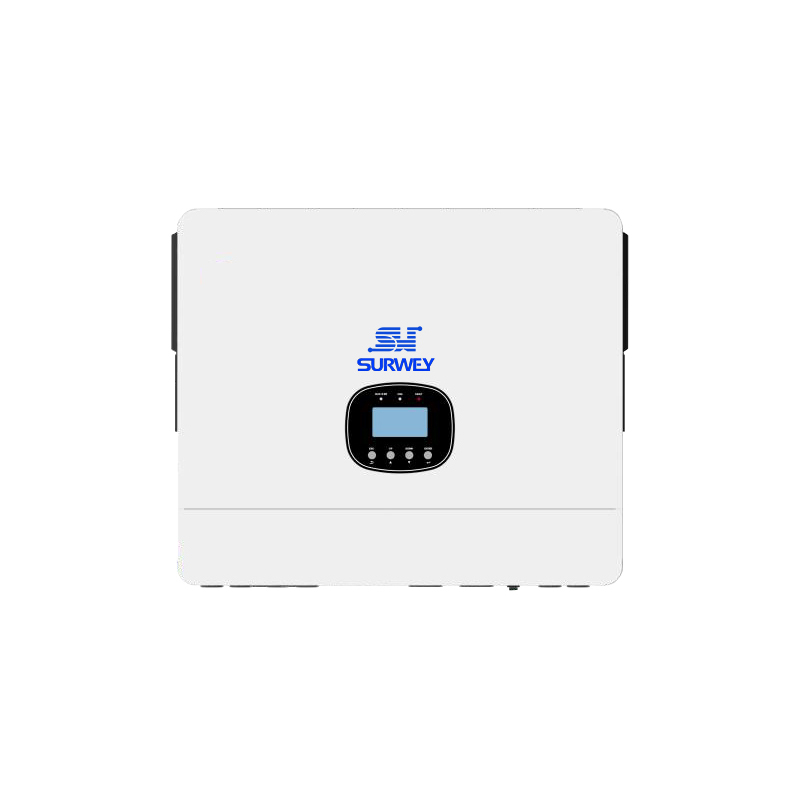
(SW 10000 ES Hybrid Inverter)
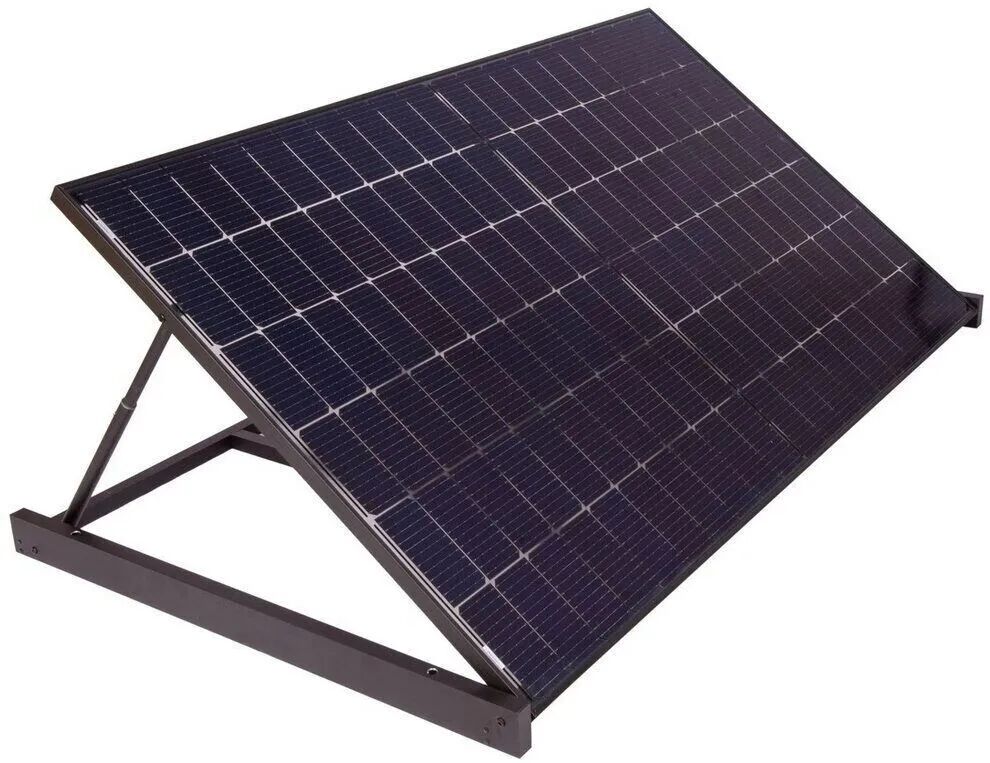
(2) 450W foldable solar photovoltaic panel
The 450W monocrystalline half-cut folded photovoltaic modules selected for this project are widely used in the market and offer stable electrical performance. With a rated power of 450W under standard test conditions, they exhibit minimal power degradation in high-temperature environments and perform exceptionally well in outdoor applications. Featuring a folded design and integrated mounting brackets, the modules are highly convenient to transport, install and store, making them suitable for both permanent installation and temporary use.
The panels feature high-transmittance tempered glass, and the junction box has an IP67 protection rating, making it waterproof and dustproof. It can withstand wind, rain, hail and salt spray, making it suitable for local outdoor environments. Each panel is equipped with a bypass diode, ensuring that power generation for the entire array is not affected if a single module is shaded. Power degradation in the first year does not exceed 1%, with an average annual degradation rate of less than 0.4% thereafter; the overall service life is approximately thirty years.
(450W foldable solar photovoltaic panel)
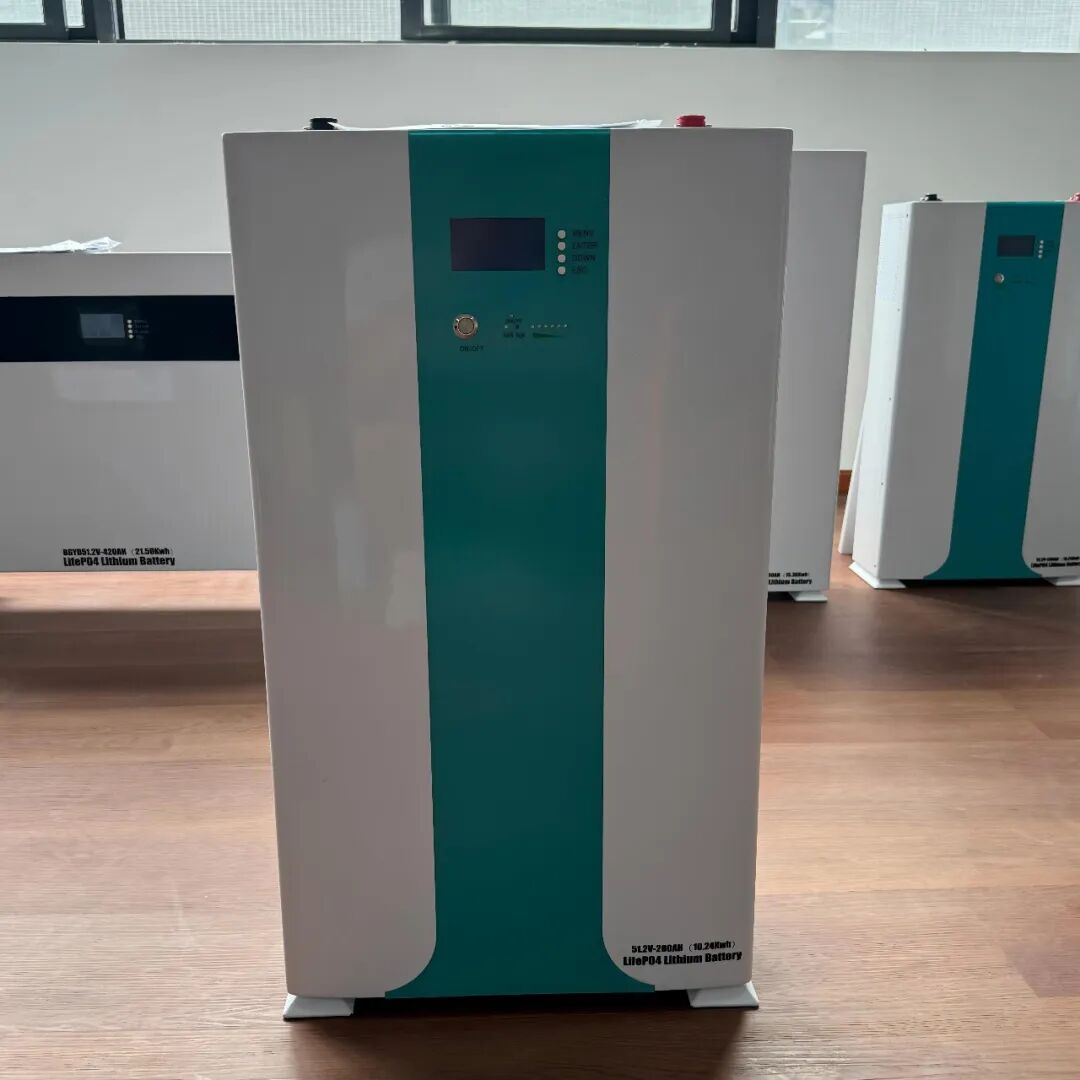
(3) 10.5 kWh lithium iron phosphate battery pack
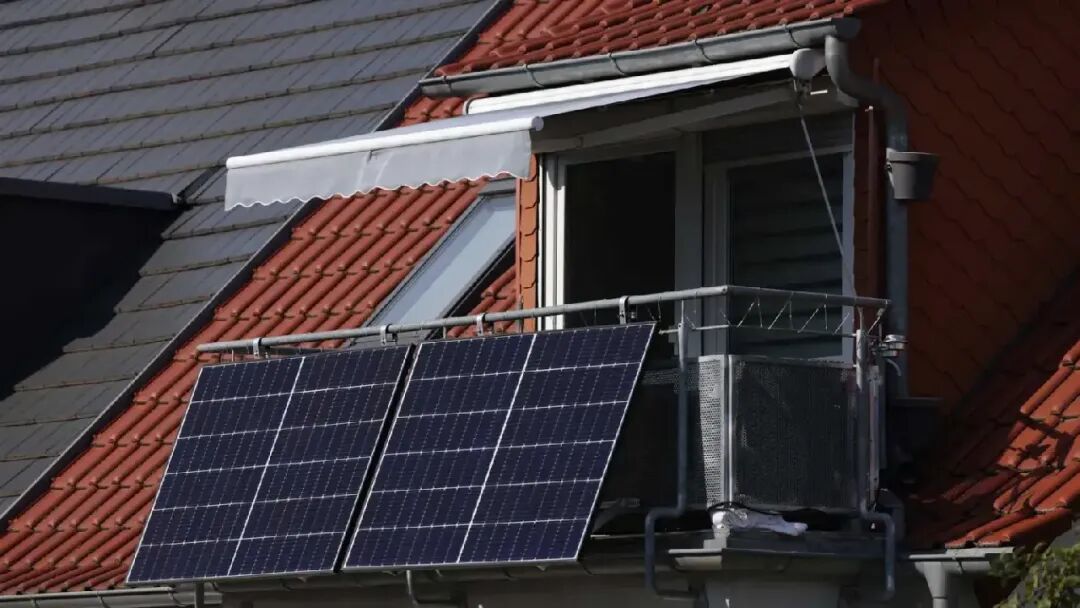
Solar panels have been installed on the balcony of a residential block in Germany
IV. Installation Layout, Safety Measures and Routine Maintenance
(1) Installation layout
(2) Safety precautions
(3) Routine maintenance
V. Conclusion
The 10kW hybrid inverter selected for this project measures 550mm × 465mm × 150mm; it is compact and easy to install. The complete solar-storage system is fully compatible with South American electrical standards of 220V/230V and 50Hz, catering to both single-phase domestic and three-phase high-power applications. With a well-designed configuration and flexible operating modes, it not only utilises solar energy to reduce electricity costs but also provides emergency power supply in the event of a mains power failure.
The equipment operates reliably, has a long service life and requires minimal maintenance. It also supports capacity expansion to meet current and future electricity demands, making it an excellent power supply solution for local households, large homes and small-scale high-power applications.