
Technical Solution of Grid-tied and Off-grid PV Energy Storage Power Supply for Households in Qinghai Tibetan Pastoral Areas
Preface
The pastoral areas of Qinghai Tibetan region feature vast territory and scattered residential sites of herdsmen. It is difficult to cover these areas with public power grids. Some regions suffer from insufficient power supply stability, frequent power outages and voltage fluctuations, which significantly restrict herdsmen’s daily use of electricity for lighting, cooking, livestock monitoring and small household appliances.
This household grid-tied and off-grid PV energy storage system is custom-designed for the power consumption characteristics of pastoral families. It supports both grid-connected supplementary power supply and independent off-grid operation. By utilizing abundant local solar energy resources, light energy is converted into electric energy and stored in battery packs to guarantee stable power supply for various household loads. The system boasts strong environmental adaptability to cope with harsh working conditions on the plateau including low temperature, strong winds and intense ultraviolet radiation. It addresses the problems of power shortage and blackouts for pastoral households, improves daily power consumption conditions of herdsmen and facilitates the modernization of pastoral life.
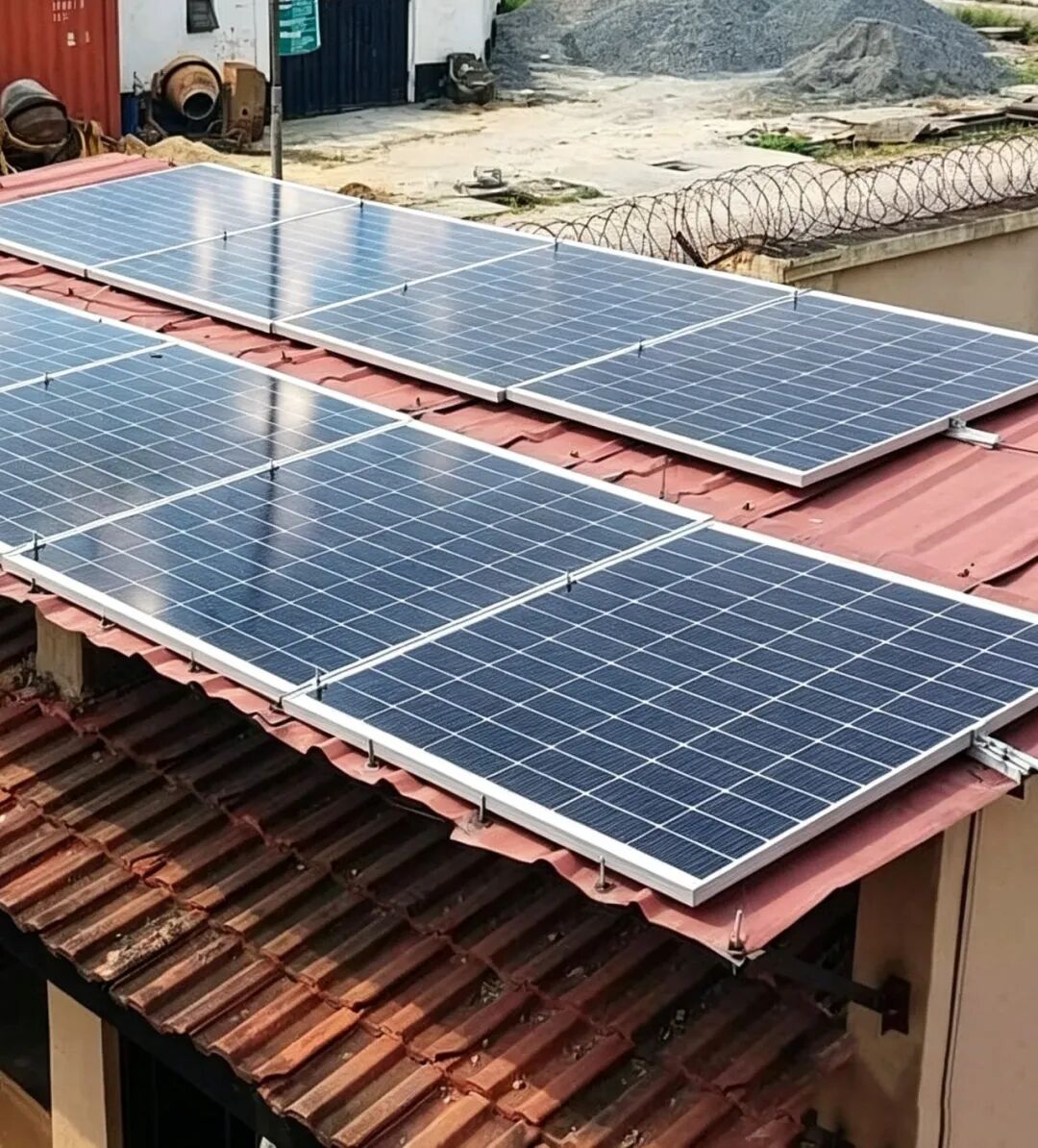
Roof PV Module Installation Diagram
1. Overview of Overall System Configuration
This household grid-tied and off-grid PV energy storage system is developed for families in pastoral areas of Qinghai Tibetan region. On the PV side, 8 pieces of 300W PV modules are connected in a single string to the PV input port of the hybrid inverter/controller. The energy storage battery bank consists of 4 pieces of 12V 100Ah gel batteries. Two batteries are connected in series to form one group, and two groups are connected in parallel before connecting to the battery terminal of the inverter. The core power equipment adopts a 4.2kW grid-tied and off-grid hybrid inverter/controller, which outputs 220V AC power to match various household AC loads.
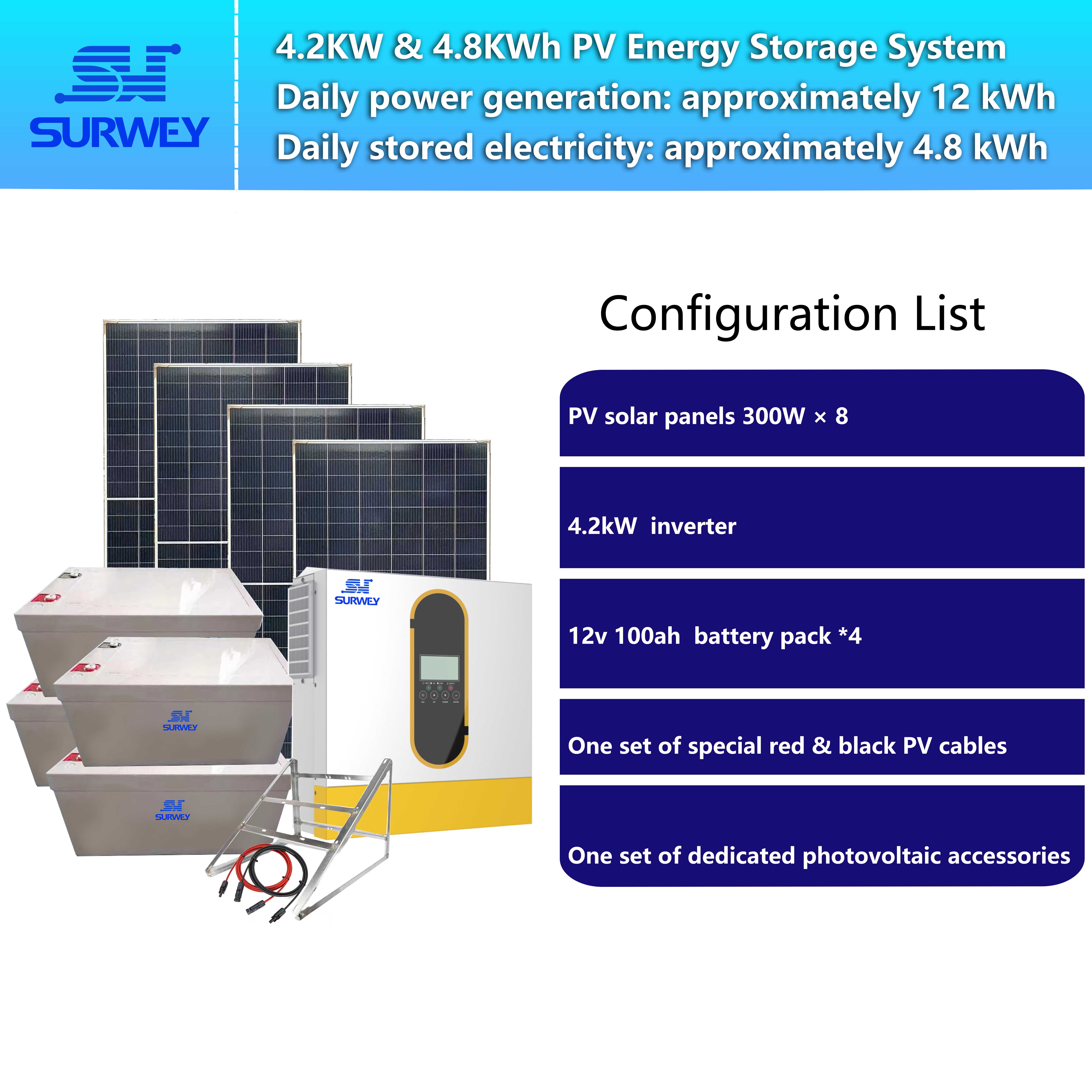
System Configuration Diagram
The system supports supplementary power supply via utility grid. It will automatically switch to independent off-grid operation when the utility grid fails. Making full use of plateau solar resources, it realizes self-consumption of on-site generated power and storage of surplus electricity. The system achieves a daily power generation of 12 kWh and an effective daily stored energy of 4.8 kWh, meeting the comprehensive power demand of pastoral households for lighting, TV, water boiling and small livestock equipment. The whole set of system adapts to plateau outdoor environments. Equipment protection rating meets the requirements of household outdoor installation. It requires simple maintenance and is suitable for long-term use by pastoral families.
2. Main Equipment Parameters of the Project
300W PV Module
This 300W monocrystalline silicon PV module has an open-circuit voltage of 38.65V and operating voltage of 30.75V under standard test conditions. The module delivers excellent low-light power generation performance. Its aluminum alloy frame and tempered glass enable resistance to snow, wind and ultraviolet radiation, adapting to harsh outdoor environments on the Qinghai plateau. The module power tolerance ranges from 0 to +3%. With superior temperature coefficient, it can output stable power under large diurnal temperature variation on the plateau and convert solar energy into DC power for the hybrid inverter/controller.
4.2kW Solar Hybrid Inverter/Controller
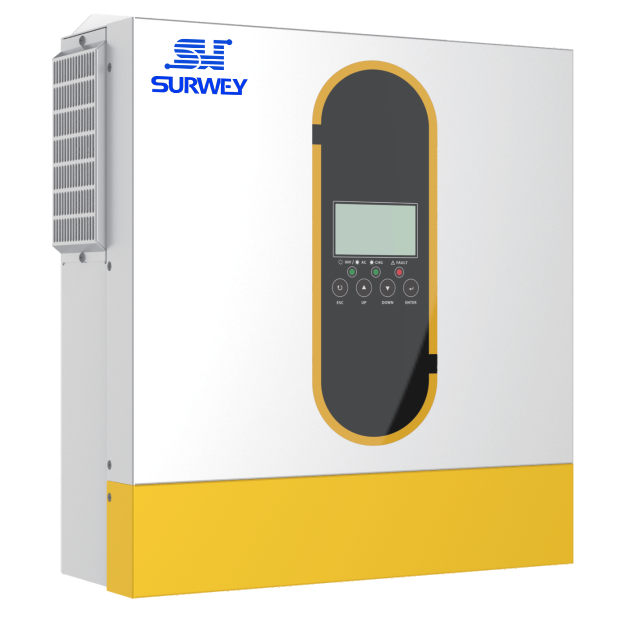
The 4.2kW grid-tied and off-grid hybrid inverter/controller serves as the core power conversion and control unit of the system. It integrates multiple functions including MPPT PV charging, battery charge and discharge management, and AC-DC inversion output, providing 220V AC output and supporting dual-mode operation of grid connection and off-grid. The built-in MPPT controller manages DC power from PV input for high-efficiency charging. It has comprehensive protection functions for battery, overload and short circuit and can operate without batteries. Multiple priority output settings are available to adapt to complex power supply scenarios in pastoral areas. It can automatically switch between grid-tied and off-grid states to ensure uninterrupted power supply for rear-end loads. Meanwhile, it supports communication monitoring to check system power generation, energy storage and power consumption status.
12V 100Ah Sealed Gel Battery
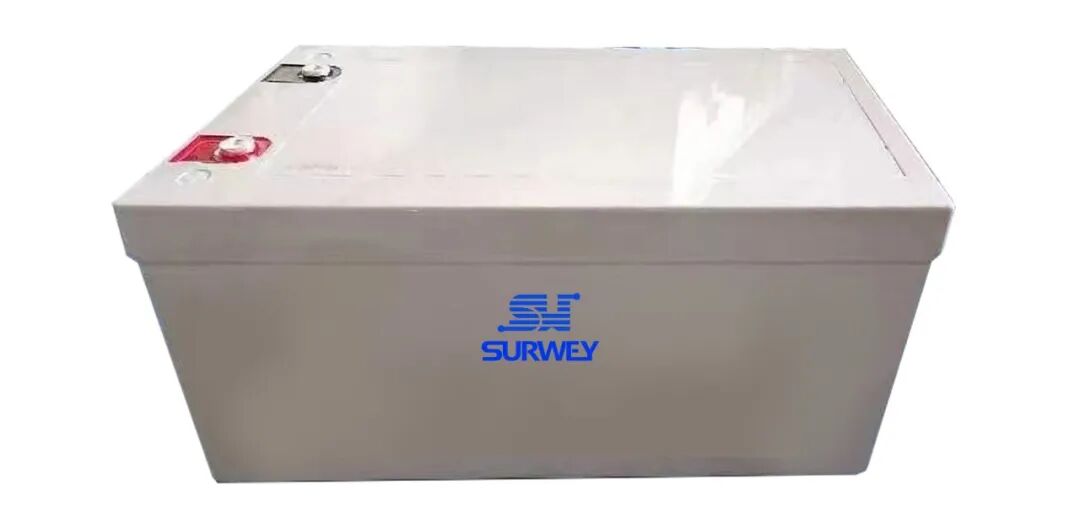
The 12V 100Ah sealed gel battery acts as the energy storage carrier. Adopting sealed gel technology, it is resistant to water loss and leakage, with good shock resistance to adapt to low-temperature plateau environments. It features low internal resistance, low self-discharge rate and long cycle life. Equipped with safety valve protection, it effectively avoids risks of bulging and cracking. In this system, 4 batteries are wired in 2S2P configuration to form a 24V 200Ah energy storage battery pack with a theoretical energy capacity of 4.8kWh. Gel batteries fit the charge-discharge working conditions of PV energy storage and satisfy household power demand of pastoral areas at night and on cloudy days without sunlight.
3. System Electrical Verification
This chapter carries out electrical parameter verification for the PV string side and energy storage battery side respectively. It checks whether voltage and current parameters fall within the allowable operating range of the 4.2kW hybrid inverter/controller to avoid electrical hazards such as overvoltage and overcurrent and ensure safe and stable operation of the whole system.
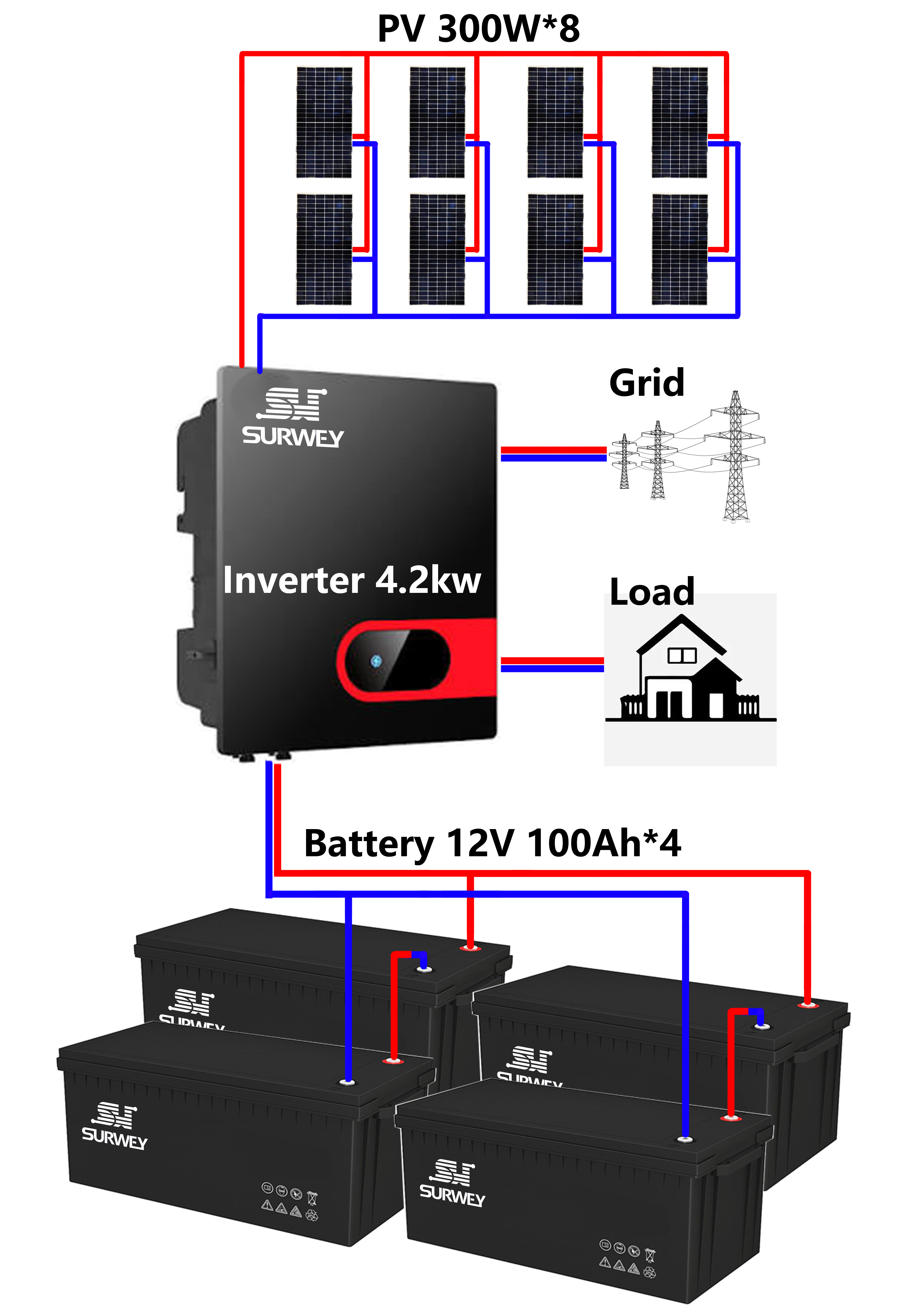
System Topology Diagram
PV String Side Verification
The PV array of the system consists of 8 pieces of 300W PV modules connected in a single string. The open-circuit voltage of a single module is 38.65V, so the total open-circuit voltage of 8 modules in series reaches 309.2V. The MPPT voltage operating range of the hybrid inverter/controller is 30–500VDC. The 309.2V open-circuit voltage after series connection is fully within the MPPT operating voltage range of the inverter. The operating current of a single module is 9.76A, and the operating current of the series string remains 9.76A, lower than the maximum PV charging current limit of 120A of the inverter. Both string voltage and current meet the electrical access requirements of the equipment. There is no risk of inverter damage caused by overvoltage. The electrical parameters of the string are well matched to guarantee efficient energy input on the PV side. Calculated based on local solar resource, the system daily power generation is 12 kWh. Restricted by the depth of discharge of gel batteries, the effective daily stored energy of the system is 4.8 kWh.
Battery Side Electrical Verification
4 pieces of 12V 100Ah gel batteries are wired in 2S2P configuration: 2 batteries connected in series form a 24V/100Ah battery pack, and two such packs connected in parallel result in an energy storage system with rated voltage of 24VDC, total capacity of 200Ah and total stored energy of 4.8kWh. The rated operating voltage of the inverter battery port is 24VDC, which perfectly matches the output voltage of the battery pack. The float charge voltage and equalizing charge voltage of gel batteries are compatible with the 24V battery charging parameters of the inverter. The maximum charge and discharge current of the battery pack is limited by the inverter and will not exceed the safe current range allowed for a single 12V 100Ah gel battery. The 2S2P wiring ensures voltage balance between the two battery groups and reduces circulation current risk. The voltage, capacity and wiring method on the battery side are compatible with the hybrid inverter/controller to meet system charge and discharge operation requirements.
4. System Operating Principle
The system has two sets of operation logic: grid-tied mode and off-grid mode.
Schematic Video of System Working Principle
In sunny daytime with sufficient illumination, 300W PV modules absorb solar energy and output DC power to the 4.2kW hybrid inverter/controller. The built-in MPPT module optimizes DC power from PV. Part of the electric energy is converted into 220V AC power through inversion to directly supply household electrical appliances. Surplus electric energy charges the gel battery pack for energy storage.
When illumination is insufficient, in evening or at night, PV output decreases or stops. The energy storage battery releases DC power to the hybrid inverter/controller, which inverts DC power into 220V AC power to continuously supply loads.
When utility grid is available, the system runs in grid-tied mode. The utility grid serves as supplementary power source. PV power is consumed on a self-use priority basis. Utility grid automatically compensates load power shortage when PV power is insufficient. In case of utility grid outage, the system seamlessly switches to off-grid mode and relies entirely on PV and storage batteries for independent power supply to guarantee uninterrupted power for pastoral households. Multi-level protection logic is embedded in the whole system to protect against overcharge, overdischarge, overload and short circuit and ensure safe and stable operation of all equipment.
5. Available Load Power and Endurance Duration of the System
Note: Data is calculated based on effective stored energy of 4.8 kWh of the system, assuming continuous operation of loads at rated power without daytime PV power generation gain. Actual operating duration will fluctuate due to equipment loss, ambient temperature and battery aging.
| Electrical Appliance | Rated Power | Continuous Operating Duration |
|---|---|---|
| LED Whole-house Lighting | 120W | 40h |
| Smart TV | 150W | 32h |
| Small Electric Kettle | 1200W | 4h |
| Household Refrigerator | 120W | 40h |
| Laptop | 60W | 80h |
| Small Livestock Monitoring Equipment | 40W | 120h |
| Household Fan | 80W | 60h |
6. Scheme Summary
This household grid-tied and off-grid PV energy storage system for pastoral areas of Qinghai Tibetan region is configured with 8 pieces of 300W PV modules, a 4.2kW hybrid inverter/controller and 4 pieces of 12V 100Ah gel batteries according to local solar resources and household power demand. Electrical verification confirms that voltage and current of the PV string fully match the inverter operating range, and the voltage and capacity of the battery pack after 2S2P wiring adapt to the inverter battery port, achieving reliable electrical safety. The system has a daily power generation of 12 kWh and effective daily stored energy of 4.8 kWh. Supporting automatic switching between grid-tied and off-grid modes, it realizes self-consumption of clean energy generated by PV and guarantees continuous power supply for basic household appliances during utility grid failure.
All equipment can withstand harsh plateau environments and requires simple maintenance. The system effectively solves the unstable power supply problem of pastoral households, improves daily power consumption for herdsmen and features good practicability for promotion and application among pastoral families in the Tibetan region.


