
Technical Solution for 3kW-5kWh Solar-Storage-Charging Integrated Grid-Tied/Off-Grid Power Supply for Suburban Residential Buildings in Lusaka
The municipal power grid infrastructure in the suburban areas of Lusaka, Zambia is underdeveloped, featuring poor power supply stability with frequent power outages, voltage fluctuations and power cuts caused by line repairs. These issues directly disrupt the normal operation of residential lighting, home appliances and other domestic electrical equipment. Many local households use diesel generators as emergency power sources, yet diesel is costly to procure, and the generators are noisy, cumbersome to maintain and impose heavy long-term financial burdens.
To address this situation, this project adopts a grid-tied/off-grid residential solar energy storage system. The integrated energy storage unit can be connected to municipal grid power or diesel generators as backup charging sources, enabling multi-energy complementation among solar PV, energy storage, municipal power and diesel generators.
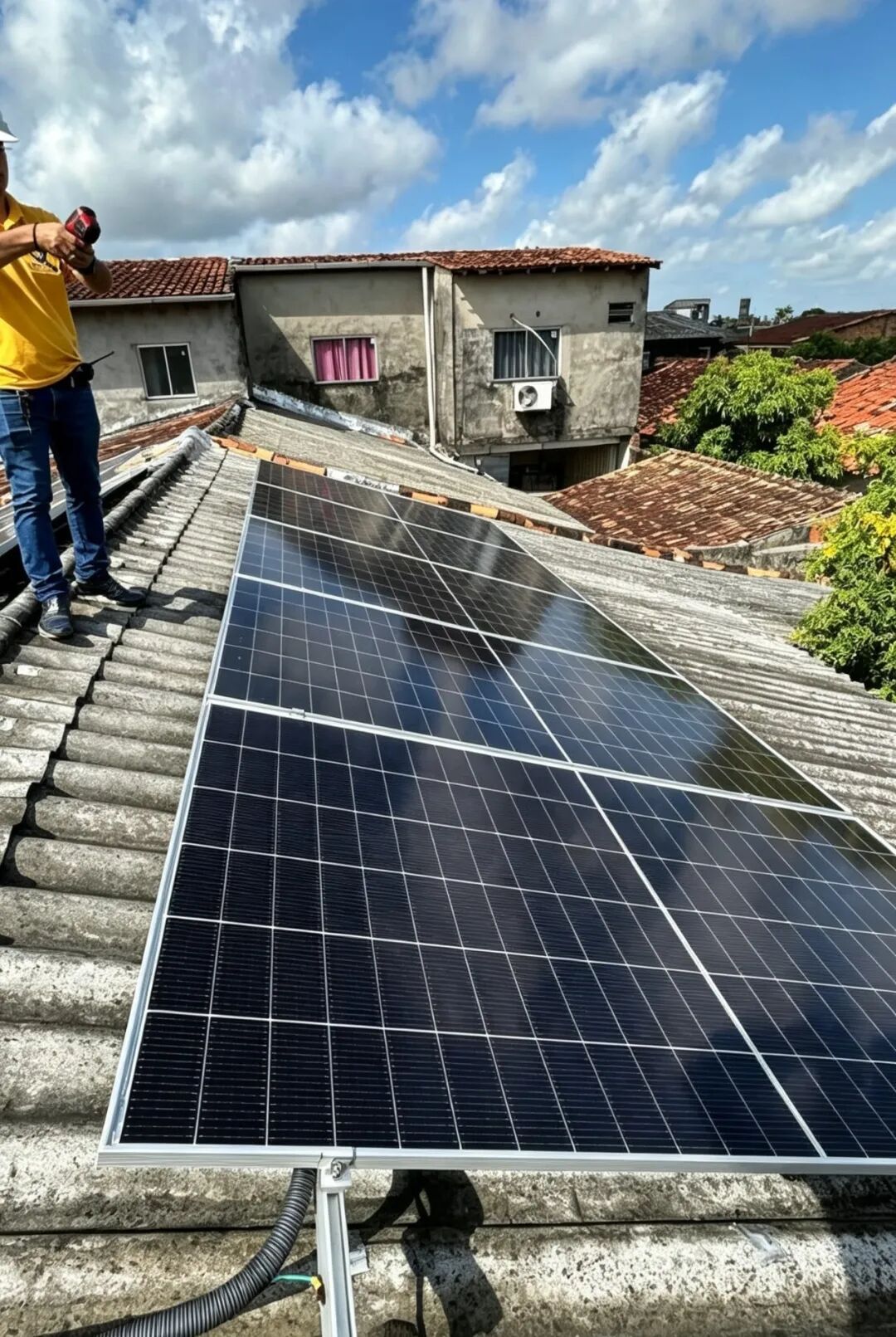 Roof PV Installation Diagram
The PV array, paired with the integrated energy storage unit, forms a complete power supply system. Leveraging abundant solar resources in Lusaka, the system is designed to achieve a daily power generation of 15 kWh and a daily stored energy of 5 kWh. The system supports multiple operating modes including grid-tied operation, off-grid operation and backup power charging. Featuring simple installation, it adapts to outdoor installation conditions for suburban residences. The solution reduces electricity expenses by harnessing solar energy while relying on backup power to eliminate disruptions caused by blackouts.
1. Overview of Overall System Configuration
This residential system is a grid-tied/off-grid solar energy storage setup. Its core components consist of 5 pieces of 585W PV modules and 1 set of 3kW-5kWh mobile integrated energy storage unit, supplemented by dedicated PV cables, outdoor mounting brackets, surge protection devices, and wiring kits for municipal power / diesel generator connection. The PV array uses 5 modules connected in series to form a single string, which connects to the MPPT PV input port of the integrated energy storage unit. The system supports multi-channel energy inputs: solar PV power input, municipal grid input and diesel generator input.
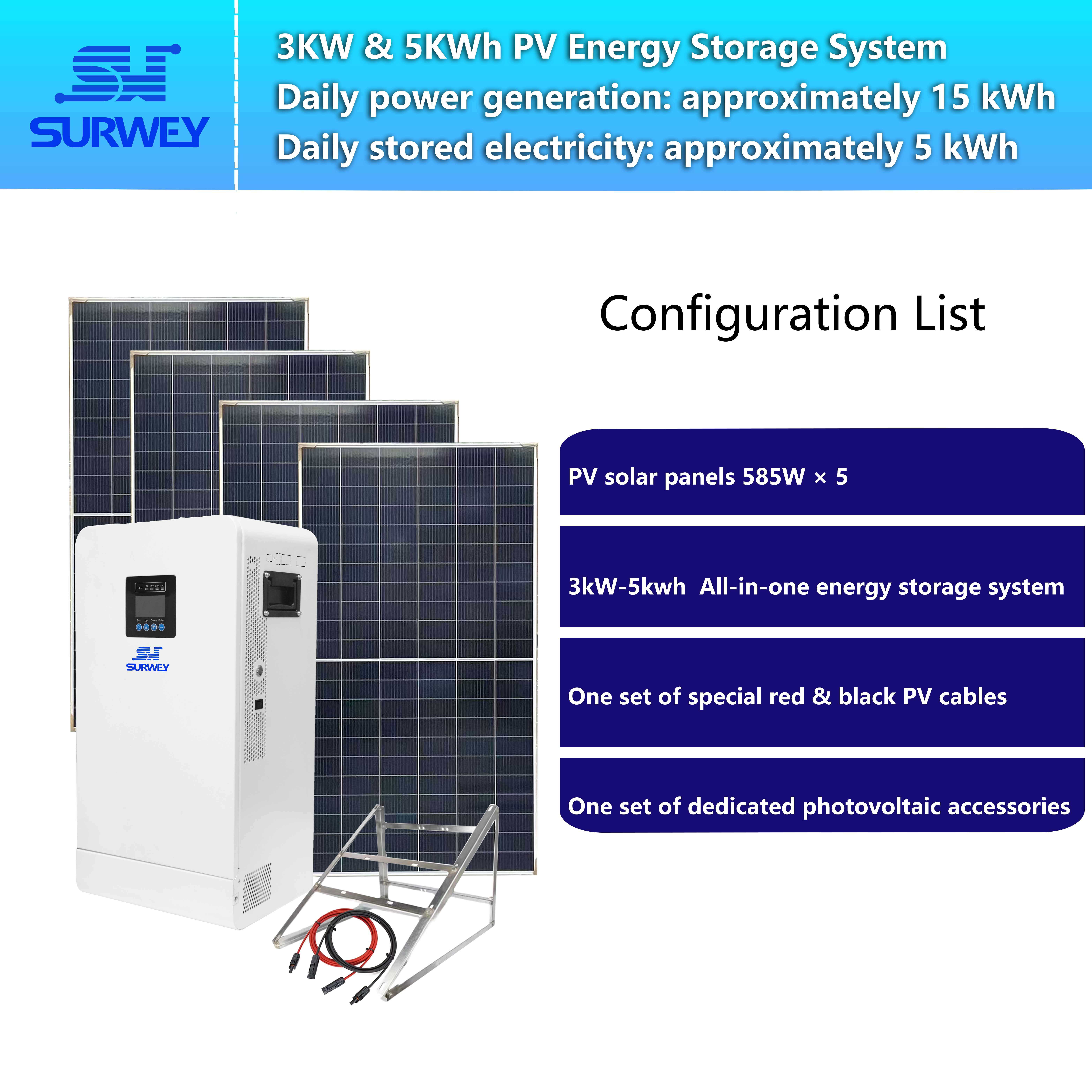 System Configuration Diagram
The system is designed for a daily power output of 15 kWh. Part of the generated electricity is consumed by on-site loads during daytime, and 5 kWh of surplus power can be stored in the energy storage system daily. The integrated energy storage unit has a rated AC output power of 3kW and can deliver pure sine-wave AC power at 208/220/230/240V. The unit does not support parallel expansion and operates as a standalone unit.
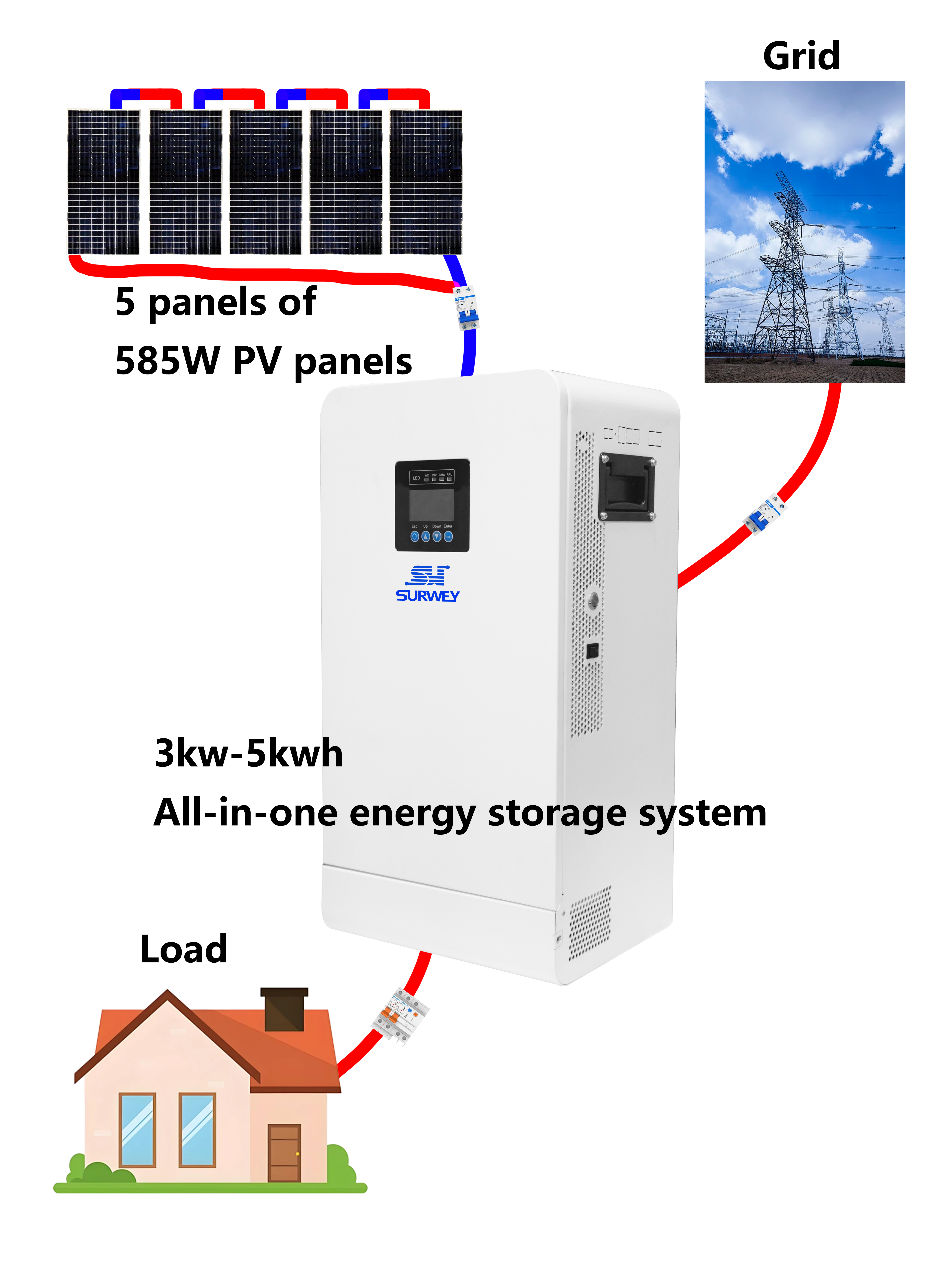 System Topology Diagram
System operation logic prioritizes solar PV power. When PV power is insufficient, energy stored in the battery is discharged. When the battery state of charge drops to the preset lower limit, the system can switch to municipal grid power or a diesel generator for charging while supplying power to loads directly. The whole system can seamlessly switch between grid-tied and standalone off-grid operation to adapt to the complex local power supply environment.
2. Main Equipment Parameters of the Project
PV Array
The PV array comprises 5 monocrystalline double-glass PV modules connected in series. It features low degradation and hail impact resistance for reliable outdoor performance, adapting to the high temperature and large diurnal temperature variation outdoors in Lusaka. It converts solar energy into direct current to feed the integrated energy storage unit.
3kW-5kWh Mobile Integrated Energy Storage Unit
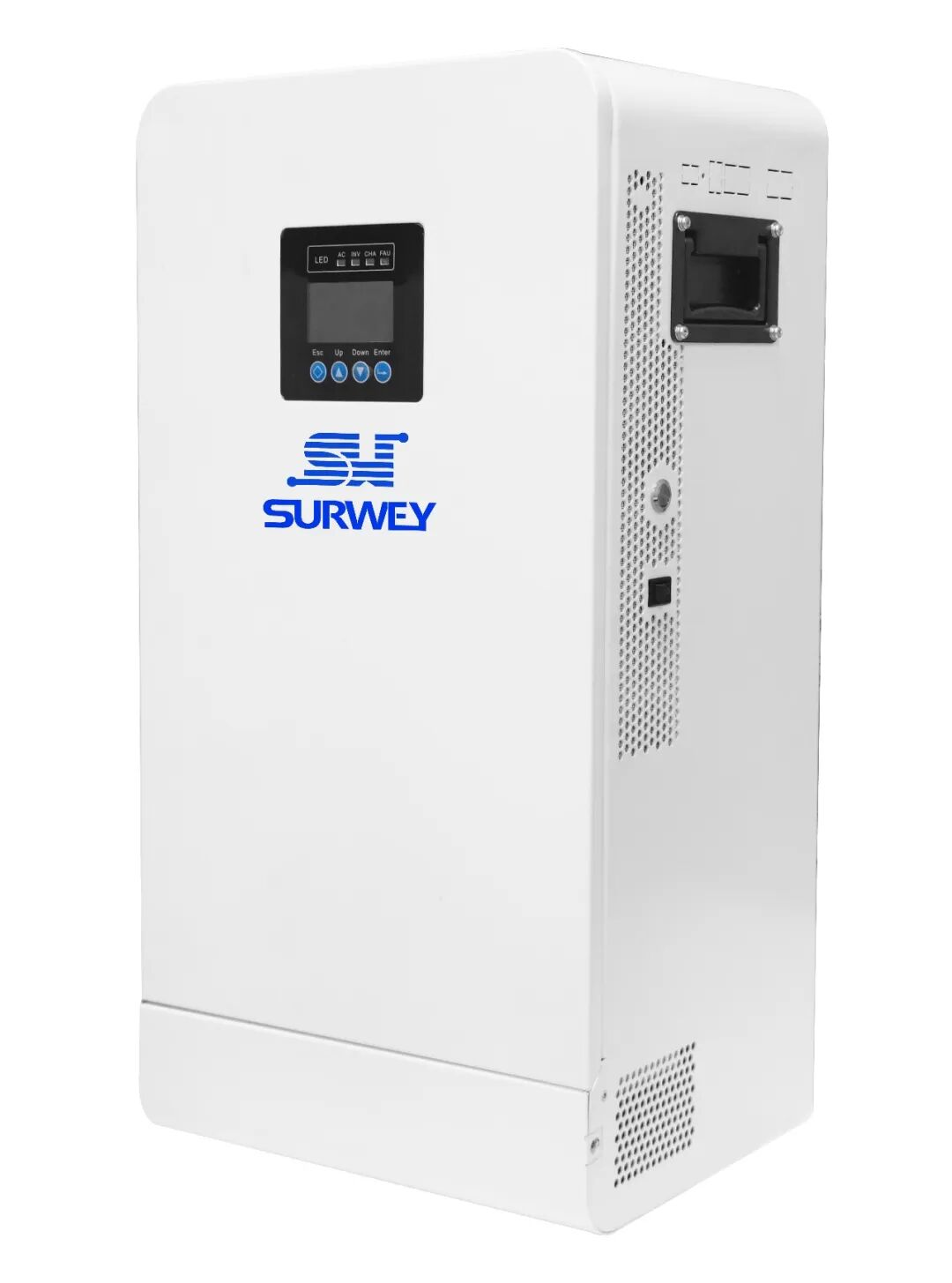
The all-in-one unit integrates an MPPT charge controller, inverter module and lithium iron phosphate energy storage battery. Battery specification: 25.6V-200Ah, usable energy capacity 5120Wh. It supports multi-source charging via solar PV, municipal power and diesel generators. The unit has no parallel connection capability and runs only in standalone mode. PV input specification: MPPT 100A, PV operating voltage range 40-430V. Rated inverter output power: 3000W, output AC voltage: 208/220/240VAC ±5%. Overall dimensions: 620320240mm, net weight 52.5kg, gross weight 58kg. The fully integrated design facilitates transportation and installation. It stores solar electricity and can also be charged by municipal power or diesel generators to continuously supply stable AC power to residential loads.
3. System Operating Principle
This grid-tied/off-grid solar energy storage system realizes coordinated operation of solar PV, battery storage, municipal power and diesel generators.
Video: Operating Principle of 3kW-5kWh Solar-Storage-Charging Integrated System
During daytime with sufficient sunlight, the PV array converts light energy into DC power and feeds it to the MPPT module of the integrated unit. The MPPT tracks the maximum PV output power in real time and supplies power to household loads as a priority. Excess solar power is stored in the built-in lithium iron phosphate battery.
When the PV output power is lower than the instantaneous household load consumption, the system automatically discharges the battery. DC power is converted into pure sine-wave AC power by the inverter module for home appliances. Once the battery SOC reaches the lower threshold, the system activates the backup power charging logic. Users may automatically switch to municipal grid power or manually start a diesel generator connected to the unit, which supplies power to household loads and charges the battery simultaneously.
The built-in BMS (Battery Management System) continuously monitors battery voltage, current and temperature and implements charge/discharge protection. The integrated unit incorporates full-set electrical protection and automatically shuts down for fault protection under overload, short circuit and over-temperature conditions. When the grid fails, the system seamlessly switches to off-grid mode, relying on PV, energy storage and backup generators to guarantee power supply. When municipal power is restored, the system can revert to grid-tied operation. The unit cannot be paralleled; the system operates standalone and does not support capacity expansion via multiple units.
Considering local solar irradiance in Lusaka, the full PV array generates 15 kWh daily. Household loads consume 10 kWh during daytime, with the remaining 5 kWh stored in the integrated storage unit. The daily stored energy matches the usable battery capacity, controlling the charge-discharge depth to avoid overcharging and effectively extend the cycle life of the lithium iron phosphate battery. The electrical parameters of the series-connected PV modules fall entirely within the MPPT operating window of the unit, and the current meets equipment input requirements for stable PV charging.
4. Supported Load Power and Equipment Operating Duration
Note: The integrated unit has a rated AC output power of 3kW. The total power of all electrical loads must not exceed 3kW. The operating durations in the table below are theoretical values under full 5kWh battery capacity. Actual runtime will fluctuate due to ambient temperature, battery degradation, line losses and equipment efficiency.
表格
| Load Combination | Total Power | Included Electrical Devices | Theoretical Continuous Runtime | Application Scenario |
|---|---|---|---|---|
| Basic Lighting & Low-Power Devices | 300W | Indoor LED lighting, router, mobile phone charging | ~16h | Night-time basic power retention, blackout emergency |
| Daily Home Audio & Video | 800W | Lighting + TV + 2 domestic fans | ~6h | Evening leisure, viewing and cooling |
| Medium Household Loads | 1500W | Lighting + TV + small kitchen appliances | ~3h | Simple home cooking and daily living |
| Near Full Rated Load | 2800W | Lighting + kitchen appliances + fans + TV operating simultaneously | ~1.4h | Short-duration heavy power consumption; prolonged full-load operation is not recommended |
Long-term full-power operation of the system is discouraged. High-power equipment generates inrush current at startup, so load selection shall reserve a 10–20% power margin. PV generation drops on cloudy days. Users can start a diesel generator or connect to municipal power for supplementary charging to maintain continuous load operation. Since the unit does not support parallel connection, capacity expansion by adding more integrated units is unavailable if load demand rises later. The whole system configuration must be re-optimized instead.
The equipment is adapted to high-temperature outdoor operating conditions in Zambia with multiple built-in electrical protections and low routine maintenance requirements. PV arrays feature low long-term outdoor degradation for stable power production. Dual backup input modes of municipal power and diesel generators greatly improve power supply reliability for suburban residences, mitigating inconveniences caused by frequent blackouts and delivering sound practical application value.


