
Commercial and Industrial Photovoltaic Energy Storage Technology Solutions for Coffee Processing Plants in Kenya
📋 Project Overview
This project is being implemented at a coffee processing plant in Kenya, where the local electricity grid is underdeveloped, voltage fluctuations are frequent, and power cuts occur regularly. Coffee processing, drying and sorting equipment requires a high degree of continuity in the power supply; any sudden power cut would directly result in production stoppages and wastage of raw coffee beans. The plant’s existing diesel-powered generation system incurs high fuel costs and requires significant daily maintenance.
This project utilises a hybrid photovoltaic and energy storage inverter system to enable self-generation for self-consumption, provide a backup power supply, and balance peak and off-peak demand. It reduces the factory’s diesel consumption and electricity costs whilst ensuring an uninterrupted power supply to critical production equipment in the event of a grid failure.
System configuration: 64 x 700W photovoltaic modules, with 16 modules connected in series to form one string, totalling four strings; a SW30K‑XHU three-phase hybrid inverter/controller unit is used, configured with a 96kWh high-voltage energy storage battery (SW‑G6‑96KWH).
The system is designed to generate an average of 224 kWh of solar power per day, with a daily energy storage charging capacity of 96 kWh; it supports both grid-connected operation and off-grid UPS standby power supply modes.

☀️ Photovoltaic Array Design and Voltage Verification
Total photovoltaic power: 64 × 700 W = 44,800 W = 44.8 kW. Module wiring: 16 modules per string, with a total of 4 strings; the 4 strings are connected to the inverter’s 4 independent MPPT channels, with each MPPT channel connected to 1 string of modules.

Taking a mainstream 700W module with an STC open-circuit voltage (Voc) of 48.25V as an example, the low night-time temperatures in Kenya will increase the open-circuit voltage; the temperature coefficient is taken as –0.34%/°C, with the local minimum ambient temperature at 0°C and a temperature difference of approximately 25°C.
Open-circuit voltage per string: 16 × 48.25 V = 772 V; after low-temperature correction, the maximum open-circuit voltage is approximately 805 V. The 30 kW inverter has a maximum permissible PV open-circuit voltage of 1,000 V, an MPPT operating voltage range of 180–1,000 V, and a full-load operating voltage range of 375–850 V.
Verification conclusion: The maximum open-circuit voltage of the modules after series connection is 805 V, which is less than the maximum limit of 1,000 V. The operating voltage falls within the inverter’s MPPT operating range; the electrical design complies with safety regulations and will not result in overvoltage damage to the inverter, whilst ensuring full-power generation is maintained.
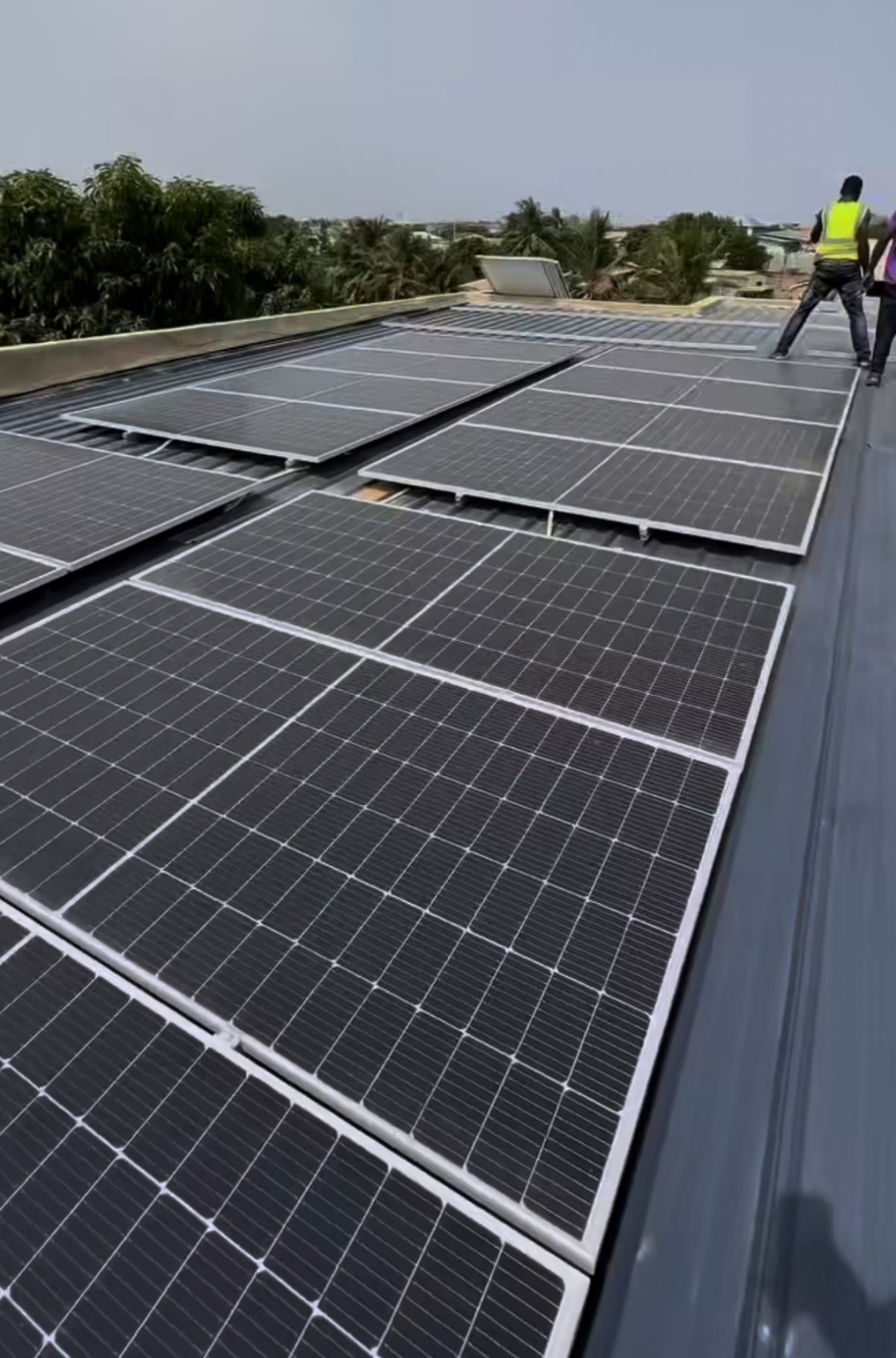
Diagram showing the installation of solar panels on a factory roof
Average daily electricity generation is 224 kWh. During the day, solar power is prioritised to meet the factory’s production load, with surplus electricity used to charge the 96 kWh battery, resulting in a daily storage capacity of 96 kWh. Once the battery is fully charged, the system automatically limits solar output to ensure self-consumption, thereby reducing the amount of electricity fed into the grid.
🔧 Selection of Core Equipment
▶SW30K‑XHU Combined mixing and reverse control unit
This model is a three-phase hybrid commercial and industrial inverter with a rated AC output of 30 kW. It features four independent MPPT channels and supports high-voltage DC connection to batteries, making it compatible with the high-voltage energy storage batteries used in this project.
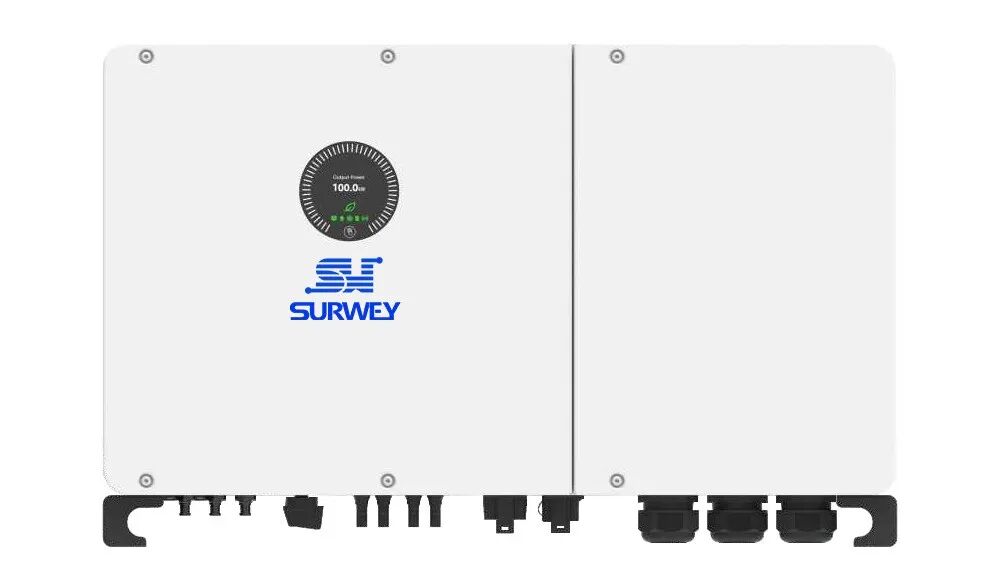
30 kW Hybrid Inverter-Controller Combination Unit
1. Grid Adaptability
Suitable for weak grids with an SCR of <1.2, and compatible with Kenya’s unstable local grid; AC voltage 380/400 V, supporting a wide input voltage range of –15% to +10%, and a 50 Hz grid, meeting local three-phase industrial power supply standards.
2. UPS and Black Start
Switchover time ≤ 10 ms; seamless switchover to standby mode upon grid failure, ensuring uninterrupted operation of coffee processing equipment; supports black start, enabling the entire microgrid system to be started using the battery alone in the absence of a grid; supports DG (diesel generator) input, allowing connection to the factory’s existing diesel generator set for coordinated operation of solar, storage and diesel power.
3. Output Capability
Supports three-phase 100% unbalanced output and 150% off-grid overload for 10 seconds to handle the inrush current during the start-up of motor-driven processing equipment; features intelligent air cooling with no derating at 50°C, making it suitable for high-temperature environments in Africa; IP66 protection rating for outdoor installation; noise level ≤55 dB.
4. Protection Functions
Comprehensive protection features including DC reverse connection, battery reverse connection, Class II AC/DC lightning protection, insulation monitoring, islanding protection and series current monitoring, making it suitable for industrial and commercial applications in Africa.
5. Communication
RS485/CAN interface for BMS integration; optional Wi-Fi/LAN connectivity; enables remote monitoring of power generation, battery SOC and load status.
▶Energy storage battery SW‑G6‑96KWH
A 96 kWh high-voltage lithium-ion battery pack, connected directly to the DC side of the SW30K‑XHU, with an operating voltage range of 200–800 V, compatible with the inverter’s battery port;
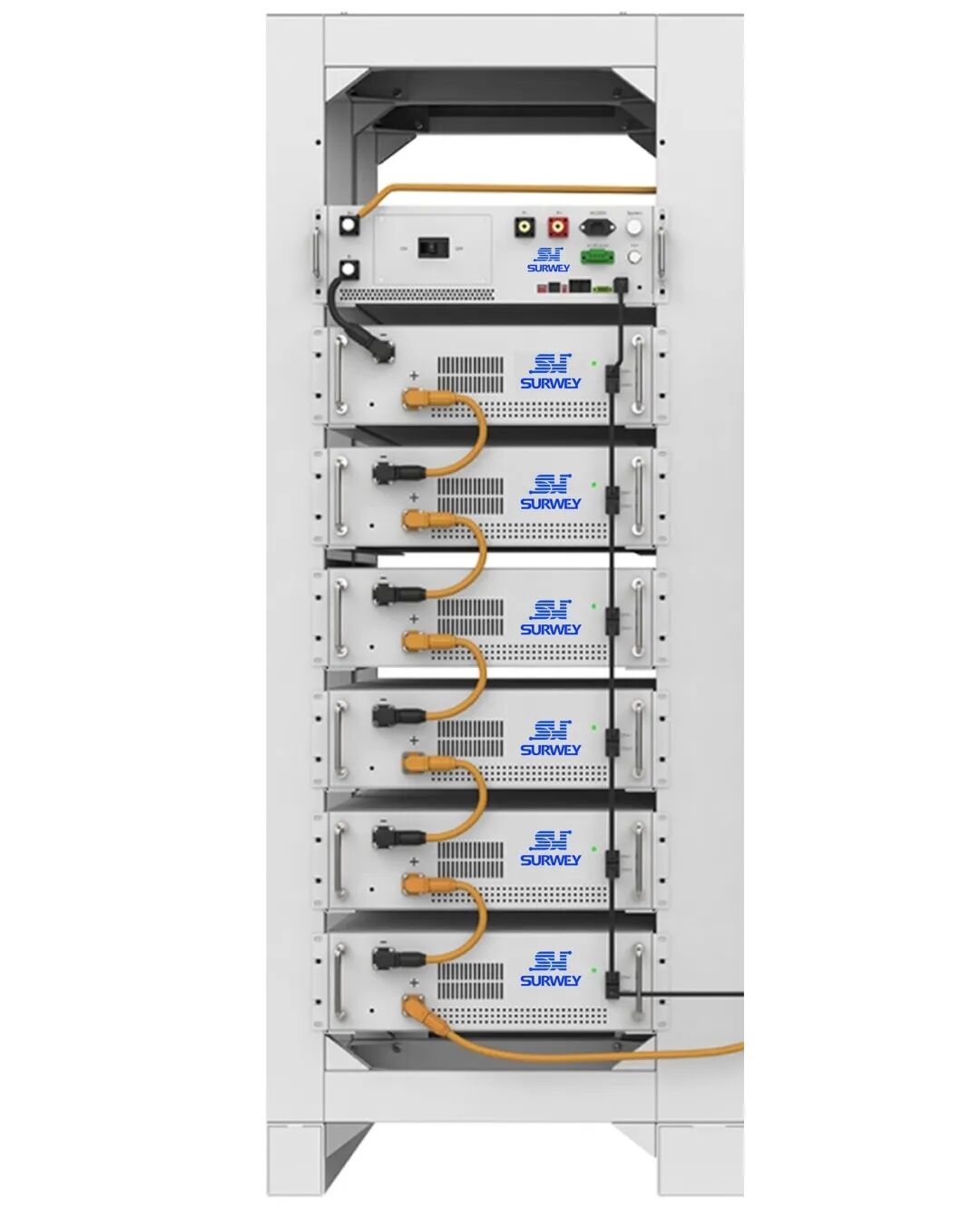
96 kWh rack-mounted energy storage battery (16 kWh × 6)
The BMS is configured to communicate with the inverter via CAN/RS485, enabling charge and discharge protection and SOC management.
The system is designed to charge 96 kWh per day, with surplus solar power during the day being stored in the battery; during peak factory electricity consumption in the evening and at night, the battery discharges to supply power, thereby reducing the amount of electricity drawn from the grid; in the event of a power cut, the battery acts as the primary power source to support the factory’s critical loads. A safety discharge depth is maintained to extend the battery’s cycle life.
⚙️ System Operating Modes
1. Grid-connected self-consumption mode (normal grid conditions)
Photovoltaic power is prioritised to supply the coffee processing plant’s loads; when photovoltaic power exceeds the load, surplus energy is used to charge the 96 kWh battery, with a daily charging limit of 96 kWh; once the battery is fully charged, the inverter reduces power output to limit photovoltaic generation; when the load exceeds the combined output of the photovoltaic system and energy storage, power is automatically drawn from the grid. This achieves peak shaving, reducing electricity consumption during peak periods.
2. UPS Off-Grid Standby Mode (Grid Outage)
In the event of a grid failure, the inverter switches to off-grid mode within 10 ms, with the PV system and battery jointly supplying power to the coffee processing plant’s critical loads; when PV power is insufficient, the battery discharges to meet the load; should the battery’s State of Charge (SOC) fall below a threshold, the existing diesel generator (DG) can be activated to provide supplementary power, ensuring uninterrupted operation of the coffee bean drying and sorting equipment. Supports multi-unit parallel expansion, facilitating future capacity upgrades.
3. Photovoltaic-Storage-Diesel Co-operation Mode
Integrated with the factory’s existing diesel generator set, the diesel unit serves solely as a backup, reducing diesel operating time; the energy storage system handles transient peak loads, whilst the diesel generator only covers the stable base load, thereby reducing diesel consumption and lowering operational and maintenance costs.
⚡ Power capacity and duration of the solutio
Note: Based on a 96kWh energy storage battery, with a depth of discharge set at 80%, the available energy is 76.8kWh; the off-grid inverter has a rated backup output of 30kW; excluding any supplementary photovoltaic generation, the theoretical duration of battery-only discharge is as shown in the table below.
| Total Power of Load Equipment | Applicable Load Types | Battery‑Only Theoretical Backup Duration | Remarks |
|---|---|---|---|
| ≤15kW | Small sorting equipment, control systems, lighting and auxiliary equipment | Approx. 5.1h | Light‑duty load for extended backup runtime |
| 20kW | Sorting equipment + partial drying auxiliary equipment | Approx. 3.8h | Typical critical load range for factories |
| 30kW | Full‑set key processing equipment at full load | Approx. 2.6h | Maximum off‑grid rated output power of inverter |
Note: During off-grid operation, photovoltaic power generation is utilised during daylight hours, meaning the actual duration of power supply will exceed the theoretical values shown in the table; when the battery’s SOC reaches the lower protection limit, the system can automatically activate the diesel generator to ensure an uninterrupted and continuous power supply.
📈 Benefits of the Scheme
1. Savings on electricity and diesel: With an average daily power generation of 224 kWh, the majority is supplied to the factory for production, whilst 96 kWh is stored daily in the energy storage system for use during the night, thereby reducing the need to purchase electricity from the grid; in the event of a power cut, it replaces diesel generators, significantly reducing fuel procurement and maintenance costs.
2. Production reliability: The system switches to the UPS instantly in the event of a mains power cut, preventing downtime of coffee processing equipment, avoiding the wastage of coffee beans and minimising direct financial losses caused by power cuts.
3. Ease of operation and maintenance: The system supports remote monitoring via a mobile app, allowing real-time viewing of power generation, energy storage State of Charge (SOC), load and fault alerts, thereby reducing the workload associated with on-site operation and maintenance.
📝 Summary
This photovoltaic energy storage system has been comprehensively designed to suit the local grid conditions and production load characteristics of a coffee processing plant in Kenya. The voltage of the photovoltaic strings has been verified for low-temperature operating conditions, and the electrical parameters of the modules and inverters have been matched; the system provides both grid-connected power generation and backup power supply capability in the event of a power cut.
The project makes full use of the solar resources available on the factory premises; during the day, solar power generated is supplied to meet production needs, whilst surplus energy is stored in batteries. This effectively reduces the factory’s reliance on purchased electricity and the frequency of diesel generator use. The system is equipped with comprehensive hardware and software protection, and the equipment is suitable for the local outdoor environment characterised by high temperatures and dust. Should there be a need to increase power supply capacity at a later stage, the system supports expansion through parallel connection of additional equipment.
During the implementation phase, attention must be paid to ventilation clearances during module installation, and cables must be selected with derated ratings to accommodate the local high-temperature environment. During the commissioning phase, appropriate settings must be configured for the inverter’s weak grid parameters, battery charge and discharge protection thresholds, and diesel generator interlock logic to ensure the long-term, stable and reliable operation of the entire system.


