
Can Solar Panels Directly Charge Batteries? Core Knowledge of Off-Grid PV Energy Storage
With the rising popularity of off-grid residential PV, outdoor energy storage, RV solar power and self-sufficient courtyard power supply, many DIY enthusiasts share the same question: solar panels output direct current (DC), and storage batteries also store DC. Given the same current type, can we simply connect solar panels to batteries with wires, skip extra accessories and cut the cost of charge controllers?
Electrically speaking, linking PV panels and batteries can generate charging current. However, for safety, battery lifespan, system efficiency and long-term operation cost, direct connection is strictly prohibited in nearly all scenarios, with only tiny trickle-charging setups as exceptions.
This article fully breaks down the underlying principles of PV charging, fatal hazards of direct wiring, core functions of charge controllers, matching schemes for different batteries, and standard construction logic for off-grid PV systems. After reading, DIY builders, farmers with self-built PV, and RV outdoor power users can avoid 90% of common energy storage pitfalls.
I. Basic Background: PV Panels and Batteries Have Inherently Mismatched Electrical Characteristics
To understand why direct wiring is unsafe, we first distinguish the differing electrical properties of PV modules and storage batteries—the root of all safety risks.
PV power generation relies on the photovoltaic effect to produce DC, yet its output voltage and current fluctuate constantly with sunlight and ambient temperature. Take the widely used 18V PV panel for 12V systems as an example: at dawn with faint sunlight, PV output voltage falls below 10V with nearly zero charging capacity. At noon under strong sunshine and mild temperatures, open-circuit voltage hits 18V–21V. In sweltering summer heat, rising module temperature slightly lowers voltage and current. At dusk, voltage drops rapidly below the battery’s rated value, halting charging entirely.
Storage batteries are fixed electrochemical devices with strict voltage and current limits for charging, and standards vary drastically across battery chemistries. A 12V lead-acid battery has a float charging voltage range of 13.8V–14.4V, with a maximum fast-charging cap of 14.8V. For mainstream 12V LiFePO4 batteries, the full-charge cut-off voltage is merely 14.6V. Sustained charging above safe voltage thresholds triggers irreversible damage to internal chemical structures. The core conflict is clear: the noon open-circuit voltage of PV panels far exceeds batteries’ safe charging limits. Without regulating equipment, continuous high voltage pours into batteries and causes overcharging damage. On cloudy or shaded days, PV voltage drops below battery voltage, leading to reverse current backflow from batteries to PV panels.
A common misconception: “Once fully charged, battery voltage rises to offset PV high voltage and stop overcharging.” This only holds true in laboratory environments with constant temperature and stable sunlight. In real life, sunlight intensity shifts every second; cloud cover or tree shade creates constant voltage fluctuations, making stable voltage balance impossible. Within hours or 1–2 days, persistent overvoltage charging occurs, creating equipment failure and fire hazards.
II. Four Irreversible Severe Hazards of Direct PV-to-Battery Connection
(1) Permanent Battery Damage, Shortened Service Life, Fire and Explosion Risks
Overcharging is the deadliest consequence of bare wiring. Different battery chemistries show distinct failure modes: For traditional lead-acid, gel and AGM batteries, sustained high-voltage charging accelerates electrolyte electrolysis, generating massive hydrogen and oxygen gas. Sealed batteries suffer sharp internal pressure spikes, swelling, electrolyte leakage and rapid plate sulfation, resulting in permanent capacity attenuation. Lead-acid batteries with a rated 3–5 year service life may fail completely in just 1–2 months under direct PV connection. Volatilized electrolyte renders the battery incapable of energy storage.
Lithium iron phosphate and ternary lithium batteries carry higher risks. Overvoltage charging forms lithium dendrites that pierce battery separators, triggering internal short circuits and thermal runaway. Confined spaces such as outdoor storage boxes or RV battery compartments have poor ventilation, easily leading to swelling, smoking, and even fire or explosion. Most outdoor energy storage fire incidents trace back to users omitting charge controllers and directly connecting PV panels to lithium batteries, causing long-term overcharging.
(2) Reverse Discharge at Night Damages PV Modules
After dark or on heavily overcast days, PV output voltage falls below battery terminal voltage. Without a controller to block the circuit, DC stored in batteries flows backward into PV panels. On one hand, continuous overnight reverse discharge means next-day PV generation cannot compensate for nighttime power loss, rendering the storage system incapable of self-sufficiency. On the other hand, reverse current burns out bypass diodes inside PV panels, causing partial power loss of individual cells and overall module power degradation. Replacing damaged PV panels costs far more than a single charge controller.
(3) Greatly Reduced Charging Efficiency, Wasted Clean Energy
PV modules have a maximum power point (MPP); only operating within stable optimal voltage and current ranges can panels deliver full rated power. Direct battery connection clamps PV output to battery voltage, keeping the system outside high-efficiency operating ranges most of the day. Under identical sunlight conditions, power generation losses reach 20%–30%. For instance, a 300W PV panel paired with a 12V LiFePO4 battery generates roughly 1.2 kWh daily with an MPPT controller, yet only 0.8 kWh via direct wiring. Over the long run, the payback period for PV investment extends by one-third, completely defeating the original purpose of cost-saving, low-carbon solar power.
(4) No Low-Voltage Protection Leads to Deep Discharge and Permanent Plate Damage
A complete energy storage system requires protection against minimum discharge voltage alongside charging regulation. Batteries power lights, water pumps and small household appliances continuously during operation. If discharge continues after voltage drops below the safety threshold, deep discharge occurs. Direct PV wiring has no low-voltage cut-off function. If users forget to turn off loads, battery voltage keeps falling: lead-acid batteries suffer aggravated sulfation, while lithium cells develop unbalanced single-string voltages, ruining the entire battery pack.
III. PV Charge Controller: Indispensable “Intelligent Gate” Between PV Panels and Batteries
Given the critical risks of direct wiring, PV charge controllers act as the core safety component of all off-grid storage systems—equivalent to dedicated battery managers. Every certified PV energy storage system must install a controller between PV arrays and batteries. Two mainstream types exist: PWM (Pulse Width Modulation) and MPPT (Maximum Power Point Tracking), both equipped with essential protective functions to eliminate all hazards of bare connection.

Eight Core Protective Functions of Charge Controllers
- Overcharge protection: Real-time battery voltage sampling reduces charging current once the full-charge threshold is hit, switching to constant-voltage float charging and cutting PV input if voltage exceeds limits to block high-voltage inflow.
- A nti-reverse charging protection: Built-in one-way isolation circuits automatically block reverse battery current at night or on cloudy days, preventing stored power loss and PV diode burnout.
- Low-voltage over-discharge protection: Monitors battery discharge voltage and disconnects external loads below the safety floor to avoid deep discharge damage.
- Overcurrent and short-circuit protection: Instant power cut upon circuit shorting or current overload to shield PV modules, batteries and wires from burnout by heavy current.
- Temperature-compensated charging: Automatically adjusts charging voltage under extreme high/low temperatures to suit outdoor wide temperature fluctuations and extend battery lifespan.
- Three-stage intelligent charging: Follows constant-current bulk charging, constant-voltage absorption charging and float maintenance charging cycles, matching battery electrochemical characteristics for fuller charging and minimal loss.
- Voltage conversion adaptation: Steps down high-voltage PV arrays to match low-voltage batteries (e.g., 48V PV strings paired with 12V storage cells) without module modification.
- Power monitoring and statistics: Records daily generation, charge-discharge energy and remaining battery capacity to help users optimize electricity planning and PV performance.
How to Choose Between PWM and MPPT Controllers for Residential Scenarios
- PWM Controllers: Entry-level, cost-effective units ideal for small systems under 100W. They adjust charging voltage via pulse on-off modulation with simple, stable structures, yet cannot track PV maximum power points, incurring roughly 15% efficiency loss. Suitable for rural courtyard lighting, surveillance power supply and portable solar panels under 50W.
- MPPT Controllers: Standard for medium-to-large systems. Though higher-priced, they boost power generation efficiency by 15%–30% with real-time tracking of PV optimal output. They deliver outstanding performance under unstable sunlight or weak winter irradiance. Prioritize MPPT for RV storage, residential off-grid PV, commercial small-scale storage above 1,000W and large-capacity LiFePO4 battery banks. Higher long-term power gains offset equipment price gaps for superior overall cost performance.
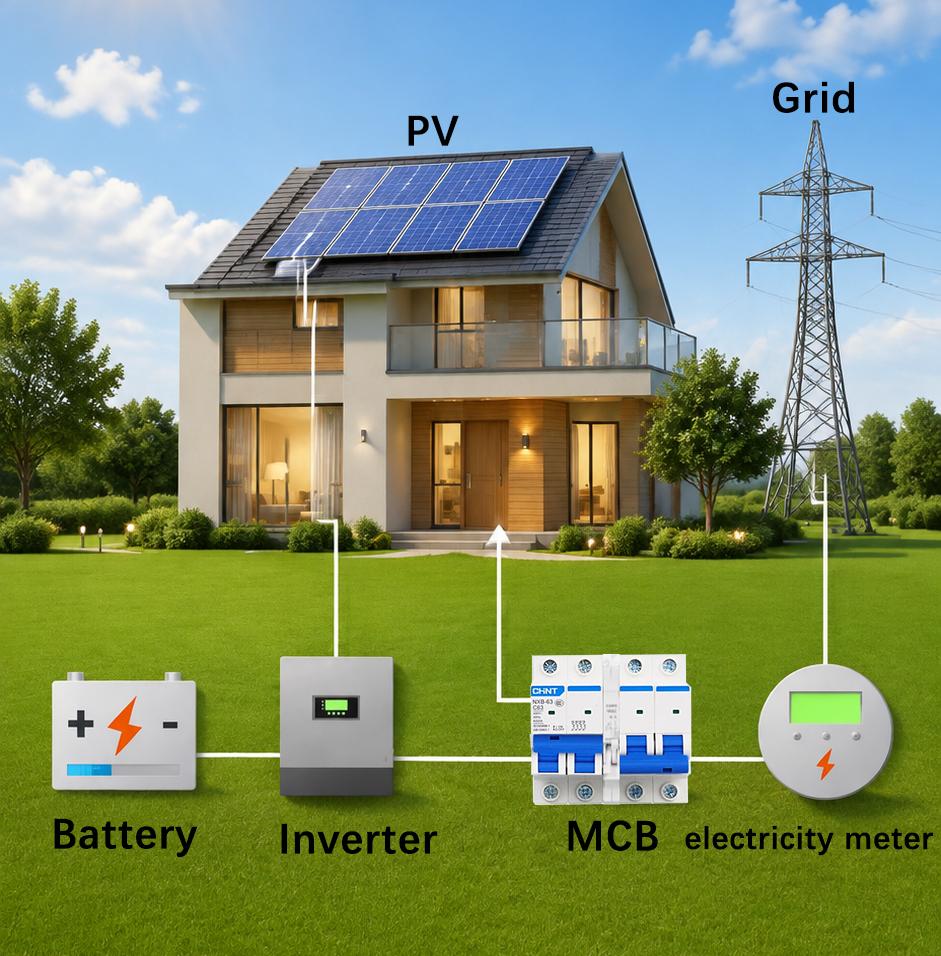
Standard PV Energy Storage System Wiring Diagram
IV. The Only Permitted Direct PV-to-Battery Scenario: Micro-Watt Trickle Maintenance Charging
As noted earlier, direct wiring is not entirely banned, but only allowed under strict power limitations for one single use case: miniature solar maintenance panels rated below 5W for static power loss compensation of car and motorcycle batteries. Such micro PV panels output under 0.3A, delivering minimal cumulative charging energy daily. Even noon high voltage cannot rapidly overcharge batteries, serving only to offset static drain from vehicle anti-theft devices and dashcams, rather than full-capacity energy storage charging.
All other setups—foldable high-power portable solar panels, residential PV arrays, large storage battery banks and EV PV supplementary charging—forbid direct connection. Many portable outdoor power stations appear to accept direct PV plug-in, yet they integrate built-in BMS and equivalent MPPT circuits internally. This differs fundamentally from bare PV wiring to raw battery cells, a critical distinction to avoid misunderstanding.
V. PV Charging Matching Tips for Mainstream Storage Batteries
Off-grid energy storage mainly uses lead-acid and LiFePO4 batteries, which require drastically different controller parameter settings—an area where new users frequently make mistakes and damage batteries.
1.Lead-acid / Gel / AGM Batteries:
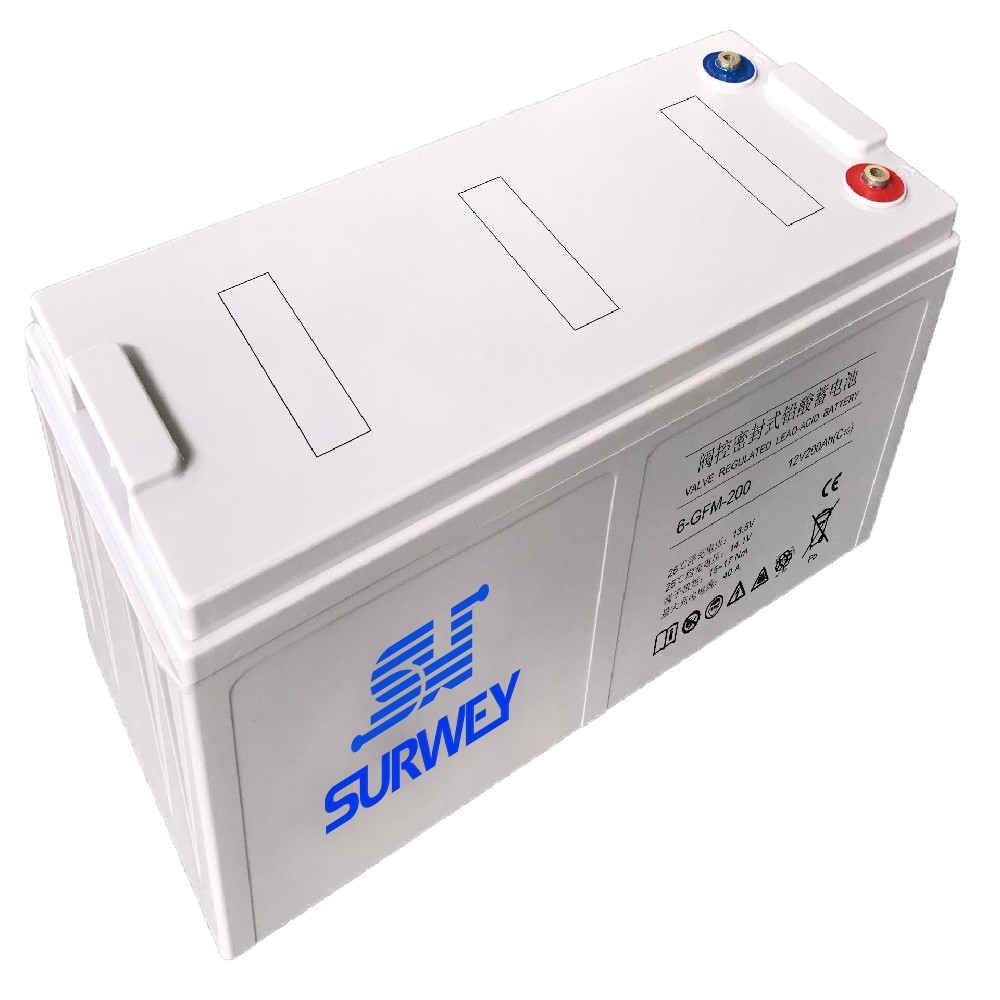
Full-charge cut-off voltage 14.4V–14.8V, discharge protection threshold 11.8V. Compatible with both PWM and MPPT controllers; maximum charging current limited to 0.2C of battery capacity (20A max for a 100Ah battery). Gel batteries are extra sensitive to high voltage, requiring a 0.2V lower float voltage to prevent electrolyte dry-out.
2.LiFePO4 Batteries:
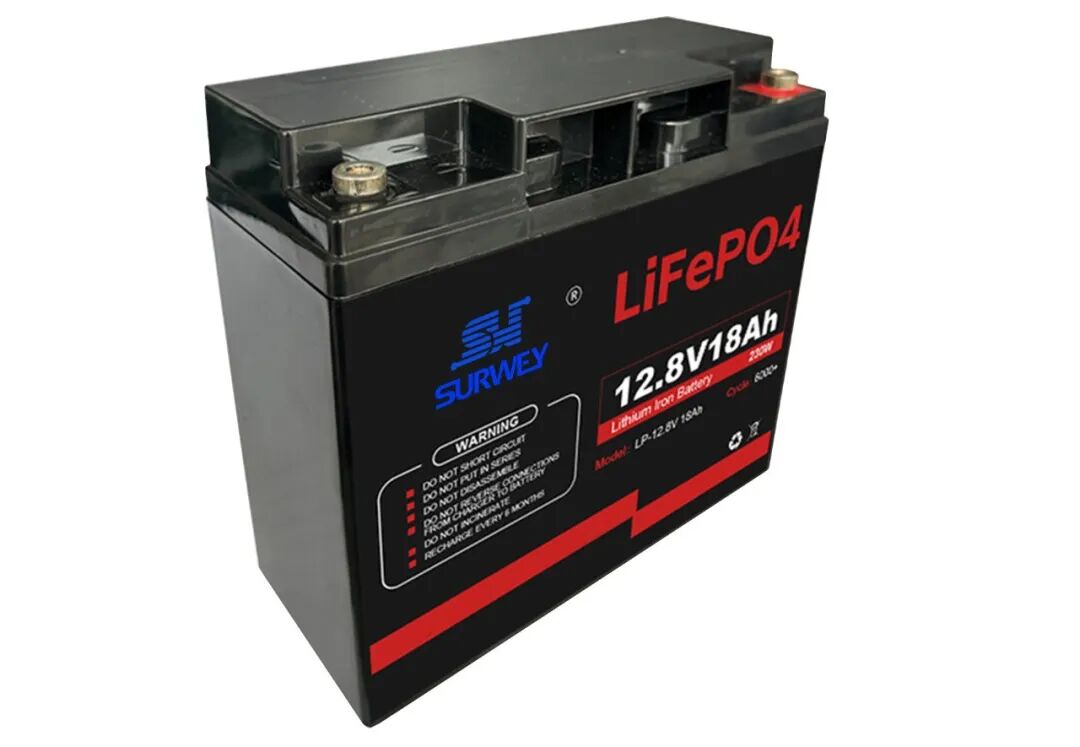
Full-charge cut-off voltage 14.6V, low-voltage protection at 12.0V. Though equipped with internal BMS protection boards, external PV controllers remain mandatory for dual protection. Battery BMS only handles extreme short circuits and single-string imbalance; it cannot continuously regulate fluctuating PV high voltage. Omitting external controllers still causes gradual overcharging and 50% capacity attenuation within half a year. Ternary lithium batteries operate at higher voltage ranges with poor stability, and are not recommended for outdoor off-grid PV due to elevated safety risks.
VI. Standard Compliant Construction Workflow for Off-Grid PV Storage (Beginner-Friendly Template)
For safe, efficient PV storage deployment, follow this fixed wiring sequence without reversal: PV module positive & negative terminals → PV input port of solar charge controller → battery port of controller → positive & negative poles of storage battery bank. To power AC appliances such as air conditioners and televisions, connect an inverter to the controller load terminal or battery bank to convert DC to 220V alternating current for loads.
Supporting wire selection rules: Use dedicated multi-strand PV cables between panels and controllers to minimize voltage drop; thicken wiring between batteries and controllers to avoid heat buildup under heavy current. Install fuses on both PV and battery branches for multi-layer short-circuit protection.
Many users cut corners by skipping charge controllers to save a few hundred yuan, yet replacement costs for damaged batteries and PV panels easily exceed thousands. Fires triggered by improper wiring lead to incalculable property losses. For high-voltage DC PV circuits, safety always comes first—charge controllers deliver the highest cost-performance protection and must never be omitted.
VII. Industry Trend: Integrated PV-Storage Devices Simplify Wiring Without Eliminating Control Cores
The renewable energy market now features all-in-one solar storage power stations and integrated PV-storage machines. Many users mistakenly believe these realize “direct PV charging to batteries”, yet manufacturers only integrate MPPT controllers, BMS and inverters into a single unit to simplify external wiring. Complete voltage and current regulation modules remain embedded internally, adhering to the core logic that PV power must pass through control units before charging batteries.
Off-grid distributed PV, rural residential storage and outdoor PV-charge-storage integrated equipment will grow more compact and integrated in the future, yet voltage regulation, overcharge prevention and anti-reverse-discharge control functions will only be upgraded, never removed. DIY PV builders must not be misled by streamlined external appearances: bare PV panels paired with standalone storage batteries require mandatory charge controllers with no viable substitutes.
VIII. Conclusion
Core takeaway summary: While PV panels can electrically connect to batteries and generate charging current, direct wiring is strictly prohibited for all standard off-grid PV energy storage systems when evaluating safety, battery lifespan, power generation efficiency and long-term operational costs. The sole exception is sub-5W miniature maintenance solar panels for car battery static loss compensation.
As the core regulation and safety component of storage systems, solar charge controllers deliver voltage stabilization, overcharge prevention, reverse current blocking and low-voltage protection. They are irreplaceable in all complete PV storage setups.
Whether building rural courtyard self-sufficient PV, RV outdoor power, off-grid surveillance power or household backup storage, always install properly matched PWM or MPPT charge controllers, set charging voltage parameters according to battery chemistry, route wiring to standard specifications and add fuse protection. This maximizes the clean, low-cost advantages of solar power while eliminating overcharging, fire and battery failure risks, enabling stable multi-year operation and genuine self-sufficient green power.


