
Popular Science on Energy Storage: Why Dual-Channel MPPT Is Preferred for Off-Grid PV Systems
Preface
"In regions with inadequate power infrastructure such as Africa and Southeast Asia, power outages are a regular occurrence. Households, small processing plants and remote communication base stations have built off-grid PV energy storage systems to achieve self-sufficient power supply relying on solar energy."
However, extensive on-site installation feedback shows that the actual power generation of many PV energy storage devices falls far short of theoretical calculations, with core pain points concentrated in three scenarios:
- Multi-sloped roof designs with PV modules laid on east, west and south orientations, where each string reaches its power generation peak at completely different times;
- Partial shading caused by trees, chimneys and surrounding buildings, which drastically reduces the output of the entire string of panels;
- High upgrading costs and severe power generation losses when expanding capacity in batches, as old and new PV modules of different power ratings are incompatible.
1. Differences Between Single MPPT and Dual Independent MPPT in Off-Grid Scenarios
(1) Single MPPT: An Efficiency Bottleneck for Off-Grid PV Systems
The Maximum Power Point Tracker (MPPT) is the core component of PV energy storage inverters. It dynamically matches the voltage and current of PV panels to capture the optimal power generation operating range. Equipment equipped with only a single MPPT shares one power regulation loop for all PV strings, which must maintain unified operating parameters. Once any string suffers output degradation due to orientation, dust accumulation or shading, the operating conditions of the entire PV array will be dragged down, resulting in severe string mismatch losses. This is the key reason why power supply hours for many off-grid users shrink sharply on cloudy days and in the evening.
(2) Dual Independent MPPT: Optimized for Complex Off-Grid Operating Conditions
The dual MPPT architecture features two non-interfering power tracking channels. The two PV strings are regulated and optimized independently, fundamentally eliminating the "short-board drag effect" of single MPPT models. This delivers outstanding practical value for off-grid scenarios with no grid backup power.
Advantage 1: Compatible with Multi-Orientation Roofs and Resilient to Partial Shading
Farmhouse and factory rooftops usually feature multiple tilt angles and orientations, and are regularly subject to intermittent shading. A dual MPPT system can connect south-facing and east/west-facing modules to separate channels, each tracking the maximum power point under its respective sunlight condition. Even if one channel is shaded, the other can operate at full load, greatly improving all-day power supply stability.
Advantage 2: Flexible Mixing of Modules and Cost-Effective Phased Capacity Expansion
Many users install PV panels in batches, making mixed use of old and new modules or different power models commonplace. Single MPPT systems impose extremely strict requirements on consistent module parameters, leading to soaring power losses when mixing different panels. In contrast, dual MPPT supports two channels connected to PV modules of varying specifications. Capacity expansion does not require full replacement of the entire system, drastically cutting subsequent renovation and maintenance costs.
For off-grid users, power generation directly determines how long electrical appliances can run. The extra power output brought by dual MPPT ensures continuous operation of refrigerators and lighting on cloudy days, and allows small workshops to extend production hours without early power cuts and work stoppages.
2. PV Energy Storage Inverters: Full Range Equipped with Dual MPPT
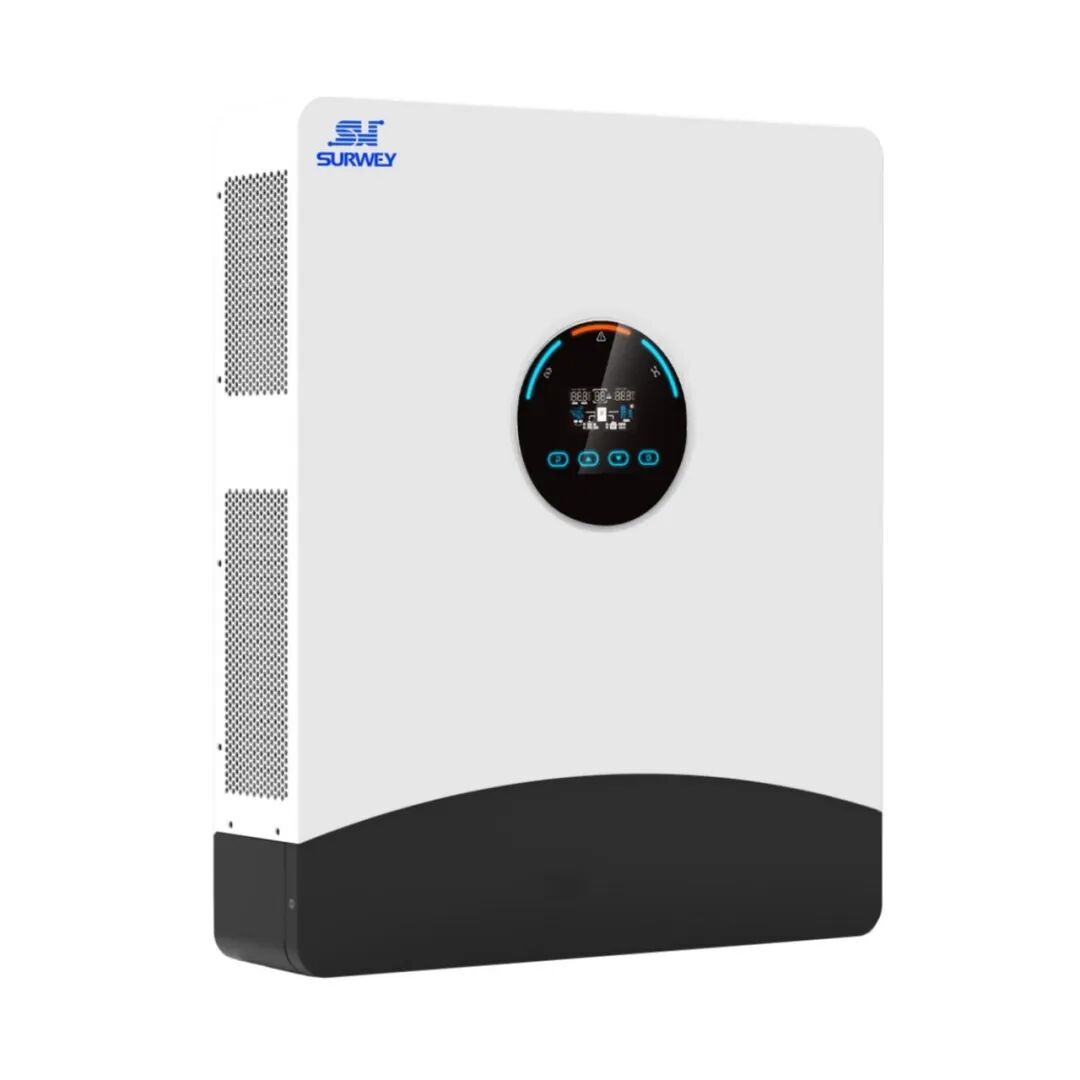
IP55、IP65 Dual MPPT PV Energy Storage Inverter
Conclusion


