
A Comprehensive Guide to Full-Scenario Energy Storage: In-Depth Analysis of Generation-Side, Grid-Side, Industrial & Commercial, and Residential PV-Storage Systems
Preface
I. The Industrial Context of Energy Storage: Why Are the Four Tracks Booming Simultaneously?
(1) Renewable Energy Curtailment Pressures Create an Imperative Demand for Storage
China has ranked first globally in installed wind and PV capacity for consecutive years. Nevertheless, wind and solar power are inherently intermittent and volatile: PV generates full power at noon under ample sunlight but zero output at night; wind power fluctuates drastically with seasons and weather. This readily creates a dilemma: surplus power during peak generation cannot be fully absorbed, while power supply falls short during peak consumption periods. Wind and solar curtailment once stood as a critical bottleneck restricting large-scale grid integration of renewable energy. Traditional thermal power has limited peak-shaving capacity and cannot match the rapidly fluctuating output curves of renewables. As a flexible regulating resource, energy storage has become the only viable solution to resolve renewable energy curtailment.
On-site operation data from multiple wind-solar stations in Northwest China shows that monthly PV curtailment rates at power stations without supporting storage generally exceed 18%. After installing energy storage equipment with matched capacity, the curtailment rate drops below 3%, bringing a remarkable rise in on-site power generation revenue.
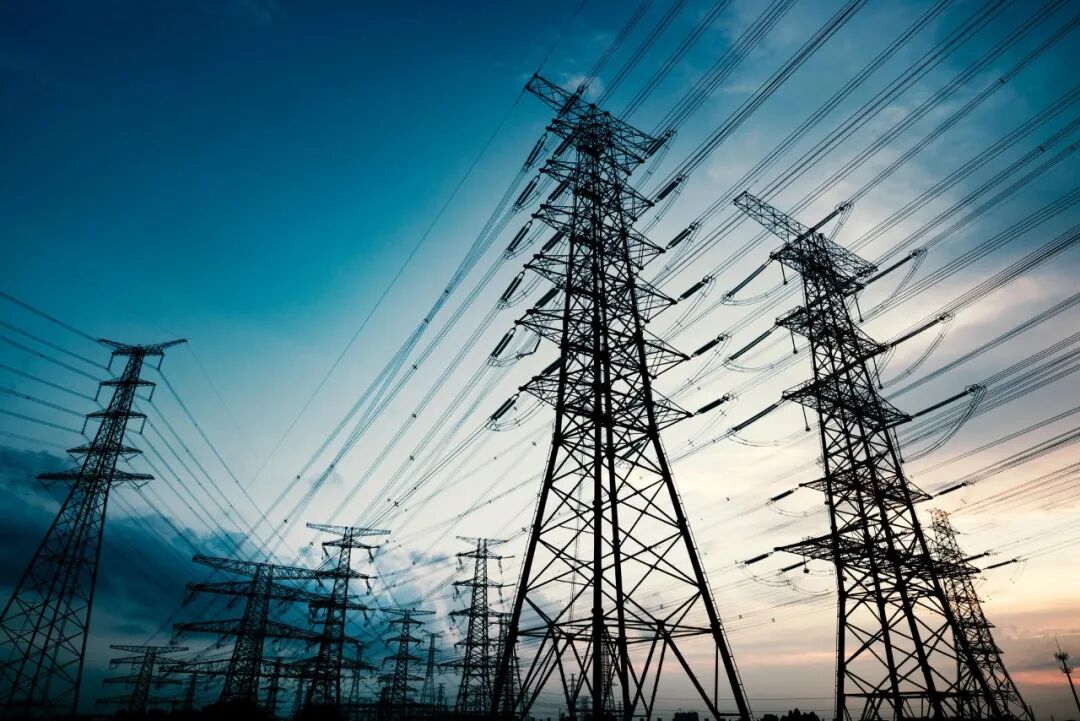
Scenario: Generation-side energy storage supporting PV power stations
(2) Imbalanced Grid Loads Give Rise to Regulation Demands
Urban power consumption features extreme peak-valley differentiation: mass activation of air conditioners on summer afternoons and surging heating loads on winter evenings impose instant strain on power grids, forcing power rationing in some regions. Late at night, factories shut down and residents rest, triggering a cliff-like drop in electricity demand that leaves grid transmission equipment idle with extremely low resource utilization.
Grid-side energy storage performs peak shaving and valley filling by charging during off-peak hours and discharging during peak periods. It alleviates grid expansion pressure and slashes massive investment in grid renovation, making it a standard core facility for current grid upgrades. Take a prefecture-level grid renovation project in East China as an example: two local 110kV transmission lines suffered chronic overload during summer peaks. Constructing a new substation would cost over 200 million yuan, while supporting grid-side energy storage requires only one-third of that budget to resolve annual load shortages steadily, delivering outstanding economic benefits.
(3) Power Market Liberalization Unlocks Diversified Profit Streams
In 2026, the National Development and Reform Commission and National Energy Administration fully rolled out the capacity price mechanism for independent energy storage, granting stable capacity compensation revenue to storage assets. Combined with multiple income channels including peak-valley price arbitrage, frequency and voltage regulation ancillary services, and virtual power plant demand response, energy storage has evolved from a policy-mandated matching facility into an industry with market-driven independent profitability.
The revenue logic varies completely across scenarios:
- Generation-side storage earns capacity price payments and renewable energy absorption subsidies;
- Grid-side storage generates returns via grid peak regulation and ancillary services;
- Industrial & commercial storage cuts electricity expenses through peak-valley price spreads;
- Residential PV-storage enables self-sufficient household power consumption.
Diversified business models fuel simultaneous expansion across all four tracks. Regional electricity policies directly impact project payback cycles: in central China provinces with a peak-valley price spread of 0.72 RMB/kWh, industrial & commercial storage achieves payback in 3.2 years; in southwest China with a spread of 0.45 RMB/kWh, the payback period extends to 4.8 years. Precise calculations based on local electricity tariffs are mandatory for project planning.
(4) Technological Iteration Lowers Barriers to Energy Storage Deployment
Lithium iron phosphate (LFP) batteries have become the mainstream cell type for energy storage thanks to their high safety and long cycle life, while emerging technologies including sodium-ion batteries, flow batteries and gravity energy storage achieve continuous breakthroughs. Intelligent upgrades to energy storage inverters and Energy Management Systems (EMS), alongside integrated PV-storage solutions, drastically cut installation and operation & maintenance (O&M) costs.
By 2026, the levelized cost of electricity (LCOE) for energy storage systems has fallen by over 50% compared with five years ago. Investment payback periods keep shortening for large power stations, industrial projects and distributed household equipment, driving rapid growth in market penetration. On the construction front, the installation cycle for integrated containerized energy storage systems has been shortened from 45 days in earlier years to just 12 days. Standardized wiring and modular battery cubicles greatly reduce on-site construction difficulty, allowing small and medium-sized projects to launch without extensive civil engineering support.
II. In-Depth Breakdown of the Four Energy Storage Tracks: Full Comparison of Positioning, Functions, Applications and Revenues
(1) Generation-Side Energy Storage: The "Power Reservoir" for Renewable Power Stations
1. Basic Definition and Deployment Locations
Also known as power-source-side storage, generation-side energy storage is constructed directly within wind farms, centralized PV power stations and renewable energy bases. It falls under large-scale pre-meter energy storage, with projects generally starting at tens to hundreds of megawatts and storage capacity mostly configured for 2–4 hours of long-duration discharge. Some large wind-solar bases deploy flow batteries to realize cross-day power regulation.
If renewable power generation is likened to mountain rivers, generation-side storage acts as upstream reservoirs that store excess electricity generated by wind and solar. Wind-solar bases in the Gobi Desert of Northwest China commonly adopt a 4-hour storage configuration, while mountainous centralized distributed PV mostly uses short-duration 2-hour storage. The core difference lies in local daily sunlight duration and grid dispatching requirements.
2. Core Functions
- Smooth fluctuations in wind and solar output. The system stores surplus power generated during daytime PV and wind peak hours and releases electricity when sunlight fades or wind dies down. It converts unstable green power into steady, controllable electricity, drastically curtails wind and solar curtailment rates, and improves grid integration capacity for renewables.
- Track grid generation schedules. Power grids set fixed output targets for renewable stations, yet natural wind-solar generation rarely matches planned curves. Energy storage adjusts output via charging and discharging to ensure station performance complies with dispatching standards and avoids penalty fees. Many grids impose tiered surcharges for output deviations exceeding 5%, while storage can limit fluctuations within 2%, saving hundreds of thousands of yuan in dispatching penalties annually.
- Participate in grid ancillary services. It delivers frequency regulation, voltage regulation and reserve capacity services, responding rapidly to grid frequency and voltage swings to boost flexibility across the entire power source system.
3. Revenue Models (Latest 2026 Policies)
- Stable underpinning from capacity prices: Nationwide unified capacity compensation for independent storage offers fixed annual subsidies based on installed capacity, unaffected by electricity price volatility, serving as the core steady income stream for projects.
- Energy arbitrage: Store power at low prices during wind-solar peak generation and sell electricity at high prices amid power shortages to profit from peak-valley spreads.
- Ancillary service subsidies: Specialized payments for grid regulation services including frequency modulation, voltage regulation and black start.
- Value-added green power trading: Stored clean electricity can be traded separately in green power markets with additional revenue from carbon assets.
4. Applicable Projects and Technical Characteristics
(2) Grid-Side Energy Storage: The "Intelligent Emergency Reservoir" for Power Grid Systems
1. Basic Definition and Deployment Locations
2. Core Functions
- Peak shaving and valley filling to ease grid congestion. It absorbs idle power during late-night off-peak hours and releases electricity during midday and evening consumption peaks, reducing investment in substation and transmission line expansion and delaying spending on grid infrastructure upgrades.
- Peak-period power supply guarantee to prevent power cuts. During sudden load spikes in summer heatwaves and winter cold snaps, the system discharges within milliseconds to fill supply gaps and secure normal power for industrial, commercial and residential users, forming a core defense line for urban power reliability. In coastal southern regions during hot summers, substation-supporting storage directly avoids power rationing in residential areas, delivering prominent livelihood protection value.
- Emergency grid support during faults. In unexpected incidents such as line tripping and unit shutdowns, storage rapidly supplies backup power to narrow the scope and duration of blackouts. Grid-forming storage simulates synchronous generator characteristics to actively support grid voltage and frequency, suiting new power grids with high renewable penetration.
- Reactive power voltage regulation and rapid frequency stabilization to maintain consistent power quality.
3. Revenue Models
Grid-side storage mainly generates income from grid capacity leasing and ancillary service subsidies, while also arbitraging in spot electricity markets:
- Capacity price compensation: Eligible for the same national unified capacity subsidies as generation-side storage.
- Specialized revenue from peak shaving, frequency regulation and voltage regulation services.
- Stable rental income from leasing storage capacity to industrial, commercial and park clients.
- High spot market electricity revenues from discharging during extreme load peaks.
4. Industrial Value
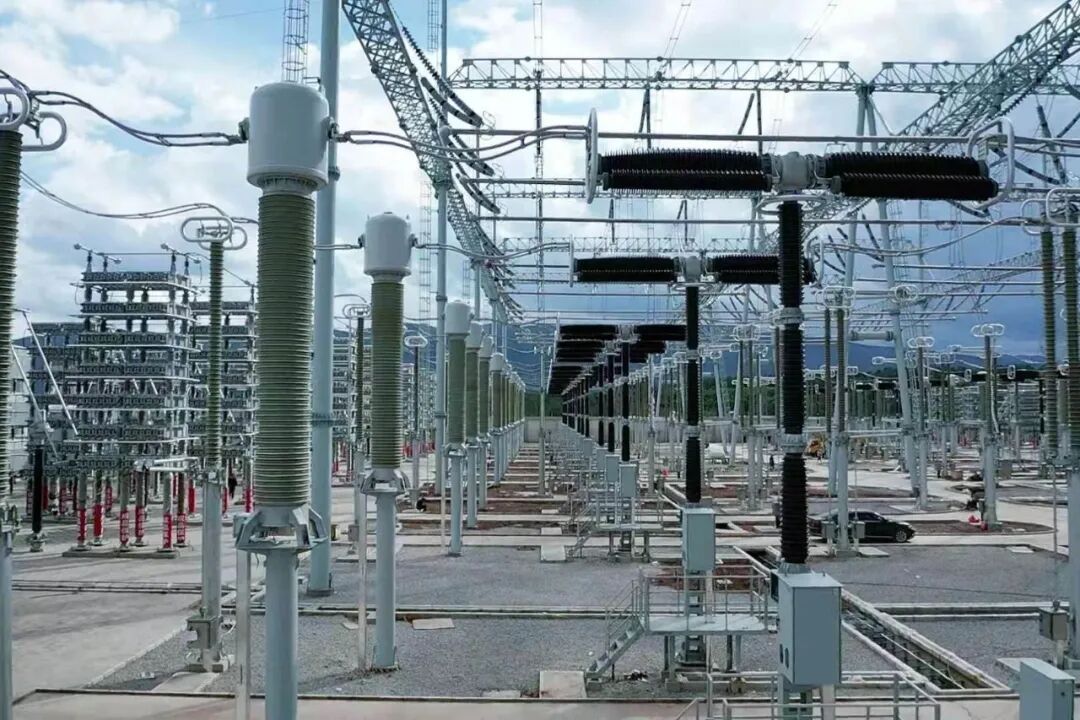
Scenario: Grid-side energy storage supporting substations
(3) Industrial & Commercial Energy Storage: The "Energy-Saving Vault" for Enterprises to Cut Costs and Boost Efficiency
1. Basic Definition and Deployment Locations
2. Four Core Value Propositions
Peak-valley price arbitrage to slash electricity bills
China’s industrial electricity rates feature substantial peak-valley spreads. Charging at low off-peak prices overnight and discharging during daytime production peaks directly cuts corporate basic power expenses. Some provinces see industrial price spreads exceeding 0.7 RMB/kWh, with megawatt-scale storage projects saving enterprises hundreds of thousands of yuan annually. A local hardware manufacturing plant equipped with a 1MW/2MWh storage system cuts annual electricity costs by nearly 700,000 yuan.
Reduce maximum demand to waive high basic demand charges
Industrial users are charged demand-based tariffs: higher peak power consumption translates to higher monthly base fees. Energy storage discharges simultaneously with production load peaks to lower the transformer’s maximum demand, eliminating large demand surcharges — the primary revenue driver for manufacturing enterprises. High-energy-consuming factories may face monthly demand fees exceeding 100,000 yuan, with storage investment recouped within half a year from these savings alone.
Participate in virtual power plants to earn extra subsidies
Policies in many regions allow aggregated distributed industrial & commercial storage to connect to virtual power plants. When grids face power shortages, storage discharges voluntarily to provide demand response and earn special government subsidies, creating a secondary income stream. Industrial park clusters in the Yangtze River Delta can receive over 100,000 yuan in annual response subsidies per park.
Emergency backup power to sustain uninterrupted core production
During grid power rationing or outages, storage systems operate independently off-grid to keep production lines, servers and cold chain equipment running, avoiding economic losses from production halts. This is an essential requirement for precision manufacturing, data centers and pharmaceutical cold chain enterprises. A power outage at a pharmaceutical cold storage warehouse can cause inventory losses worth millions of yuan, making backup storage an indispensable necessity.
3. Mainstream Business Models
- Self-owned self-invested: Enterprises purchase storage systems outright and retain all long-term energy-saving revenue. Suitable for manufacturing firms with sufficient cash flow and long-term factory ownership.
- Energy Management Contract (EMC): Third-party investors fund and build storage facilities, sharing energy-saving profits with the enterprise proportionally with zero upfront investment from the client. Ideal for small and micro factories unable to cover large initial costs.
- Financial leasing: Staged equipment payments ease upfront capital pressure, widely adopted by commercial parks with 5–8 year operating cycles.
4. Applicable Scenarios
(4) Residential PV-Storage Systems: Exclusive "Green Power Banks" for Households
1.Basic Definition and Deployment Locations
Residential PV-storage systems are storage units matched with household distributed PV, installed on rooftops of villas, self-built rural houses and balcony roofs of high-rise apartments. Single units deliver 3kW–20kW power with 5kWh–30kWh capacity, representing the smallest-scale user-side storage and the most accessible energy storage product for the general public.
Rooftop PV power takes priority for household appliances during the day, with surplus electricity stored in batteries to supply power at night and on cloudy days. Rural self-built homes mostly adopt 10kWh storage capacity, while urban villas with higher power loads typically use large-capacity 20–30kWh units.
2. Core Practical Benefits
- Boost PV self-consumption rate. Without storage, excess power from household PV can only be sold to the grid at low prices. With storage, over 90% of PV power is consumed on-site, drastically reducing grid electricity purchases. Field tests in rural households show monthly grid power consumption drops by 75% after storage installation.
- Emergency backup power during blackouts. During outages caused by extreme weather or line maintenance, the storage system supplies independent power to support refrigerators, lighting, internet and air conditioning, enhancing household power security. Demand surges in typhoon and flood-prone regions. In rainy southern towns, frequent line maintenance during flood seasons makes residential storage extremely practical.
- Mitigate tiered and peak-valley electricity costs. Charge from the grid during off-peak hours and discharge storage during peak periods to reduce purchases at high electricity rates, delivering pronounced energy savings for large families and users of high-power appliances.
- Long-term low-carbon emissions reduction to realize green household power consumption, complying with supporting standards for green and zero-carbon buildings.
3. Product and Technical Features
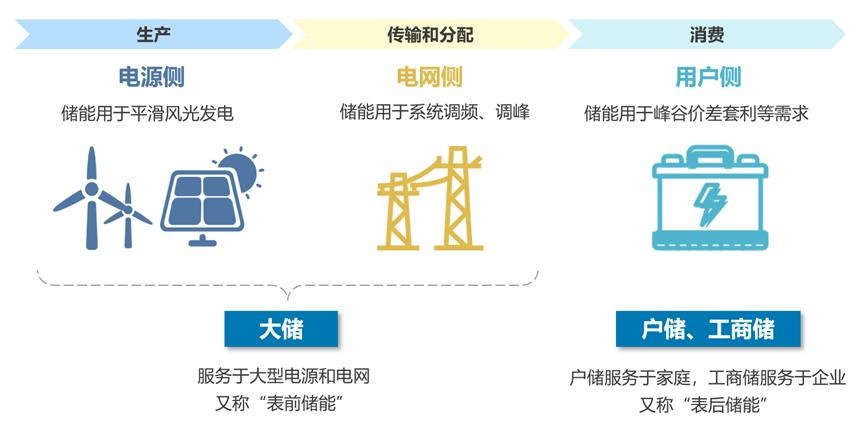
Schematic Diagram of Full-Scenario Energy Storage Classification
III. Development Status and Market Opportunities of PV & Energy Storage Industry in 2026
(1) Sustained Rapid Growth of Market Scale
The global PV and energy storage market is projected to exceed USD 100 billion in 2026, maintaining an annual compound growth rate of over 25%. Supported by the Dual Carbon strategy, a complete industrial chain and massive installed wind and solar capacity, China accounts for more than half of the world’s newly added energy storage capacity.
Among segmented tracks, industrial and commercial energy storage registers the fastest growth, while the urban and rural penetration rate of residential PV-storage systems rises steadily. Large-scale generation-side and grid-side energy storage continues to expand alongside renewable energy base construction and grid upgrading projects, pushing all four tracks into a golden development phase.
Tender data of the industry shows that domestic tender volume for industrial and commercial energy storage surged by 63% year-on-year in the first half of 2026, and retail sales of residential PV-storage equipment nearly doubled year-on-year, revealing enormous growth potential in lower-tier markets.
(2) Improved Policy Framework Forms a Fully Closed Profit Logic
In 2026, the energy storage industry has completely moved past the model of mandatory storage allocation driven solely by policies, forming a multi-layered revenue system:
- Large-scale energy storage (generation-side + grid-side): Triple revenue streams including capacity prices, ancillary service fees and spot market trading, delivering stable project cash flow and sharply boosting investment appeal.
- Industrial & commercial energy storage: Triple revenue streams covering peak-valley arbitrage, maximum demand charge reduction and virtual power plant subsidies, cutting the payback period for small and medium manufacturers to 3–5 years.
- Residential PV-storage: Multiple regions have rolled out supporting subsidies for distributed PV-storage systems. Policies on rural revitalization and green residential buildings offer consistent support, unlocking vast potential in lower-tier markets.
Meanwhile, the Ministry of Industry and Information Technology has carried out standardized rectification of the PV and energy storage industry, cracking down on low-cost, shoddy assembled products and supporting high-quality enterprises with independent R&D and system integration capabilities. The industry is accelerating survival of the fittest, with integration enterprises mastering core control technologies of BMS and EMS and possessing full-scenario implementation experience gaining increasingly prominent competitive edges.
(3) Diversified Technologies Cater to Demands of Various Scenarios
- Short-duration regulation energy storage (mainstream for generation-side, grid-side, industrial & commercial and residential scenarios): Lithium iron phosphate batteries featuring fast response and flexible installation, suitable for 2–6 hour charge-discharge cycles.
- Long-duration energy storage (for large wind-solar bases): Flow batteries, pumped hydro storage and gravity energy storage with a cycle life of over 30 years, capable of inter-seasonal power regulation.
- New low-cost technical routes: Sodium-ion batteries are undergoing rapid industrialization with superior low-temperature performance and lower raw material costs, slated for large-scale deployment in industrial, commercial and residential storage projects in the future. In northern regions with frigid winters, sodium-ion batteries outperform traditional lithium batteries in low-temperature discharge, boasting unique on-site application advantages.
Digital twin and AI intelligent prediction technologies are widely applied to energy storage operation and maintenance. Cloud platforms enable real-time battery status monitoring, wind-solar output forecasting and optimized charge-discharge strategies, lifting system operation efficiency by over 40%, slashing failure rates and cutting full-lifecycle operating costs. Frontline maintenance staff report that intelligent monitoring can predict abnormalities of individual battery cells one week in advance, preventing thermal runaway risks.
(4) Diverse Extended Scenarios Expand the Boundaries of Energy Storage
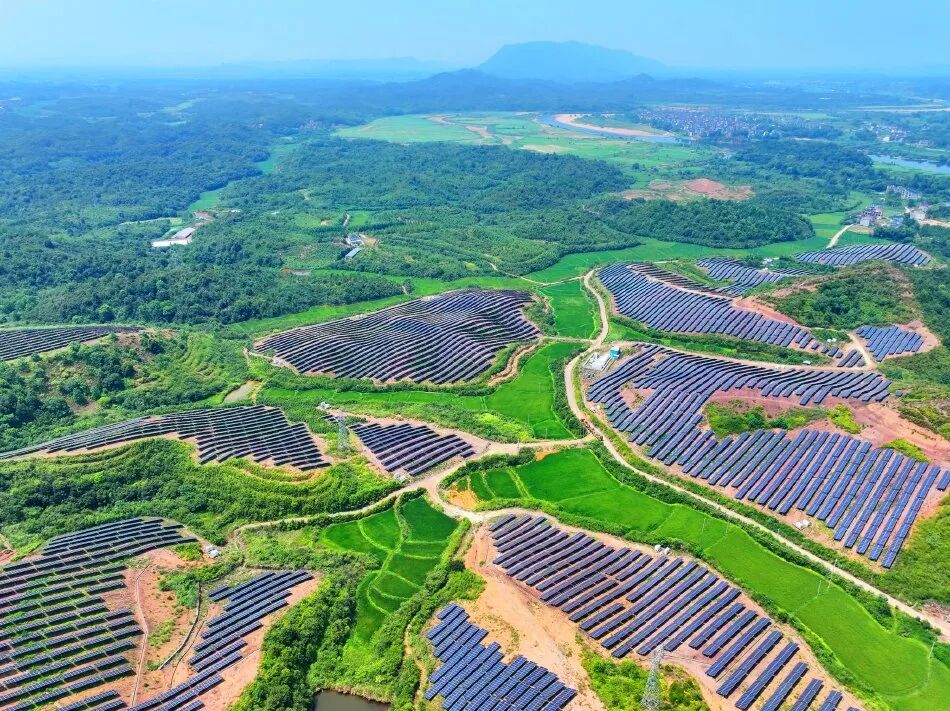
Drone inspection of mountain PV power stations
IV. Core Service System Advantages for Energy Storage Project Implementation
Comprehensive energy service providers deeply engaged in the PV and energy storage sector layout all four tracks of generation-side, grid-side, industrial & commercial and residential PV-storage, offering full-chain services ranging from scheme design, equipment integration, construction and installation, intelligent operation and maintenance to post-completion asset operation. Distinct from low-end manufacturers that merely assemble equipment, their core strengths lie in four dimensions:
-
Independent R&D of full-scenario technologies Self-developed Energy Management System (EMS) and Battery Management System (BMS) for energy storage, with AI algorithms that accurately match charge-discharge strategies for different scenarios. Grid-forming energy storage technologies adapt to power grids with high renewable penetration, greatly boosting the operating efficiency and revenue of energy storage systems.
-
Capability to deliver customized solutions Exclusive PV-storage schemes are tailored for large wind-solar bases, urban substations, various factories and urban-rural households respectively. Storage capacity and power ratios can be adjusted based on site conditions, power load and electricity tariff policies to maximize customer returns. Customized solutions are developed through three steps: on-site survey, load calculation and electricity tariff estimation, eliminating revenue losses caused by standardized generic plans.
-
Safeguards for safety and long-term operation & maintenance All energy storage products are equipped with multi-layer thermal runaway protection systems, supported by 24/7 remote cloud monitoring and early warning. Operation and maintenance service outlets are established across multiple regions to conduct regular inspections, battery testing and system optimization, ensuring stable operation of energy storage equipment for more than 8,000 cycles. Quarterly on-site inspections and annual battery balancing maintenance extend battery service life by 2–3 years.
-
Diversified cooperation models For corporate clients, multiple cooperation options including self-investment, Energy Management Contract (EMC) and financial leasing are provided to lower upfront capital thresholds. Turnkey services for large-scale energy storage power stations are offered to renewable energy developers and grid enterprises. Standardized all-in-one residential PV-storage units are supplied to households with one-stop on-site installation and commissioning.
From generation-side energy storage projects at gigawatt-level wind-solar bases in Northwest China and grid-side energy storage retrofits for urban substations, to industrial & commercial PV-storage energy-saving systems in industrial parks and residential PV-storage equipment for rural self-built houses, we rely on accumulated full-scenario energy storage expertise to continuously deliver cost-effective, high-return comprehensive PV and energy storage solutions, facilitating the construction of new power systems and the low-carbon energy transition of the whole society.
V. Summary of Future Development Trends of the Energy Storage Industry
Full-scenario integration becomes mainstream
Collaborative dispatching of generation-side, grid-side and load-side (industrial & commercial + residential) energy storage. Virtual power plants connect centralized large-scale storage and distributed energy storage resources to realize unified optimized allocation of power resources across society. Multiple regions have built regional collaborative energy storage dispatching platforms to uniformly manage large-scale and distributed storage within their jurisdictions.
In-depth penetration of intelligence and digitalization
AI, digital twins and cloud monitoring become standard configurations for energy storage systems, shifting energy storage from passively executing dispatching orders to active prediction and autonomous regulation.
Large-scale commercialization of long-duration energy storage technologies
Flow batteries, gravity energy storage and compressed air energy storage are gradually commercialized to address the challenges of cross-day and inter-seasonal absorption of renewable energy.
Continuous penetration of distributed residential and industrial & commercial energy storage
Demand surges in county, township and rural markets, with integrated PV-storage systems becoming standard fittings for new buildings.
Rising standalone asset value of energy storage
Energy storage completely breaks away from its positioning as a supporting facility for PV, evolving into an independent power asset. Capital market and industrial capital keep increasing investment, unlocking broad long-term growth space for the industry.
Conclusion
Energy storage serves as the "heart" of the new power system. Generation-side energy storage stabilizes green power supply, grid-side energy storage safeguards grid security, industrial & commercial energy storage cuts corporate costs, and residential PV-storage guarantees household power supply. The four energy storage tracks each perform their own functions and coordinate with one another to jointly underpin China’s energy mix transition.
With improved policies, mature technologies and clear business models in the 2026 energy storage industry, renewable energy investors, grid practitioners, factory operators and ordinary households alike can achieve a win-win outcome of economic benefits and low-carbon value through PV and energy storage.
Industry service providers will continue to deepen their presence in full-scenario energy storage, empowering all types of energy storage application scenarios with on-site implementation experience and customized services. Together with industry partners, we will seize opportunities in the era of energy transition and build a modern energy system that is safe, stable, low-carbon and efficient.


