25.6V Lithium-Ion Energy Storage 3.6 kW Single-Phase Grid-Tied Residential PV Energy Storage Turnkey System
High-power household appliances place a heavy load on the electrical system, and power outages or rationing often result in interruptions to the power supply. Many users are looking for a residential photovoltaic energy storage system that can generate and store electricity for their own use. Today, we recommend a 25.6V lithium-ion battery storage system paired with a 3.6 kW single-phase grid-tied photovoltaic system, designed for standard residential homes. This system ensures both a stable daily power supply and emergency backup during outages, and can power all household appliances, including air conditioners, refrigerators, washing machines, and rice cookers.
I. Breakdown of the Core Configuration of the Entire System: Parameters Precisely Tailored for Home Use
The complete system consists of three core components: photovoltaic modules, a 3.6 kW single-phase grid-tied inverter/controller combo unit, and a lithium-ion energy storage battery. Installation can be completed by simply adding photovoltaic cables and mounting brackets. The system’s specifications have been carefully optimized to avoid both the cost waste caused by excess capacity and the risk of insufficient power to run household appliances, making it suitable for large homes and single-family homes.

(1) Nine 450W N-type double-glass modules connected in series, generating an average of 20.25 kWh of electricity per day
The power generation system consists of 9 high-efficiency 450W N-type double-glass modules connected in series, with each module rated at 450W, for a total array power of 4,050W. Calculating power generation based on an average of 5 hours of effective sunlight per day: 4,050W × 5h = 20,250Wh, which equates to an average daily power generation of 20.25 kWh.
The total daily electricity consumption for a typical family of three generally ranges from 8 to 15 kWh, and even during summer when air conditioning runs continuously, peak consumption rarely exceeds 20 kWh. The system’s daily output of 20.25 kWh is sufficient to fully cover the household’s electricity needs. On sunny days, excess electricity is stored in the battery, and on cloudy days, the battery provides supplementary power, significantly reducing the frequency of drawing power from the grid.
Series Voltage Compatibility Verification: The open-circuit voltage (Voc) of a single 450W module is 39.8V; the total open-circuit voltage of 9 modules connected in series is 39.8 × 9 = 358.2V. The inverter’s MPPT operating range is 60–500 VDC, 358.2 V falls within the middle of this range, allowing the equipment to efficiently absorb photovoltaic energy throughout the entire operating range, with no issues of voltage exceeding limits or reduced power generation efficiency.
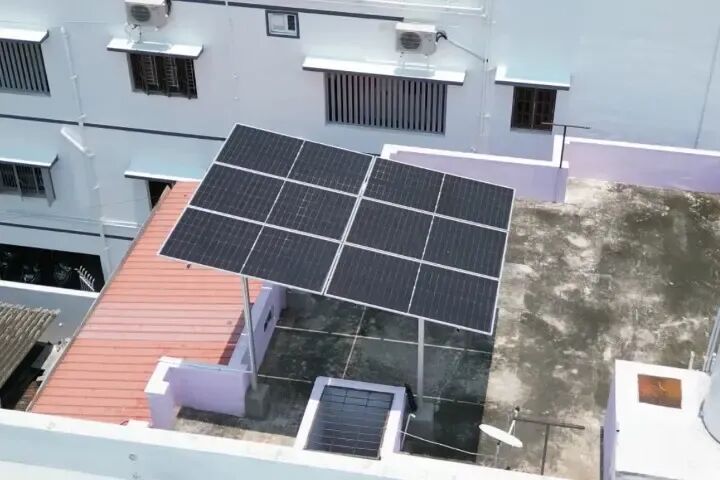
The modules support two installation methods: flat mounting on roofs and mounting on elevated brackets. They can be installed on the roofs of self-built rural homes as well as on the balconies and terraces of commercial housing, and are resistant to damage from prolonged exposure to wind and rain outdoors.

(2) 3.6 kW, 24 V, Single-Phase Hybrid Grid-Tied/Off-Grid All-in-One Inverter—a Versatile All-in-One Unit for Both Grid-Tied and Off-Grid Operation
The system’s core control unit is a 3.6 kW, 24 V, single-phase hybrid grid-tied and off-grid inverter. Its pure sine wave output is compatible with all household AC appliances and supports both grid-tied and off-grid modes. During normal power supply, it operates in grid-tied mode for self-generation and self-consumption; in the event of a power outage, it instantly switches to off-grid mode using stored energy, making it suitable for a variety of usage scenarios.
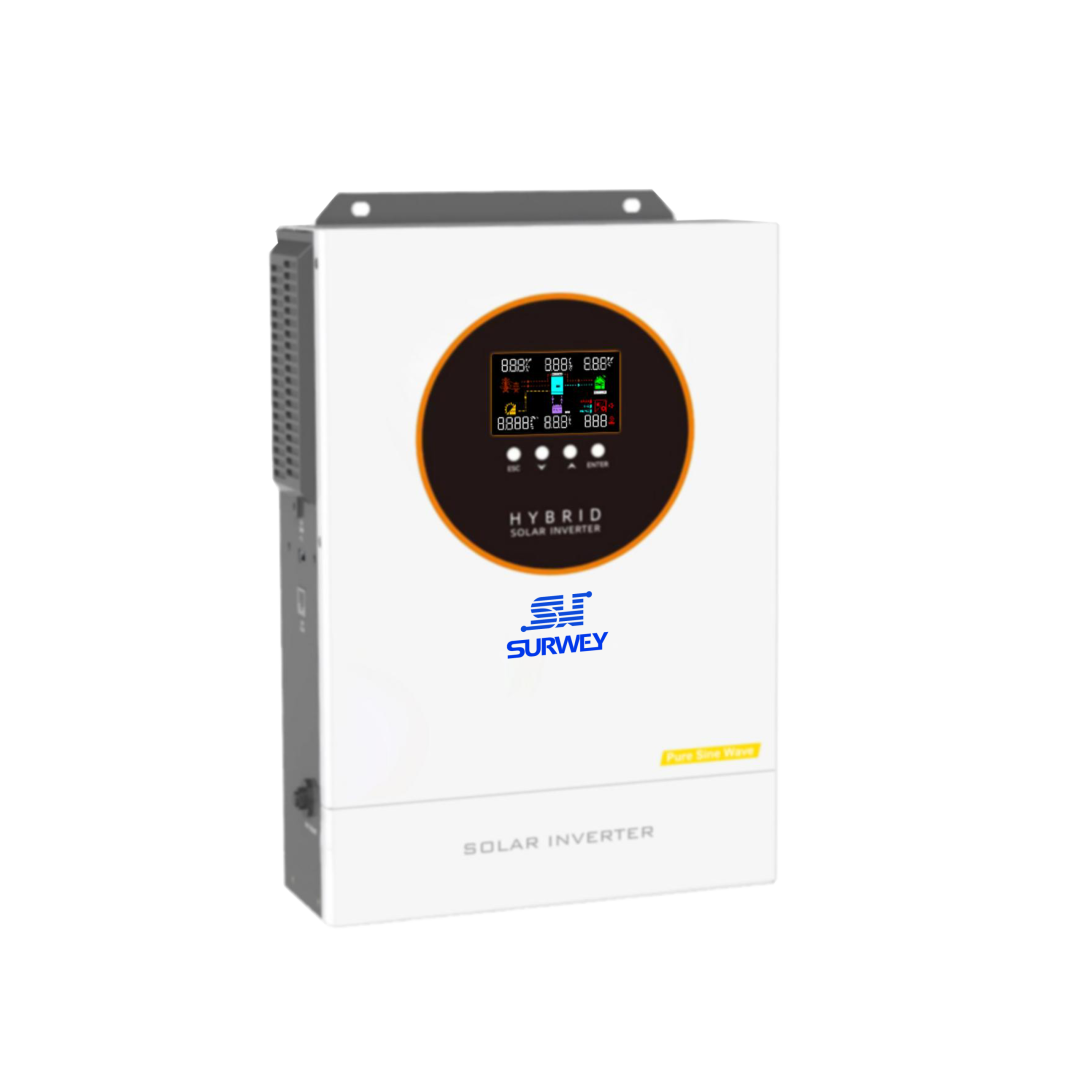
The unit has a rated output of 3,600 W, a power factor of 1.0, and a conversion efficiency exceeding 97%. It can handle the simultaneous operation of multiple appliances—such as a 1.5-pai air conditioner, refrigerator, washing machine, and induction cooktop—without overloading. The device features a built-in grid-tapping function; when power generation is insufficient due to consecutive days of cloudy weather, it automatically connects to the grid to charge the battery, ensuring you never run out of power.
With a built-in smart MPPT module and a maximum PV input of 6,500 W, a 4,050 W PV array is well within its capacity, ensuring maximum solar energy utilization. Equipped with multiple safety protections—including overvoltage, undervoltage, overload, short circuit, and over-temperature protection—it ensures safe operation. It supports remote monitoring of power generation, battery charge level, and load power via Wi-Fi and GPRS on a smartphone, offering simple and intuitive operation.
Many users are concerned that a 24V inverter may not be compatible with a 25.6V lithium-ion battery. Please note: The 25.6V lithium iron phosphate battery consists of 8 standard modules connected in series, and its charge and discharge voltages are perfectly matched to this unit. The device comes with a built-in lithium-ion battery auto-detection program, so it’s ready to use as soon as it’s wired—no additional conversion equipment is required, which simplifies installation and commissioning.
(3) Two 25.6V 200AH lead-acid-to-lithium batteries connected in parallel, providing 10.24 kWh of energy storage capacity, ensuring stable storage of excess electricity generated during the day
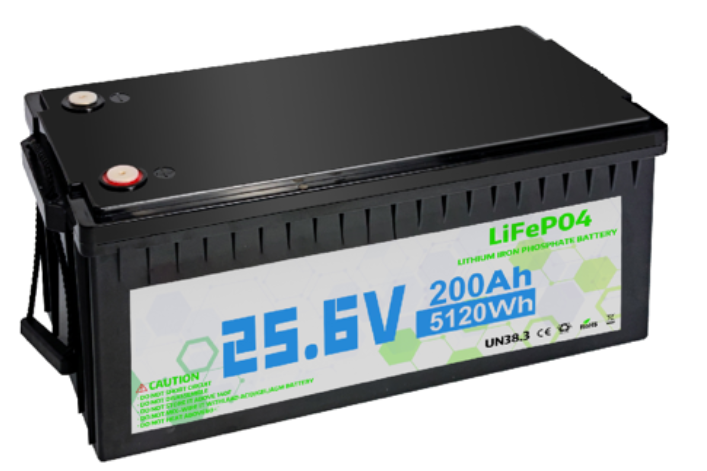
The energy storage system consists of two 25.6V 200AH lead-acid-to-lithium iron phosphate batteries connected in parallel. Each battery has a rated voltage of 25.6V and a capacity of 200AH, providing an individual energy storage capacity of 5,120Wh. When connected in parallel, the total energy storage capacity is 10,240Wh, or approximately 10KWH, which meets the system’s average daily energy storage requirement of 10 kwh.
This lead-acid-to-lithium battery is specifically designed for home energy storage and offers significant advantages over traditional lead-acid batteries: it has the same capacity but is smaller and lighter, so it takes up minimal space indoors; it has a longer cycle life and experiences slower capacity degradation, eliminating the need for frequent replacements; and it supports continuous 150A charging and discharging, ensuring no voltage drop when starting high-power appliances and stable, smooth operation without interruptions.
The battery features a comprehensive set of protection mechanisms against overcharging, over-discharging, short circuits, overloading, and overheating, ensuring a high level of safety. It operates at temperatures ranging from -20°C to +60°C and withstands 95% humidity, allowing for stable operation in both outdoor cabinets and indoor storage rooms. The battery supports only parallel connection for capacity expansion; connecting two batteries in parallel complies with the manufacturer’s specifications and will not damage the cells or shorten their service life.
During the day, solar power is prioritized for powering home appliances, and any excess energy is stored in the battery; at night or during power outages, the battery automatically discharges to ensure the normal operation of the refrigerator, air conditioner, and cooking appliances. The standard version does not include Bluetooth monitoring, but a Bluetooth module can be added to allow real-time monitoring of battery voltage and remaining charge via a smartphone. The unit has a compact design and can be placed in an energy storage cabinet or a storage corner.
II. Real-world application scenarios for the entire system, designed to meet home electricity needs at all times of the day
1. Daily power supply on sunny days: Prioritize power from the solar system to reduce consumption of grid power
On a sunny day, the entire photovoltaic array generates 20.25 kWh of electricity. During the day, all home appliances prioritize the use of solar power, and the surplus of about 10 kWh is stored in the energy storage battery. At night, when there is no sunlight, the system relies on the battery for power; grid electricity is used only in small amounts during prolonged periods of overcast or rainy weather or when the battery is depleted, effectively reducing grid consumption over the long term. Solar panels can be installed on large rooftop areas in rural areas as well as on balconies and terraces of commercial housing, thoroughly alleviating the pressure of high electricity consumption from air conditioning during the summer.
2. Emergency backup power during outages to ensure uninterrupted basic electricity for the home
Power rationing during peak hours and unexpected power outages can directly disrupt daily life at home. This system can switch to off-grid energy storage mode in milliseconds, and its large-capacity 10-degree energy storage can support the continuous operation of essential household appliances for an extended period—keeping air conditioners, refrigerators, lighting, and cooking appliances running normally—functioning as a long-lasting home emergency UPS. In addition to residential use, it is also suitable for providing backup power to small neighborhood stores, security surveillance systems, small-scale communication equipment, and home medical devices.
3. Store energy during rainy days to ensure a stable, uninterrupted power supply throughout the year
During rainy weather, solar power generation drops significantly, so the inverter automatically connects to the utility grid to recharge the batteries, ensuring sufficient energy storage. On sunny days, the system reverts to prioritizing solar power, providing a stable, uninterrupted power supply throughout the year, regardless of season or weather.
III. The Five Key Advantages of This Solar Power and Energy Storage Solution: The Top Choice for Complete Systems in Single-Family Homes
The photovoltaic voltage is properly matched, and the ratio of power generation to energy storage is balanced, with no waste.
The total voltage of the 9 modules connected in series is 358.2V, which falls within the inverter’s 60–500 VDC MPPT range, maximizing power generation efficiency. With an average daily power output of 20.25 kWh paired with a 10 kWh energy storage battery, all excess electricity is stored, ensuring no solar energy is wasted. The 3.6 kW power rating is suitable for the typical electrical loads of most households, providing a well-balanced configuration that keeps overall procurement costs under control.
Lithium-ion batteries last longer than lead-acid batteries, offering greater peace of mind and cost savings over the long term.
Its cycle life far exceeds that of ordinary lead-acid batteries, eliminating the high costs associated with frequent battery replacements; it features low charge-discharge losses and delivers a stable 150A high-current output, preventing issues such as device lag or power outages.
The grid-tied inverter features an integrated design, making installation and wiring simple and convenient.
It integrates three key functions—PV charging, grid-tied charging, and inverter output—eliminating the need to purchase a separate controller or charger, thereby reducing accessory costs. Wiring is simple, and installation is quick and easy. The pure sine wave output protects precision appliances with motors, such as air conditioners and refrigerators.
The device is highly adaptable to various environments, and its multiple safety features make it safer for home use.
Solar panels, inverters, and lithium-ion batteries are all resistant to high and low temperatures, as well as moisture and water, and can be installed in a variety of indoor and outdoor settings; the entire system features multiple power-off protection mechanisms, ensuring safe use at home for the elderly and children.
Smart Remote Monitoring: Easy to Operate and Maintain, Even for Beginners with No Prior Experience
System operating data can be viewed remotely in real time via a mobile phone. The system automatically adapts to lithium-ion batteries when powered on; simply connect the wires and turn on the power to start operation—no complex setup is required. Daily maintenance involves only a simple visual inspection, keeping maintenance costs low.
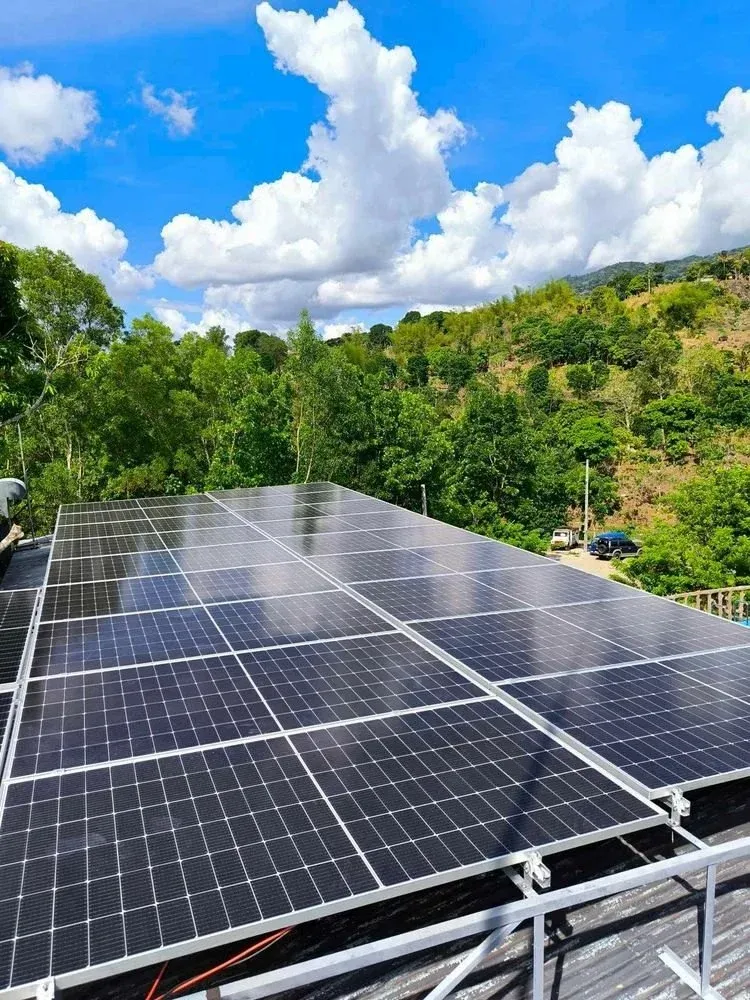
Thailand-Cambodia Border: Complete Residential Solar Power and Energy Storage Systems
IV. Four Types of People Suitable for Installing This Photovoltaic Energy Storage System
Category 1: Residents of self-built rural homes with ample rooftop space capable of accommodating 9 solar panels; these households run air conditioners around the clock in the summer and face frequent power rationing and outages in their villages and towns, requiring a high-capacity solar power system;
Category 2: Residents of large urban condominiums with balconies or terraces offering ample space for installation; these households have high electricity consumption year-round and hope to significantly reduce their utility bills;
Category 3: Residents in areas with frequent temporary power outages who have equipment that cannot be disconnected from power—such as refrigerators and oxygen concentrators—and require a long-lasting emergency power supply;
Category 4: Street-side sole proprietorships and small convenience stores where refrigerators, lighting, and surveillance systems consume electricity 24 hours a day, relying on solar power to reduce electricity costs for business operations.
V. Summary of Long-Term Benefits: A Stable and Sustainable Clean Energy Solution for the Home
Many users are concerned about the initial investment in the equipment, but the overall long-term returns are substantial. Large homes and custom-built houses consume a significant amount of grid electricity each month; by generating an average of 20.25 kWh of solar power daily, they can significantly reduce their reliance on grid electricity, thereby gradually offsetting the equipment purchase costs over the long term.
Photovoltaic modules have a long service life and deliver stable performance in outdoor environments; lithium-ion batteries (replacing lead-acid batteries) have a typical service life of 8–10 years under normal use; and inverters operate reliably for over a decade. Once installed, the system continuously generates clean electricity for decades, unaffected by electricity rate hikes or tiered pricing structures. It addresses both daily energy savings and emergency power needs during outages, enabling full control over household electricity consumption.
The complete 25.6V 10kWh lithium-ion energy storage + 3.6kW single-phase grid-tied PV system integrates power generation, storage, and inversion functions. It is configured to meet the electricity needs of large-sized homes and custom-built residences in China, with no unnecessary components, ensuring stable operation and simple handling. Whether you’re looking to optimize your electricity usage, reduce utility bills, or establish a whole-house emergency power supply, this cost-effective residential PV storage solution leverages solar energy to create a long-term, stable home power supply system.