Technical Solution for a 30 kW Integrated PV-Storage System (Self-Consumption + Feed-in of Surplus Electricity)
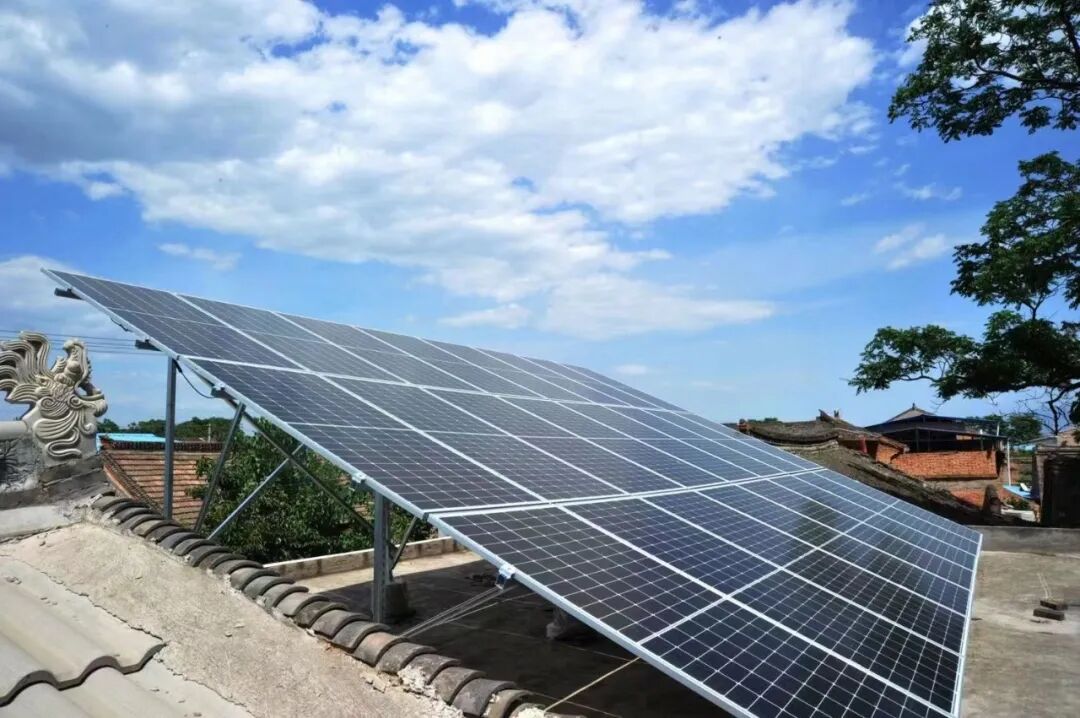
30 kW Rooftop Solar Power Plant
I. Overview of the Proposal
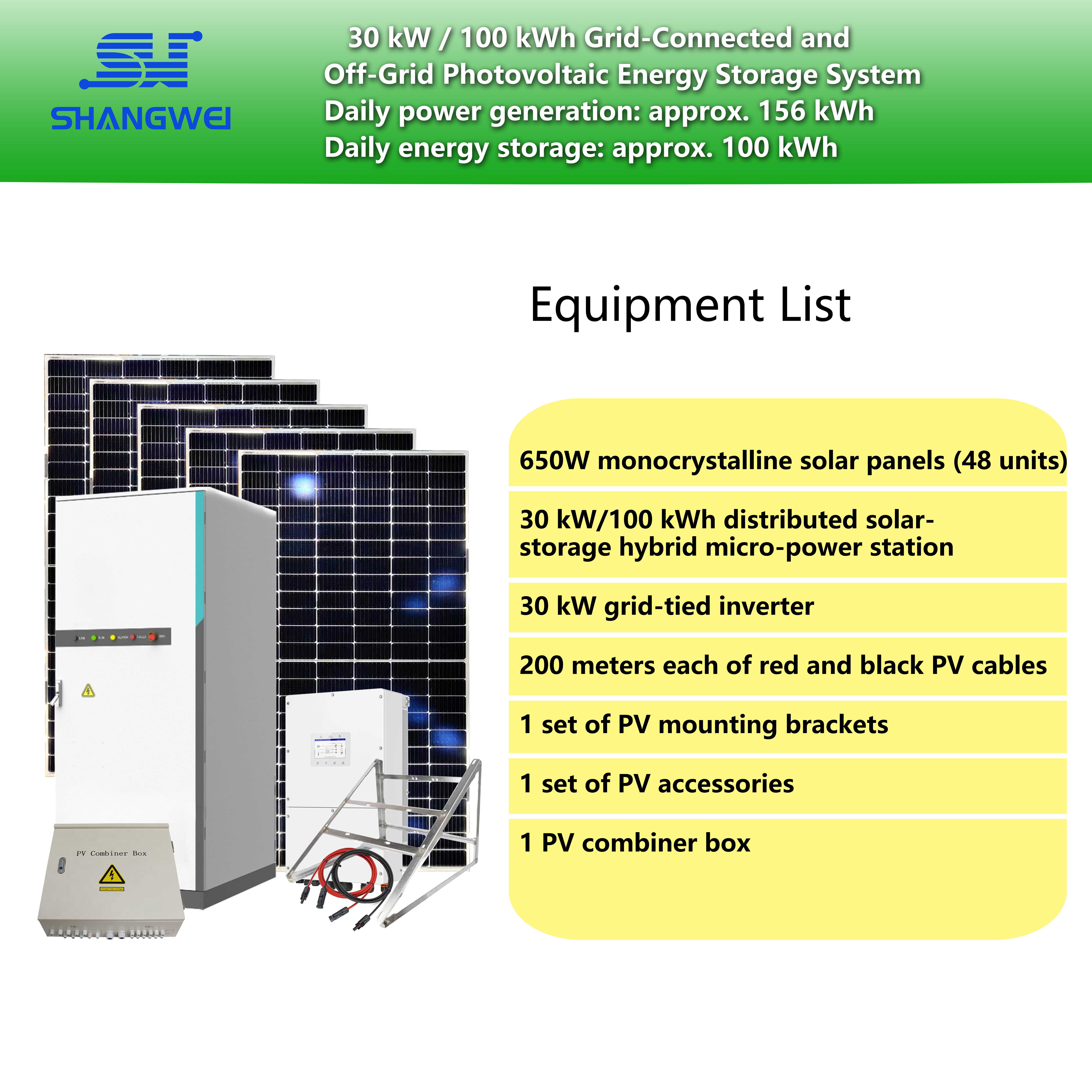
Configuration Diagram for a 30 kW/100 kWh Integrated Photovoltaic and Energy Storage System
Special Note: Grid-tied inverters have not yet obtained grid connection certification in China. In this solution, this equipment is used solely as an energy storage converter and an off-grid backup power source. All functions related to formal grid-connected power generation and surplus power feed-in are handled independently by a 30kW grid-tied inverter that holds full domestic grid connection certification, ensuring the system fully complies with State Grid connection standards and safety requirements.
With the core objectives of maximizing self-consumption rates, minimizing electricity purchase costs, and stabilizing surplus power revenue, the system establishes a fully closed-loop green energy ecosystem encompassing “power generation—energy storage—power consumption—power sales.” This is achieved through high-voltage energy storage, intelligent EMS scheduling, rapid grid-on/off switching, and multi-layered safety protections, thereby meeting users’ dual needs for continuous power supply assurance and asset appreciation.
II. Core System Design Parameters
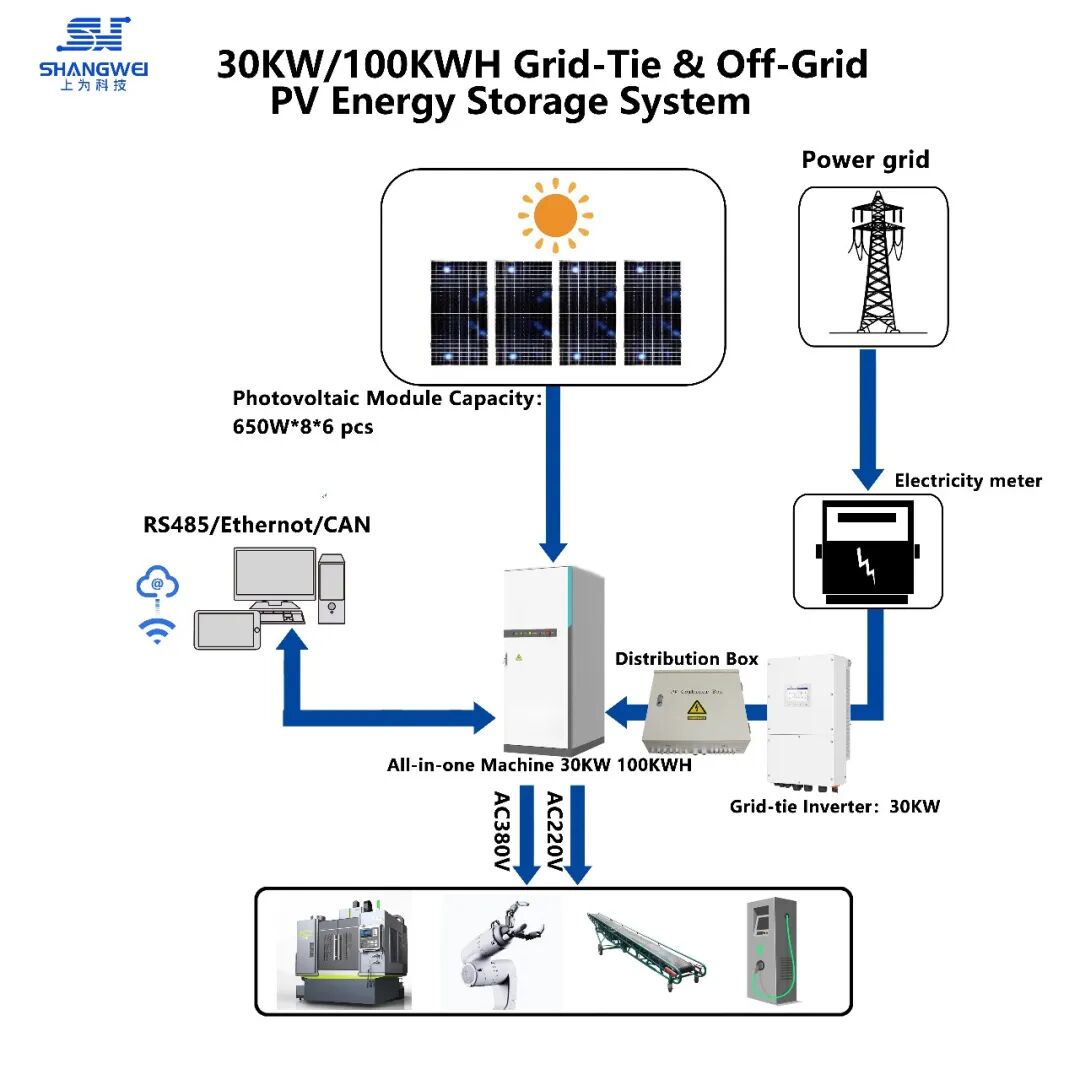
Topology Diagram of a 30 kW/100 kWh Integrated Photovoltaic and Energy Storage System
(1) Photovoltaic Array Section
Module Specifications: 650W monocrystalline high-efficiency modules, 48 cells
Total Installed Capacity: 48 × 650W = 31.2kW
String Configuration: 8 cells per string, 6 strings total, compatible with the inverter’s MPPT design
String Voltage: Open-circuit voltage 48V/cell; operating voltage range of 600–800V when 8 cells are connected in series, matching the inverter’s MPPT voltage range
Average Daily Power Generation: 156 kWh, optimized for local solar irradiance and system conversion efficiency
Module Advantages: Low temperature coefficient, high reliability, and low long-term degradation, suitable for long-term outdoor operation
(2) Energy Storage System Section
Battery Type: Outdoor high-voltage lithium-ion integrated cabinet with lithium iron phosphate (LiFePO₄) cells
Cell Configuration: 6 stacked 51.2V/314Ah modules, total capacity 96kWh (close to the 100kWh design target)
Battery Voltage: High-voltage platform, compatible with the high-voltage battery port of a 30kW grid-tied inverter
System Architecture: Dual independent battery ports, supporting flexible expansion and balanced charging/discharging
Protection Rating: Outdoor integrated design, dustproof and waterproof, suitable for harsh environments
Core Capabilities: Supports high-current fast charging and discharging, meeting the needs of daytime PV charging and evening/nighttime self-consumption
(3) Inverter System Section
Grid-connected equipment: 30 kW grid-tied inverter
Energy storage equipment: 30 kW hybrid inverter
AC output: Three-phase 3/N/PE, 380 V/50 Hz, compatible with standard commercial and industrial grids
System topology: Transformerless design, high efficiency, compact size, lightweight
Protection rating: IP66, worry-free outdoor installation
(4) System Performance Metrics
Rated Output Power: 30 kW
Maximum Conversion Efficiency: 98.5% (Grid-Tied Inverter) / 96.3% (Hybrid Inverter)
Grid-Tied/Off-Grid Switching Time: <10 ms, zero load interruption
Off-Grid Overload Capacity: 160% of rated power / 2 s, reliable startup of motor-type heavy loads
Operating environment: -25°C to +60°C, up to 4,000 m altitude, stable operation across a wide temperature range
III. Detailed Explanation of Core Equipment Technology
(1) Photovoltaic Arrays: High Power, High Compatibility, High Returns
(2) Energy Storage Battery Cabinet: High-voltage safety, high capacity, long service life
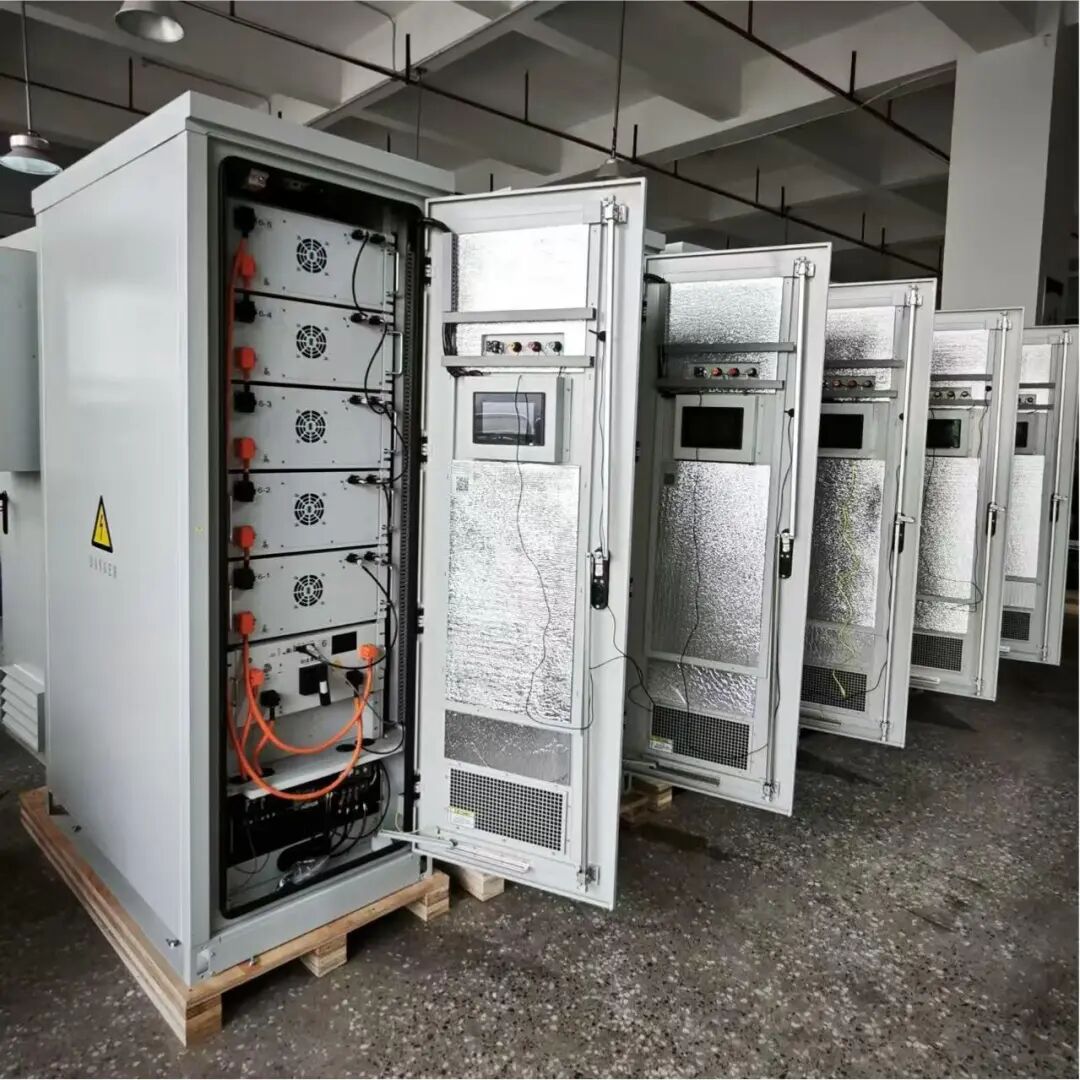
30 kW / 100 kWh Distributed Solar-Storage Hybrid Micro-Power Plant
The battery cabinet is equipped with a comprehensive BMS (Battery Management System) that provides:
Balancing and protection for individual cell voltage, current, and temperature
Comprehensive protection against overcharging, over-discharging, overcurrent, short circuits, high temperatures, and low temperatures
Active temperature control and intelligent air cooling to extend cell lifespan
Dual independent ports support phased expansion and flexible configuration
The outdoor integrated cabinet meets high protection standards, offering rain, dust, rust, and UV resistance. It can be installed directly on rooftops or open outdoor areas without requiring a dedicated equipment room, thereby reducing civil engineerring costs.
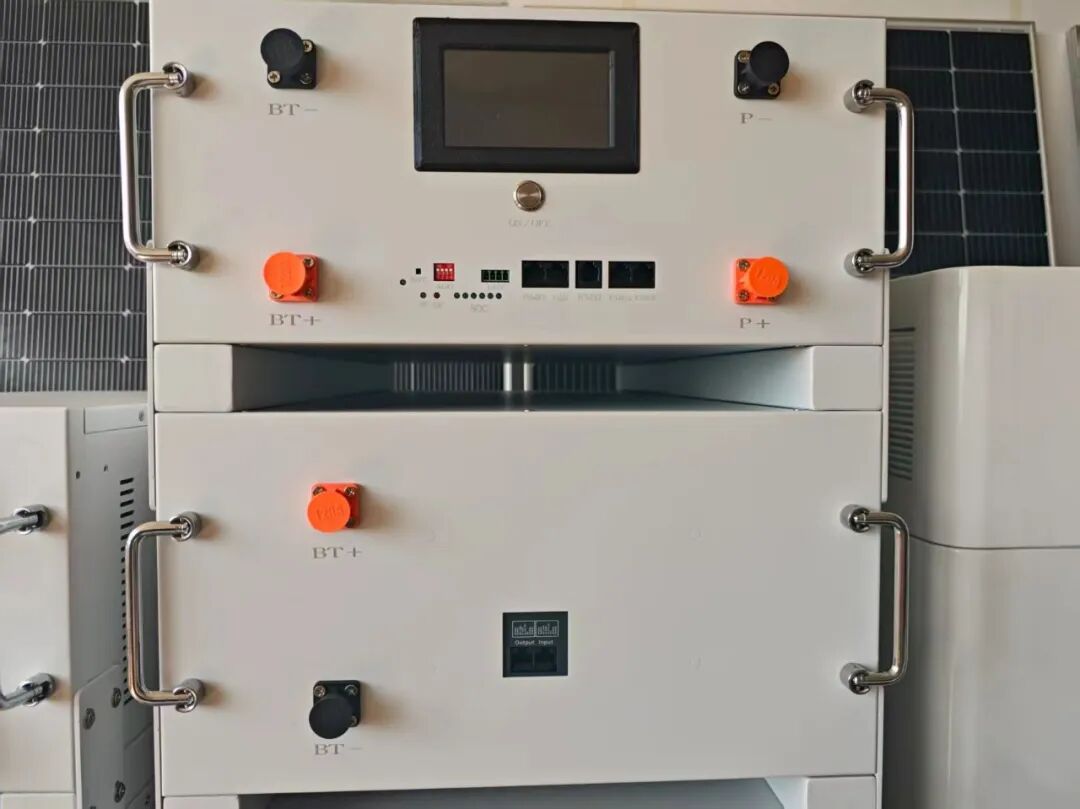
51.2V/314Ah lithium-ion battery module
(3) Inverter System: Dual-unit Coordination, Integration of Solar Power and Energy Storage
*30kW Grid-Tied Inverter
High-Efficiency Conversion: Maximum efficiency of 98.5%
Superior Adaptability: Supports over-sizing of 150% or more; compatible with 210W high-current modules; suitable for this project’s 31.2kW PV array
MPPT Performance: 2 MPPT channels / 4 string channels, wide voltage range of 160–1000V, rapid tracking of irradiance changes
Grid Adaptability: Automatic voltage stabilization technology, adapts to weak and complex grid conditions, ensuring stable operation without disconnection
Safety Protection: Full protection against DC reverse connection, AC short circuit, overcurrent, surge, islanding, and overtemperature; optional AFCI arc fault protection to reduce the risk of DC-side fires
Smart O&M: One-click QR code scanning for cloud platform access, enabling remote monitoring, parameter configuration, and firmware upgrades, plus 24/7 load energy consumption monitoring
Physical Specifications: Dimensions 353×602×250 mm, Weight 25.3 kg, IP66, intelligent air cooling, nighttime self-consumption <1 W
Certifications: Fully certified for grid connection in China; legally connects to the grid, enabling surplus power feed-in and electricity sales settlement
*30kW Grid-Tied Inverter
Important Note: This grid-tied inverter has not yet obtained grid connection certification in China and cannot be used directly for grid connection or feeding surplus power into the grid. In this system, it serves the functions of energy storage charge/discharge management and off-grid backup power supply.
Photovoltaic-Storage Over-Configuration: Supports 2 times the rated PV input, with a maximum PV power of 60kW, and supports future PV module expansion
Battery Compatibility: Voltage range of 150–800V; compatible with mainstream lithium-ion battery modules ranging from 100–280Ah; flexible configuration via dual battery ports
Powerful Performance: Maximum charge/discharge power of 33kW; 160% overload capacity in off-grid mode; supports wide-range generator integration
Reliable Switching: Grid-to-off-grid switching in <10ms, ensuring uninterrupted power supply to critical loads
Multi-unit Parallel Operation: Supports up to 300 kW in parallel, meeting future system expansion needs
Smart Interaction: 7-inch industrial-grade LCD screen for intuitive local operation; cloud platform enables AI optimization, remote control, and fault diagnosis
Comprehensive protection: Anti-islanding, output overcurrent, short circuit, DC reverse connection, surge protection, optional AFCI 2.0
Physical specifications: Dimensions 530×880×290 mm, weight 73 kg, IP66, intelligent air cooling, suitable for harsh outdoor environments
IV. System Operation Logic: Self-consumption + Feeding Surplus Electricity into the Grid—The Complete Process
This system employs coordinated control via the EMS Energy Management System and dual inverters to achieve fully automated energy dispatch, ensuring stable operation throughout the process without the need for manual intervention. Grid connection and power feed-in are handled by a 30kW grid-connected inverter certified in China, while the 30kW hybrid inverter does not participate in grid interaction; it is solely responsible for energy storage and backup power, ensuring full compliance.
(1) During periods of ample daylight
Prioritize direct supply to loads from PV: PV generates DC power → Grid-tied inverter converts it to 380V AC → 100% of the power is prioritized for on-site loads, offsetting utility grid consumption and reducing electricity costs
Excess power is fed into storage: If power remains after load consumption, the hybrid inverter directs it to charge the 96kWh lithium-ion battery until it is fully charged
Excess Power Fed into the Grid After Battery is Fully Charged: When both PV and storage are operating at full capacity, excess energy is fed into the grid via a 30kW grid-tie inverter, generating revenue from the sale of electricity
Real-time MPPT Optimization: Multiple MPPT channels rapidly track the maximum power point, maintaining high power generation even under fluctuating cloud cover
(2) Evening / Night / Cloudy or Rainy Days
Battery discharge for self-consumption: The battery releases energy → which is converted into 380V AC via the hybrid grid-tie inverter → to power loads, further reducing grid power consumption
Automatic grid backup when battery is low: When battery levels are low, the system automatically switches to grid power to ensure uninterrupted power supply to loads
Smart peak shaving and valley filling: Can be combined with peak-valley electricity rates to charge during off-peak hours and discharge during peak hours, further reducing electricity costs
Power Outage Backup: In the event of a grid failure, the hybrid inverter can seamlessly switch to off-grid mode within 10 milliseconds, with power supplied jointly by the PV and energy storage systems to ensure the continuous and stable operation of critical loads.
(3) Surplus Power Feed-in and Revenue Cycle
Bidirectional Smart Meter: Accurately measures self-consumed PV power, energy storage discharge, surplus power fed into the grid, and grid power purchased
Grid Settlement: Surplus electricity is transmitted via compliant grid-connection equipment and purchased at the local commercial and industrial feed-in tariff, with stable monthly settlements generating a continuous cash flow
Revenue Composition: Electricity bill savings from self-consumption + revenue from selling surplus electricity to the grid + peak-valley arbitrage profits—the combination of these three revenue streams shortens the payback period
V. Key Technical Advantages of the System
(1) Compliant Grid Connection and Safe Power Delivery
The core grid connection and power delivery functions are handled independently by a 30 kW grid-connected inverter, meeting all State Grid connection requirements.
The hybrid grid inverter is responsible only for energy storage and backup power, and does not connect to the grid interface, thereby avoiding certification risks and ensuring the system remains fully compliant throughout its operation.
Physical and logical isolation between the two units ensures grid-side safety and stability.
(2) Ultra-High Efficiency, Maximized Power Generation
The grid-connected inverter achieves a maximum efficiency of 98.5%, the hybrid inverter a maximum of 96.3%, and the PV charging efficiency a maximum of 97.4%.
Multi-channel MPPT + fast tracking algorithm to minimize losses from shading and module mismatch
Transformerless topology reduces magnetic and copper losses, enhancing overall energy efficiency
(3) High-voltage PV-storage integration for enhanced system safety
PV strings at 600–800V, high-voltage battery platform, and high-voltage inverter input ensure high-voltage, low-current operation throughout
Low line current, low line loss, minimal heat generation, and minimal voltage drop result in higher transmission efficiency and lower cable costs
Both units feature comprehensive high-voltage protection, eliminating risks of overvoltage, arcing, and leakage
(4) Intelligent Coordination, Unmanned Operation
Dual cloud-based platform monitoring: Real-time viewing of power generation, electricity consumption, energy storage levels, grid-fed power, and equipment status
Remote fault diagnosis, I-V curve scanning, and multi-peak detection for rapid identification of module and inverter anomalies
AI-powered scheduling: Automatically optimizes charging and discharging strategies based on sunlight forecasts, load curves, and electricity price curves to enhance self-consumption rates and returns
(5) Comprehensive Protection, Stable and Reliable
IP66 high-grade protection, suitable for outdoor environments with high and low temperatures, humidity, and dust
Wide-temperature operation: -25°C to +60°C; stable operation at high altitudes up to 4,000 meters
Multiple protections against DC reverse connection, AC short circuit, overcurrent, overvoltage, undervoltage, islanding, surges, overtemperature, and arc faults
Seamless switching between grid-tied and off-grid modes; stable off-grid restart under heavy load; balances grid-connected revenue with backup power
(6) Easy to install, expand, and maintain
Standard MC4 connectors on modules and standard terminals on the inverter ensure simple wiring and a short installation cycle
Dual battery port design supports the addition of battery modules later to extend storage duration
Integrated inverter design supports rooftop, outdoor wall-mounted, and ground-mounted installations
Multiple communication methods including Bluetooth, app, 4G, and Wi-Fi enable convenient local and remote debugging
VI. System Cost-Effectiveness and Profitability Analysis
(1) Base Power Generation
PV Capacity: 31.2 kW
Average Daily Generation: 156 kWh
Annual Generation: ≈57,000 kWh (estimated based on 365 days)
(2) Energy Flow and Revenue Breakdown
Self-Generation and Self-Consumption: During the day, power is prioritized for direct supply to loads; calculated at commercial and industrial electricity rates, this results in significant daily savings on electricity bills
Energy Storage Discharge: Releases 96 kWh of electricity at night to continuously cover loads, further reducing grid power purchases
Excess Power Feed-in: Daily surplus electricity is reliably fed into the grid via a 30 kW grid-connected inverter, generating legitimate revenue from power sales
Long-Term Benefits: System lifespan exceeds 25 years, continuously generating electricity cost savings and revenue from power sales, with low O&M costs
(3) Summary of Core Benefits
Cost Reduction: Significantly increased self-consumption rate and markedly reduced reliance on the grid
Revenue Generation: Stable, compliant feed-in of surplus electricity, providing a fixed monthly income from electricity sales
Security of Supply: Seamless backup during power outages, ensuring uninterrupted operation of critical loads
Low-Carbon: Utilization of green, clean energy that aligns with carbon peaking and carbon neutrality policies, while qualifying for photovoltaic support incentives
Value Enhancement: Upgrade of fixed assets, improving site energy efficiency and asset value
VII. Use Cases and Customer Value
This solution is designed for users who require a stable three-phase 380V power supply, seek to generate and consume their own electricity, and wish to earn revenue from selling surplus power. Typical applications include:
Small and medium-sized factories and workshops: Power-intensive loads such as air compressors, water pumps, fans, and production lines
Commercial complexes, supermarkets, and hotels: Continuous power consumption for air conditioning, lighting, cold chain systems, and elevators
Industrial parks and office buildings: Office equipment, lighting, and central air conditioning systems
Agricultural facilities and livestock farms: fans, water pumps, temperature control systems, processing equipment, etc.
Core Benefits for Customers:
Controllable electricity costs: Eliminate the risk of rising electricity prices; the larger the self-consumption scale, the lower the electricity costs
Stable revenue from selling surplus power: Sell surplus power to the grid in compliance with regulations, generating long-term, stable passive income
Improved power supply reliability: Maintain production and business operations during grid outages, reducing losses from power cuts
Intelligent operation and maintenance: Cloud-based monitoring, reduced or unmanned operation, lowering management costs
VIII. Conclusion
This 30kW PV + 96kWh integrated energy storage system is based on high-performance grid-tied inverters and high-voltage hybrid inverters, paired with 48 high-efficiency 650W modules. With a mature and reliable technical architecture, intelligent and efficient energy management, a comprehensive safety protection system, and clear and substantial economic benefits, it fulfills the core requirements of self-consumption, surplus energy storage, and feeding excess power into the grid.
The system strictly adheres to domestic grid certification requirements: Since the 30kW hybrid inverter currently lacks domestic grid-connection certification, it is limited to energy storage charging/discharging and off-grid backup power functions; all grid-connection, power feed-in, and electricity sales processes are handled by a 30kW grid-tied inverter with full domestic certification, ensuring the project’s legal compliance and smooth grid-connection acceptance.
The system balances power generation efficiency, energy storage capacity, power supply reliability, and return on investment. Designed to withstand harsh outdoor environments, it supports long-term stable operation and serves as the optimal solution for commercial and industrial users seeking energy self-sufficiency, cost reduction, and green revenue generation. With its rigorous design, rational configuration, advanced technology, and simple operation and maintenance, the complete solution can be rapidly deployed to provide users with continuous, stable energy returns and reliable power supply.