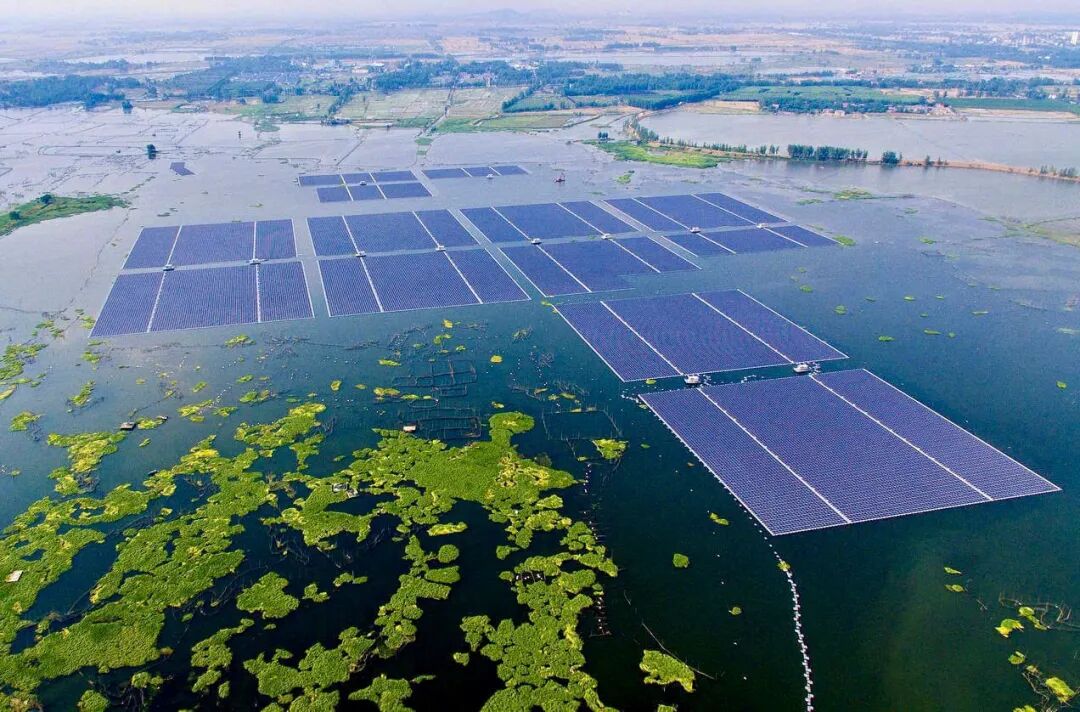
Mekong Delta, Vietnam
As the global energy transition intersects with the restructuring of regional industrial landscapes, Southeast Asia is emerging as a key battleground for Chinese renewable energy companies’ overseas expansion, thanks to its unique resource endowments, policy incentives, and strong market demand. This dynamic region—comprising thousands of islands, a rapidly growing manufacturing sector, and stringent carbon regulations—is unlocking a trillion-dollar market for solar and energy storage. From off-grid microgrids in Indonesia’s 80,000 villages to the Singapore-Indonesia cross-border green power corridor, and from Thailand and Vietnam’s manufacturing sectors seeking to circumvent carbon tariffs, every sector holds certain growth opportunities. For Chinese enterprises with advantages in technology, cost, and the full industrial chain, Southeast Asia is not only a breakthrough point for business expansion but also a strategic fulcrum for building global competitiveness.
I. Indonesia: The Energy Revolution in the Land of a Thousand Islands—A Vast Untapped Market for Solar and Storage
As the world’s largest archipelago, Indonesia comprises more than 17000 islands. Its unique geography has created the world’s most complex electricity supply landscape and driven an urgent need for renewable energy alternatives. For a long time, the country’s power grid development has lagged behind, with approximately 2,000 islands nationwide relying entirely on expensive diesel-powered generation, where electricity prices exceed 2 RMB per kilowatt-hour; More than 60% of rural households suffer from frequent power outages, with a total population of approximately 60 million facing electricity shortages. High-cost, unstable fossil fuel-based power supply not only hinders improvements in people’s livelihoods but has also become a bottleneck in the industrialization process.
A breakthrough is on the horizon. The Indonesian government has officially launched the “One Million Village-Level Cooperative Solar Projects” initiative, announcing the nationwide deployment of integrated solar-storage microgrid systems across 80,000 villages to comprehensively address rural electricity challenges through this strategic national project. According to the plan, the project will adopt a standardized configuration: each village will build a 1-megawatt solar power plant paired with a 4-megawatt-hour energy storage system. Based on these figures, the entire project will create a massive market scale comprising 80 gigawatts of distributed PV capacity and 320 gigawatt-hours of energy storage. Combined with 20 gigawatts of centralized PV power plants, the total installed capacity will reach 100 gigawatts, making it the largest rural energy transition project in Southeast Asia and even the world.
The economic viability and feasibility of this plan are highly attractive. Once the project is implemented, the cost of clean electricity can be reduced to $0.12–0.15 per kilowatt-hour, representing a reduction of more than 40% compared to traditional diesel-powered generation, thereby completely resolving the issues of “high electricity costs and limited access to power.” For Chinese enterprises, this represents a once-in-a-lifetime opportunity: the project covers numerous remote islands that cannot be connected to the main power grid, making off-grid solar-storage microgrids the only viable solution. China’s extensive experience in island microgrids, construction in complex terrain, and system integration constitutes its core competitive advantage. From photovoltaic modules and lithium-ion battery systems to EMS energy management systems, engineering, construction, and O&M services, the entire industry chain holds immense potential for orders. Leveraging their past project experience in island and remote regions, along with robust construction capabilities, Chinese enterprises have become key participants and beneficiaries of this initiative.
Indonesia’s opportunities extend beyond rural areas. Leveraging the world’s largest nickel reserves, Indonesia has established a complete industrial chain spanning nickel mining, smelting, and battery materials, making it a key raw material hub for the global new energy industry. Its downstream nickel industry—particularly nickel smelting—boasts the world’s largest production capacity and is expanding at an astonishing rate. These energy-intensive industrial parks have an extremely high demand for stable, low-cost green electricity, making the **“industrial park + solar-plus-storage”** model an essential requirement. On the one hand, it can reduce high industrial electricity costs and enhance product competitiveness; on the other hand, it enables early preparation for global carbon tariffs and facilitates green production. This has opened up a massive incremental market for industrial-scale applications for Chinese solar-plus-storage companies.
Cross-border energy cooperation holds even greater strategic value. Singapore plans to procure a total of 3.4 gigawatts of low-carbon electricity from Indonesia by 2035; the two countries have already signed a memorandum of understanding, with project investments exceeding $10 billion. This means Indonesia will construct large-scale solar power plants and transmit clean electricity to Singapore via undersea cables. The project requires substantial implementation by 2030, directly driving demand for gigawatt-scale integrated solar-storage projects. Leveraging their extensive experience in large-scale solar power bases, energy storage systems, and cross-border power projects, Chinese companies are fully capable of leading this national-level energy cooperation initiative, transforming Indonesia’s abundant solar resources into a steady stream of trade revenue and cooperation opportunities.
II. Thailand and Vietnam: Driven by CBAM Carbon Tariffs, Green Energy Becomes an “Essential Requirement” for Exports
While Indonesia’s opportunities stem from energy accessibility, those of countries such as Thailand and Vietnam arise from the strict constraints of international trade rules. Starting in January 2026, the European Union’s **Carbon Border Adjustment Mechanism (CBAM)** will be fully implemented. This policy, often referred to as a “carbon tariff,” imposes carbon emission fees on energy-intensive products such as steel, aluminum, cement, fertilizers, and electricity.
This policy has had a massive impact on Southeast Asia’s manufacturing sector. Data indicates that the CBAM will affect 3.8% of Thailand’s exports to Europe. For the numerous export-oriented enterprises in Thailand and Vietnam, this is no longer a matter of choice but a matter of survival—these companies largely form manufacturing clusters in sectors such as electronics, chemicals, and paper, which emerged from the spillover of Chinese production capacity and are highly dependent on the EU market. If they cannot provide complete product carbon footprint certification and use clean energy, they will face high carbon costs and may even be excluded from the EU supply chain.
Against this backdrop, “integrated PV-storage + carbon management” has become an essential solution for export-oriented enterprises. Chinese companies can provide one-stop services: deploying rooftop solar and energy storage systems at factories to enable on-site generation and consumption of green electricity, thereby directly reducing carbon emissions during production; simultaneously offering carbon footprint tracing, carbon accounting, and certification services to help enterprises establish comprehensive carbon management systems, successfully pass EU audits, and avoid the application of punitive high default carbon values. This is not merely an energy solution but a core competitive advantage that helps clients retain their market share in the EU.
In addition, the explosive growth of the data center industry in Southeast Asia has driven demand for high-quality green electricity. Take Thailand as an example: government policies explicitly require that all new data centers must use 100% renewable energy. This mandatory requirement has created a promising market for large-scale, stable photovoltaic-storage projects. Given that data centers have extremely high requirements for power supply reliability and continuity, they represent the ideal setting for Chinese companies to demonstrate their capabilities in photovoltaic-storage microgrids and smart control technologies.
III. Seizing the Opportunities of the Times: The Path to Success for Chinese Enterprises
Facing the vast and promising new energy market in Southeast Asia, Chinese companies hold an unparalleled advantage. We possess the world’s most comprehensive photovoltaic and energy storage industrial chain, offering leading technology and optimal costs; we have extensive practical experience in off-grid microgrids, island construction, and industrial support systems; and we have a deep understanding of global carbon regulations, enabling us to provide clients with integrated “energy + carbon management” solutions.
In the Indonesian market, we should focus on two key areas: First, actively participate in the 80000-village solar-plus-storage project, leveraging our strengths in off-grid microgrids and island construction to provide comprehensive solutions ranging from equipment supply to EPC contracting. Second, seize opportunities in nickel industrial parks and the Indonesia-Singapore cross-border power project by deploying large-scale ground-mounted power plants and commercial and industrial energy storage systems to secure industrial-scale and national-level flagship projects.
In the Thai and Vietnamese markets, we must position CBAM compliance as our key selling point. By bundling photovoltaic storage systems with carbon footprint services, we can offer export-oriented manufacturing companies the dual benefits of “carbon reduction and cost savings.” At the same time, we should actively target high-standard customers such as data centers to build a strong brand reputation through highly reliable and intelligent photovoltaic storage solutions.
The wave of energy transition in Southeast Asia is now unstoppable. From addressing the electricity needs of the people in the “Land of a Thousand Islands” to supporting the green transformation of global industrial chains, and on to building a new framework for transnational energy interconnection, every front requires Chinese wisdom and Chinese solutions. For new energy companies with global ambitions, establishing a presence in Southeast Asia at this moment means seizing the momentum of the times. This is not only a trillion-dollar market but also a strategic leap from “product exports” to “solution exports, standard exports, and ecosystem co-creation.”